📊 Stockmarket Knowledge
📈 Finance & Investing Tips
Market analysis & insights for informational purposes only. Not financial advice. Always do your own resear
Data-driven. Logic-focused. Risk comes first.
I focus on AI, semiconductors, technology stocks, and macro trends, using earnings, valuations, capital flows, and technical analysis to identify opportunities worth watching.
I regularly share stock research, market insights, and trade reviews.
No chasing hype. No emotional decisions. Just data, logic, and what the market is actually doing.
👇 For more market insights, connect through the link in my Bio.
https://t.co/CDOKcc61W1
Weekly U.S. Stock Market Recap: Liquidity Is Tightening — War, Interest Rates, and AI Capital Spending Are Driving the Market.
This week, U.S. stocks, gold, silver, and Bitcoin came under simultaneous pressure, while oil prices continued to climb. Beneath the volatility lies one underlying dynamic: energy shocks are fueling inflation expectations, higher interest rates are increasing financing costs, and AI’s enormous capital requirements are putting market liquidity to the test.
NVIDIA CEO Jensen Huang has emphasized that AI demand remains extremely strong, but the capital needed to meet that demand is becoming increasingly constrained. This highlights the market’s central dilemma: AI’s long-term growth story remains intact, but tensions are building between massive capital expenditures, rising financing costs, and the need to deliver tangible returns.
As capital becomes more expensive, markets are forced to reprice risk. The most highly valued assets and those most dependent on external financing are often the first to come under pressure.
My outlook: Selling pressure could persist through today’s close, but that does not necessarily mean the medium-term trend has turned decisively bearish.
If oil prices begin to stabilize, long-term Treasury yields stop rising, and leading AI companies maintain solid earnings and capital expenditure guidance, the market could see a rebound and a recovery in risk appetite next week. High-quality technology stocks may be among the first to attract renewed capital inflows.
However, my bullish outlook for next week is a conditional trading thesis, not a certainty. If energy prices continue to surge, Treasury yields break above key levels, or AI capital spending shows signs of slowing, markets could remain under pressure.
Three key themes deserve close attention:
Macro: Oil prices, inflation expectations, and the 10-year U.S. Treasury yield.
AI: Earnings execution from $NVDA, $META, and the broader semiconductor sector.
Capital Flows: Whether the Nasdaq can stabilize and whether any rebound broadens beyond a handful of mega-cap leaders.
My strategy is straightforward: I will not sell blindly out of fear, nor will I assume every decline is a buying opportunity. I will wait for macroeconomic pressures to ease and key price levels to stabilize before looking for opportunities in high-quality assets.
Markets do not ultimately reward blind optimism. They reward those who can distinguish genuine opportunities from risks — and act with discipline.
$SOXL #StockMarket #NASDAQ #SP500 #AIStocks $NVDA $META #Semiconductors #Macro #Investing
$SOXL | Looking Beyond Short-Term Volatility: The Semiconductor Rebound Setup
The recent pullback in semiconductor stocks has increased market uncertainty, but it has not fundamentally eliminated the long-term growth drivers behind AI infrastructure.
My bullish outlook on $SOXL is based on three factors:
1. AI investment remains a structural growth driver.
Demand for AI computing, advanced semiconductors, and high-bandwidth memory continues to shape the industry's long-term outlook. The key question is whether earnings growth can justify current investment levels.
2. Valuation and market positioning are becoming increasingly important.
After a sharp sell-off, the focus shifts from chasing momentum to identifying where selling pressure begins to ease. If major semiconductor stocks stabilize and buying interest returns, the sector could establish the conditions for a technical rebound.
3. Confirmation matters more than prediction.
I will be watching $NVDA, $AMD, and $MU, alongside the Philadelphia Semiconductor Index, for signs of improving price action and stronger market participation. Earnings guidance and AI spending trends will also be critical in determining whether a rebound can sustain itself.
My strategy: I remain constructive on the potential for a semiconductor recovery, but I want confirmation from price action and fundamentals before increasing exposure.
$SOXL offers amplified exposure to daily semiconductor index movements, which also means significantly higher risk. Position sizing and disciplined risk management remain essential.
The objective is not to predict every market bottom. It is to identify favorable risk-to-reward setups and act when the evidence supports the thesis.
#SOXL #Semiconductors #AI #NVDA #AMD #MU #StockMarket #TradingStrategy
I was just chatting with some of my Chinese followers, and we got into a funny discussion about market colors. I mentioned that green means stocks are up and red means they're down here in the U.S. One of them told me that in China, wearing a green hat symbolizes that someone's wife is cheating on them, so they prefer red instead. 😂
That got me thinking: do you think $META 's earnings will surprise the market today and send the stock into the green, or will investors be seeing red? What's your take?
🚨 BREAKING: $TSLA × $SPCX — Elon Musk Is Exploring a Merger That Could Reshape the Tech Landscape!
Elon Musk said Tuesday that combining Tesla and SpaceX would be “a good idea.” Even more importantly, both companies have established special committees composed of independent directors to explore a potential transaction.
What could this mean?
If a merger moves forward, the market could be looking at more than a traditional automaker joining forces with an aerospace company. It could create a technology powerhouse spanning AI, robotics, autonomous driving, satellite internet, and space infrastructure.
Three key factors to watch:
1️⃣ AI & Computing: Could Tesla's AI capabilities and SpaceX's infrastructure create meaningful synergies?
2️⃣ Valuation: Would the market reassess the long-term growth potential of the combined businesses?
3️⃣ Shareholder Value: The deal structure, valuation terms, financing arrangements, and regulatory approvals will determine whether a merger creates value or introduces additional risks.
One important distinction: Discussions are still at the potential-transaction stage. Establishing special committees does not mean a merger agreement has been reached.
The big question is this: If $TSLA and $SPCX eventually merge, will the market continue to value them as separate businesses, or recognize a new technology ecosystem spanning intelligence on Earth and infrastructure in space?
This is a major corporate development worth watching closely. The next catalysts will be official announcements, deal structure, and the implications for shareholders.
$TSLA $SPCX #Tesla #SpaceX #ElonMusk #AI
If power and cooling constraints delay AI infrastructure expansion by 12–18 months, are GPUs really the only scarce resource?
While competitors wait for grid connections, can $BE leverage on-site fuel cell power to bring data centers online faster and emerge as one of the most undervalued winners in the AI infrastructure race?
If AI infrastructure demand is accelerating from $SMCI to $SPCX while valuations for players like $AAOI and Colo are collapsing, is the market mispricing the next generation of AI winners, or are investors already sensing that returns on AI capital spending may be starting to deteriorate?
$SPCX $TSLA $NVDA $GOOGL #SpaceX#AI#Earnings
🚨 BREAKING: SpaceX Delivers a Major Q3 Earnings Beat! $SPCX's Growth Story Is Being Backed by Real Results.
Latest earnings highlights:
Revenue: $14.58 billion vs. $12.72 billion expected, up 161% year over year.
EPS: $0.35 vs. approximately $0.16 expected.
Net Income: $4.4 billion.
AI Revenue: $7.6 billion, emerging as a major growth driver.
Starlink Subscribers: 13.6 million, reflecting continued expansion in the satellite communications business.
The biggest takeaway isn't just that revenue and earnings exceeded expectations. It's that SpaceX is evolving from a traditional aerospace company into an integrated platform spanning AI computing, satellite communications, and space infrastructure.
My outlook is clear:
AI is increasingly translating into real revenue. Starlink provides a growing commercial foundation, while SpaceX's aerospace technology creates a long-term competitive advantage.
However, massive AI capital expenditures remain a key risk. Future cash flow and returns on investment will determine whether higher valuations can be sustained.
The market was previously concerned about excessive AI spending. Now, the earnings results are beginning to demonstrate that real demand exists.
In the short term, focus on the earnings beat. In the long term, watch AI monetization and capital efficiency.
The next big question for $SPCX is whether it can turn rapid growth into sustainable profitability.
$SOXL $NVDA $AMD $MU $LRCX $TXN
🚨 $SOXL: The Semiconductor Rebound May Be Just Getting Started! This Week's Earnings Could Set the Stage for the Next Big Move.
Last week, the Philadelphia Semiconductor Index fell for eight consecutive trading sessions, marking its longest losing streak since 2008, as the entire sector faced heavy selling pressure.
But Monday brought a major shift in market sentiment. The semiconductor index surged as much as 3.7% intraday, with $NVDA, $AMD, and $MU attracting renewed buying interest.
So why am I still bullish on $SOXL?
The core thesis isn't just about an oversold bounce. It's about the major earnings catalysts coming this week.
On Wednesday, $LRCX and $TXN are scheduled to report earnings. We'll be closely watching semiconductor equipment orders, chip demand, and management's forward guidance on future growth.
$META is also reporting on the same day. As one of the biggest investors in AI infrastructure, its capital expenditure plans will directly influence market expectations for GPU demand, memory chips, and data center expansion.
If these earnings confirm that AI capital spending continues to grow and semiconductor orders remain resilient, the selloff driven by high interest rates and valuation concerns could trigger a major reassessment of the sector.
And that's exactly why I remain bullish on $SOXL:
Capital flowing back into an oversold sector + confirmation of strong AI demand + earnings catalysts could create the momentum for another significant rally.
But I'm not ignoring the risks. If forward guidance disappoints, the rebound could reverse just as quickly. With $SOXL offering 3x daily leveraged exposure, disciplined position sizing and risk management are absolutely critical.
My take: This week isn't simply about betting on a semiconductor rebound. It's about waiting for earnings to confirm the real underlying demand across the AI supply chain.
The market can sell off semiconductor stocks in the short term, but ultimately, orders, earnings, and future growth will determine the long-term trend.
🚨 $TSLA : Tesla's Biggest Value Driver May No Longer Be Cars!
Elon Musk just sent a major signal: Optimus humanoid robots and Cybercab robotaxis could become the primary drivers of Tesla's future valuation.
What does this really mean?
Tesla is positioning itself to evolve from an electric vehicle manufacturer into an AI, robotics, and autonomous driving technology powerhouse.
Traditional auto businesses are constrained by production capacity, pricing competition, and profit margins. But if Optimus and Cybercab achieve large-scale commercialization, their potential markets could far exceed Tesla's vehicle sales business.
That's one of the key reasons why investors are willing to assign $TSLA a much higher valuation than traditional automakers.
But here's what really matters: Tesla's next major move won't be determined by Musk's vision alone. It will depend on real-world execution, autonomous driving commercialization, robot mass production, and when these businesses can start generating meaningful profits.
My take: The market will increasingly value $TSLA based on its ability to deliver on AI and robotics, rather than just vehicle deliveries.
Cars define Tesla's present. AI and robotics will determine whether Tesla can justify its future valuation.
$TSLA #Tesla #Optimus #Cybercab #AI
🚨 $MSTR Faces Major Downside Risk! Potential MSCI Index Exclusion Is Becoming a Key Market Concern.
MSCI has officially adopted new index rules targeting "non-operating companies," placing Strategy ($MSTR ) on the list of potential exclusions. Following the news, MSTR fell approximately 3% in premarket trading, showing weakness even as Bitcoin moved higher.
Why does this matter?
The real issue isn't Bitcoin's long-term value. It's the possibility of forced institutional selling.
MSTR is currently included in MSCI's global indexes. If officially removed, passive funds tracking those indexes would have to rebalance their holdings. The company previously warned that potential selling pressure could reach $2.8 billion.
This means MSTR could face three major headwinds: passive fund outflows, shrinking valuation premiums, and weakening short-term investor sentiment.
My view: MSTR could enter a period of heightened volatility and downward pressure. Even if $BTC remains strong, MSTR may not necessarily follow it higher.
However, index exclusion does not mean the company would be forced to sell its Bitcoin holdings, nor does it invalidate its long-term investment thesis.
Two key dates to watch: November 11, when the final exclusion list is expected, and November 30, when index changes are scheduled to take effect after the market close.
Our strategy: Stay cautious in the short term and closely monitor institutional capital flows and Bitcoin's price action. Until the risks are fully priced in and the stock shows clear signs of stabilization, there's no reason to chase rallies or blindly average down.
Successful traders don't just look for reasons why a stock could go higher. They identify the risks that could change the market trend before everyone else does.
$MSTR $BTC #Bitcoin #StockMarket
$GDXU $QQQ $NVDA $MU $AI
After the release of the CPI data, the market experienced significant volatility.
The market’s real concern is not the data itself, but whether inflation pressures will impact the future path of interest rates.
Higher-than-expected inflation data has pushed investors to reassess rate-cut expectations. Capital has temporarily rotated out of high-valuation technology and growth sectors, while rising Treasury yields have added further pressure to the market.
However, it is important to understand:
This is more of a macro-driven risk repricing event rather than a change in the long-term market trend.
The key drivers behind the market’s previous strength remain intact:
AI infrastructure investment continues to expand.
Corporate earnings continue to improve.
The long-term competitive advantages of high-quality companies remain unchanged.
Short-term volatility often creates fear, but it can also create new opportunities for investors.
The best investors do not only look for opportunities when markets are calm — they look for undervalued opportunities when uncertainty increases.
Key factors to watch next:
Changes in Federal Reserve policy expectations
Treasury yield movements
Capital flows within the AI sector
Corporate earnings performance
Markets will not rise forever, but one pullback does not change the long-term trend.
GDXU could be an opportunity.
$GDXU $QQQ $NVDA $MU $AI
bitcoin:native $MSTR $MSTX
Position update.
The message from bank earnings is clear: the economy is not breaking down, but the pressure from higher rates is starting to show.
$GS continues to show strength, while $JPM came in below expectations, and $WFC and $C are moving in different directions. Higher financing costs, bond market volatility, and a restrictive rate environment are gradually impacting corporate activity.
At the same time, AI-related capital spending is being put to the test. Higher oil prices, rising financing costs, and elevated discount rates are forcing the market to reassess high-valuation assets.
But this is exactly why I continue to focus on bitcoin:native and $MSTR.
As the market begins to reprice liquidity, inflation, and asset quality, Bitcoin’s value proposition as a scarce asset is becoming increasingly relevant. And as a high-beta Bitcoin proxy, $MSTR has historically offered stronger upside potential when BTC enters a new expansion phase.
Short-term volatility remains, but the market is moving into a new phase.
Tomorrow’s CPI will be the next key catalyst.
The position is built, but discipline remains unchanged. Stay focused on the data and wait for confirmation of the trend.
The long-term Bitcoin thesis remains intact, and $MSTR continues to be one of the most direct ways to capture the upside of the Bitcoin cycle.
$AAPL is approaching a historic milestone:
A market capitalization of $5 trillion.
This is not just a reflection of company size — it represents the market’s renewed valuation of Apple’s future growth potential.
Over the past few years, investors have raised concerns about Apple’s slowing growth. However, the market is now refocusing on several key growth drivers:
The evolution of Apple’s software ecosystem in the AI era.
A potential upgrade cycle driven by enhanced on-device AI capabilities.
Continued growth in its high-margin services business and strong cash flow generation.
And the long-term competitive advantage created by a global ecosystem with more than one billion users.
If Apple successfully reaches a $5 trillion market cap, it will once again prove:
The greatest technology companies are not built on a single product. They create long-term value through ecosystems, cash flow, and continuous innovation.
However, investors will continue watching several key factors:
Can Apple’s AI strategy translate into real revenue growth?
Can iPhone demand maintain its resilience?
Can the services business continue supporting strong margins?
A $5 trillion valuation is not the finish line.
It is the market’s latest vote of confidence in Apple’s next chapter.
$AAPL #Apple #AI #Stocks
I used my weekend to analyze the upcoming CPI data, and this can be used as a reference.
Strong AI expansion demand: Memory and chip prices are continuing to rise, reflecting strong demand from the AI sector.
Geopolitical tensions: Crude oil prices remain elevated due to ongoing geopolitical uncertainty.
Last week’s employment data: Nonfarm payroll growth came in below expectations, and wage growth also showed signs of weakness. Sustained wage growth requires inflation to be brought under control.
Ahead of the CPI release, the key focus for markets is not just the inflation number itself, but whether the data changes the Federal Reserve’s future interest rate path.
If CPI comes in significantly above expectations, it would signal that inflation pressures remain persistent. Markets may reprice rate-cut expectations, increasing the possibility that higher rates will remain for longer. Tighter liquidity conditions would put pressure on growth stocks and high-valuation assets, with technology stocks, REITs, and small-cap companies likely to experience greater volatility. Meanwhile, sectors such as energy, financials, consumer staples, and high-dividend stocks could attract relatively stronger capital flows.
If CPI comes in line with expectations, the market reaction may be more muted. Investors will shift their focus toward the details behind inflation, including core CPI, services inflation, and wage pressures. In this scenario, market direction will depend more on investor sentiment, economic data, and Federal Reserve commentary.
If CPI comes in significantly below expectations, it would suggest inflation is cooling faster than anticipated. Expectations for rate cuts could strengthen, improving liquidity conditions and benefiting growth-oriented assets. Technology stocks, high-growth companies, and AI-related sectors could see stronger upside potential, while defensive sectors and certain cyclical assets may underperform.
One scenario deserves special attention: headline CPI remains moderate, but core CPI stays elevated. The market may interpret this as evidence that inflation remains sticky, reducing expectations for rapid rate cuts. Under this scenario, growth stocks could still face pressure.
Ultimately, CPI affects interest rate expectations. Interest rates determine valuation levels, and valuations drive capital allocation.
The best trading opportunities often come from the gap between market expectations and the actual data outcome.
Micron Technology (NASDAQ: MU) is sending a powerful signal to the market.
The company’s board has approved an increase in its discretionary share repurchase authorization to $35.16 billion.
This marks the largest buyback authorization in Micron’s history.
What makes this even more interesting:
MU shares have already gained more than 270% year-to-date.
The driving force behind this rally is not just a traditional memory cycle recovery — it is the AI-driven memory supercycle.
AI servers, data centers, and high-performance computing are accelerating demand for advanced memory technologies, including HBM and high-end DRAM.
But there is one detail the market should not overlook:
Despite its massive rally, Micron is still trading about 18% below its 52-week high reached on June 25.
The market is still trying to answer one key question:
Is this AI memory boom just a short-term trade?
Or is it the beginning of a multi-year structural upgrade cycle?
The massive buyback authorization reflects management’s confidence in future cash flow and long-term value.
Now investors are watching three critical factors:
Whether AI capital spending remains strong.
Whether HBM demand continues to exceed expectations.
Whether the memory pricing cycle enters a sustained uptrend.
The AI revolution is not only a battle for computing power.
It is also a battle for memory infrastructure.
And Micron is becoming one of the key players in this new AI era.
$MU #AI #Semiconductors #Stocks
Dear Prime Minister Ambani,
Please accept my humble apologies for not realizing that you are the real boss of India.
Naturally, you would prefer to maintain your monopolistic exploitation of the great people of India, but would you nonetheless consider allowing Starlink to compete?
There are many areas of India, as there are in all countries, with no Internet access, which denies children the opportunity for education and for small businesses the opportunity to sell their goods to a global market. Starlink would change their lives for the better.
Thank you 🙏
A new M&A signal is emerging in the energy infrastructure sector.
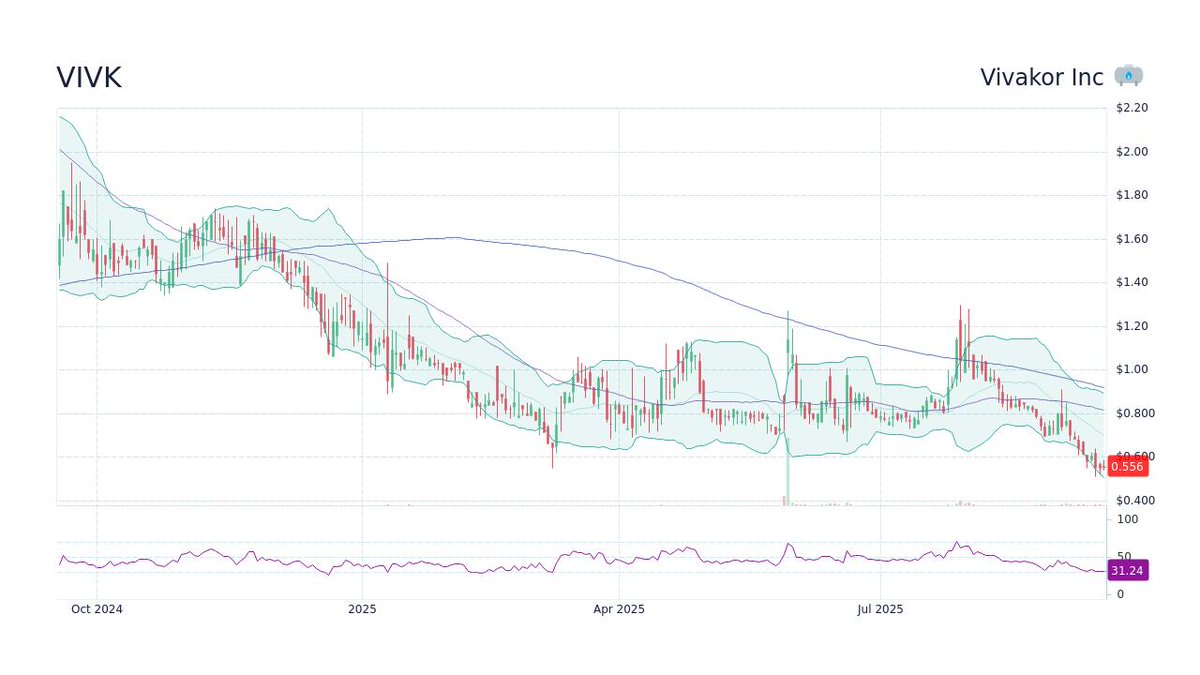
Vivakor $VIVK has signed a letter of intent for a proposed $40 million acquisition of Direct Midstream, expanding its midstream energy operations in the Permian Basin.
This transaction is not simply a traditional acquisition.
Direct Midstream provides key energy infrastructure services, including:
• Produced water management
• Saltwater disposal facilities
• Oilfield waste processing
• Oil recovery and recycling services
The company operates in the Permian Basin, one of the most important oil and gas regions in the United States.
Under the proposed transaction, Direct Midstream is valued at approximately $40 million, representing about 4x its targeted 2027 free cash flow. Vivakor plans to invest approximately $10 million in additional capital to support future expansion.
The market focus is not only on the acquisition itself.
The bigger story is the growing importance of energy infrastructure, water management, and environmental services as U.S. oil production continues to expand.
Unlike companies that rely purely on oil price movements, midstream infrastructure businesses often provide more stable cash flow characteristics.
Through this acquisition, Vivakor aims to build a more integrated platform across energy transportation, storage, recycling, and environmental services.
The deal remains subject to due diligence and final agreements, but the strategy is clear:
Vivakor is using acquisitions to expand its asset base and create a new growth pathway.
The next opportunity in energy may not only come from rising oil prices.
It may come from companies that control critical infrastructure and cash-flow-generating assets.
#Energy #OilAndGas #VIVK #Investing
A key signal is emerging in the U.S. stock market today:
AI stocks are rebounding, but capital may be quietly shifting its direction.
Yesterday, AI-related stocks came under pressure as investors began questioning the fundamentals behind the AI investment cycle.
The market’s focus is no longer just:
“How big can AI become?”
It is now asking:
“When will AI generate enough real profits?”
Concerns over AI monetization and the pace of returns on massive infrastructure spending triggered short-term selling pressure. But today, capital is flowing back into key AI names such as Nvidia, AMD, and Marvell, suggesting that investors are not abandoning the AI trend — they are reassessing valuations.
However, the bigger story is not simply the AI rebound.
The real signal is the market rotation happening underneath.
Over the past few years, capital has been concentrated in:
AI,
semiconductors,
and computing infrastructure.
Now investors are starting to look for:
More stable earnings,
clearer cash flow,
and less crowded opportunities.
Healthcare is becoming one of the areas attracting renewed attention.
Humana $HUM is one of today’s notable names.
HUM surged in pre-market trading after improvements in Medicare Advantage ratings. The market is reassessing the company’s earnings potential and future profitability outlook.
The market is not just trading a single headline.
The deeper logic is:
AI valuation pressure
→ Capital searches for certainty
→ Healthcare earnings recovery
→ Defensive growth assets get revalued.
That is why today’s market action shows:
AI recovering,
Healthcare gaining momentum,
while some high-valuation growth stocks remain under pressure.
The market may be entering a new phase:
Phase 1:
Trading the AI dream.
Phase 2:
Testing AI profitability.
Phase 3:
Finding the next generation of undervalued cash-flow businesses.
AI remains one of the most important long-term trends of the decade.
But short-term capital flows are sending a different message:
The next opportunity may not come from the most popular trade.
It may come from the sectors the market has overlooked — where earnings are beginning to improve.
Today’s most important question is not only:
“How much did AI rise?”
The bigger question is:
“Where is the money moving next?”
$HUM #AI #Stocks #Healthcare #Investing