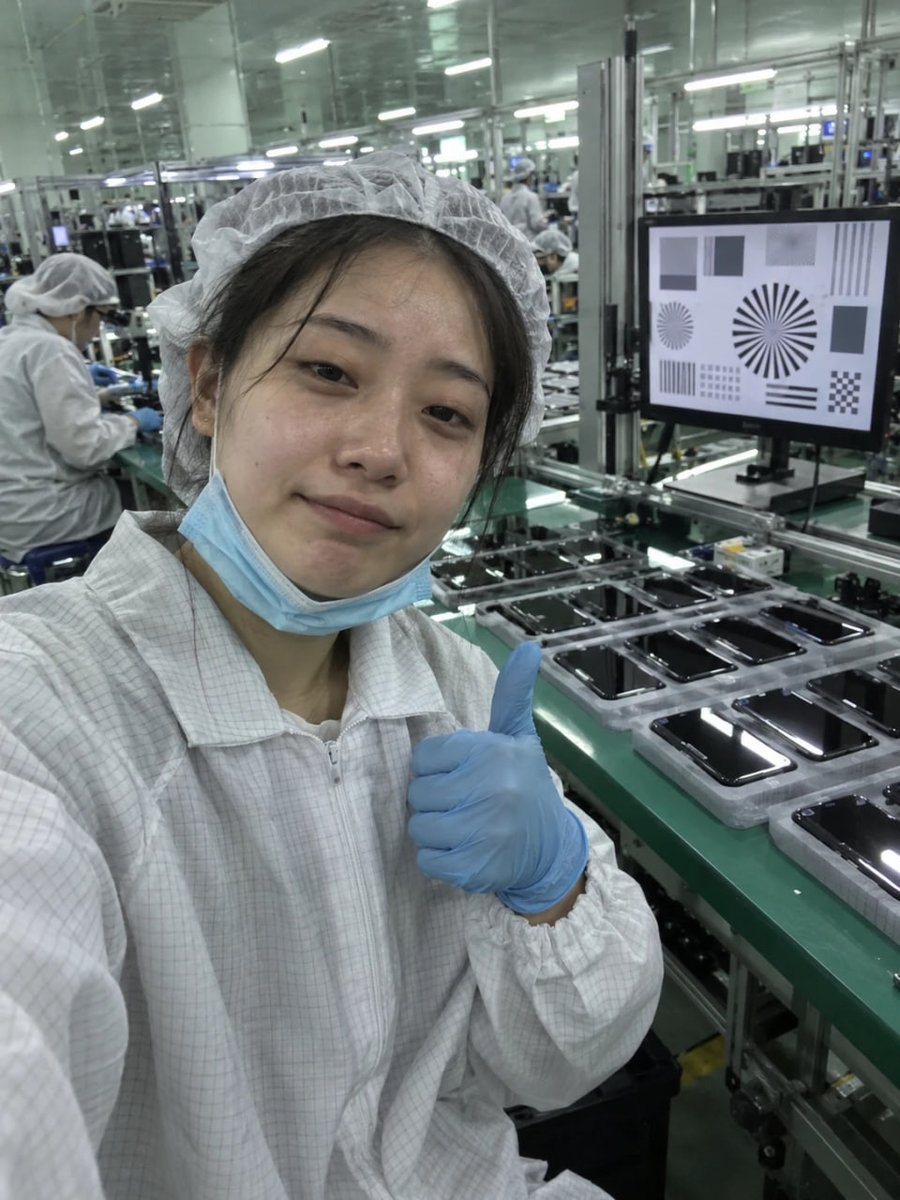
BREAKING: I used Claude Code to find hidden photos on my Android. There was even one of me on the toilet.
412 of them. i never pressed the button once.
Watch the video below to see the scan pull them out one by one.
my phone kept saying the storage was almost full, but my gallery barely had any photos in it. so i asked Claude Code to write a scanner that opens every folder, even the ones the gallery skips.
the first part was boring. camera roll, whatsapp, telegram, screenshots, all where they should be.
then it hit a folder called .cache buried in the system files. 412 files ending in .bin. Claude read the first bytes of each one, and every single file was a JPEG with a fake extension.
the data inside every photo said the same thing: front camera. most of them are random shots of my day. the newest one is from 2:26 PM today, and yes, it's me on the toilet.
if you want to run the same check on your phone, it takes about 5 minutes:
1. turn on USB debugging: tap Build number 7 times in Settings, About phone (on Samsung it sits under Software information), then switch on USB debugging in Developer options
2. plug the phone into your laptop, tap Allow on the phone and open Claude Code
3. paste this: "use adb to scan /sdcard on my Android. find every file that starts with JPEG or PNG bytes, whatever its extension, and every folder with a .nomedia file. compare it with what the gallery shows and give me a list of everything the gallery hides."
no adb on your laptop? ask Claude to install it first.
Claude Code recovered every photo i ever deleted from my Pixel 9. EVEN THE ONE THE FACTORY WORKER TOOK WHILE TESTING THE CAMERA.
this is f*cking creepy. i've slept next to this phone every night for 2 years, and a stranger's face was hiding in it the whole time.
Watch the video below to see how my phone still remembers the face of the person who built it.
i only ran the scan because i was about to sell this phone. i wanted it clean before a stranger got it.
turns out a stranger had it first.
the photo is dated July 2024, 3:14 AM. a night shift. she's in a hairnet, mask pulled down, giving my camera a tired thumbs up. that thumbs up wasn't for me. it was a test, probably the same one she ran on hundreds of phones that night.
and that's the part i can't stop thinking about. behind her sits a whole tray of phones, all waiting for the same test.
every one of them is in someone's pocket now. one of them might be yours.
ok, confession. it's a prank. none of it is real.
i wanted to see how far Claude Code on Opus 5.5 could push a fake. it built the whole "recovery app" in one session, the scan, the storage map and the logs. the photos came out of ChatGPT, the factory girl and my "deleted" banana included. nothing on my phone was ever scanned.
so be honest. did you just think about checking your own phone, or did the 3:14 AM give it away?
OpenAI’s model says it broke a law computer science trusted for 25 years. The proof passed a computer check, OpenAI says.
If it’s right, the limit everyone accepted was never real. People just stopped looking past it.
Watch the video below first. In 40 seconds you’ll see why this is not just another AI headline.
The law is about a puzzle called 3-SAT. You get a few hundred yes-or-no switches and a list of rules, and you need one setting that breaks none of them. Every new switch doubles the options. With 300 switches, trying them all would take longer than the universe has existed.
For decades the best minds in the field found tricks that made it a little faster. None of them got far. In 2001 Russell Impagliazzo and Ramamohan Paturi turned that into a law: this puzzle has a speed limit, and no algorithm will ever beat it. Nobody could prove it. Almost everyone believed it.
So they built on it. If your problem could crack 3-SAT, your problem was hopeless too. Hundreds of papers in scheduling, graphs and logic stand on that one belief.
Now an internal OpenAI model says it found a way to go faster than the law allows. And the people checking the proof are the ones who set the limit: Impagliazzo and Paturi, with MIT’s Ryan Williams.
If the proof holds, every “this can’t be done faster” built on the law has to be checked again, one by one. It won’t make hard problems easy, and it doesn’t solve P vs NP. It means experts were wrong exactly where they felt safest.
If it fails, the law survives. But a machine got close enough that the law’s own authors had to sit down and check.
Many of you don't understand how serious this is, so let me break it down.
In computer science there is a famous kind of puzzle called 3-SAT. You are given a long list of yes-or-no switches and a set of rules about how they must be arranged, and you have to find a combination that satisfies every rule. The obvious way to solve it is to try every combination, but each new switch doubles the number of possibilities, so a puzzle with a few hundred switches would take longer than the age of the universe to brute force.
For decades, the smartest people in the field found clever tricks that made this a little faster, but every trick still hit the same wall: the time required kept exploding as the puzzle grew.
About 25 years ago, two computer scientists, Russell Impagliazzo and Ramamohan Paturi, working with Francis Zane, turned that wall into a formal idea.
They proposed the Exponential Time Hypothesis, which says this explosion is not a failure of human cleverness but a law of nature. No algorithm, however brilliant, will ever solve 3-SAT without the time blowing up exponentially. Nobody could prove it, but almost everyone believed it, and it became one of the foundations of modern computer science.
Researchers used it as a measuring stick. If you could show that solving some other problem quickly would also crack 3-SAT quickly, you had shown that problem was hopelessly hard too. Hundreds of papers, across scheduling, graphs, logic and much more, rest on this one assumption.
Now an internal AI model at OpenAI claims to have broken it. It says it found an algorithm that solves these puzzles meaningfully faster than the hypothesis allows, and it has checked the proof in a computer verification system called Lean.
And here is the remarkable part: the very people who proposed the hypothesis, Impagliazzo and Paturi, along with MIT's Ryan Williams, are now leading the public review of whether a machine has disproved their own idea.
So what happens next? If the disproof holds, a large part of theoretical computer science has to be revisited.
Every result that said "this problem cannot be solved faster, assuming ETH" loses its foundation, and researchers will have to work out which of those walls were real and which were simply where we stopped looking. It does not mean everything becomes easy. The new algorithm is still slow in absolute terms and this is not the famous P versus NP problem being solved.
But it means our map of what is possible was wrong in a place we were very confident about, and it was an AI that redrew it. If the disproof fails, the hypothesis survives and the field breathes out, but we will still have watched an AI produce serious, checkable work on one of the deepest questions in the discipline, closely enough that the founders of the idea had to take it seriously. Either way, something has shifted.
Lofi Girl, the YouTube channel with almost 16 million subscribers, rebuilt by Claude Code in one chat. A studio would charge $10,000+ per minute for this. The chat costs $20 a month.
It took zero animation skills. The hardest part wasn’t the code at all.
Watch the video below, then ask yourself why you don’t have a channel like this yet.
Lofi Girl turned one looping animation of a girl doing homework into a channel with millions of subscribers. The whole business is a cozy room, a soft beat and a stream that never stops.
Every piece of it is now one chat away.
The art: a few pictures from ChatGPT.
The motion: Claude Code makes them breathe, rain and glow, and loops them.
The music: Claude writes the beat in code, so it’s yours. No licence, no label, no fees.
That’s the whole kit for a 24/7 YouTube stream, for the price of one subscription.
And your room doesn’t have to be a girl with headphones. A rainy Tokyo kitchen. A cat flying a spaceship. A library at 3 am. Pick a mood people want to study to, and it’s yours.
Studios charge thousands for this. You need one idea and the patience to keep typing “make it better”.
Save this for the weekend you finally start your channel.
Stop picking your AI because a friend uses it.
Coding, images and video each have a different winner, and the good cheap option can cost 6x less. Here's my benchmark cheat sheet for complete beginners. https://t.co/8Hze74a94W