Leadership roles are less about problems to be solved than about tensions/paradoxes/polarities to be managed. These are pairs of goals that may appear to be contradictory, but BOTH are necessary. An example would be in team dynamics, with a dual focus on being safe/supportive AND honest/accountable. Both are needed to create positive results for the team.
@Deloitte has just published the 2nd of two papers.
Part one: explores the characteristics of managing these tensions/paradoxes well
Part two: describes the key qualities/conditions that leaders need to navigate in addressing them
Both parts are here: https://t.co/4BFogjODDS
Measuring impact. There's an increasing focus on demonstrating impact in our work in improvement, change & knowledge creation. But while we're so busy measuring impact, is anything actually changing? Data & measurement are important but they're not enough to create change, particularly in complex systems. Here's a brilliant new discussion article that offers:
1) A history of impact measurement and how its cultural roots are affecting how we think about impact today
2) How "value" skews impact measures
3) How the more uncertain things become, the more the push for methods that help us generate a sense of certainty grows - which should make us question them
4) How might we pragmatically frame ‘impact measurement’ in the context of complex challenges & work to improve systems?
https://t.co/fOPi61GmaC. By @Centre4SysInnov via Paul Batalden
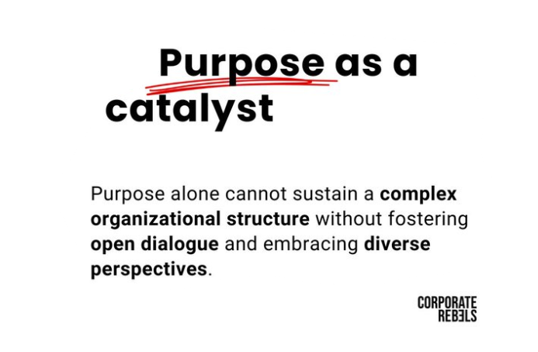
As leaders, we are told to "start with why" because purpose is critical: if we create & commit to a profound purpose, a whole host of engagement, performance & outcome benefits will result.
However, purpose isn't enough. People constantly engage in meaning-making at work & purpose is only part of that. People also need:
1) Coherence: a sense that things fit together, systems & processes work, the strategy makes sense & change is managed well.
2) Significance: experiences that require mastery & promote the joy of accomplishment.
3) Mattering: belief & understanding that the things we do are relevant to something bigger, beyond our personal desires.
No single person can decide what the ideal combination of these factors should be that will appeal to a diverse workforce. For people to be dedicated to collective purpose requires dialogue, evolution & shared meaning-making:
https://t.co/M1NiTTD8bo. By Gary Armstrong. Graphic by @corp_rebels.
There's a myth that "change has to start at the top". Change doesn't come from top-down or bottom up. Change can come from anywhere. It emanates from the centre of networks. We get to the centre through small groups, loosely connected & uniting them with a shared purpose. It is generally a more successful strategy to "grow" change by attracting people, than to "drive" change by overpowering people: https://t.co/dQgD29Zs1V. By @digitaltonto.
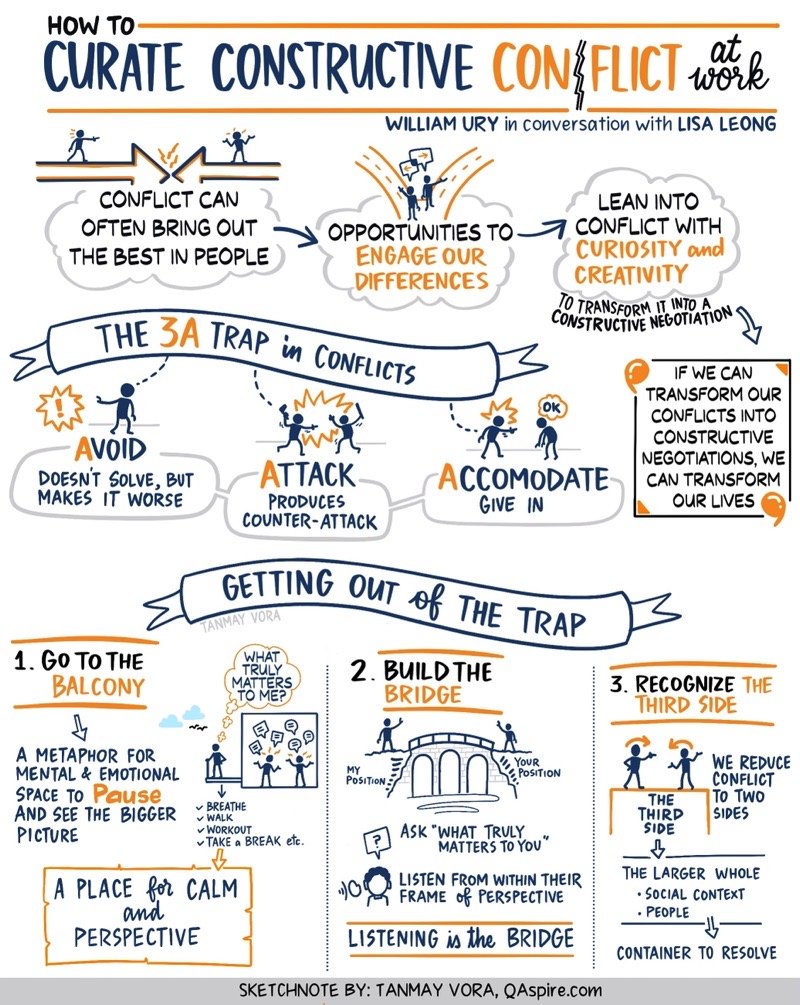
Three strategies to turn a workplace conflict into a constructive negotiation:
1) Go to the balcony: step away so that you can see the bigger picture
2) Build the Bridge: seek to understanding the other’s standpoint to uncover their real need
3) Engage the third side: get perspective from others who are part of the larger context in which the conflict is happening:
https://t.co/1o2zJEKBKV Blog & sketchnote by @tnvora, based on wisdom from @WilliamUryGTY
One of the most powerful aspects of design thinking is that it encourages us to focus very strongly on defining the problem. Far too often, we rush into change solutions with a lot of assumptions about the problem we are addressing. It means we limit the possibilities of our solutions in advance of any actual solution being developed. The most radical, breakthrough innovation is usually much more about reinventing or rethinking the problem than it is about developing solutions. So, it's usually good advice to pause, to stop the rush to solutions, and go backwards to the problem: https://t.co/g5WWwa8QlF By Jason Frasca on @Medium.
Emotions play a significant role in the leadership of change. As well as being powerful tools of persuasion and influence, emotions ground us in humanity. Yet they're often undervalued & underdiscussed. Ten emotions that can provide a driving force towards positive change:
1) Frustration: can lead to groundbreaking ideas
2) Regret: can show us what to do differently next time
3) Enthusiasm: the most effective change leaders are evangelical about the world they're building
4) Devotion: full-bodied unapologetic commitment to someone else's success
5) Happiness: the power of sparking joy at work
6) Discomfort: good things can happen when we leave our comfort zone
7) Anger: understanding what's underneath it is often a good place to start change
8) Joy: can fuel success
9) Fellowship: other people who will help us when we need to get back up
10) Grace: making space for our own flawed humanity before we can open up the circle to others
https://t.co/rQvUnl2zRs. By Frances X Frei and Anne Morriss in @HarvardBiz
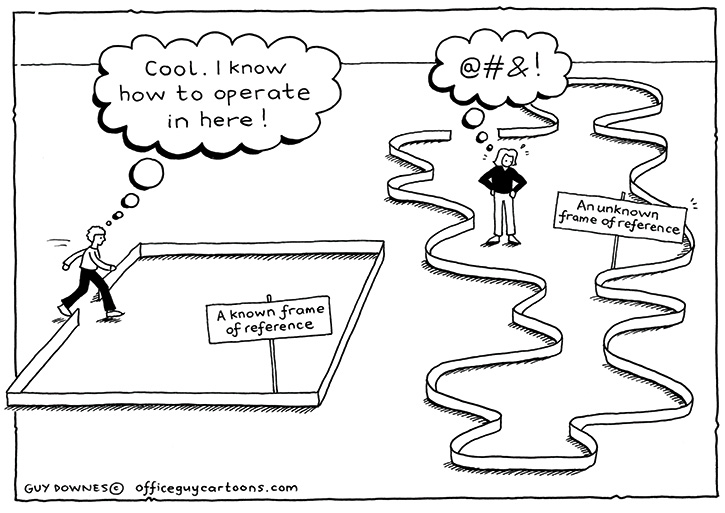
As leaders in situations of complex change & uncertainty, we know we should communicate a lot but there's a risk that we add to people's confusion or anxiety by saying the wrong thing. So we end up staying silent (what researchers call "unproductive uncertainty") and nothing moves forward because we don't know the right thing to say. Three ways to stop this happening:
1) Use the word "and" more intentionally, eg, things will be different "and" current strengths will continue.
2) Create a path between good things that happened in the past with the present, to create more certainty about the future.
3) Actively encourage small scale experiments and tests of new ways of thinking and working.
https://t.co/eWP32fUAVs. By @redcaperev. Graphic: @OfficeGuyToons
It’s been so good to have a big focus on #PrideMonth2023 at our @childrensociety TownHall #TCSLive today. We are committed to being an inclusive organisation and it was brilliant to hear from @childsoceast about supporting LGBTQ+ young people!
In this #NationalVolunteersWeek I’ve recorded a short message to say a massive thank you to the amazing people who volunteer @childrensociety and bring such energy and passion to our mission to transform children’s hopes and happiness
https://t.co/XJFX0Tl7YV
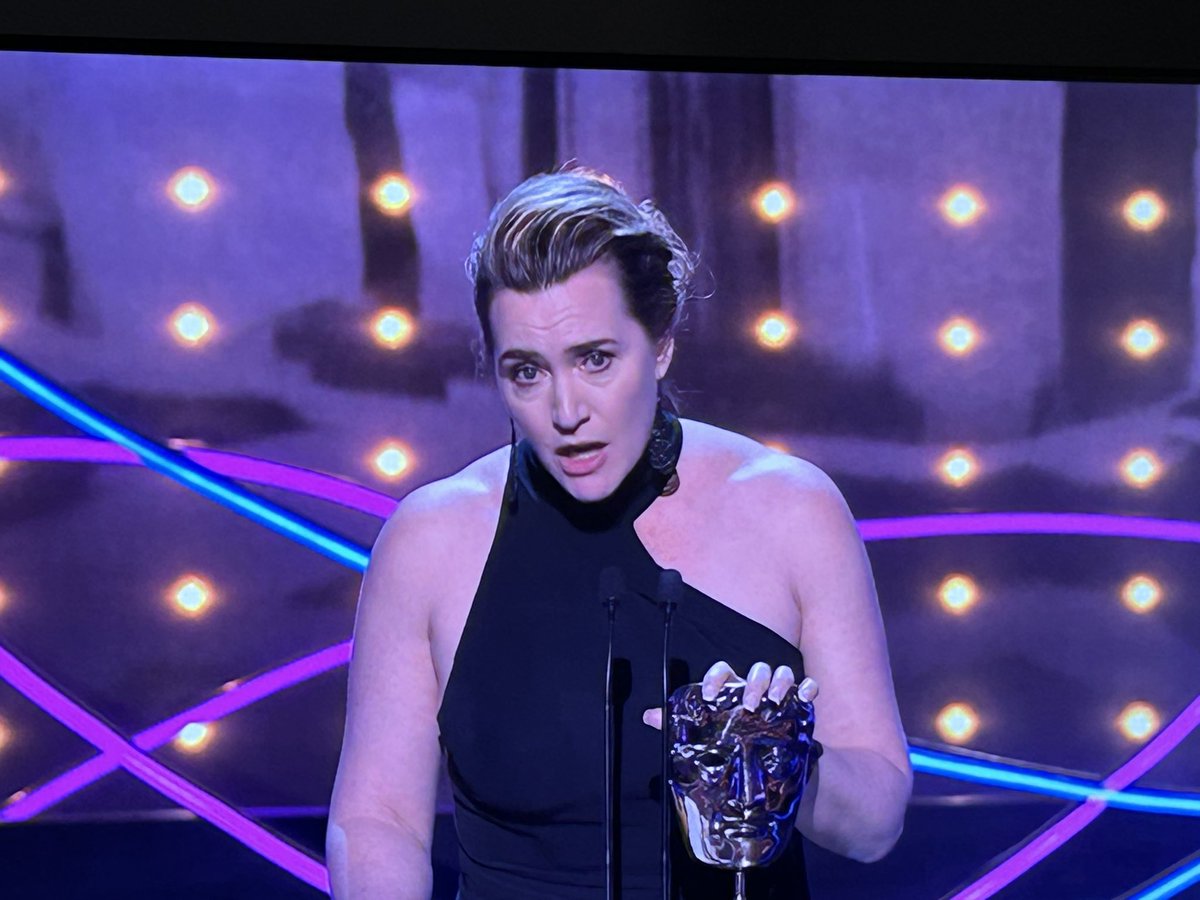
Incredible #BAFTA speech from Kate Winslett making such powerful points about keeping children safe online, and sharing how young people need support with their mental health. We @childrensociety couldn’t agree more. We will keep fighting for a safer world for our children