I’ve never believed in hope. I see it as an abstraction, closer to superstition than to reason, and I say that as someone who passed every exam he took on the 13th and none on the 14th.
This is Hope by George Frederic Watts, and it’s beautiful, which is inconvenient.
Watts gave Hope a lyre with every string broken but one, and in a letter to a friend he described her trying to get all the music she could out of that “poor little tinkle,” listening with all her might. Critics said it should have been called Despair.
I never thought she looked like she’d given up. She’s sitting on the world with one bare foot dangling, the light is on her face, and she’s bent toward that one string as if it were enough.
To hope for something good, you have to know what the bad looks like, and she seems to. It also takes believing that something or someone can change things. Sometimes I think the world survives only because somebody, somewhere, refuses to give up.
The one string made me think of Paganini. A princess at the court of Lucca, Napoleon’s sister Elisa, once asked whether one string wouldn’t be enough for his talent, and he wrote her a sonata for the G string alone. Later came a fantasy on Rossini’s "Moses in Egypt" for the same string.
There’s also a story that his strings snapped one by one during a concert until only that one was left, and some say he sometimes broke them on purpose.
I own a cat, or at least , that`s what I used to think. Now I`m beginning to suspect the cat owns me. I`m the pet.
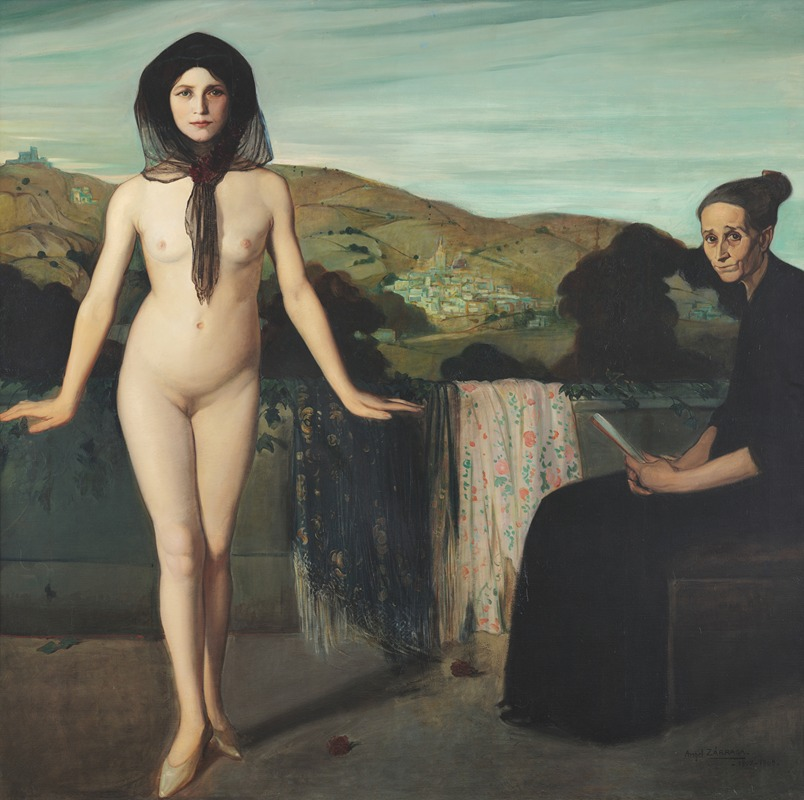
Beauty works in much the same way . It is intoxicating , whether we choose to admit it or not. Herod find himself in the same position as I do with my cat: he believes he is in control, when in reality he is powerless.
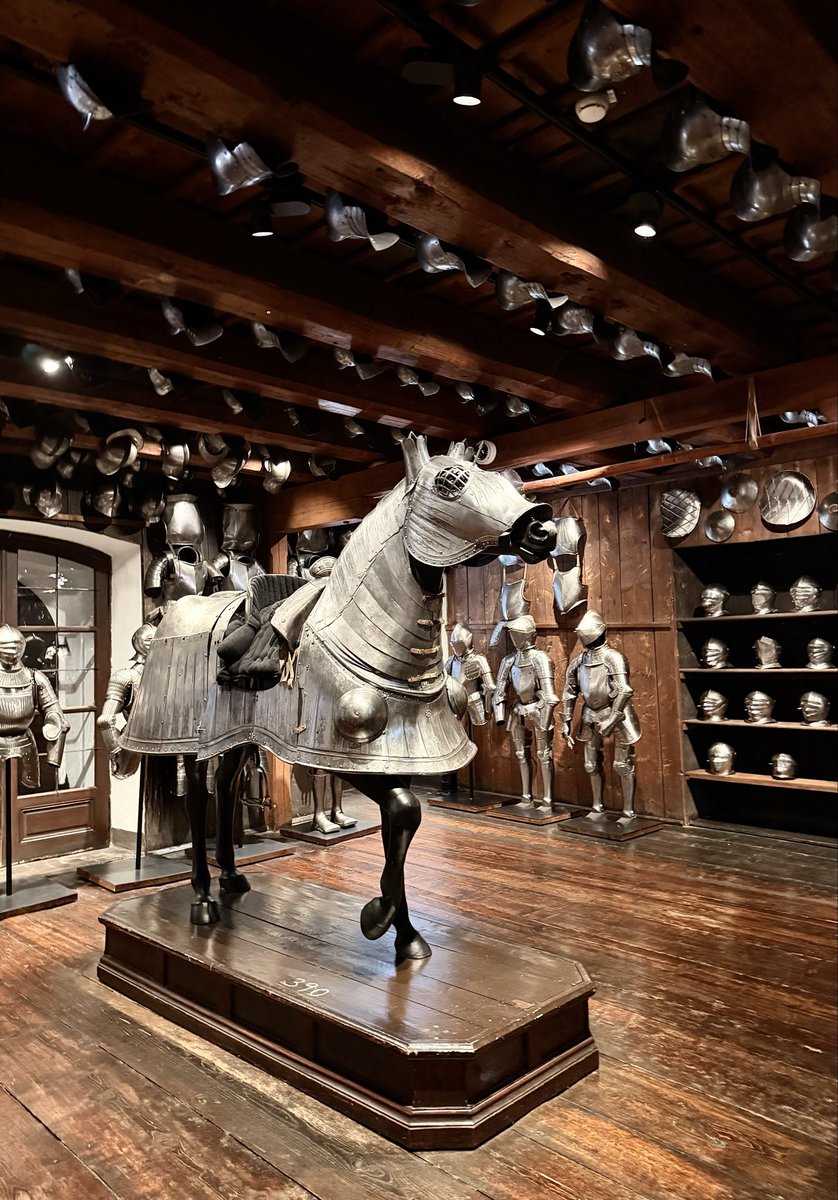
The Styrian Armory (Landeszeughaus) in Graz, Austria, is the world's largest preserved historic armory, housing approximately 32,000 pieces of battle and ceremonial weaponry, suits of armor, and artillery. A different kind of museum, but a huge part of medieval and early modern history.
The 15th to the 18th centuries were quite a turbulent time for the duchies of Styria, Carinthia, and Carniola, Habsburg territories within the Holy Roman Empire. During the 16th century, Ottoman expansion into Hungary and Croatia brought the military threat much closer to these lands. The necessity of defending the borderland with weapons ultimately led to the establishment of today’s Styrian Armory, which at its height around 1700 held nearly 190,000 pieces of military equipment.
Already in the early 16th century, Holy Roman Emperor Maximilian I maintained an arsenal in Graz.
And so it comes that along with the mass-produced items for local soldiers, there are also pieces such as this horse armor made around 1510 in the workshop of the famous master armorer Konrad Seusenhofer in Innsbruck, with elaborate ornate etchings most likely made by Daniel Hopfer of Augsburg.
Two-handed swords were used to disrupt the enemy's ranks of pikes. Because of their length of up to two meters, they had to be wielded with both hands, meaning that the soldiers who carried them required special training and apparently received higher pay. Some even received double pay, hence the name Doppelsöldner in German.
Michael Triegel, né en 1968 en ex-RDA au sein d'une famille athée, est un artiste contemporain allemand particulièrement fasciné par l'art sacré, qu'il envisage comme une voie vers la transcendance. D'abord musicien malgré lui, il s'oriente rapidement vers la peinture et reçoit de nombreuses commandes pour des églises, tout en restant athée.
Sa conversion au catholicisme trouve son impulsion décisive dans sa rencontre avec le pape Benoît XVI, dont il réalise le portrait. Il justifie ce choix par sa quête d'un mystère indicible et par la place accordée à la sensualité et à l'image dans la tradition catholique. L'Église l'a précisément choisi pour son regard extérieur, capable de peindre ses doutes et ses désirs afin de stimuler une réflexion théologique novatrice.
Son travail artistique suscite toutefois des controverses. Souvent taxé de kitsch par ses détracteurs, il réemploie les techniques des maîtres de la Renaissance en les mêlant à une esthétique moderniste pour réhabiliter la beauté, devenue tabou dans l'art contemporain. Ses modèles ne sont pas des idéaux de perfection, mais des gens ordinaires, à l'instar de ses enfants ou de ses voisins.
À rebours de la domination de l'art abstrait et conceptuel, Triegel s'impose comme une figure singulière qui réhabilite le symbolisme chrétien et la figuration classique à travers une vision introspective et personnelle de la réalité.
#MichaelTriegel #ArtContemporain #PeintureSacree #ArtReligieux #ArtisteAllemand #RenaissanceModerne #ArtFiguratif #Esthetique