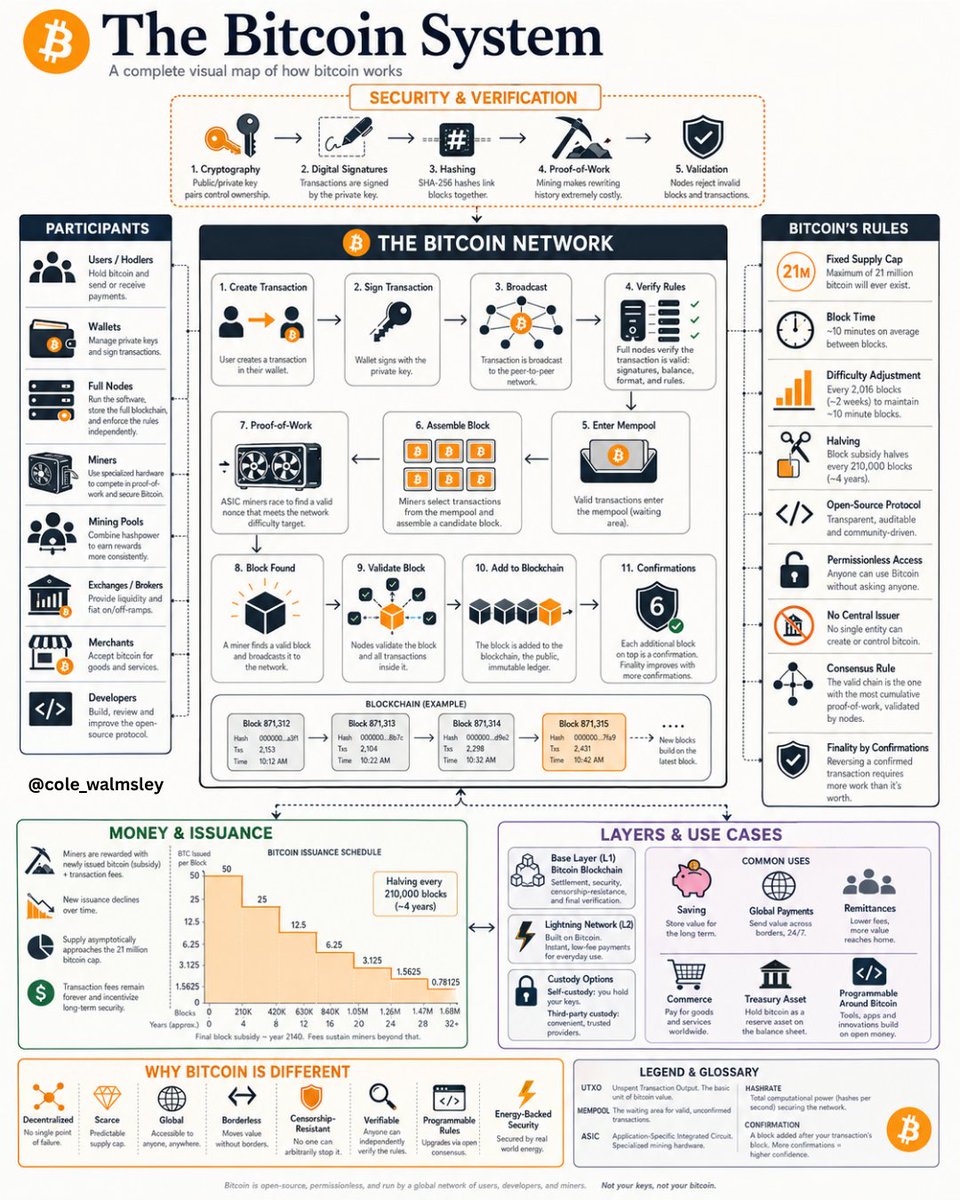
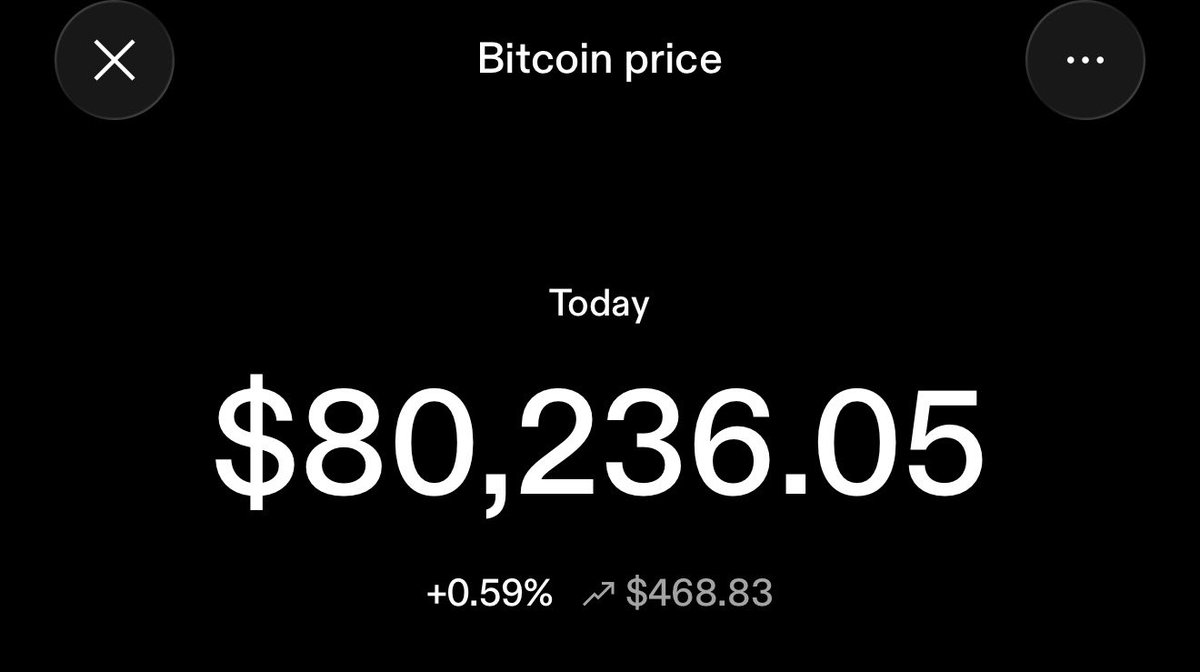
21,000,000 BTC / 8,000,000,000 humans = 0.002625 BTC each.
Bitcoin was never designed so everyone could have one. It was designed so no one could print more.
Position accordingly.
I’m sick of it. The Bitcoin gloom and disappointment. Don’t you see what is underway?
When you close your eyes, there’s one number you should see in your mind: $500T of fiat assets.
That’s how much global asset value is sitting in Bonds (fixed income) & Money (M2 fiat currency). Why does that matter?
Because that giant reservoir of ~½ the world’s asset value contains the potential energy necessary to power hyperbitcoinization.
This is what Saylor sees.
But do you see it yet?
Consider Hoover Dam. The reservoir behind it contains 12 TWh of usable hydroelectric energy – it just looks like one big lake, calm and placid. But if you stick a pipe through that damn and put a turbine generator in the middle of it and let the water run through it… you can generate enough energy to power the city of Las Vegas for 5 years.
That’s potential energy. Stored, untapped power. And by removing the barrier for the water to flow towards a lower energy state, you can harness the pent up power of the reservoir.
This same mental model works for capital.
A high Sharpe ratio is the financial analogue of a low-energy equilibrium state. Capital flows downhill, always seeking lower risk per unit of return.
(Yes, I know everyone thinks about it as “highest return per unit of risk”, but this is the equivalent and helps understand the physical metaphor)
Do you see it yet?
Think about all the capital parked in fixed income instruments or money market funds. All of this capital is parked there because it has historically provided an acceptable trade-off of modest nominal returns for minimal risk.
The entire premise of fixed income is “here’s a way to park cash in low-risk instruments that will generate a positive return slightly greater than inflation.” Adjacent to this asset category is “cash and cash equivalents” where the value proposition is somewhat smaller returns in exchange for even less risk.
And over the decades, a steady stream of capital has found its way into these asset buckets that promise low risk and modest nominal returns via future fiat cashflows.
These buckets have become a giant fiat reservoir, brimming with nearly $500T of capital.
Do you see it yet?
Along comes Strategy. @saylor realizes that much of this $500T of capital would be better off if it flowed into Bitcoin. But Saylor also recognizes that this reservoir of capital is inherently constrained. Boxed in by convention, investment mandates, risk management, volatility aversion, etc.
It won’t flow to Bitcoin on its own. It can’t – it’s walled off, dammed up.
Strategy engineers a solution. Creates a product to meet that capital where it’s at. The $500T fiat asset reservoir wants low risk, low volatility, fiat cash flows. Strategy designs preferred equity instruments that solve for these constraints, while Strategy uses the fiat capital proceeds to buy Bitcoin (which it believes will appreciate at 29% CAGR for the next 20 years).
In exchange for capital today, STRC offers 11.5% annual returns with volatility asymptotically approaching 0. The Sharpe ratio is off the charts. It breaks everything in tradfi portfolio allocation. At first glance, it seems impossible. But it works because it’s not powered by risk-taking layered on top of fiat inflation; it’s powered by the ongoing monetization of a superior monetary asset whose endogenous properties ensure its appreciation when valued in fiat currency units over time.
Saylor terms this kind of Bitcoin-powered fixed income offering “Digital Credit.”
When a commodity flows from a high-energy state to a low-energy state, it releases energy. In the case of Hoover Dam, that energy can be used to power a hydroelectric turbine. In the case of Bitcoin treasury companies with Digital Credit offerings, that energy can be used to power shareholder returns for common equity holders. This can happen in every major capital market in the world.
Do you see it yet?
Strategy has stuck a pipe through the dam. A conduit through which capital can flow out of the Fiat Asset Reservoir and towards a low-energy equilibrium state. Digital Credit offerings (e.g., STRC, SATA, and others) create that value proposition.
And what’s the Total Addressable Market (TAM)? All $500T of fiat assets in the reservoir.
The recent SpaceX IPO Prospectus recently made a splash by claiming the company had a combined $28.5T TAM, proclaiming that this was the “largest TAM in human history.”
But my essay from 2023 titled “Bitcoin’s Full Potential Valuation” already articulated how Bitcoin’s TAM is all value itself, above and beyond the usual lens of annual economic activity across industries. Saylor read it, adopted it for his presentations, and built on it with the Bitcoin24 valuation model.
The SpaceX Prospectus is wrong. Bitcoin has the largest TAM in human history.
And Digital Credit has the second largest TAM in human history – the $500T Fiat Asset Reservoir.
Do you see it yet?
Digital Credit offerings will redirect some % of the $500T Fiat Asset Reservoir into Bitcoin. This will happen because the value proposition of Digital Credit offerings is higher Sharpe than anything I am aware of in the entire $500T reservoir, inflation-adjusted.
Think of it as the Second Law of Capital Dynamics: capital flows toward assets offering superior risk-adjusted returns.
If Digital Credit ingests 1% over the coming decades, that’s $5T. It seems unreasonably pessimistic to think that only 1% of the $500T Fiat Asset Reservoir would be interested in vastly better returns with a similar (or better) risk profile.
Let’s say Digital Credit appeals to a (still-conservative) 10% of the $500T fiat asset reservoir, that’s $50T.
Bitcoin is currently a $1.5T asset.
Do you see it yet?
Digital Credit may direct a torrent of $50T of capital into Bitcoin over the coming decades. All of it bidding for a finite supply of Bitcoin.
The scale of that inflow would likely drive Bitcoin’s valuation to $10m/BTC, or ~$200T total.
Digital Credit is the plumbing of hyperbitcoinization.
This is how it happens – you’re watching the early stages of Bitcoin’s monetization megatrend.
The question is: do you see it? Or will it have to play out first?
Larry Fink likes Bitcoin. Donald Trump likes Bitcoin. Kevin Warsh likes Bitcoin. Scott Bessent likes Bitcoin. Stan Druckenmiller likes Bitcoin. Paul Tudor Jones likes Bitcoin. Elon Musk likes Bitcoin. And you and your uncle Joe think you're smart for not liking it? Get real.
In the near future 1 Bitcoin will cost 1 decade worth of labor
Right now it’s one year worth of labor
A few years ago it was one month worth of labor
Before that, a week worth of labor
Before that, a day worth of labor
Before that, a hour worth labor
Get it?
Time is money
BREAKING: THE #BITCOIN AND CRYPTO CLARITY ACT OFFICIALLY SECURES 13 VOTES NEEDED TO PASS COMMITTEE –– POLITICO
SENATOR KENNEDY CONFIRMS YES VOTE
DEMOCRATS CANNOT BLOCK THE BILL
CLARITY IN AMERICA IS HAPPENING 🚀
One of the strangest things about America 🇺🇸…
You meet people making $300k/year who are anxious, exhausted, medicated, and can barely sleep at night.
Then you go to Mexico 🇲🇽…
and see some guy running a small restaurant, barely breaking even…
but he’s laughing with friends, drinking mezcal at lunch, hugging customers, and sleeps perfectly fine at night.
Caught my wife doing laundry and stopped her immediately. I said, “Babe, it’s Mother’s Day. You don’t do chores today. Go sit down and relax; these clothes will still be here tomorrow.”
I’m such a good husband.
You can take a quarter million dollars from American banks, move to Bali, and live like a king for 3 years on $4,000 a month while the banks send you angry letters to an address you don't live at anymore
And the craziest part? Not a single thing about this is a criminal offense
$250K liquidated from 0% business credit cards through Melio and Plastiq into your business checking account. Processing fees: about $7,125 at 2.85%. Now you have $242,875 in cash sitting in your bank
Average cost of living in Bali for a baller lifestyle (private villa, scooter, eating out every meal, coworking space, weekend trips to other islands): $3,500 to $4,500/month. Call it $4,000
$242,875 / $4,000 = 60 months. 5 years of living in paradise on bank money
"They'll come after you"
Here's what they can actually do:
They can call you. Your US phone number is cancelled. You have a local Indonesian SIM card. Good luck
They can mail you. To the US address on file. You moved 9,000 miles away. The letters pile up in a mailbox nobody checks
They can report to credit bureaus. Yes. Your US credit score gets destroyed. But you're living in a country where nobody checks a FICO score. Indonesian landlords don't pull Equifax. The villa owner wants cash
They can sue you. In a US court. For a civil judgment on unsecured credit card debt. If you don't show up (because you're in Bali), they get a default judgment. That judgment lets them garnish US wages (you have none) and levy US bank accounts (you moved your money to a Wise or Mercury account that you access internationally)
They cannot have you arrested. Not paying a credit card is not a crime. It's a civil debt. There is no international arrest warrant for credit card default. Interpol does not care about your Chase Ink bill. The US embassy in Bali does not care. Nobody cares
After 7 years from the date of first delinquency, every account falls off your credit report automatically per the FCRA. You come back to the US with a clean file. Rebuild your score in 90 days with the authorized user strategy. Stack another round of business credit. The banks have no memory. Their systems only look back 7 years
"But the personal guarantee"
Business credit cards with a personal guarantee make you personally liable for the debt. That means they can pursue you personally in civil court. But the judgment is still civil. Still not criminal. And enforcement of a US civil judgment in Indonesia is... let's just say it's not something that happens. Indonesia does not have a treaty with the United States for enforcement of civil money judgments. The collector would have to re-litigate the entire case in Indonesian court. For a $250K credit card bill. They will never do this
Here's what people are actually doing:
The digital nomads who figured this out aren't even running from debt. They're running profitable online businesses from Bali while the 0% promo runs out, cycling to new cards remotely (you can apply for US business credit cards with a US address and US SSN from anywhere on earth), and paying off the old cards with business revenue. The ones who can't make the business work just... don't pay. And life goes on
A guy I know moved to Lisbon in 2023 with $180K in 0% business credit. Lived on $3,800/month for 18 months while building a marketing agency. Agency hit $22K/month by month 14. Paid every card off from revenue. Never missed the US once. Still lives in Lisbon. Still uses the same credit cards. Still at 0% on his current cycle
He didn't need to default. But he had the option. And knowing the option existed let him take the risk. The mental math changes completely when you understand that the worst case scenario for $250K in credit card debt is "my credit score sucks for a few years and I settle for pennies"
People mortgage their lives around a number on a credit report. They stay in jobs they hate. They live in cities they can't afford. They say no to opportunities because "what if I can't make the payment." Meanwhile the bank that issued the card has already priced your default into their quarterly earnings. They don't care if you pay. They've already hedged it
The bank made a bet. They bet you'd carry a balance and pay 24% interest for a decade. You took their money and moved to Bali. One of you is going to lose that bet
Am I telling you to flee the country with $250K? No. I'm telling you the actual legal consequences of credit card default, which are dramatically less severe than what most Americans have been led to believe. And I'm telling you that understanding those consequences changes how you evaluate risk, opportunity, and what you're willing to do with a 12-month window of free capital
every financial decision you've ever made was based on a fear that doesn't match the legal reality. that fear is profitable for banks. it's expensive for you
do with this information what you will
(we get 700+ score business owners $100K-$250K in 0% business funding. where you take the money is your business. link in bio)
Bitcoin isn't real! It's not physical!
Yeah? Neither is the number seven, but I bet you'd notice if your bank balance dropped by seven figures.
Let me break the spell for you: money has never been "real."
Money is a collective hallucination—a social construct we all agree to pretend exists so we don't have to barter chickens for dental work.
Gold wasn't money because it fell from heaven with "LEGAL TENDER" stamped on it.
We picked gold because it was the least-bad physical object that checked the boxes:
- Scarce
- Durable
- Divisible
- Portable
- Verifiable
It was the analog solution to our shared idea.
But here's the thing about analog: it's slow, heavy, and requires armed guards.
And here's the thing about humans: we engineer better tools.
We went from abacus to iPhone. From carrier pigeons to satellites.
From gold bars locked in vaults to Bitcoin—verified by thermodynamics, secured by energy, and transmitted at the speed of light.
Bitcoin is the digital versioin of money. Just like X is the digital version of town hall.
Gold was the best we could do for many centuries.
Bitcoin is what we can do now that we have cryptography, distributed consensus, and proof-of-work anchored in physics.
Your grandpa trusted gold because he could hold it.
You trust Bitcoin because you can verify it.
One required faith in a metal. The other requires faith in math.
Guess which one has never been debased, diluted, or confiscated by executive order?
The concept of money is a human mental construct.
Always has been. Always will be.
The only question is: do you want your construct built on scarcity enforced by governments—or scarcity enforced by code?
Gold was monetary technology for the industrial age. Bitcoin is monetary technology for the information age.
Welcome to the upgrade.
I once asked my 55-year-old father:
“What’s the biggest lie people in their 20s and 30s believe about life?”
He stayed silent for a moment.
Then he said:🧵
Time in Federal Government…
Alexander Hamilton: 5 years
George Washington: 8 years
Thomas Jefferson: 10 years
John Adams: 12 years
Bernie Sanders: 35 years
Nancy Pelosi: 39 years
Mitch McConnell: 41 years
Chuck Schumer: 45 years
It explains everything.
Founders vs Grifters