One of the most annoying criticisms of reviewer feedback many African scholars receive is about over reliance on African American scholarship. I see it as a perceived threat to established Africanist (I hate hate this word) scholarship re: The Comaroffs.
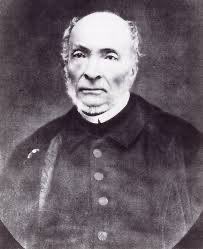
“From the very first day I met Osita (Pawpaw), I felt instant chemistry. He’s a true introvert who shies away from people. Before we even met in 2001, students in my school had already been telling me about this guy who looked exactly like me.”
— Chinedu Ikedieze AKI
Thomas Nagel dismantles relativism in one paragraph.
In a 1995 talk on reason, the philosopher exposes a fatal flaw at the heart of the relativist position:
"Claims to the effect that a type of judgment expresses a local point of view are inherently objective in intent. They suggest a picture of the true sources of those judgments which places them in an unconditional context."
In other words, the moment you say "all truth is relative," you've already made an absolute claim.
Nagel sharpens this into a precise logical trap:
"The judgment of relativity or conditionality cannot be applied to the judgment of relativity itself."
The relativist wants to stand outside all perspectives and declare that no perspective is universal. But that declaration is itself a universal perspective.
He then drives it home:
"To put it schematically, 'everything is subjective' must be nonsense, for it would itself have to be either subjective or objective. But it can't be objective, since in that case it would be false if true. And it can't be subjective, because then it would not rule out any objective claim including the claim that it is objectively false."
The argument is elegant in its completeness. If "everything is subjective" is an objective truth, it defeats itself immediately because it would mean at least one thing is objective. But if it's merely a subjective opinion, it has no power to challenge objectivity at all.
Either way, relativism collapses under its own weight.
What's striking is how often this self-refuting structure goes unnoticed in everyday debates about truth, culture, and morality. The person who says "that's just your perspective" is quietly assuming their own perspective is the correct one.
Nagel's point isn't that objectivity is easy to achieve, only that abandoning it entirely is incoherent.
Who Abolished Slavery?
You think there is no correlation between how we Africans have been engineered to look down on ourselves and to genuflect before those who oppressed us?
Who abolished slavery? Ask any fourth grader in Togo, and the answer comes without hesitation: Victor Schoelcher. Wake me from a deep sleep with that question, and my subconscious will answer before my eyes are open: Victor Schoelcher. Twenty-five years after leaving primary school, the colonial curriculum still lives in me like a reflex.
That is what was planted, and that is how thoroughly it took root. It is only the adult brain, the one lucky enough to stumble upon other literatures, other histories, other archives, that comes afterward to contest the first answer. But the first answer is always his name.
That is what colonial schools taught. That is what post-colonial schools taught. That is what is still being taught today, by people placed in power precisely to ensure that the curriculum of self-erasure continues undisturbed.
Because in Francophone Africa, the abolition of slavery has one face, and it is this French man. And in twenty years of academic formation on this continent, from primary school through university, including my own years as a history major at the University of Lome, not once, not in a single classroom, not in a single textbook, was the Haitian Revolution mentioned.
Not once were we told that enslaved Black people organized, fought, and defeated the French army, that Haïti became the first Black nation in colonial Americas and the first nation in modern history to defeat a European power that practiced slavery through the resistance of the very people it had enslaved. Twenty years of “schooling”: not one mention of that historical fact. And this is just one example, on just one subject.
Because not once throughout my entire education in Togo was I introduced to a Black mathematician, a Black physicist, a Black inventor, a Black philosopher. Not once. But for those of us who were cursed with France, the French apparently discovered more than 70% of world knowledge and wrote more than 80% of the world’s books, because our curriculum was designed to make us believe that the smartest, most resourceful, most intellectually gifted humans to have ever walked the surface of this earth were French. When the data actually tells you that France contributes approximately 2% of the world’s scientific innovation. Two percent. And we were built, from childhood, to worship that two percent as the totality of human genius. I imagine the same arithmetic applied to British, or Portuguese colonies, just with a different flag. This just one subject. There are decades of damage underneath it, layered and compounding.
Which is why it is genuinely exhausting to wake up every single day and be expected to debate, with patience and good faith, people who were produced by these laboratories of engineered ignorance and who are entirely convinced that what was done to their minds was an education.
But chale the colonizers die3 they’ve done a number on us o
The mindset
They poisoned generations
That be why till today, if we pick 10 Africans, 8 believe nothing good can come from Africa
They did a number on us ankasa ankasa
I see that JDM and GoG officials are in New York doing what Ghanaian politicians do best: performing competence and compassion. I wish to remind them that we can’t take them or their new pet project seriously until they attend to issues of inequality and justice at home.