Too much ML to keep up with? We pick what's worth a look.
Daily picks of ML papers, repos and datasets, here on X.
The week's best by email every Monday: The Weekly ML Signal → https://t.co/WmJodzPBLS
The full feed on Telegram → https://t.co/7SVtOMh30o
Every pick, archived → https://t.co/TX0jFiF7aC
Selected, not collected.
📄 Non-penetrating World Models
by Yuhang Dai, Yinwei Wu et al.
A frozen-DiT control layer that probes hidden states for collision risk, then projects unsafe commands to safe alternatives before chunk synthesis.
Key points:
• Violations drop from 74% to 16% on average over 6 world models
• LingBot-World 2.0 Task 2 violations fall 89% -> 4% in prediction mode
• Task 1 misses nearly all unsafe actions: 2.4% on LingBot-World 2.0
Frozen video world models already encode obstacle-contact information; the failure is action execution, not lack of scene understanding.
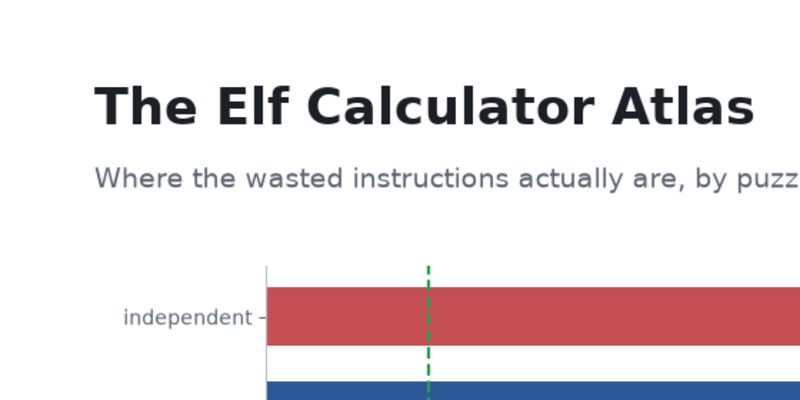
📊 The Elf Calculator Atlas (Santa 2026)
Contains 1,000 scored puzzles and 200 practice puzzles with 13 tabular features, verified programs, provenance, and 5-family labels or predictions.
Key points:
• 1,000 scored puzzles + 200 practice puzzles
• 13 features per puzzle and 5 puzzle families
• Includes a verified 133,935 submission and standalone verifier
Useful for classifying puzzle families, auditing submission legality, and analyzing where solution length waste concentrates.
📥 3.1k downloads
📄 MemOnce: A Scalable Memory Architecture for Large Language Models
by Chang Nie, Chaoyou Fu et al.
Caches compressed final-layer states, then retrieves memory once and decodes it into per-layer KV caches for continual inference.
Key points:
• 1313x lower memory-state cache than Qwen3.5-4B at 1M context
• 6.9x lower prefill latency and 3.5x higher throughput at 1M
• +5.77% over full-context Qwen3.5-4B; +18.68% over M+, +32.27% over Metis
Shows compact final-layer memories can be decoded back into useful layer-wise attention state, preserving recall while making long-context inference scalable.
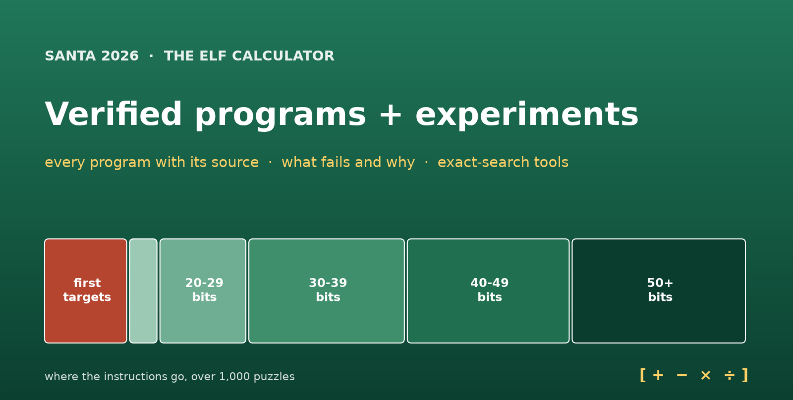
📊 Santa 2026 Elf Calculator: Programs + Experiments
Contains verified best programs for 1,000 scored arithmetic puzzles, plus official puzzle data, experiment records, and exact-search tools for program optimization.
Key points:
• 141,339 verified programs in version 1
• 1,000 scored puzzles plus practice_puzzles.csv
• Apache License 2.0 with C++ verifier/search tools
Useful for benchmarking and reproducing exact-search or program-optimization methods on Elf Calculator puzzles.
📥 44.4k downloads
💻 kyutai-labs/aura
Generates talking-head video from one portrait and speech audio chunk by chunk, using causal streaming so each chunk needs only its own audio.
Key points:
• AURA-1.3B runs at 20.7 fps at 576p on 1× H100
• Student models are 17-23× faster than 50-step teachers
• Rolling KV cache keeps memory constant on arbitrarily long streams
Shows that real-time, causal speech-to-video avatar generation is practical on a single H100.
⭐ 28 stars
📄 Posterior Matching Distillation
by Hidir Yesiltepe (@d_yesiltepe), Julius Berner et al.
A posterior-matching distillation method that replaces mode-seeking marginal matching with tilted conditional mean matching via shifted teacher inputs.
Key points:
• SDXL 4-step FID 19.14, beating DMD2's 19.20 and all other 4-step baselines
• FLUX.2 4B 4-step FID 24.12, beating base 24.58, SMD 25.89, RTDMD 31.57
• Leads SDXL on OneIG-EN 0.3426 and PickScore 22.97 among 4-step methods
Matching conditional posteriors rather than output marginals improves few-step diffusion diversity without sacrificing image quality.
@alexlee20122022 Weights, intermediate checkpoints, training data, pre- and post-training code, plus the pipelines used to build the data. Quite a rich set.
Weekly Top · Nov 16 – Nov 22
Follow for next week’s top
📄 Paper: K2-Horizon: A Frontier Fleet of Open Source Language Models
Unlike most open LLM releases, it ships six fully open models up to 375B-A23B with sparse value-routing MoE and draft-free decoding adapters delivering 2.2x speedup.
💻 Repo: mit-han-lab/pear
Targets robot control with zero-demonstration, sim-only RL for an open 27B reasoning model, then deploys the same stack to real robots.
📊 Dataset: ropedia-ai/Ropedia-Xperience-2
Unlike larger egocentric-only datasets, it aligns LiDAR scene scans, mocap, IMU, and task annotations in one shared metric space.
Full issue: https://t.co/4zkxbjcZDS
New ML comes out faster than anyone can follow. We go through it and keep what's worth your time.
In Q3: 1,058 new datasets, 39 made our weekly tops.
Don't want to miss anything? Follow for daily picks, or subscribe for a free weekly email:
https://t.co/ajyC9ONrf8
📄 Late Entry in Looped Language Models
by Ziqi Jin, Jiaxi Li et al.
Uses late entry instead of early exit: tokens run only final recurrent passes over deep context, while skipped passes are completed and verified asynchronously.
Key points:
• 5.2x exact speedup on Ouro-2.6B; +26% vs K=4 block on GSM8K
• 8.4x exact speedup at T=64 on Huginn-3.5B; +153% vs K=64 block
• 6.8x lossy speedup on Ouro-2.6B; +16.9 pts over trained early exit
In looped LMs, deep cached context is more valuable than spending the same pass budget on token-local early passes.
📄 Game2Player: Scaling Gameplay Experience for Visual Agents through Environment-Player Co-Development
by Xirui Jiang, Yuxi Chen et al.
Builds verifiable game tasks from existing web games via builder-player co-development, then trains a pixel agent from code and VLM play with progress-weighted SFT.
Key points:
• PlayerBench progress improves 14.3% to 31.2% with Game2Player-9B
• GameWorld progress rises 30.0% to 53.1% on an external benchmark
• Player reports raise correct tasks 65%→72% and solved tasks 34→46 in 20 rebuilds
Shows that jointly repairing environments through play and weighting supervision by verified progress can scale useful gameplay data for visual agents.