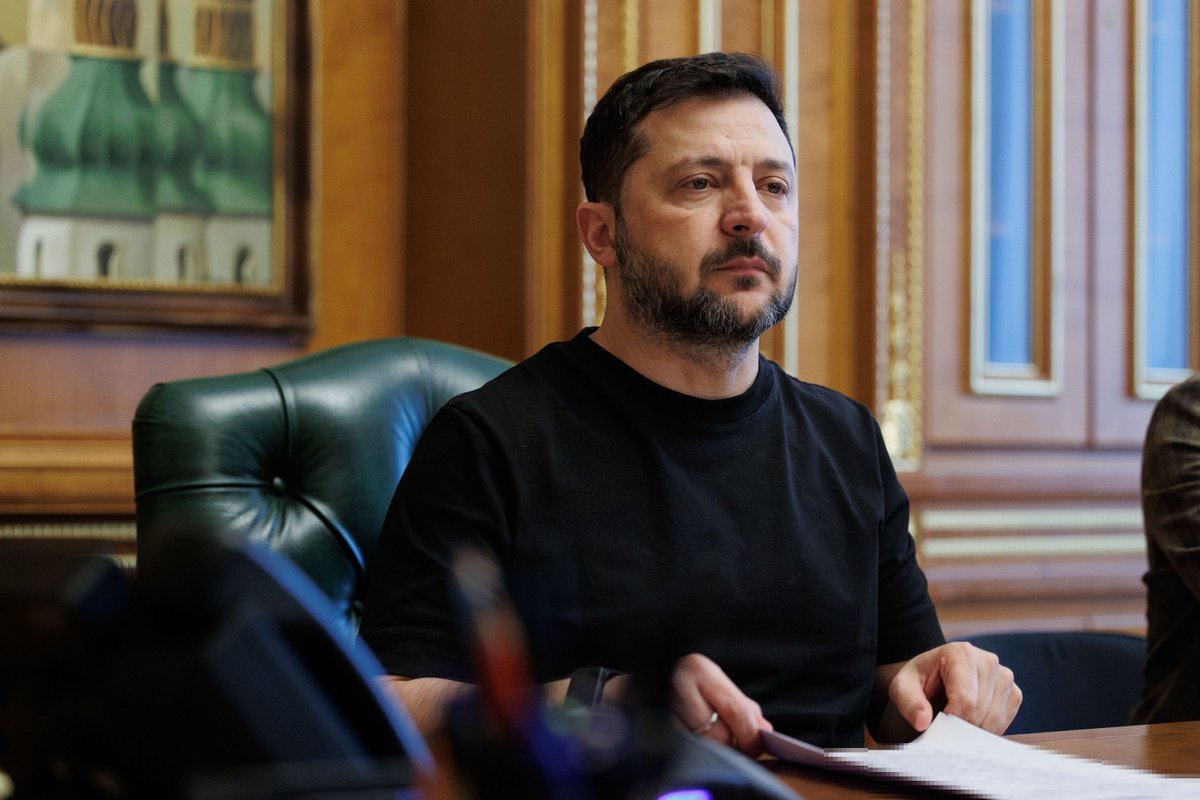
Decades from now, we will look back on this conflict as a watershed event that fundamentally reshaped what had been bedrock principles of modern geopolitics, writes Kenneth M. Pollack. https://t.co/NkRjWsI0MQ
Google spent 20 years teaching every small business in America to check a dashboard and then pay to make the numbers go up. As of today, ChatGPT shows business owners how many times it brought their store up to customers, and OpenAI ran that whole 20-year playbook in a single day.
Here's how Google did it. In March 2005 it launched a free tool called Local Business Center. You claimed your shop, Google mailed a postcard with a PIN to your actual address, and you typed it in to prove you were real. Five years later about 4 million businesses had done it. In 2010 Google renamed it Places, and in that same release it started selling a little yellow ad badge for your listing at $25 a month.
Then it kept turning the dial for another fifteen years. Last winter, paid listings in the Google Maps box at the top of mobile search went from under 3% of tracked searches to about 22% in roughly two months.
OpenAI didn't bother with the slow part. You claim your business and verify it with a phone number, email, website or your Shopify account. You get a dashboard showing how often ChatGPT mentions you, how many people clicked through to your site, and what people were asking about when you came up. If you're an eligible US store, you can build a little AI sales rep that answers shoppers' questions. And you can pay to make that sales rep the place a ChatGPT ad sends people.
The order is what got me. The dashboard comes first, and it's free. OpenAI's head of monetization told Digiday that claiming your business "should not have an impact" on how often ChatGPT recommends you. So you log in, you see your number, and the free stuff doesn't really move it. The ad button sits one tab over.
If you're wondering who this launch is really for, look at the ad business. ChatGPT ads crossed a $1 billion run rate in under 200 days, and OpenAI says more than 100,000 advertisers have already run campaigns. Keeping that going means signing up millions of businesses that have never bought an ad in their lives, and a claimed profile gives OpenAI a verified account for every one of them plus a reason to log in every week.
You should still claim yours. OpenAI says a clean product feed with current prices helps ChatGPT match you to more of the right conversations, and that part is free. Just know which button they built the page around.
Google needed postcards and five years to get 4 million businesses in the door. My guess is OpenAI blows past that number a lot faster, because every owner who logs in sees how many times they came up this week, and nobody looks at a number like that and hopes it stays flat.
“India's poverty reduction is the second biggest in world history, just behind China's. India is now growing at around 6.5%, which is about the same as China in 2014. Manufacturing is growing right along side services.”
جب نواز شریف اور کلنٹن ملے تو کھانے کے بعد کلنٹن نے نواز شریف کو بتایا: ”میں تو اپنی کابینہ کے ارکان کی اہلیت و قابلیت کا امتحان لے کر انہیں منتخب کرتا ہوں۔“
یہ سن کر نواز شریف بڑے حیران ہوئے اور پوچھا: ”آپ ان کی اہلیت و قابلیت کا امتحان کیسے لیتے ہیں؟“
مبینہ طور پر یہ بھی کہا جاتا ہےکہ
بل کلنٹن نے کہا: ”ایک منٹ، میں ابھی دکھا دیتا ہوں۔“ کلنٹن نے میڈلین البرائٹ کو بلایا اور کہا: ”میڈلین! مجھے بتاؤ وہ کون ہے جو آپ کے والد کی اولاد ہے اور آپ کی ماں کا بچہ ہے، مگر آپ کا نہ بھائی لگتا ہے نہ بہن؟“
میڈلین نے کہا: ”بہت آسان ہے، وہ میں ہوں۔“
کلنٹن نے میڈلین کی تعریف کی۔ نواز شریف بہت متاثر ہوئے، اور جب اسلام آباد آئے تو امریکی کابینہ کے ارکان کی ذہانت کے بہت معترف تھے۔
انہوں نے اپنی کابینہ کی ذہانت جانچنے کے لیے سرتاج عزیز کو بلایا اور کہا: ”سرتاج عزیز! بتاؤ وہ کون ہے جو آپ کے والد کی اولاد ہے اور آپ کی ماں کا بچہ ہے، مگر آپ کا نہ بھائی لگتا ہے نہ بہن؟“
سرتاج عزیز نے سوچا، جواب نہ بن پڑا تو کہا: ”مجھے سوچ بچار کے لیے 24 گھنٹے عنایت کر دیں۔“ نواز شریف نے کہا: ”پرانے ساتھی ہو، تمہیں یہ مہلت دے دیتا ہوں۔“
سرتاج عزیز دیکھنے میں بھی ”پرانے“ ساتھی ہی لگتے ہیں، پھر ان کا سر بھی تاج لگتا ہے۔ بہرحال، انہوں نے بہت سوچا مگر جواب نہ بن پڑا…
انہوں نے کیبنٹ سیکریٹری، چیف سیکریٹری اور جوائنٹ سیکریٹری کو بلوایا؛ پورا بجٹ تیار ہو گیا مگر جواب نہ ملا۔ 20 گھنٹے گزر گئے۔
سرتاج عزیز بڑے فکر مند ہوئے۔ صرف چار گھنٹے بچے تھے۔ انہوں نے بالآخر جارج فرنینڈس کو فون کیا اور پوچھا: ”وہ کون ہے جو آپ کے والد کی اولاد ہے اور آپ کی ماں کا بچہ ہے، مگر آپ کا نہ بھائی لگتا ہے نہ بہن؟“
جارج فرنینڈس نے کہا: ”بہت آسان، وہ میں ہوں۔“
سرتاج عزیز خوش ہوئے۔ انہوں نے نواز شریف کو فون کیا: ”وزیر اعظم صاحب! مجھے اس سوال کا جواب مل گیا ہے اور جواب ہے ’جارج فرنینڈس‘۔“
اس پر نواز شریف نے ناراض ہوتے ہوئے کہا: ”یہ جواب غلط ہے، صحیح جواب ہے میڈلین البرائٹ!“
The next trillion-dollar company will come from the right founders, and Paul Graham says the idea matters less than the person behind it!
He answers a direct question on where giant companies come from.
His answer in four lines:
1️⃣ The source: formidable founders
2️⃣ Startup ideas are very mutable
3️⃣ Good founders probably work on promising ideas
4️⃣ 20 years of data say founders look the same as before
He expects the next generation of founders to resemble the last two decades’ founders, and he says robots won’t take their place.
Takeaway: back the person, and expect the idea to evolve.
On paper, the planes leaving this airport in Nepal can't take off. The runway is too short for air this thin. They do it anyway every morning, because the whole runway tilts downhill toward a 2,000-foot cliff and gravity gives them a free push.
This is Lukla, where most Everest trips start. The runway is 527 meters long, about a third of a mile, and it sits at 9,334 feet.
Up there the air is about a quarter thinner than at sea level. A wing has to move roughly 15% faster to make the same lift, so the plane needs about a third more energy before it can fly. And the engines are breathing that same thin air.
De Havilland's own spec sheet says a Twin Otter, the plane in this video, needs 454 meters to take off and clear a 50-foot obstacle. That's at sea level. Put the same loaded plane on flat ground at Lukla's altitude and it wants a lot more runway than Lukla has.
The hill makes up the difference. An 11.7% grade means gravity shoves the plane forward with about 11.6% of its own weight the whole way down. On a fully loaded Twin Otter, that's around 1,450 pounds of push you won't find anywhere on the spec sheet.
For context, airport runways are normally kept to a 1 or 2% slope. Lukla's is about twice the steepest grade the US allows on an interstate.
Landings run it backwards. Planes touch down at the low end and roll uphill, so the hill does the braking.
Then there's the cliff. That 50-foot number on the spec sheet exists because at a normal airport you have to climb over trees or buildings past the end of the runway. At Lukla the ground just falls away about 2,000 feet into the river gorge below, and there's nothing to clear. Watch the end of the runway in this one.
Back in 1964, a decade after he summited Everest, Edmund Hillary was building schools in the area when some Lukla farmers came to his team with a sloped patch of scrub and potato field to sell. They swore the wind always blew the right way for planes. Hillary later wrote that he had no clue how farmers who'd never seen an airfield could know that, but they turned out to be right.
More than 100 Sherpas cleared it by hand with khukuris and mattocks. Boulders too big to move got buried in pits. Hillary still didn't think the dirt was firm enough to land on, so he bought a pile of chang, the local barley beer, and paid 50 Sherpas to link arms and stomp-dance back and forth across the field. They kept it up for two days, and by the end the ground was packed hard and smooth.
The first plane that landed there needed full power just to taxi up to the top.
They didn't pave it until 2001. The place people call the world's scariest airport started as a hillside flattened by a two-day Sherpa dance party, and the tilt nobody bothered to fix is still doing the heavy lifting on every flight out.
Applying to Harvard and being forced to study theoretical physics: that’s what a startup is like, per Paul Graham. SHARP!
Early in YC’s history, people started applying for the prestige.
Graham’s logic:
1️⃣ Harvard has easy majors to slide through
2️⃣ Startups have no easy major
3️⃣ It takes hard work, cleverness and determination
4️⃣ Easier ways to get a credential exist
Chasing the badge means missing what the job demands.
Would you start a company if there were no credential at the end?
For over two decades, Mohsen Fakhrizadeh was the single most protected and elusive figure in the Islamic Republic of Iran:
A brigadier general in the Islamic Revolutionary Guard Corps (IRGC) and professor of physics, he served as the covert director of Project Amad, Iran's clandestine nuclear weapons development program.
International intelligence agencies dubbed him "the Iranian Oppenheimer." In a famous 2018 televised presentation detailing the seizure of Tehran's nuclear archive, Israeli Prime Minister Benjamin Netanyahu pointed directly at his photograph and issued a chilling public directive: "Remember that name, Fakhrizadeh."
Aware that Mossad had already eliminated multiple nuclear scientists in motorcycle drive-by magnetic bombings between 2010 and 2012, the IRGC placed Fakhrizadeh under the highest level of state security, shielding his routes with elite bodyguards, armored convoys, and electronic countermeasures.
On Friday afternoon, November 27, 2020, Fakhrizadeh and his wife were driving their black, armored Nissan Teana sedan toward their weekend villa in Absard, an orchard-filled resort town fifty miles east of Tehran:
Leading and flanking the sedan were three armored escort vehicles carrying heavily armed IRGC bodyguards.
As the convoy passed a boulevard roundabout on Mostafa Khomeini Boulevard, a blue Nissan Zamyad pickup truck was parked under a row of trees near a U-turn.
Resting concealed under tarpaulins and construction debris in the bed of the pickup was a custom-engineered FN MAG 7.62mm machine gun mounted on a robotic, gyroscopic motorized pan-tilt apparatus.
The execution relied on futuristic autonomous robotics:
No human snipers or hit-team operators were present anywhere near the ambush site, eliminating the risk of capture or firefights.
The robotic weapon was connected via a secure, encrypted satellite communications link to an overseas control room thousands of miles away.
To overcome the 1.6-second satellite transmission latency (the time delay between what the camera saw, the operator pulling the trigger, and the gun firing), engineers integrated real-time computer vision and artificial intelligence:
Cameras mounted on the apparatus recognized Fakhrizadeh’s facial features as the sedan approached.
The algorithmic fire-control system calculated vehicle speed, distance, wind drift, and the 1.6-second communication lag, adjusting the barrel's micro-motors continuously to lock onto the driver's side windshield.
As the sedan slowed for a speed bump, the robotic turret opened fire:
A rapid burst of armor-piercing rounds struck the hood and shattered the windshield directly in front of Fakhrizadeh.
When Fakhrizadeh pulled the car over and opened the door, a second automated burst struck him in the torso and spine.
His wife, seated right beside him in the passenger seat, was completely untouched by gunfire, demonstrating the surgical precision of the computer-aimed system.
Seconds after the volley ended, a blue explosion tore through the Nissan pickup truck: secondary charges rigged inside the vehicle detonated to incinerate the robotic camera array, microprocessors, and firing apparatus.
Although the blast destroyed the truck, key components of the heavy mounting bracket and charred satellite links survived the fire, enabling Iranian investigators to reconstruct how the strike occurred without a single foreign boot touching the ground that afternoon.
I spoke with Prime Minister of India Narendra Modi @narendramodi and briefed him on the latest diplomatic developments. We are actively preparing on every item on the agenda for the meeting in Abu Dhabi. Ukraine has always taken a constructive approach, and Russia must show the same readiness to de-escalate.
The Prime Minister has said more than once, including directly to the Russian leader, that now is the time to end the war, not to continue it.
It is important that India identify what steps it can take and what dialogue it can pursue with other leaders to help bring the war to an end. Food security could be one such area. We discussed Russia's blocking of grain exports via the Black Sea. India is ready to mediate in establishing food corridors, and we are counting on these efforts to continue.
Russia must understand that the global economy and hundreds of millions of people around the world are suffering because of blocked sea routes. We agreed that our teams will stay in touch on these and other bilateral issues.
A wild donkey in the Arizona desert will dig a well six feet deep with its front hooves, and for half a century the United States government has been shooting it as a threat to the desert.
August on a dry wash in the Sonoran. The creek has been gone since May. The sand is hot enough to cook on and every animal for miles is standing in what shade it can find, waiting for a rain that is not coming. A burro walks down the wash, stops at a bend for no reason anyone else can see, puts its head down and smells. Then it starts digging. Front feet, one after the other, like a dog after a bone, until it is in up to its shoulders and the bottom of the hole goes dark and wet.
It drinks and walks off.
Within the hour there is a queue. Mule deer. Javelina. A bobcat. A scrub jay standing on the rim. In 2021 a biologist called Erick Lundgren published the count in Science: 59 species of vertebrate drinking at donkey wells, 64% more species than at the dry stretches of the same streams, and in the driest months the donkeys were raising the amount of open water in the desert by 300% on average and by up to 1,450%. When the wells were abandoned, cottonwood and willow seedlings came up in them. The donkey had been planting the riverbank.
Asked about his methodology, the donkey had another drink and left.
When a beaver builds a pond, a film crew is sent. When a donkey digs a well, the Park Service sends a marksman. The burros came up from Mexico with the Spanish and the prospectors, carried the ore out of every mine in the West, and were turned loose when the mines closed. Then they were reclassified. In 1979 the National Park Service planned to shoot all 577 in the Grand Canyon. A writer called Cleveland Amory raised more than $500,000 and lifted 582 of them out by helicopter, slung underneath, the most expensive taxi ride a donkey has ever taken. Death Valley shot 400 between 1987 and 1994.
Lundgren said that when he started, people did not think a donkey digging a hole was worthy of scientific attention.
The animal was listed as a threat to the desert's water.
It was the one bringing the water up.
Fifty-nine species knew.
The ones with the rifles had never sat by the hole.
Every night at 10pm, they turn Niagara Falls down by half.
This is a real thing, written into a treaty the US and Canada signed in 1950. It says at least 100,000 cubic feet of water per second has to go over the falls from 8am to 10pm during tourist season. After 10pm the number drops to 50,000. From November through March it's 50,000 all day, so anybody visiting this week is seeing the off-season version.
The rest of the river gets pulled off before it ever reaches the edge. A control dam upstream has gates that get adjusted on that schedule, and the water goes into giant tunnels under the city that feed two power plants, Sir Adam Beck on the Canadian side and Robert Moses on the New York side. At night about three out of every four gallons in the Niagara River never go over the falls at all.
Which left the engineers with an awkward problem.
If you cut the water in half and spread it across the same old cliff edge, it looks thin. You'd see bare rock poking through on the sides, and tourists would notice. So in the 1950s they reshaped the Horseshoe Falls itself. They chopped 355 feet off the length of the edge, filled in both ends with rock, dug out parts of the riverbed and steered more of the water toward the middle. Their own planning documents called the goal an "impression of volume." When they tested it on scale models, smaller cuts looked fine at the daytime flow and fell apart at the nighttime one.
Some of the land they filled in got turned into viewing areas. Terrapin Point on the American side is one of them, so a lot of people taking their Niagara Falls photo there are standing on what used to be Niagara Falls.
Does the water ever actually stop? It did once. In March 1848 a big windstorm shoved Lake Erie ice into the mouth of the river and jammed it shut, and the falls dropped to a trickle for a day and a half or so. One local business went out on the exposed riverbed and blasted out rocks that had been tearing up boats. Since 1964 they've strung an ice boom across the lake outlet every winter so it can't happen again.
Abraham Lincoln wrote about the falls later that same year. His line was "never dried, never froze, never slept, never rested." He wrote that about six months after it went dry.