Brand Building | Intersection of Marketing & PR | 2 times Sabre Gold Winner l Jim Morrison | Crazy about Trains I Amrohi - The Land of Jaun Elia & Kamal Amrohi
You can now install Claude artifacts as desktop apps on Mac and Windows.
Ask Claude to build an artifact, click "Install as app", and open it like any other app. It can use your connectors and, if you allow it, send notifications or add a menu bar item.
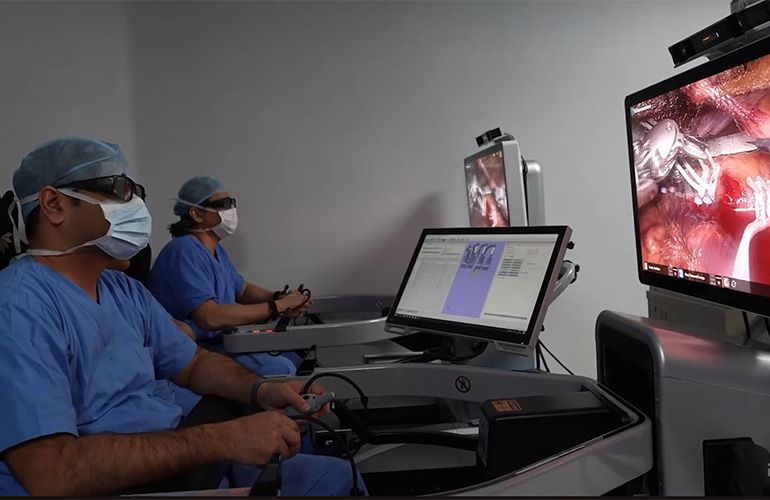
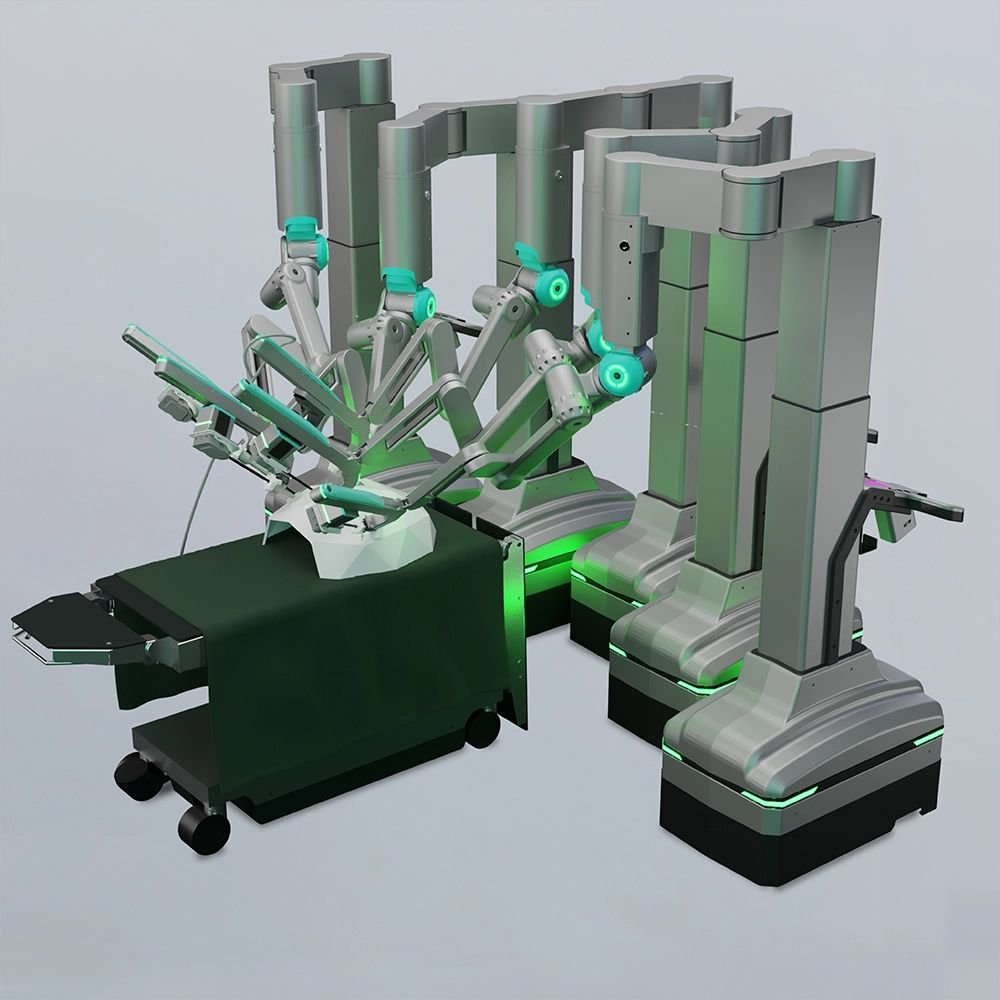
In Gurugram, 2 surgeons did a heart bypass without opening the chest / stopping the heart: 5 robotic arms, 2 consoles, a world 1st. The robot was Indian, SSi Mantra.
Why is this so quiet?
2 surgeons, Dr. Nitin Kumar Rajput of Medanta Hospital, Gurugram and Dr. Lalit Malik of Manipal Hospital, Jaipur, performed a heart bypass on a beating heart.
In such procedures, called TECAB, the bypass is done entirely through small ports with robotic arms. This time, all 5 arms of the robot worked together, driven by the 2 surgeons from 2 separate consoles, in complete sync. A stabiliser held just the target spot steady while the rest of the heart pumped on.
This is the world's 1st dual-console, beating-heart TECAB. The patient's recovery is encouraging.
And the robot was not imported. It was the SSi Mantra, built in India by SS Innovations, a company founded by cardiac surgeon Dr. Sudhir Srivastava, who guided the team.
Robotic surgery is costly mostly because the robots are. SS Innovations says it exists to change exactly that, to make world class robotic surgery affordable and accessible.
The announcement is the company's, dated 19 November. A journal publication is yet to come.
Names to remember: Dr. Rajput, Dr. Malik and Dr. Srivastava. 🙏🙏
Sources: SS Innovations, MassDevice, Mint
Photo 1: Drs. Nitin Kumar Rajput and Lalit Malik performing a beating-heart TECAB procedure with the SSi Mantra. Credit: SS Innovations via MassDevice.
Photo 2: The 5 arm SSi Mantra cart, official render from SS Innovations.
BREAKING: A mathematician at Anthropic claims to have used the company's AI to solve the Riemann hypothesis, the most notorious open problem in all of math
https://t.co/nEXAyIkvSt
You're seeing these terms everywhere on X but don't know what half of them mean.
Here's the full dictionary:
1. GOAT — Greatest Of All Time
2. POV — Point Of View
3. FOMO — Fear Of Missing Out
4. YOLO — You Only Live Once
5. LOL — Laugh Out Loud
6. OMG — Oh My God
7. WTF — What The Fuck
8. IDK — I Don't Know
9. TBH — To Be Honest
10. NGL — Not Gonna Lie
11. IMO — In My Opinion
12. FR — For Real
13. IYKYK — If You Know, You Know
14. TL;DR — Too Long; Didn't Read
15. SMH — Shaking My Head
16. ICYMI — In Case You Missed It
17. BRB — Be Right Back
18. BTW — By The Way
19. DM — Direct Message
20. IRL — In Real Life
21. RN — Right Now
22. LMK — Let Me Know
23. ASAP — As Soon As Possible
24. JK — Just Kidding
25. NVM — Never Mind
26. LMAO — Laughing My Ass Off
27. AFK — Away From Keyboard
28. FYP — For You Page
29. BFF — Best Friends Forever
30. TMI — Too Much Information
31. W — Win / Winning
32. L — Loss / Losing
33. RATIO — Reply gets more engagement
34. MID — Average / Not impressive
35. SUS — Suspicious
36. BET — Okay / Agreed
37. BASED — Confidently holding a view
38. NO CAP — No lie
39. CAP — A lie
40. RIZZ — Charm / Game
41. SLAY — Did something impressively well
42. ATE — Did something extremely well
43. FIRE — Excellent
44. COOKED — In trouble / Finished
45. LET HIM COOK — Let someone continue
46. DELULU — Delusional
47. VIRAL — Spreading rapidly online
48. MEME — Shareable internet joke/idea
49. CLICKBAIT — Designed to make you click
50. GOATED — Extremely great
51. STAN — Super fan
52. FLEX — Show off
53. AMA — Ask Me Anything
54. OP — Original Poster
55. OC — Original Content
56. NSFW — Not Safe For Work
57. ROFL — Rolling On the Floor Laughing
58. FRFR — For Real, For Real
59. ONG — On God
60. ISTG — I Swear To God
61. IJBOL — I Just Burst Out Laughing
62. AFAIK — As Far As I Know
63. WBU — What About You?
64. HBU — How About You?
65. G2G — Got To Go
66. TTYL — Talk To You Later
67. HMU — Hit Me Up
68. OFC — Of Course
69. FYI — For Your Information
70. TBF — To Be Fair
71. IDC — I Don't Care
72. IK — I Know
73. IKR — I Know, Right?
74. TIL — Today I Learned
75. WYM — What You Mean?
76. WDYM — What Do You Mean?
77. ILY — I Love You
78. PFP — Profile Picture
79. Mutuals — People who follow each other
80. OOMF — One Of My Followers/Friends
81. Lurker — Watches without interacting
82. Troll — Provokes people online
83. Bot — Automated account
84. Receipts — Proof / Evidence
85. Clapback — Sharp response
86. Callout — Public criticism
87. Bait — Content designed to provoke
88. Ratioed — Reply outperforms the original
89. Trending — Currently popular
90. Touch Grass — Spend less time online
91. Doomscrolling — Endless negative scrolling
92. Ragebait — Content designed to make people angry
93. YAP — Talk excessively
94. YAPPER — Someone who talks a lot
95. VIBE — Overall feeling / atmosphere
96. LOWKEY — Somewhat / Secretly
97. HIGHKEY — Openly / Strongly
98. LOCKED IN — Fully focused
99. GLOW UP — Major positive transformation
100. HIT DIFFERENT — Feels especially good/different
Save this.
You'll need it.
Dario Amodei
Studied Physics at Stanford.
Earned a PhD in biophysics at Princeton.
Worked at Baidu, then Google Brain.
Joined OpenAI in 2016.
Helped to discover scaling laws.
Helped lead GPT-3 and become VP of Research.
Discovered that large models get predictably smarter, and predictably more dangerous.
2020: walks out of OpenAI with six senior colleagues over disagreements on AI safety and governance.
2021: Starts Anthropic with his sister Daniela with a focus on AI safety
2022: Receives a $500M investment from Sam Bankman-Fried. (which would be worth over $30 billion today if he wasn't in jail)
Holds Claude over safety concerns.
Looked on as ChatGPT dominated the entire market
2023: Claude finally ships.
He tells Congress AI could be catastrophic and pushed for regulation
Raised billions from various companies and became a legit competitor to Chatgpt.
Paid a $1.5B settlement for training Claude models with copyrighted materials.
Continued to bring billions in compute online
Today: Claude has a $81B revenue run rate vs OpenAI's reported ~$50B.
ANT closes day one at $97.17 for a 1.27 trillion dollar valuation.
Crazy that he started as Sam Altman's employee!!!
Former NSA hacker David Kennedy reveals he’s actively responding to a live breach where an AI “agent swarm” bypassed two-factor authentication, stole data, and encrypted a company's entire system: “This all took 14 minutes. 14 minutes. Never seen anything that fast before.”
Firstly, from @AdaniOnline congrats to @AnthropicAI
Second,
Cross-Regime Category Error: Why Legacy Bankers Can’t Price Synthetic GDP
Comparing Anthropic’s $1.5T valuation to India’s top 10 corporates as "undervaluation"vs. "catching up" is a textbook category error in asset pricing. It benchmarks a convex call option on synthetic Labor in a new economic substrate against discounted cash flow (DCF) claims on a human-constrained economy.
1. The Ceiling of Human-Economy Equities
Traditional blue chips (banking, energy, staples) are linear yield vehicles anchored to biological human GDP. Growth is capped by demographics, credit penetration, physical consumption, and waking hours—priced via mean-reverting multiples (P/E, EV/EBITDA).
Calling them "undervalued" next to frontier AI is like calling Mumbai real-estate undervalued next to the discovery of thermodynamics.
2. Anthropic as a Call Option on Synthetic GDP (Yₛ)
Cognitive labor is decoupling from human population growth. Frontier models aren't SaaS tools; they are the "infrastructure of intelligence" for a parallel synthetic workforce (Yₛ) operating above human output (Y_Total = Yₕ + Yₛ). At $1.5T, markets aren't capitalizing EBITDA. Using Black-Scholes intiution Wall Street is pricing implied volatility and right-tail convexity of a 24/7 digital workforce scaling at the marginal cost of compute.
@AdaniOnline , we are already operationalizing this reality through our cobotic workforce model—a dual-track organizational architecture weaving human creativity with autonomous AI agents and robotics across our utilities, ports, and operations, upskilling 11000+ professionals annually to lead a ybrid industrial paradigm.
3. The 1999–2020 Precedent: Euphoria Still Underprices Regime Shifts
In 1999, Mary Meeker and Dow 36,000 were mocked as peak-bubble delusion when global e-commerce was ~$150B, internet penetration was 5% (277M users), and $1T tech firms seemed impossible. When the NASDAQ peaked at 5,048 in March 2000 and crashed 78% (wiping out ~$5T and bankrupting https://t.co/cTFPLaPK4w and Webvan), legacy finance declared the thesis dead.
Yet by 2020, reality crushed 1999’s wildest models: 4.5B+ internet users (57% of humanity), $4.2T+ in annual e-commerce, >60% digital ad share, and core winners (Apple, Microsoft, Amazon, Alphabet) compounding into a $16T+ asset class. Legacy allocators mistook the 2000 clearing event for a ceiling, missing a new digital GDP layer.
4. The Epistemological Blind Spot of Legacy Bankers & Capital
This is classic lender-mindset orthodoxy: mistaking backward-looking accounting ratios for capital creation. Allocators trained in capital-scarce banking worship trailing multiples, static book value, and incremental yield—dismissing any paradigm-building capex cycle that breaks 20th-century spreadsheet as a "bubble."
While legacy finance debates scoreboards in the rear-view mirror, we have laid out our $100B+ (₹10 lakh crore) roadmap for the "Infrastructure of Intelligence"—mastering the full physical-to-digital stack from Port to Power to Metals to Processor, integrating gigawatt-scale renewable energy, grid transmission, and hyperscale liquid-cooled AI data centers (scaling toward 5 GW). Because intelligence is written in code, but it runs on electrons and sovereign infrastructure.
India’s blue chips are neither undervalued nor "behind"—they are yield vehicles monetizing the physical human economy, while those building the energy-and-compute backbone are underwriting the new substrate of an add-on synthetic economy. You cannot measure a non-linear dimension with a static ruler built for the old world ( much like 2000, clearing out will occur here too). Scientifically, Ai is a bigger shift, akin to development of scientific method in 16th century thus an order of magnitude a greater opportunity.
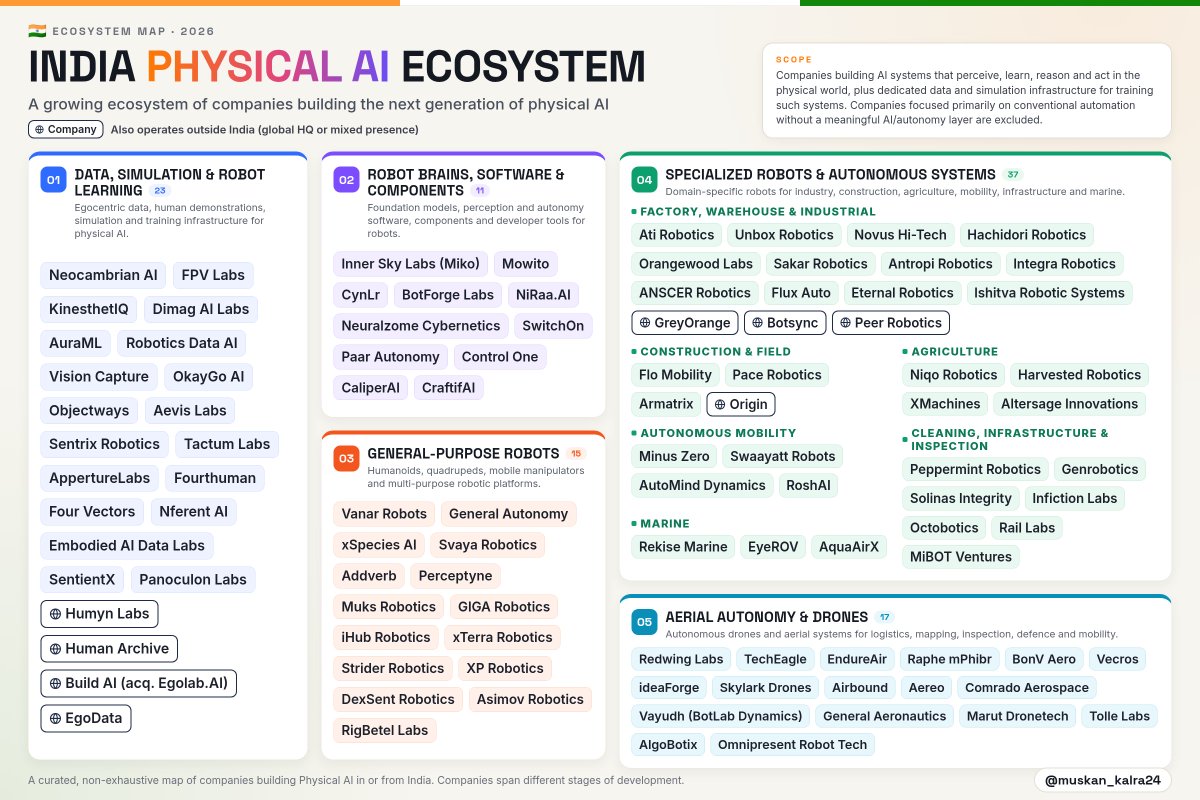
Physical AI is still very early in India, especially compared to the US and China.
But there’s already some really interesting work happening across robot learning, intelligence, humanoids, industrial robotics, infra and more.
So I put together this India Physical AI Ecosystem Map to highlight the teams building across the stack
This is definitely not exhaustive. If I’ve missed someone, reply below or DM me and I’ll add them to the next version.
You probably deleted a sales email today without opening it. So did nearly everyone else, because about 96 of every 100 cold sales emails never get a reply. The few that do have one thing going for them, and the sender had almost no control over it.
It's the week the email showed up. The few I've ever answered landed right when I was already shopping for that exact thing. The sender had no idea, because a rep with 200 accounts isn't reading news on 200 companies every morning. So they miss the new VP who started Monday and the customer who just raised money, and the email goes out on some random Tuesday.
That 96 comes from Spara, a sales AI company that puts normal email sequences at a 3.5% reply rate, or 29 emails for every answer. This week it launched Scout, an assistant built to watch job changes, company news and CRM activity, then text or Slack the rep who to contact and why today, with a draft they approve before anything sends. The company says replies on those emails run 10.5%, which works out to about 10 emails per answer. No sample size came with it, so I'm holding that loosely.
Now picture a year from now, when every rep has one of these. A new VP could get forty congratulations emails in the first few hours and tune them all out, so what wins is what you alone know about the account, like last spring's pricing objection or the champion who switched companies and already trusts you. An assistant that remembers every account is the part I'd pay for.
Getting a reply has always come down to the right week, and software is starting to watch for it on every account at once.
We’re bringing multimodal agents to phone calls with Call Companion: an interactive page sent by text that lets callers see and select options while talking to the agent. It gives callers a clear view of their choices, more confidence in their decisions, and an easier way to enter details that are hard to capture by voice.
See Call Companion in action. A caller compares hotels, chooses a room, and pays for her stay, all while talking to the same agent.
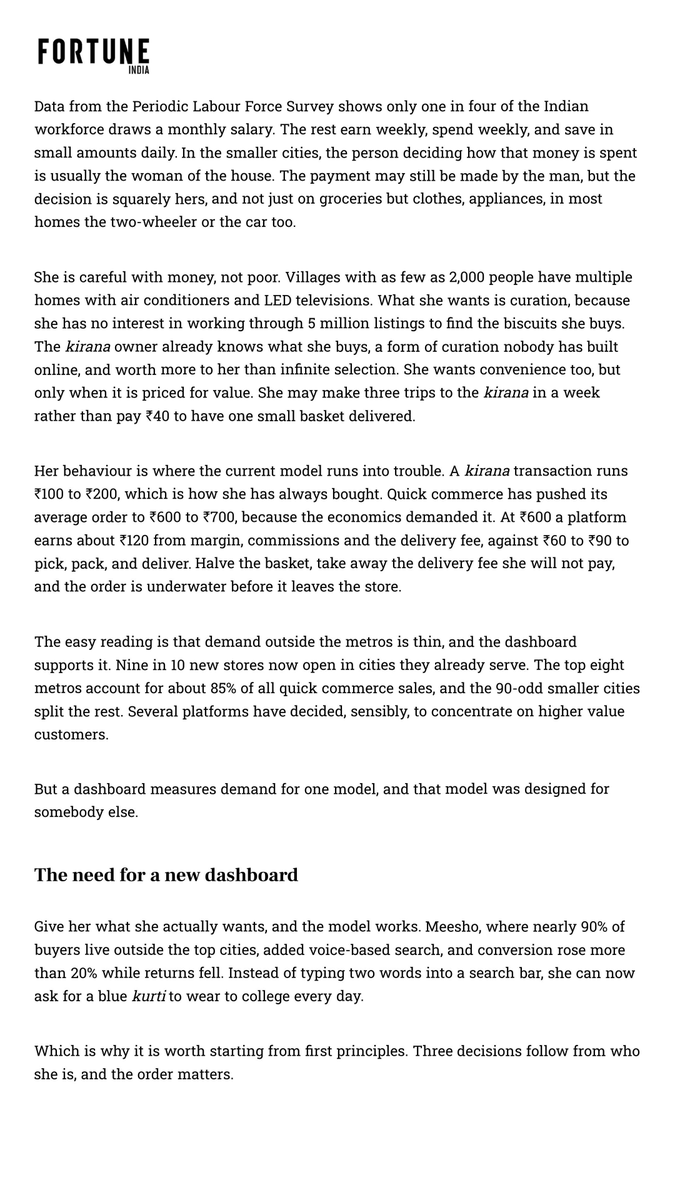
Indian quick commerce was built around one customer. He lives in a big city, earns a monthly salary and pays extra for convenience. The next customer looks very different.
Lightspeed Partner Rahul Taneja (@rahultaneja) writes in @FortuneIndia about who comes online next. This customer is more likely to be the woman of the house in a smaller city, whose household earns and spends weekly. She is careful with money, buys for value, and shops in ₹100 to ₹200 baskets that today’s model was not built to serve.
Rahul writes about the three choices that decide who wins her. Start with necessities, earn her frequency, and become the lowest-cost operator in the category. The next commerce companies won’t be cheaper versions of what came before. They'll be built differently from the start.
Read the full piece here: https://t.co/6noQ6inBpX