AI systems are now being trained to identify “pseudoscience” with reported accuracy rates above 95%. As AI increasingly shapes search, moderation, and public discourse, who decides what counts as legitimate inquiry?
https://t.co/M1YcG2qTvg
#AI#UAP#UFO
We've moved! I'm handing over to a colleague who has started a new feed, and this one is now inactive. The Society for Psychical Research's Psi Encyclopedia can now be found at @PsiEncyclo so please head over there to find out about the latest additions to the website.
In questo episodio parlo del caso di Jaytee, il terrier la cui anticipazione è stata provata in esperimenti controllati con videocamere sincronizzate e rientri a orari casuali. E' un inganno o la prova di un inspiegabile legame mentale?
https://t.co/39w1HBwlmr
Menschen machen außergewöhnliche Erfahrungen.
@KornmeierJu & Eberhard Bauer sprechen über den Umgang mit Betroffenen und darüber, was passiert, wenn Wissenschaft an ihre Grenzen stößt.
#Parapsychologie
https://t.co/32fXsENZEr
New President of the SPR! We have said goodbye to Prof Adrian Parker as president (though he has been elected a vice-president of the Society) and we welcome a new one: https://t.co/YUk6atikiX
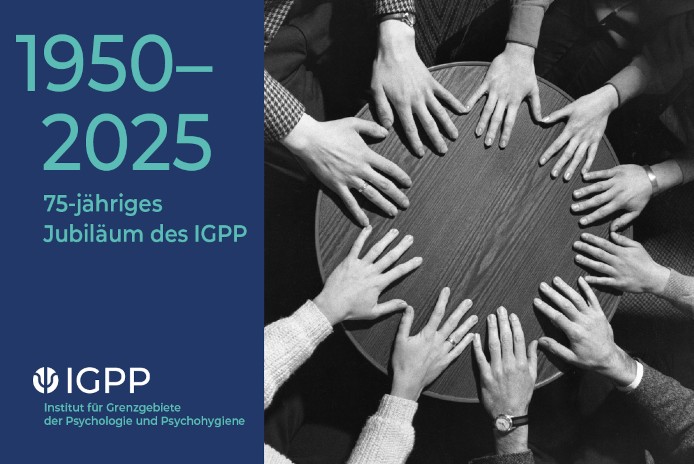
Das IGPP feiert Geburtstag !
Heute, am 5. Juni 2025 feiern wir das 75-jährige Bestehen des IGPP, veranstalten ein Jubiläums-Symposium, präsentieren unsere Forschung und skizzieren Zukunftsperspektiven.
Do we need to rethink near-death experiences? What’s really happening in the brain? NDEs might be a hardwired coping strategy: the dissociation, calmness, and detachment when facing death may actually be an evolutionarily protective response. For decades, people have asked me: "Is there something happening in the brain when people have a near-death experience?" How does the brain, at the edge of life, produce the powerful, often mystical experiences so many people describe. New insights on the topic have just been published in Nature Reviews Neurology by Martial and colleagues.
Key Points:
- This study by Martial and colleagues offers a compelling neuroscientific model of near-death experiences (NDEs).
- The authors try to move us from spiritual speculation toward biological plausibility.
- If we rethink these experiences, we might also learn something crucial about human consciousness itself.
- NDEs seem to involve a cascade of neurophysiological and psychological processes.
- These events can be triggered by physiological crises like a cardiac arrest (heart attack).
- These experiences seem to be linked to massive releases of neurotransmitters (serotonin, dopamine, noradrenaline, GABA, endorphins).
- The default mode network, temporoparietal junction, and brainstem arousal systems may all play key roles.
- Serotonin (5-HT1A, 5-HT2A) and glutamate are particularly implicated in the peaceful feelings and vivid hallucinations.
- The authors review the newly proposed NEPTUNE model that actually frames NDEs as "evolutionarily conserved responses."
- These episodes may not just be 'brain failures.' Should we be thinking of them as potential survival mechanisms.
My take: Why does this matter? This paper bridges what we once pictured as the mystical with the medical. It helps us understand that NDEs are not a supernatural anomaly, but rather a biological response to an extreme crisis. These NDEs may have evolved to help the brain cope, survive, and even encode memory in the final seconds of life.
My 5 Key Takeaways:
1- NDEs may reflect a brain in survival mode. In other words, these experiences likely originate from complex brain activity, not from flatlining or from brain inactivity.
2- REM intrusion, not just hypoxia, plays a role. The features of REM sleep (like atonia and vivid dreams) can possibly intrude into waking consciousness, helping explain out-of-body sensations.
3- Neurotransmitter surges may create mystical content. The massive releases of serotonin and dopamine can produce hyper-reality, hallucinations, and euphoria. These effects are similar to what is observed when using psychedelics.
4- NDEs might be a hardwired coping strategy. Think about it: the dissociation, calmness, and detachment when facing death may be evolutionarily protective responses. Ever heard the terms: playing dead or thanatosis.
5- We must rethink brain death and consciousness Brain activity may persist or surge briefly after cardiac arrest, suggesting we have much more to learn about when and how consciousness truly ends.
What is the bottom line? As we edge closer to understanding the neural basis of NDEs, we also open doors to new insights into the biology of consciousness. What we once attributed to metaphysics may now be understood as neurophysics. Let’s keep asking bold questions. Because understanding near-death may bring us closer to understanding what it means to be fully alive.
https://t.co/OmxqDunaFB
#Consciousness #Neuroscience #NearDeathExperience #Neurology #Serotonin #NDE #BrainScience #NatureNeuro #NEPTUNEModel
Birthday–Nancy Sondow, president of the dormant American Society for Psychical Research (ASPR) is 78 today. Below is the last known image of her–a 1992 BBC show. Between 2002-2019 as pres she took out over $12 mil in loans using the ASPR building as collateral–Why? Where's the $?
Das IGPP sucht engagierte Nachwuchswissenschaftler/-innen (m/w/d) und vergibt eine dreijährige #Promotionsstelle im Forschungsbereich „Außergewöhnliche Erfahrungen“ mit Anstellungsbeginn zum 1.5.2025.
Nähere Informationen: https://t.co/sZSaFXSSoX