Spent all night writing something I'll probably delete once I've slept on it, why did I start a blog again? Stupid. I'd much rather write fantasy, it's much more fun and the research can be made up.
Lived in a building with a grocery store built into the first story for a year. Currently live a block away from said building. The experience is elite and I pity the fools who have never experienced being able to use the downstairs grocery store as their personal fridge/freezer.
Every revival sees this, like dressing up for 80s day but your mom was a teenager in the 80s and says no one dressed like that, so she shows you 80s movies and she's absolutely right 😂
the flares OVER uggs in a 2000s revival outfit is like an archeology / dinosaur mistake where yeah it makes total sense that when ppl had wide pant hems & poofy boots, the wide hems were to go over the boots. But then in real history they were all stuffed in or bunched up on top
Having a community of cousins, siblings, parents etc that can watch the kid would be great, but assuming both parents work they're going to need reliable daycare options and their family is also working. Even once the kids are in school, it's not a full work day.
The shift in SAHM explains a lot of it. My grandma stayed home and babysat her grandkids when her kids all went off to work. Now that her grandkids are having kids we have to pay for daycare or be SAHMs because our parents all work and Grandma needs her own full-time care.
I think this is a huge misreading.
Why did he have to pay $60k for a nanny? Simple: because grandparents or great-aunts and great-uncles or grown cousins or neighbors whatever were not available.
Why weren't they available?
One answer is "they don't exist or are not known." Extended families are shrinking, social ties within them are weakening, and not being replaced by deeper other local ties.
But another answer is "normative shocks to welfare functions have reduced the hedonic benefits potential caretakers get from care."
And this is super important: some grandparents/neighbors/friends/cousins derive large amounts of welfare from investing in your children. The reason they derive that welfare is because they have basically cultural/ideological beliefs shaping their preferences and welfare functions.
But that particular welfare function shape is, I think, declining in prevalence. Your siblings who won't encourage your kid's teenage cousins to babysit. Your parents who won't commit to taking the kids to a regular 6-hour slot each week. A church that doesn't encourage its young adults and empty nesters to adopt young families. Whatever it may be.
The simple fact is that a lot of Americans don't pay very much for childcare. This is true even for high-earning Americans, even for high-earning dual-earner Americans. The reason they don't pay much for childcare is because they have other social supports. They have other social supports because they are in communities with deeper benches of care due to larger and closer-knit families, and/or because they are in communities with stronger motivations to help one another with childcare.
That's not an "opportunity cost" change. That's in some sense a pure budgetary cost change. In "traditional" societies, families receive large amounts of alloparental support. In contemporary societies, they do not, and as such have to compensate by bringing that "on budget."
Unfortunately alloparenting has not generally been considered very important to most statistical agencies, so we don't have long time series on it in most countries. But the signal shift of modern family life is the strong separation of the nuclear family and its reliance on market provision of family support services-- and that's not correctly described as opportunity cost!
To put it another way: the reason you feel you have those high opportunity costs is because your community is underperforming in alloparental provision vs. historic cross-cultural human norms and vs. some other communities today.
I can’t find it but I saw a post recently that used clothes shopping has been taken over by upper middle class people searching for quality they can’t buy new and I have been thinking about that quite a bit.
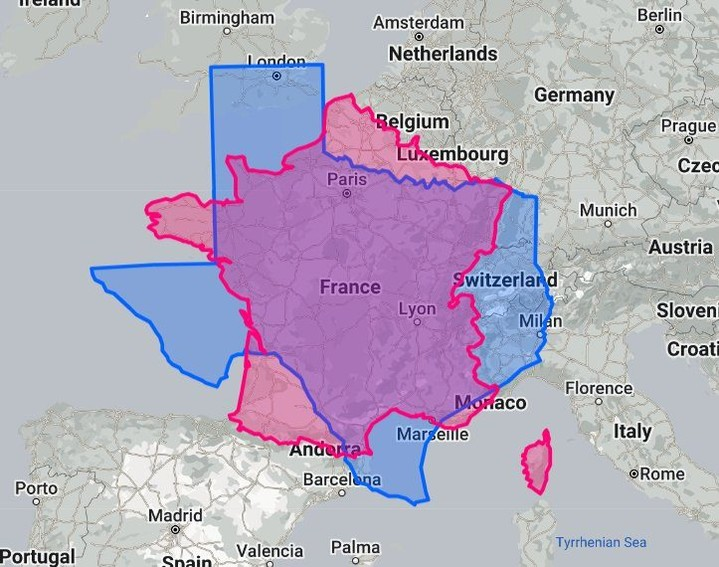
@1RAOKADAY That big. Basically every time size comparison comes up they situate Texas or Alaska over other areas I guess, to show how many countries can fit in just one state.
Everyone I am close with is a mom. Many of them have multiple kids. Most are breastfeeding. Even when we have kid-free things like book club and Bible study there is an understanding that little babies are allowed. Without this understanding some women wouldn't get out for years
I'll never forget breaking the news to my SIL that her mother's choice was *Meemowee*
"Will my kids have to call her that?!"
"Don't worry, we talked her back to Memow, but also no. In fact, I'm hoping YOU can talk sense into her."
Sure it's a good sign if the guy can take care of himself because that means you're not taking on a child. But at a certain age a lot of these are just having money and nothing to do with maturity or being a good partner.
Bachelor pads are gross because they don't have hand towels and their bathroom garbage is unlined and overflowing with tp tubes, not because they use a 3-in-1 wash and don't own a hairbrush. Some of these are green flags, the rest are signs he's been a bachelor a long time.
Green Flags in a Man’s Apartment:
1. Expensive candles
2. Nice hand soap
3 Actual toilet paper, not a single-ply situation (recession indicator
4. No clothes on the floor
5. No dishes in the sink
6. Uses face wash (bonus points if it’s not 3-in-1)
7. Owns a hairbrush
8. Plants that are alive
9. Wine glasses that aren’t stolen from a bar
10. Clean sheets (that smell like detergent, not “boy”)
11. More than two things in the fridge -and none of them are expired
I'm a 33 year old woman that doesn't buy expensive candles, my hand soap is cheap, I always have dishes in the sink (I cook a lot), my body wash is my face wash, I can't keep plants alive inside for some reason, don't own wine glasses, and sometimes things expire in the fridge 🤷🏻♀️
Honestly, the child-free wedding issue IS the temperature check on how people view children in today’s society. Plenty of people go child-free for financial reasons or venue restrictions, but once you drift outside of that, you start to see what people really think about kids.
@agreatdayinnc I remember my aunt throwing a FIT about being called ma'am. She thought it was rude because it made her feel old. She was 50+ at the time, and a grandma.