I am heading to Japan tomorrow. The agenda is to partner with small to mid-sized companies in small town Japan and bring them to small town and rural India.
We want to restore our culture of craftsmanship - Aasaari (ஆசாரி) in Tamil and Vishwakarma (विश्वकर्मा) in Sanskrit - by partnering with smaller Japanese companies that still have those ethos and are present in rural Japan. Japanese are world leaders in areas that require intricate craftsmanship.
I am guided by my friend Britto (Britto-san!) originally from Madurai and who spent decades in Japan and understood the culture and companies well. He is the founder of Takumi Motion Controls, and Takumi (匠) also means "craftsman".
Britto-san and I bonded over our admiration of Japanese craftsmanship. This has become a mission for us.
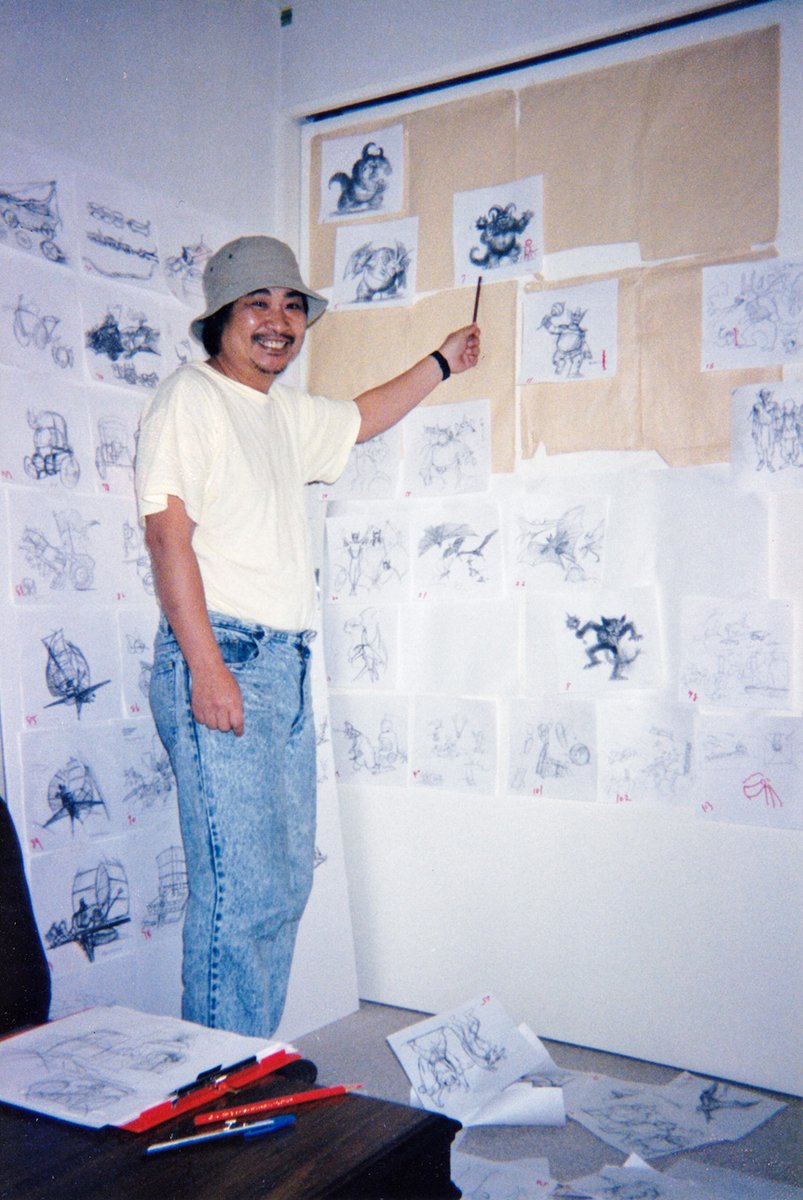
I’m surprised and proud that the film that is more than 30 years old is being released in India, the country with the largest film industry in the world, and in theatres.
When I was given the role of director for this film, I began by researching a number of literature and felt that “Ramayana” would not be a video work without mob scenes. However, at the time of production, the film had not yet been digitized, so the more mob scenes there were, the more time and effort it would take. Therefore, there were many scenes that we gave up in tears during the process from script to storyboard, and from storyboard to direction.
Even so, I think we created mob scenes that were outstanding for the time. As a director, I was filled with a sense of joy and happiness that I had never felt before, knowing that the animators and other staff members in each part of the film had created so many handmade mob scenes.
In terms of visuals, we are proud of the high level of animation that was achieved, including movement, timing, and character expressions, in addition to the mob scenes.
However, as you know, a film is not only about the visuals. It's only with sound and lively dialogue that a film shines. The sound for this film was created 100% in India. I feel it's a wonderful sound of the best of India. I cannot help but respect the many musicians and actors in India.
As one of the people involved in this film, I would be more than happy if many people in India think, “This is my favorite Ramayana !”
Sincerely,
Koichi Sasaki, the director
---
It's a message regarding the theatrical release in India on Oct 18, 2024 by @geekpictures_IN from #KoichiSasaki, the director for #Ramayana : #TheLegendOfPrinceRama.
Teaser - https://t.co/yIdg1ExT7j
#RamayanaAnimeInCinema #RamayanaAnime
Bollywood can try hard with their Ramayana references, but it will take another 250 years for someone from there to recreate a mass scene with even 50% of the impact this one had.
Goosebumps pro max.
Raamam Raaghavam Ranadheeram Raajasam!
The Edinburgh Gazette, January 2, 1920, Pg 28 has the names of some admirers of Gen O’Dwyer and Dyer (remember 13thApril 1919). 1 of the names is:
Dewan Bahadur Kunj Behari Thapar of Lahore - the Golden Temple management, head of Akal Takht, Arur Singh, (the predecessor of the SGPC) presented Dyer a Kirpan (sword) and a Siropa (turban) along with Rs. 1.75 Lakhs contributed by Kunj Bihari Thapar, Umar Hayat Khan, Chaudhary Gajjan Singh and Rai Bahadur Lal Chand. It is shocking because Golden Temple is a next door to Jallianwala Bagh and most of the victims were pilgrims.
Thapar’s family was newly wealthy, having made their fortune in trade during the first world war, as commission agents for the colonial British Indian Army. Kunj Behari Thapar did everything necessary to please his colonial masters to keep his hold in the British Indian Army. For loyalty during Jallianwala crisis, Kunj Behari Thapar was awarded the Most Excellent Order of the British Empire in 1920.
What are commission agents for Colonial British Indian Army during the First World War?
When the war was declared, many sections of the Indian elite fell over themselves to offer help to the British cause. Nowhere was this more evident than in Punjab. The old Sikh nobility was more than keen to prove the loyalty of the martial race. The Chief Khalsa Diwan condemned the Ghadarites and helped recruit soldiers. Even Gandhi, newly returned to India, joined the recruitment drive despite his avowed adherence to the principles of non-violence. However, the most enthusiastic supporters of the war effort were the contractors and agents who profited handsomely from arranging supplies and recruits (our Mr Thapar being one of them). They fanned out across the province and used all means fair and foul to arrange recruits, supplies and contributions to war funds.
The demands became greater as the war dragged on and the death toll mounted. Recruitment quotas were set by district, or even individual village, and ever more young men were taken into the army using false promises and intimidation. In many place, the relatively wealthy purchased young men from poor families to replace their own children. In other places, they made large contributions to the Imperial War Fund. Lieutenant Governor O'Dwyer ramped up the incentives for the contractors. In addition to their monetary commission, they were given thousands of acres of irrigated farmland next to newly built canals. They were also given fancy imperial titles. 'Dwyer would later write that the system of rewards 'were such as would appeal to the Oriental mind, such as the Indian titles of honour from "Raja" and "Nawab" down to "Rai Sahib" and "Khan Sahib", robes of honour, swords of honour, guns ...'. He also states that the land grants could go up to 15,000 acres!
The contractors and agents quickly became a staunchly loyals nouveau riche. In the early years, there may have been some members of the general population who voluntarily signed up for the army in exchange for regular pay or adventure. However, as the death toll mounted, voluntary recruitment all but disappeared.
There are several eyewitness accounts of how local officials and agents colluded to 'herd' poor peasants into the army.
Now, let’s see look at the Loyalist’s Descendants.
1. Grandson, Romesh Thapar: Maxist Romesh Thapar, a member of Communist Part of India started Seminar, as a monthly journal and established a stable revenue model – predictably, nearly all the advertising revenue came from the government and a large proportion of the sales were also to government institutions and libraries. Thapar also shifted base to Delhi from Mumbai in order to leverage his growing political clout in the socialist and “socially progressive” Nehru-led dispensation. He was duly allotted prime property at a low rate by the government.
Thapar and his wife grew especially close to Indira Gandhi through the 1960s and 1970s. Although he had known her earlier, it was after Nehru’s death that Thapar became a part of the inner circle of then Prime Minister Indira Gandhi. This connection brought Thapar significant clout in society and government, and numerous sinecures were showered on him as patronage. Thapar served, at various times, as director of the India International Centre, National Books Development Board, ITDC and as vice-chairperson of the National Bal Bhavan, Delhi, all of which are government sinecures conferred on him by successive Congress Party governments.
2. Granddaughter, Romila Thapar: She is a famous “top” typical JNU Nehruvian communist ideologue historian, who gets to write our textbooks and pollute them with pro-Congress Marxist propaganda. Thapar’s appointment to the Library of Congress’s Kluge Chair in 2003 was opposed in an online petition bearing more than 2,000 signatures, on the grounds that she was a “Marxist and anti-Hindu”. The Communist Party of India (Marxist) supported her appointment by calling her “a liberal with a scientific outlook”. To Know more about the great historian, you may check this piece: (Eminent Historian’s continuing fraud)
3. Son, Pran Nath Thapar: General Pran Nath Thapar was the youngest son of Diwan Bahadur Kunj Behari Thapar of Lahore. In March 1936, Thapar married Bimla Bashiram Sehgal, sister of Gautam Sahgal, whose wife Nayantara Sahgal (recently famed for her award wapasi) was a daughter of Vijayalaxmi Pandit and niece of Jawahar Lal Nehru.
Gen. Pran Nath Thapar was the only Indian Army Chief to have lost a war (against China in 1962). Gen. K.S. Thimayya, on his retirement, recommended Lt. Gen. S. P. P. Thorat as his successor. However, it was overruled and Pran Nath Thapar was selected. It’s amazing how Pran Nath Thapar’s role in 1962 debacle is left out of history books. He was forced to and resigned in disgrace after the debacle.
General Thapar and Smt. Bimla Thapar had four children, of whom the youngest is the prominent journalist Karan Thapar.
Karan Thapar: He is a famous media personality who also writes columns frequently for Hindustan Times. The Nehru family itself is related, through blood and marriages to the high-profile Thapar family. To know more about his journalism, you may refer this piece on https://t.co/yYJAS6Z1mM
A potsherd excavated from the Kodumanal Archeological site has the name ‘Kannan Adhan’ inscribed in Tamil Brahmi. The period of this is estimated to be 2-3 century BCE. Kannan is one of the Tamil names of Sri Krishna & this is one of the earlier reference of His name found in Tamilagam
#HappyJanmashtami
Where @sanjeevsanyal goes back 5000 years to discover the origins of Bharat and then travels forward to explain the etymology of India.
Mesmeric exposition, stunning in its clarity and detail. This is how history should be taught - one hopes this is how history will be taught.
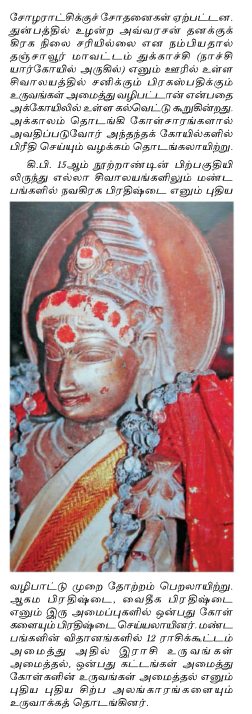
Rajendra-3, the last king of the Chola empire, was concerned about planetary positions affecting his dynasty.
As a remediatory measure, he installed - for the first time ever - separate shrines with images of Shani and Brihaspathi within the Shiva temple premises to worship them. The practice of Navagraha aaradhana in a separate shrine within temple premises started after this.
This was at Thukkaachi - short for Durga Aatchi (rule by Durga), a village 16km from Kumbakonam.
Aabathsahayeswarar temple was popular in the Chola period as they believed the deity had cured Vikrama Chola's sever leukoderma (venkushtam).
This temple - called Kaalahasthi of the South is completely neglected by the authorities and is in a dilapidated, unmaintained state for years.
The temple - modeled by the same design of the UNESCO World Heritage site Airavateeshwara Temple, is one of the priceless heritage left behind by our Cholas.
History shall forever remember that our society suffered more from the apathy of internal citizens and governments, than malicious attacks from external invaders.
Who will save Aabathsahayeshwarar - the one who saves us during times of danger - from our collective apathy?
The waking up of the sri ranganatha is a very elegant ritual in #srirangam a vainika strums an ancient tune on the veena and sings gently so as to not wake him abruptly. The first objects that he sees need also be auspicious
Join this unique camp for children where they will be immersed in Bharatiya education and learn some amazing concepts from the Acharyas around the world.
Register below to join
https://t.co/DgLZPmZrpM