Quantum computing opens up massive opportunities for science, but it also brings new challenges for digital security. 🔐
Particle is here to help us understand how post-quantum cryptography can prepare us for a future where protecting our data matters more than ever.
Imagine your data needs to stay confidential for the next 10 years. Your system migration takes 5 years, while a potential quantum threat is estimated to emerge in 12 years.
The math speaks for itself. ⏳
When data confidentiality and migration timelines add up to more than the time left before a potential threat, waiting too long can be risky.
Post-quantum migration isn’t something to leave for tomorrow. Start assessing your risks today.
quantum security is becoming a serious topic for crypto
and one thing from this #CoinDesk article about @Americanfort_io caught my attention
what happens to old bitcoin wallets when quantum computers become a real threat
moving every wallet to a new address sounds like a huge task especially for people who have not touched their funds in years
americanfortress is working on a different approach
their proposed protocol aims to protect vulnerable wallets through a backward compatible soft fork rather than requiring everyone to move their funds first
the article also discusses how this could apply to satoshi era bitcoin and other dormant wallets
there is still work to do and the approach depends on how the network chooses to handle these changes
but protecting existing funds without forcing a massive migration is an important problem to work on
good security should take into account the wallets people already have not just the ones they create tomorrow
@Americanfort_io
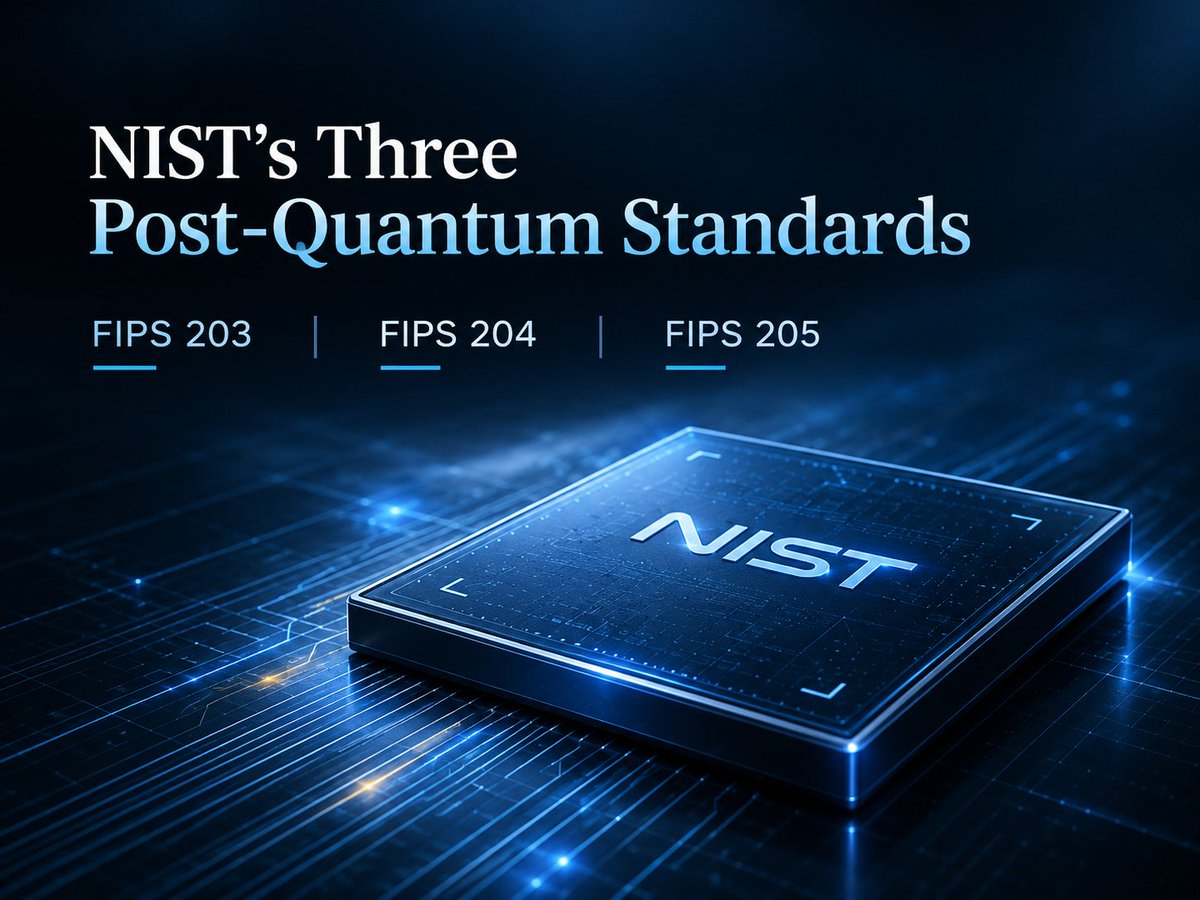
In August 2024, NIST released three major post-quantum cryptography standards: ML-KEM for key encapsulation, ML-DSA for digital signatures, and SLH-DSA for hash-based digital signatures.
These standards are a key step toward a post-quantum future and provide an important foundation for the cryptographic migration ahead.
The shift is happening. Time to get ready.
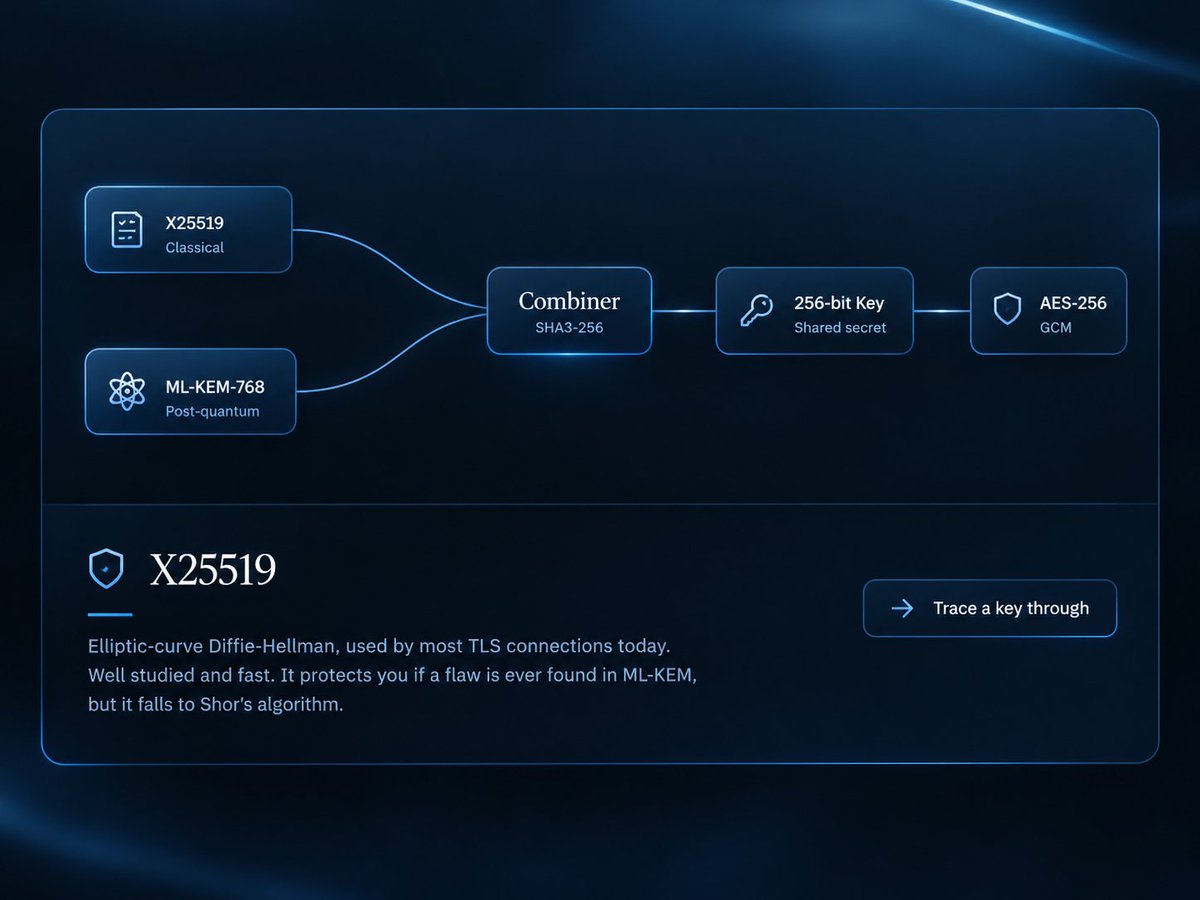
Why combine X25519 with ML-KEM instead of using ML-KEM alone?
ML-KEM is a 2024 standard; X25519 has been studied for almost two decades. A hybrid stays secure as long as either one holds: a future flaw in ML-KEM is covered by X25519, and a quantum computer is covered by ML-KEM. Chrome, Signal and OpenSSH made the same choice.
Is AES-256 still safe?
As far as is known, yes. Grover's algorithm at best halves the effective key length, leaving AES-256 with about 128 bits of strength, which is out of reach. That is why the Vault uses AES-256-GCM for the content and spends its post-quantum effort on the key exchange.
Lattice-based cryptography uses mathematical structures to create computational problems that are extremely hard to solve without the right information.
Particle makes these concepts easier to understand through visualizations that break down the core ideas.
Complex math, made easier to explore.
ML-KEM is young. X25519 is well studied but falls to a quantum computer.
#Particle combines them, the same way Chrome, Signal and OpenSSH now do, so a flaw in either one alone does not expose your key. Select a step to see what it does.
Identity
Logins, certificates, signed software
Relies on
RSA, ECDSA and Ed25519 signatures in TLS certificates, code signing, passkeys and documents.
What breaks
Derive a private key from its public key and you can sign as that person, server or vendor.
Particle's answer
ML-DSA signatures (FIPS 204). Sign and tamper with a message in Signatures.
DATA
Relies on
RSA or elliptic-curve key exchange (ECDH) to agree on the symmetric key.
What breaks
Recover the key exchange and every recorded session opens. This is the harvest-now risk above.
Particle's answer
Hybrid key encapsulation (ML-KEM-768 + X25519) feeding AES-256-GCM. Try it in the Vault.
Traffic recorded today can be opened later.
An attacker does not need a quantum computer yet. They only need to store your encrypted traffic until one exists.
Michele Mosca's rule makes the risk concrete: if the years your data must stay secret (x) plus the years your migration takes (y) exceed the years until a quantum attacker arrives (z), that data is already exposed.
quantum security is becoming a serious topic for crypto
and one thing from this #CoinDesk article about @Americanfort_io caught my attention
what happens to old bitcoin wallets when quantum computers become a real threat
moving every wallet to a new address sounds like a huge task especially for people who have not touched their funds in years
americanfortress is working on a different approach
their proposed protocol aims to protect vulnerable wallets through a backward compatible soft fork rather than requiring everyone to move their funds first
the article also discusses how this could apply to satoshi era bitcoin and other dormant wallets
there is still work to do and the approach depends on how the network chooses to handle these changes
but protecting existing funds without forcing a massive migration is an important problem to work on
good security should take into account the wallets people already have not just the ones they create tomorrow
@Americanfort_io
Post-quantum cryptography is designed to protect data and communications against future quantum-powered attacks, and it can run on regular computers and digital systems.
Particle makes these concepts easier to explore through clear explanations and interactive tools.
Quantum security starts with understanding it.
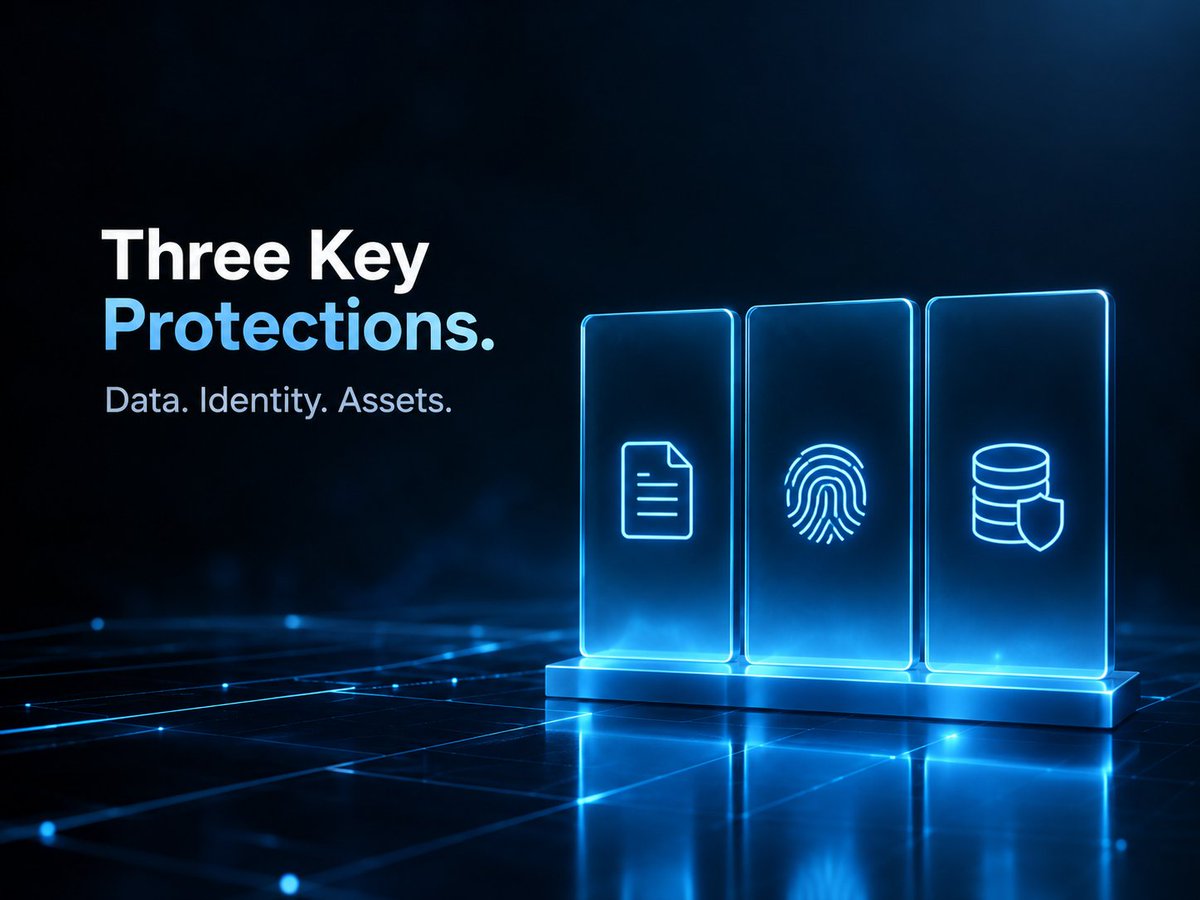
There are 3 key areas to focus on when preparing for the post-quantum era:
Data : confidential documents, messages, and archives.
Identity : certificates, digital signatures, and authentication.
Assets : digital ownership systems that rely on cryptography.
Post-quantum security isn’t just about swapping out one algorithm. It’s about understanding the risks across every layer and preparing before it’s too late.
“Harvest Now, Decrypt Later” is a strategy where attackers collect encrypted data today, hoping to decrypt it in the future when technology catches up.
The scary part? Your data might be safe today, but that doesn’t mean it’ll stay safe forever.
That’s why post-quantum cryptography matters. The time to prepare is now.