Developers of high performance simulation codes for plasma physics, spacecraft electric propulsion, and contamination control. PIC/DSMC/MHD/CUDA/MPI/FPGA
Just became aware of a recent @FrontiersIn Space Technologies paper that includes recent analysis using CTSP, https://t.co/O5TSovVc51. CTSP is now available in a free demo-version so reach out if interested in trying it out, https://t.co/lJ4Pw1hSNQ #contamination#cleanroom
Just a reminder that there is an opening at PIC-C for part-time analysts, https://t.co/brW31t3dW5. This may be perfect for those of you still in college (in the USA) looking for modeling and simulation experience, and a way to make a bit of $. #space
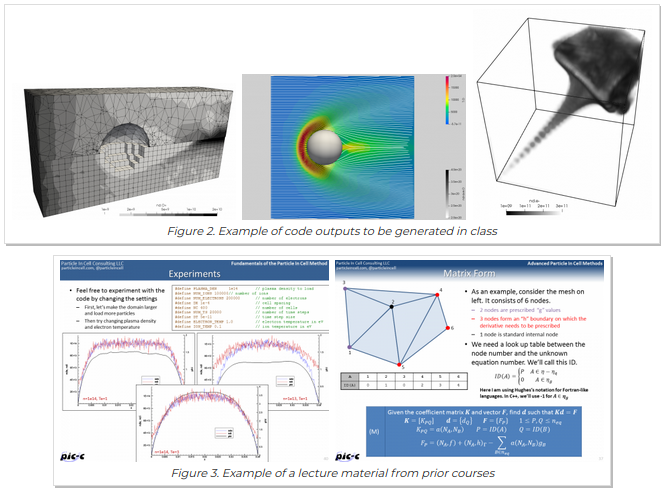
This summer I will be teaching a new plasma #simulation course based on the recent book. It will be a 9 week crash course covering topics including ES and EM-PIC, DSMC, FEM, parallelization, and Eulerian methods. Sign up now! https://t.co/c7I20m6pQP #AcademicTwitter#space
Finally getting back to working on the second textbook. Here is an example heat equation solver written using just 115 lines of #javascript and using #webgl for drawing.
This summer I will be teaching a new plasma #simulation course based on the recent book. It will be a 9 week crash course covering topics including ES and EM-PIC, DSMC, FEM, parallelization, and Eulerian methods. Sign up now! https://t.co/c7I20m6pQP #AcademicTwitter#space
The @RocketLab stream is going live! This is it! Only 20 minutes to go! I'm so nervous and excited I can't do anything else. The opportunity to finally possibly go to orbit! From building open source electric propulsion in the basement for fun to my first ever flight!
Fun with DEM. This is a work in progress to simulate evolution of electrical conductivity across an insulator layer. Such a change in electrical properties could lead to limited lifetime in ablative thrusters, https://t.co/qpIvNt0XmD #plasma#simulation#paraview
Poster for the upcoming #ICOPS2020 conference highlighting recent work to model vacuum arc formation using a 1D CPU/GPU PIC code. The code will be posted to the blog once additional V&V is completed. #plasma#physics
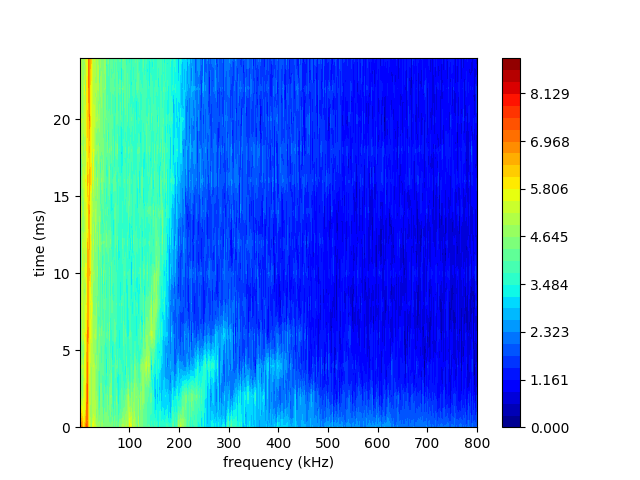
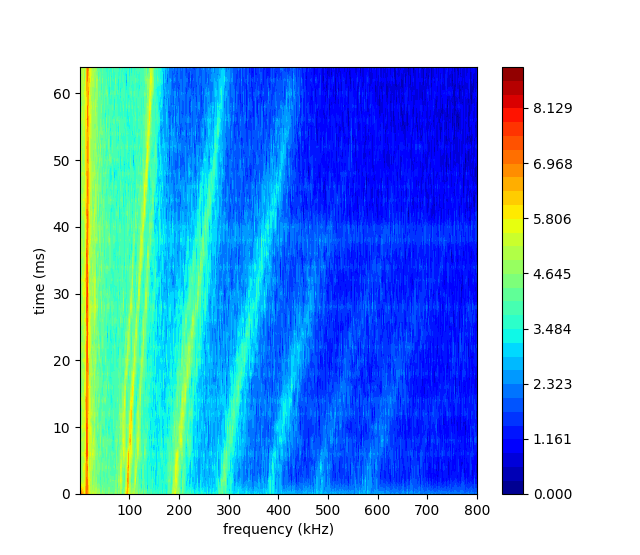
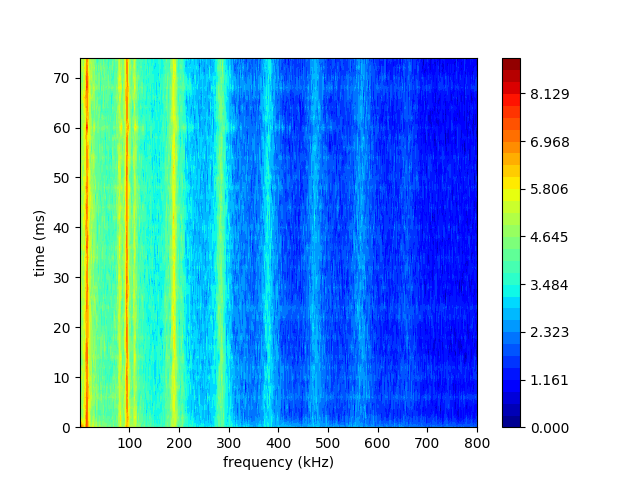
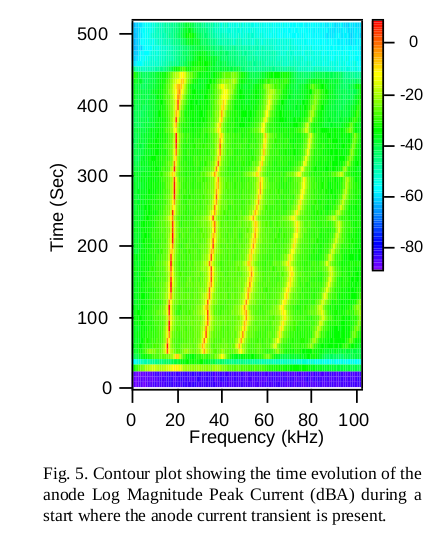
Time scales are different, but trends seem to indicate that as pressure increases, high modes dampen out, and we end up with a single broader "breathing mode". This is what Hargus' plot shows for t>500s. Pressure constant in first sim, and no change in spectrum. 2/2
Hard to know just when to trust simulations, but interesting to see trends in simulated Hall thruster discharge current spectrum qualitatively matching prior experimental measurements of start up (last fig, Hargus JPC 2002). Sims consider increasing background pressure. 1/2
Week ago, hired the first batch of interns. Today we had our second online tagup. Really impressed with both of them! Helping with V&V of the 2D code Starfish and developing a plasma simulation code running on the Arduino. Stay tuned, both projects should lead to papers.
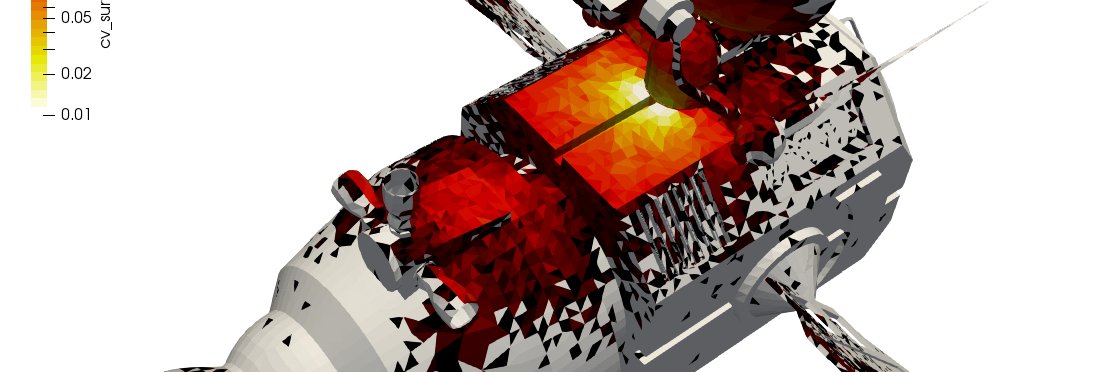
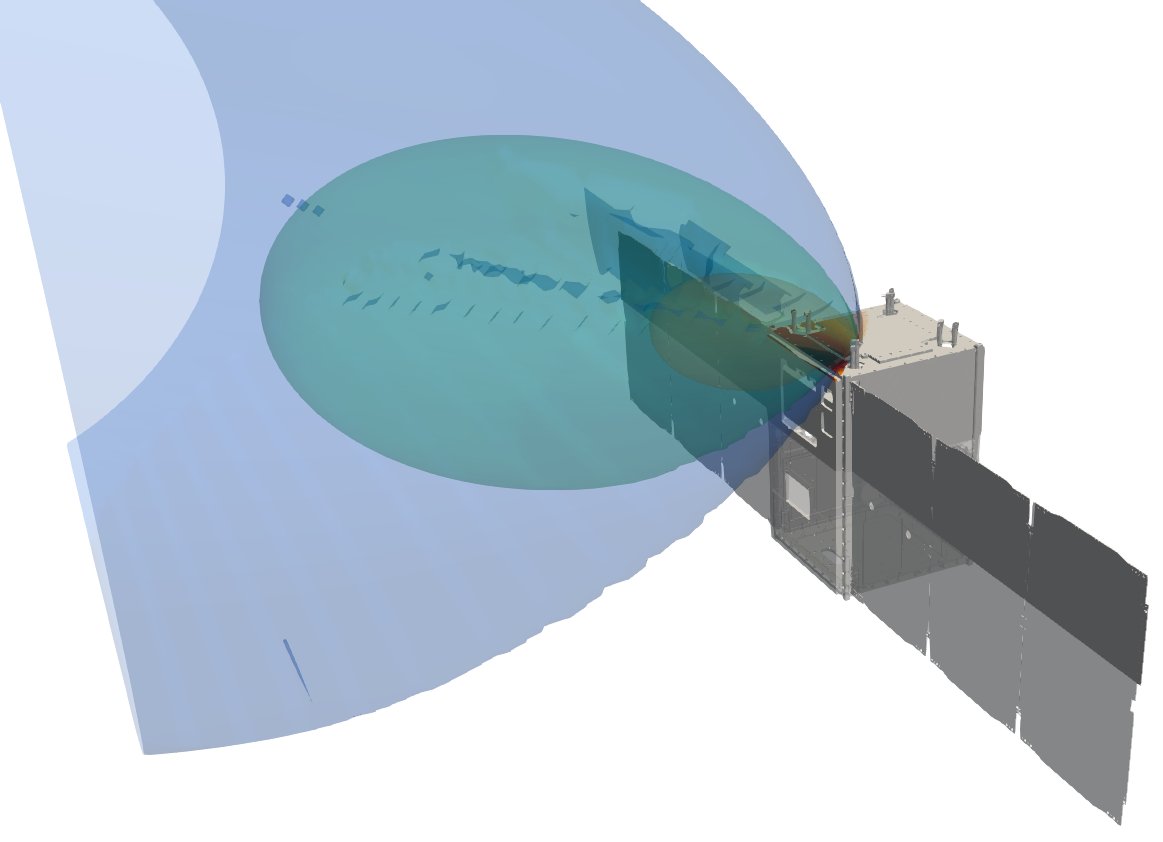
While our contamination program CTSP is primarily a free-molecular particle-tracing code, it can also be used with analytical plume models. Here it is used to study plume impingement on a generic 12U #Cubesat utilizing Stellar Exploration Inc. propulsion system. ~1min run time.
Excited to kick off our new internship program! Two bright computer students from UT Austin and Stony Brook U. will be helping to design a hardware-based plasma code and validate our 2D code Starfish. Hoping that both projects lead to a journal publication.