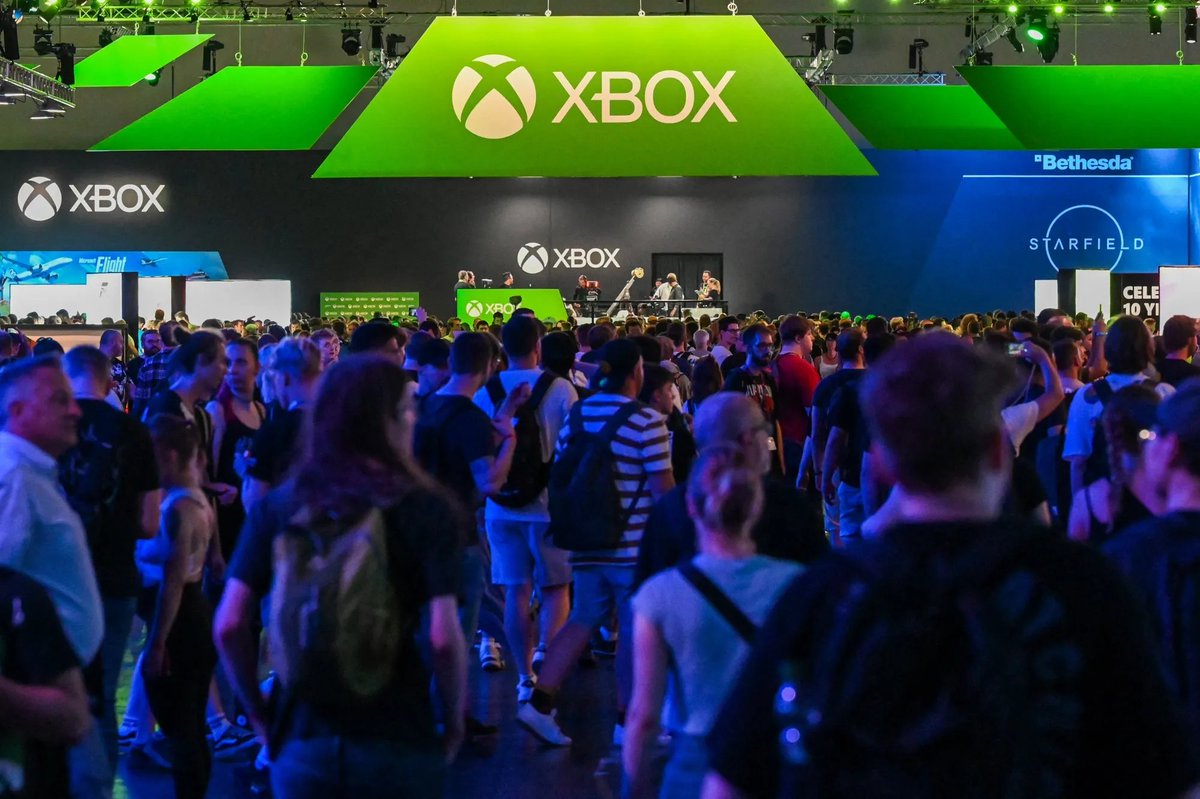
Bloomberg: Several Xbox Studios, including Compulsion Games, Ninja Theory, and Double Fine, are in active negotiations with Xbox to spin off as they try to avoid closure https://t.co/qchx3ENYlY
Después de años sin consola por fin puede adquirir una para jugar mi saga favorita estoy listo para halo campañig evolved gracias por tanto 🥹🔥💚 @XBOX@asha_shar@Halo
Why I Support XBOX as a Korean Gamer:
(For reference, Korea has been a country of lowest priority for XBOX, as Microsoft stopped selling XBOX consoles here more than a year ago)
Although I am Korean, I continue to believe that XBOX is the only entity in the gaming industry capable of envisioning and shaping the larger picture. Over the past decade, under the leadership of Phil Spencer and now Asha, every initiative has been directed toward that broader vision. By contrast, Sony and Nintendo remain constrained by the fundamental requirement that their strategies must ultimately serve the purpose of selling more consoles. Their limitations are evident, and it is difficult to expect them to evolve beyond the role of console gaming platform companies.
My long-standing support for Microsoft Gaming and my anticipation of its future are rooted in this contrast. Much of my enthusiasm comes from a sense of resistance to Sony and Nintendo’s narrow, hardware-bound approach. Korea, in fact, has long demonstrated what the future of gaming looks like. More than 20 years ago, live service games had already become mainstream here, and gamers grew accustomed to open platforms that were not tied to specific hardware. They embraced diverse stores and games from different regions/publishers with ease. Today, this openness is no longer unique to Korea; it has become the norm among younger gamers worldwide.
Although the precise future of XBOX remains uncertain, I am convinced that it will continue to present a vision centered on inclusivity and openness. This has always been the defining characteristic of XBOX—the industry’s “rebel,” challenging established norms and offering alternatives to the status quo.
For that reason, I remain confident that XBOX will once again lead the way in redefining what gaming can be.
That is why I still expect Project Helix to show something beyond merely representing next‑generation console hardware.
Why I Support XBOX as a Korean Gamer:
(For reference, Korea has been a country of lowest priority for XBOX, as Microsoft stopped selling XBOX consoles here more than a year ago)
Although I am Korean, I continue to believe that XBOX is the only entity in the gaming industry capable of envisioning and shaping the larger picture. Over the past decade, under the leadership of Phil Spencer and now Asha, every initiative has been directed toward that broader vision. By contrast, Sony and Nintendo remain constrained by the fundamental requirement that their strategies must ultimately serve the purpose of selling more consoles. Their limitations are evident, and it is difficult to expect them to evolve beyond the role of console gaming platform companies.
My long-standing support for Microsoft Gaming and my anticipation of its future are rooted in this contrast. Much of my enthusiasm comes from a sense of resistance to Sony and Nintendo’s narrow, hardware-bound approach. Korea, in fact, has long demonstrated what the future of gaming looks like. More than 20 years ago, live service games had already become mainstream here, and gamers grew accustomed to open platforms that were not tied to specific hardware. They embraced diverse stores and games from different regions/publishers with ease. Today, this openness is no longer unique to Korea; it has become the norm among younger gamers worldwide.
Although the precise future of XBOX remains uncertain, I am convinced that it will continue to present a vision centered on inclusivity and openness. This has always been the defining characteristic of XBOX—the industry’s “rebel,” challenging established norms and offering alternatives to the status quo.
For that reason, I remain confident that XBOX will once again lead the way in redefining what gaming can be.
That is why I still expect Project Helix to show something beyond merely representing next‑generation console hardware.