BREAKING: Africa's first Formula 1 Grand Prix since 1993 will take place in Rwanda starting in the early 2030s, after signing a 10-year agreement to host the African Grand Prix 🇷���🚨
BREAKING: Formula 1 returns to Africa with 10 year agreement to race in Rwanda
The African Grand Prix is set to join the F1 calendar in the early 2030s
#F1
In 2026, following a May 2025 assessment, Rwanda’s National Tuberculosis (TB) Reference Laboratory in Kigali was designated a @WHO Supranational Reference Laboratory (SRL), making it #Africa's 5th fully operational SRL and the 33rd globally.
This recognition strengthens Rwanda’s role in advancing high-quality TB diagnosis and improving the region’s response to the disease.
As part of the WHO SRL network, #Rwanda will expand its technical support to countries across the region, building on its work with #Comoros and #Madagascar.
The designation also opens doors to stronger scientific collaboration, research, and access to new technologies, helping build laboratory capacity and improve #TB diagnosis and care across Africa.
Rwanda Biomedical Centre (RBC) is expanding wastewater surveillance to key Points of Entry (PoEs), giving us an added way to monitor health signals linked to cross-border movement and spot potential threats earlier,before they spread.
RBC scientists are testing and refining sampling and detection methods in the field. With 12 viruses, including Ebola, now routinely monitored, this work is strengthening preparedness and providing timely evidence to guide early investigation and response.
🚨 | BREAKING!
F1 is set to return to Africa after 37 years, with Rwanda expected to join the calendar in 2030.
An agreement has reportedly been reached for a new permanent circuit to be built around 40km from Kigali.
An official announcement could come later this year.
📰 @Racingnews365c
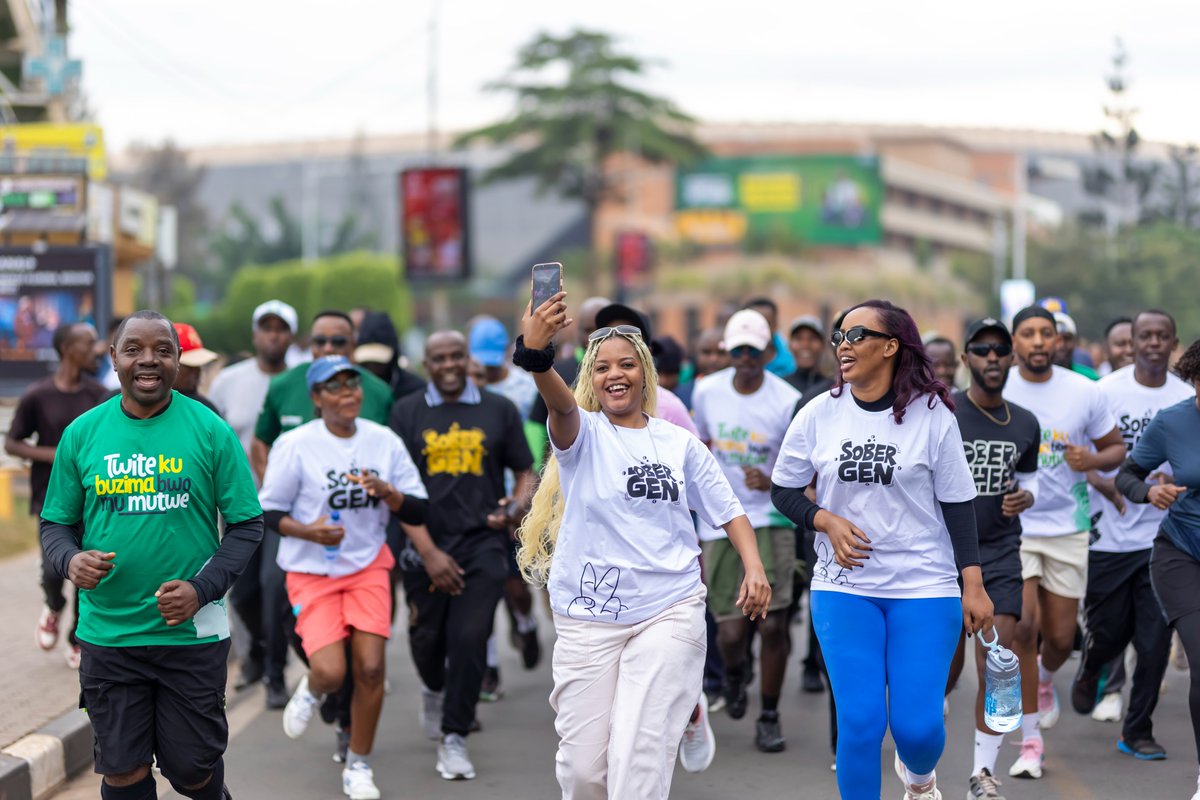
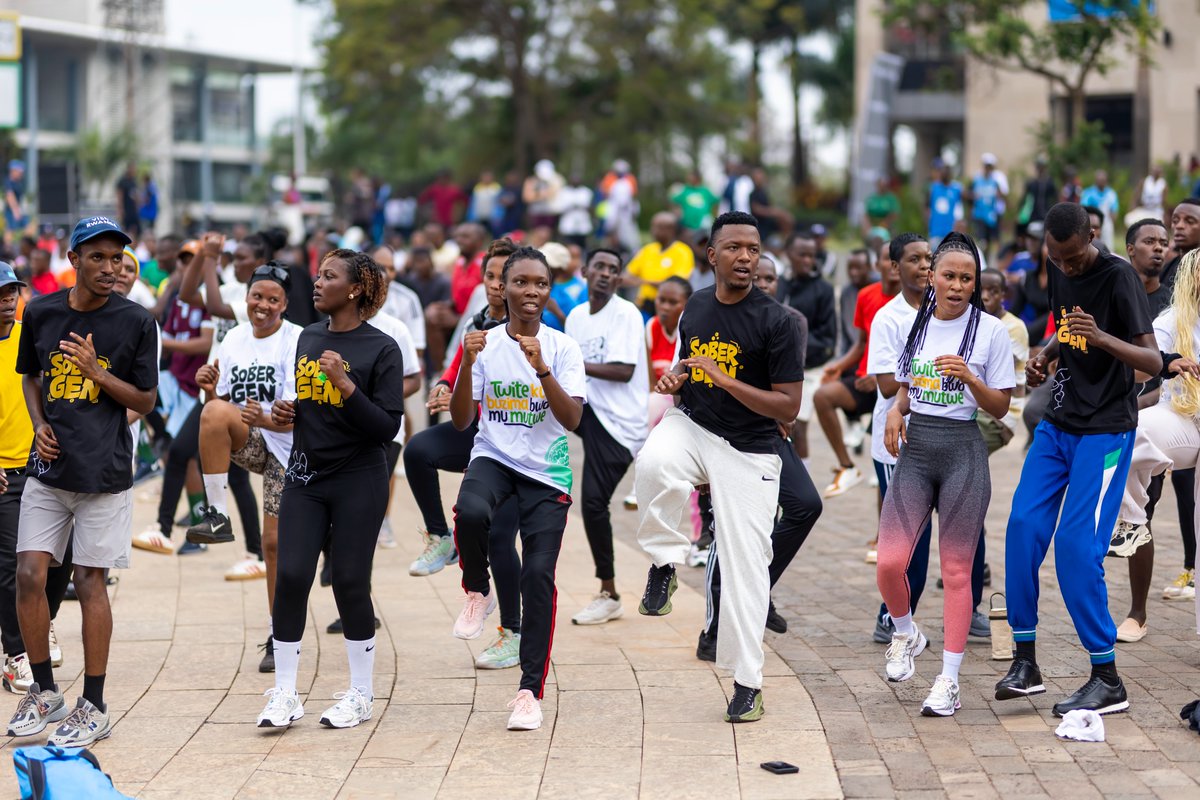
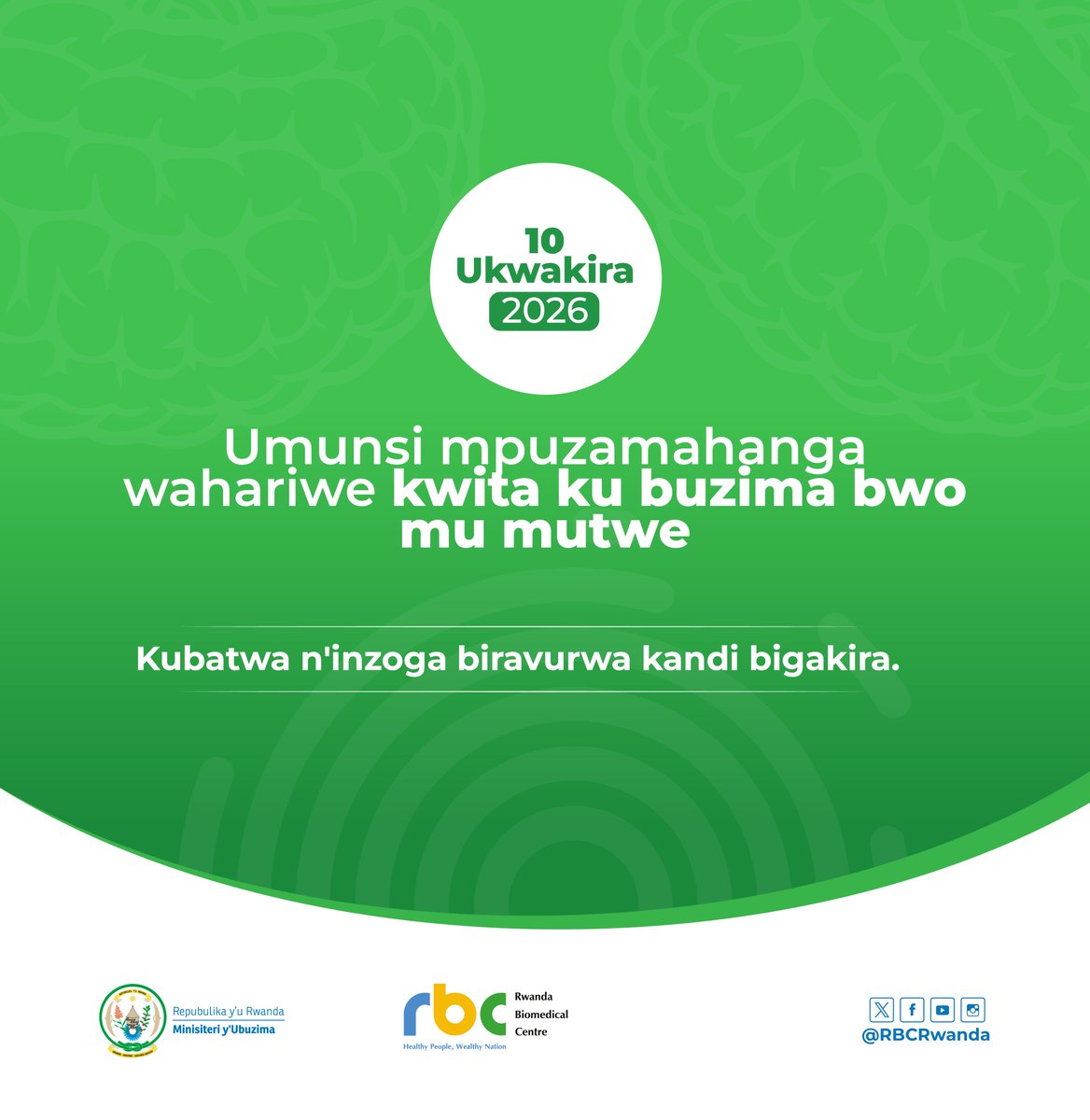
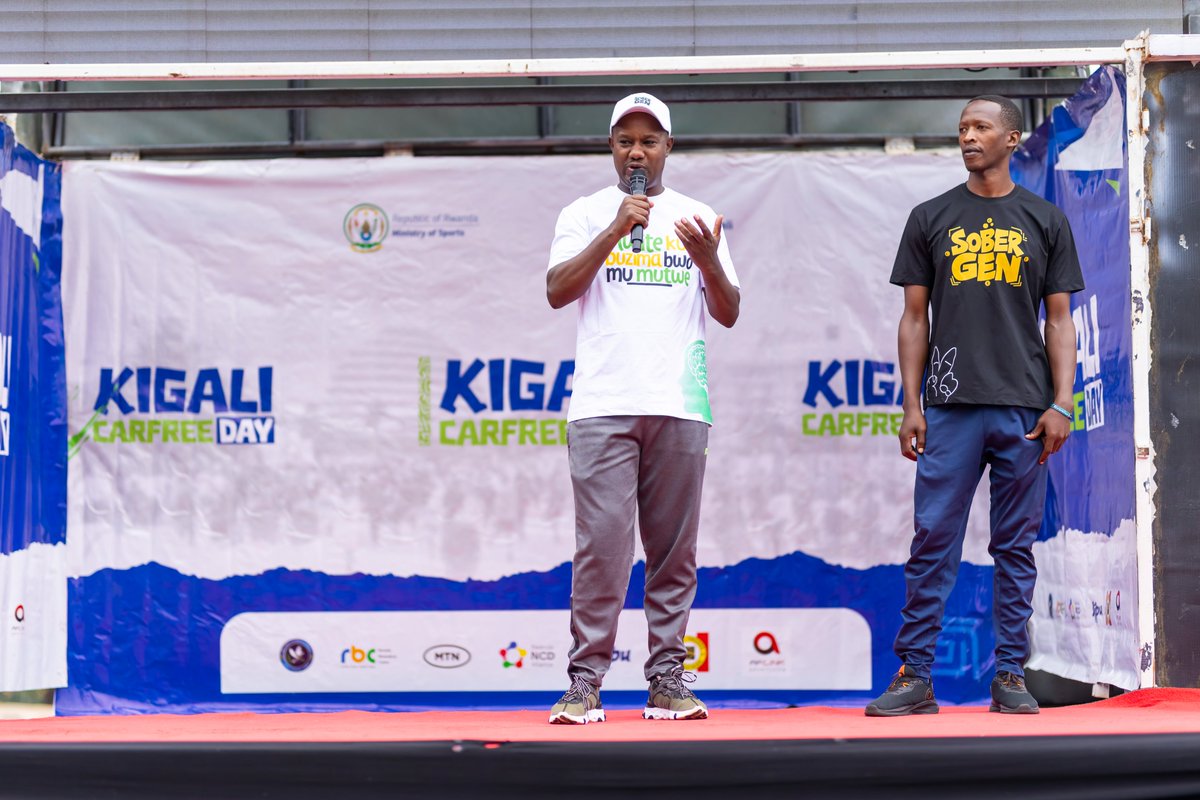
Tuganire!
Ujya wibaza ku ngaruka z'inzoga mu mubiri w'umuntu?
Reba iyi videwo usobanukirwe maze ufate umwanzuro wo kuba #Sober, ugire ubuzima bwiza.
#TunyweLess#HeheNicyuma#SoberGen
🔎🔊RBC Research Insight!
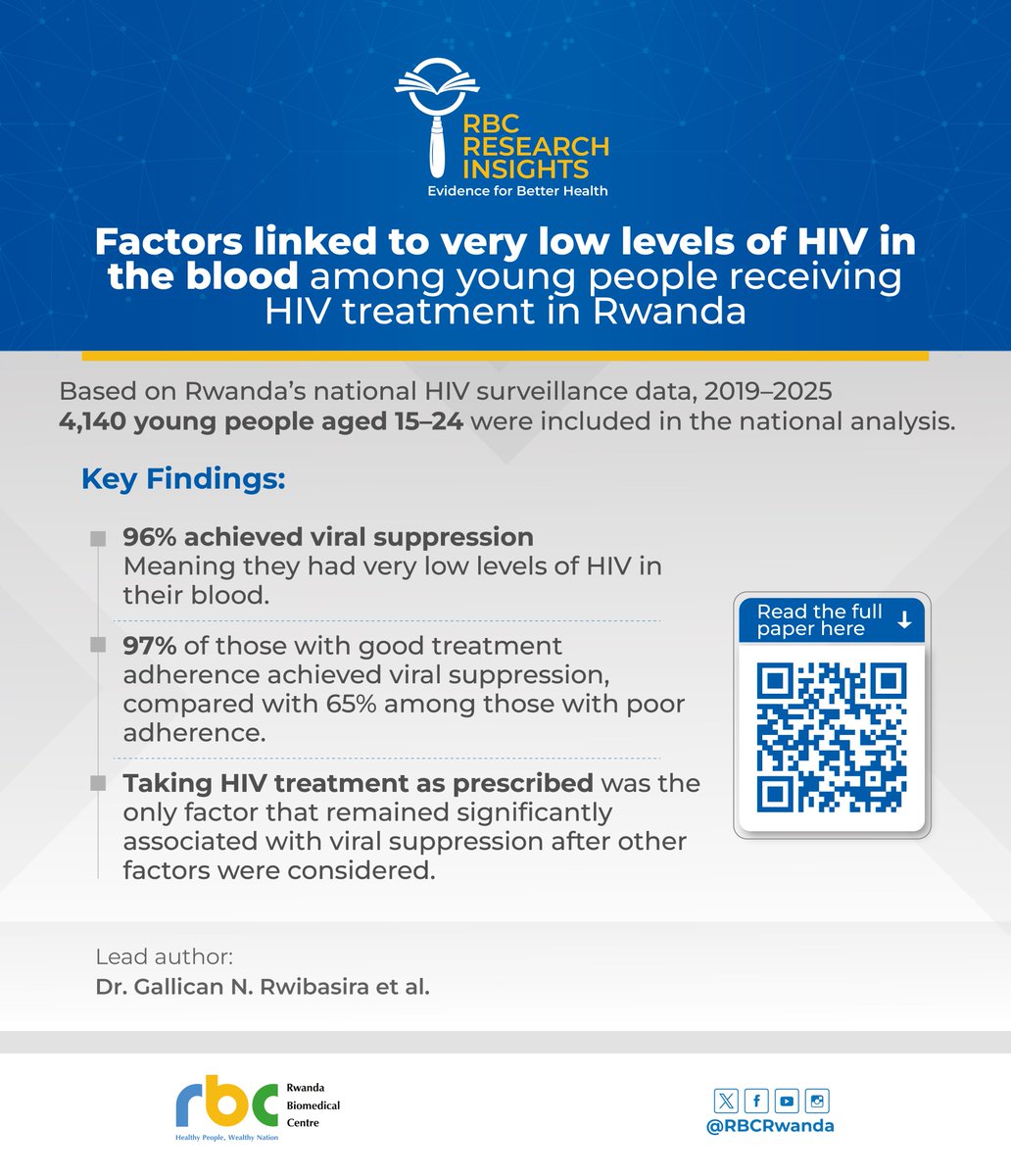
Factors linked to very low HIV levels in the blood among young people receiving HIV treatment in Rwanda.
As countries work to #endAIDS as a public health threat by 2030, new evidence from #Rwanda shows encouraging progress in HIV treatment among young people.
Researchers from the Rwanda Biomedical Centre (RBC) and partners analyzed national HIV surveillance data on 4,140 young people aged 15–24 who started #HIV treatment between 2019 and 2025 and had their viral load measured at least six months after starting treatment.
Key findings:
☑️96.1% of young people achieved viral suppression, exceeding the @UNAIDS 95% target.
☑️Treatment adherence was key: 97% with good adherence achieved suppression, compared with 65% with poor adherence.
☑️After accounting for other factors, adherence remained the only significant factor associated with viral suppression.
☑️Strong outcomes may also reflect effective ART, good tolerability, timely HIV testing, and early treatment initiation.
The findings underscore the importance of continuing to support young people in taking their #HIVtreatment consistently. The authors recommend strengthening adherence counseling and early support for young people who struggle to stay on treatment.
Read the full study: “Factors Associated with Viral Load Suppression among Adolescents and Young Adults Living with HIV on ART in Rwanda: Data From Rwanda HIV Case-Based Surveillance, 2019–2025. Journal of Tropical Medicine, 2026.”
🔗https://t.co/YIgXrdg2QD
#EndAIDS2030 #HIV #YouthHealth
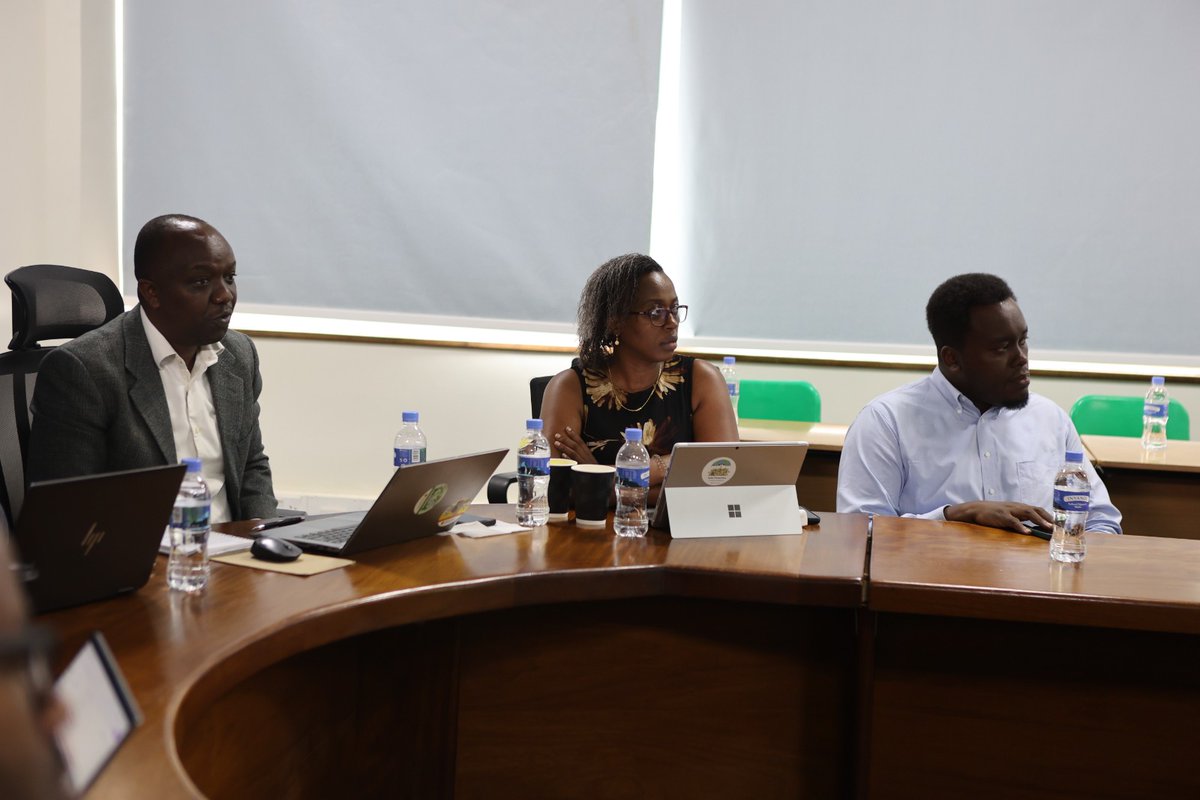
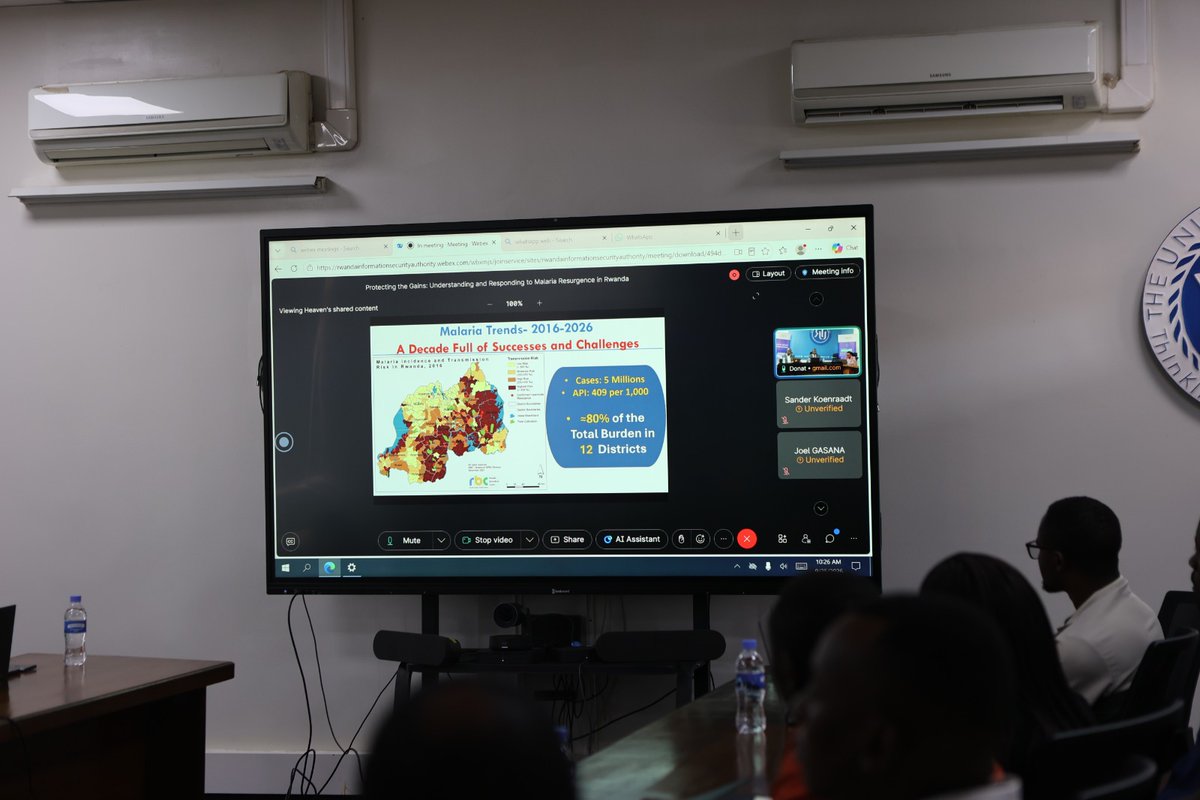
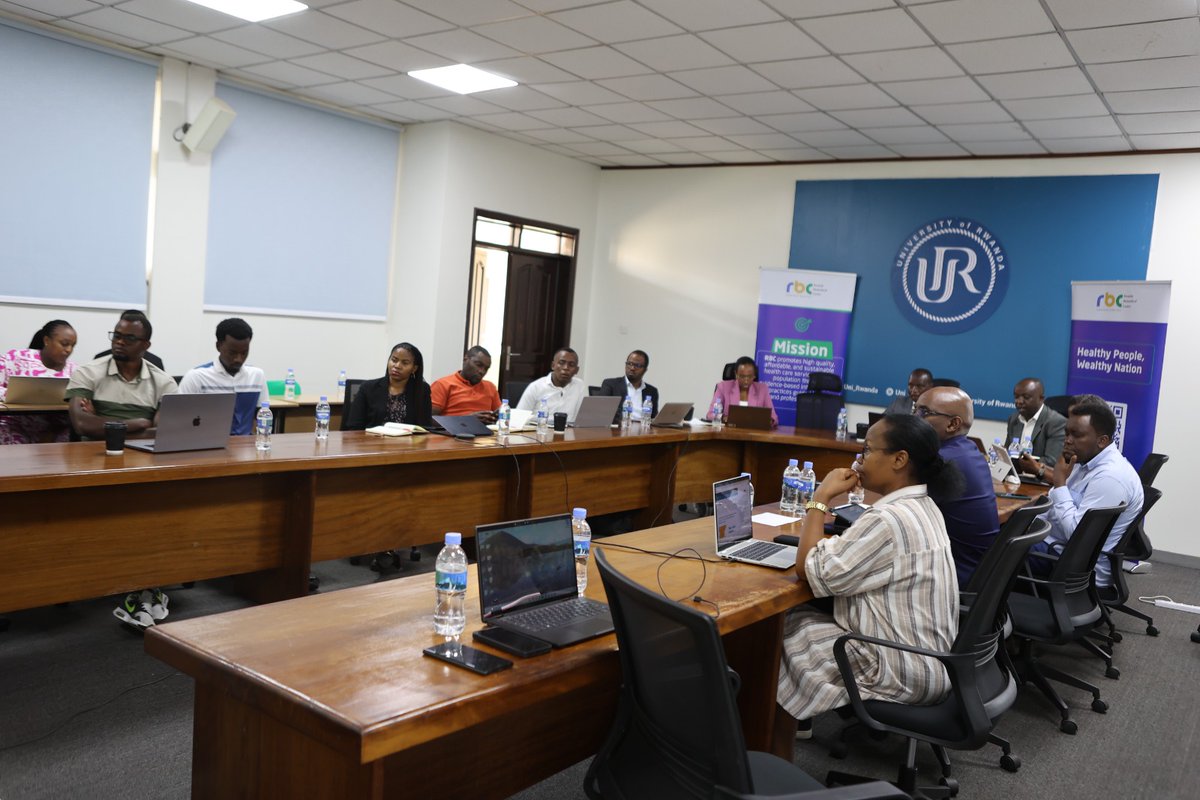
Today, RBC’s Health Science and Innovation Platform (SIP) looked at the malaria situation in #Rwanda, focusing on current trends, the recent malaria resurgence and its drivers, but also the ongoing national response to address the rise in malaria cases to protect gains.
Discussions showed that several factors contributing to malaria resurgence include mosquitoes becoming resistant to some insecticides, more mosquito breeding sites, changes in mosquito biting behavior, emerging anti-malaria drug resistance, population movement, climate change, and budget constraints to sustain evidence-based interventions.
Noting that malaria burden in Rwanda is not equally distributed across districts, the ongoing response consists of data-guided and tailored interventions.
To achieve the national goal and protect gains, there is a need for regular local surveillance, stronger community engagement, and timely response.
Closing the forum, DG @CMuvunyi stressed: “Data alone is not enough. We must turn timely, quality evidence into action” to strengthen malaria prevention, treatment, and mosquito control.
#ZeroMalariaStartsWithMe
🔎🔊RBC Research Insight!
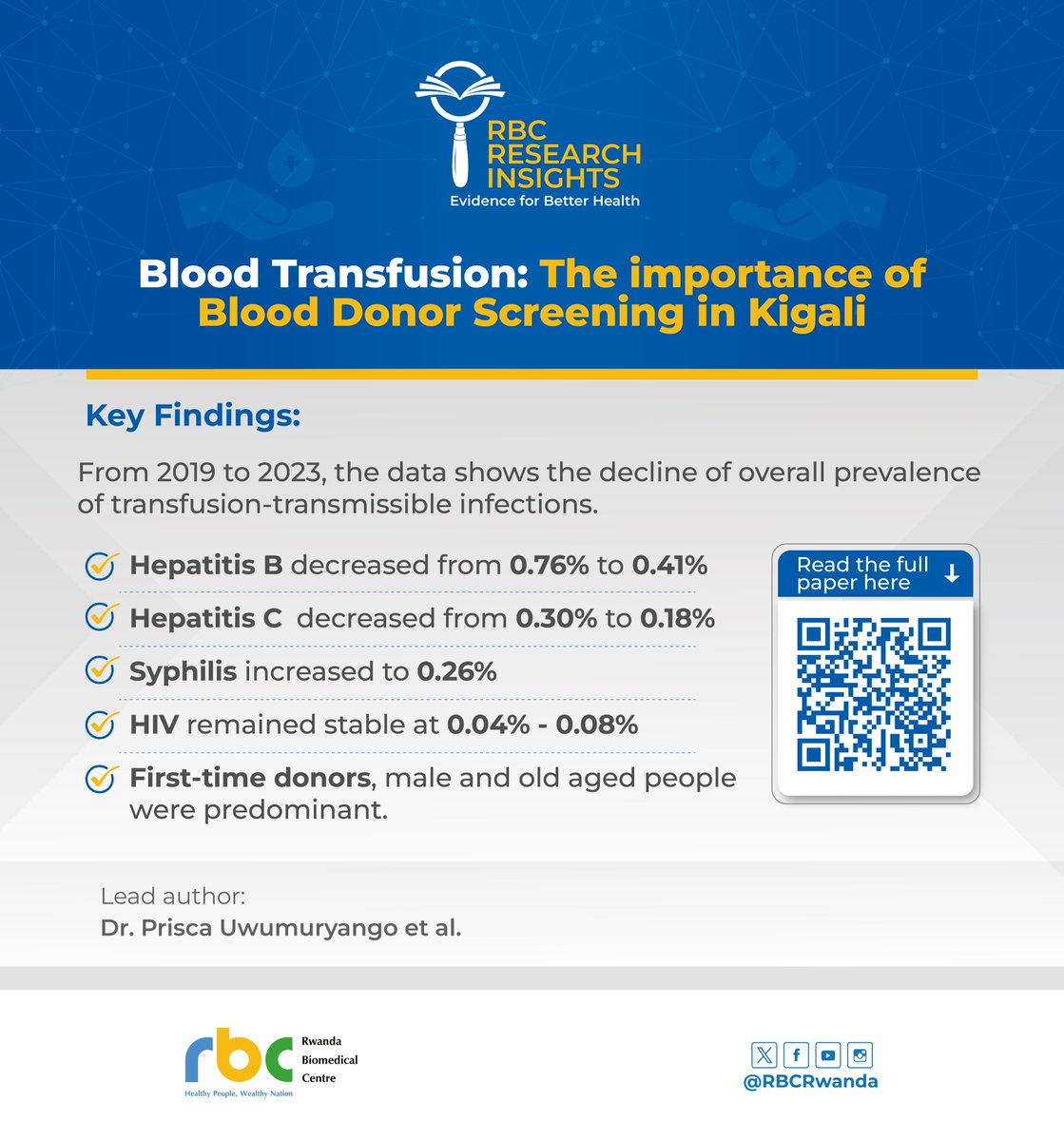
Blood Transfusion: The importance of Blood Donor Screening in Kigali.
Blood screening is essential to ensure donated blood is safe for transfusion.
Researchers from Rwanda Biomedical Centre and partner institutions analyzed over 38,000 voluntary blood donation records from 2019–2023 and found that infections detected during screening were uncommon overall.
Key findings:
✅ Hepatitis B decreased from 0.76% to 0.41%.
✅Hepatitis C decreased from 0.30% to 0.18%.
✅Syphilis increased to 0.26%.
✅HIV remained stable at 0.04% - 0.08%.
✅First-time donors, males, and older people were predominant.
The findings showed differences between first-time and regular donors, reinforcing the importance of appropriate guidance for new donors and continued regular donation among eligible donors to maintain a reliable blood supply.
Read more about the paper: “Prevalence and socio-demographic factors associated with transfusion-transmissible infections among voluntary blood donors in Kigali, Rwanda”✍️🔗 https://t.co/YbQDC61R4T
#DonateBlood #GiveBloodNow #BloodSavesLives🩸