➡️ https://t.co/CnfIRQn9zc is the most accurate early stage (Pre-Seed through Series B) investor database out there.
➡️ For BAM Ventures' profile, go to: https://t.co/XMmDVCrhgd
➡️ Fellow VCs, make sure to verify / update your profiles on the website directly.
If you are building a consumer business and know your consumer better than you know yourself, that is a sign that you should have this early-stage investor on your radar!
This week's #findfunding spotlight is on @adlebovitz, Principal at BAM Ventures.
🌄 Based in Venice, CA
⛷️ During COVID, he skied 115 days over two winters, and was still at his desk every morning by 9am PT!
🌊 In college he played on the Men's Varsity Water Polo team and was Captain of the Men's Varsity Swim Team
Among founders, @adlebovitz and his team at BAM Ventures, including Brian Lee, Shamin Walsh, and Maurice Maschmeyer, are known for being the ones to call with any problem and for finding the best person, whether that’s them or someone else, to help solve it.
To get in touch:
✉️ Warm intro is fastest and easiest, but also checking LinkedIn DMs and happy to look at cold inbound!
📰 Check out the Bam Portfolio -> bam[dot]vc/companies
For more, check out our funder spotlight card below along with BAM Ventures' profile on findfunding[dot]vc (link in comments).
Token costs are exploding
Companies have to choose: cut AI spend or cut people?
Coworker is the 3rd option
> Same frontier AI
> Chat, Cowork, Code
> 5X more tokens per dollar
Live today.
Fifi is one of the most impressive founders we're fortunate to have backed - even though she's barely 18!
She's now hiring a founding engineer for Maxed. The most important thing when joining a company as a founding engineer is the founder.
Fifi's track record speaks for herself: Self-taught coder since 7, three companies before 18, speaks five languages, played competitive chess, and SO MUCH more.
Now, at 18, she's rebuilding accounting from the ground up as an AI-native operating system at Maxed, with backing from angels including the founders of Notion, DigitalOcean, and SecurityScorecard.
If you want to build with a founder who'll definitely raise your bar and intensity, take a look: https://t.co/1CaV8IUEWV
I'm hiring our first, full-time founding engineer at Maxed 👇
Accounting is one of the largest professional services markets on Earth and it's about to be rebuilt from the ground up.
Maxed is an open-source, AI-native operating system for CPA firms.
Design partners are live. The architecture underneath has never been built before and as a result, most of what we're doing has no playbook - you have to be the kind of person who finds that energising.
I'm technical, obsessed and this is my whole life. I need someone wired the same way.
Help rebuild a trillion-dollar industry from the inside out - apply here: https://t.co/bpWXGkW74I
Today, we dropped the price of enterprise AI by 80%.
Same frontier AI. Same chat, cowork, and code experience.
Just 5x more tokens for the same spend.
Here’s how and why. 👇 Also, we made a video. Please enjoy.
Early-stage hiring can be a lot like venture investing:
It's power-law driven: a few people contribute most of the value. So it’s far more important to hire the best people than it is to avoid making bad hires. Which means you’re not making mistakes, you’re likely not taking enough swings.
It's also people-focused rather than process-focused or role-focused. When you’re looking for venture investments, you’re not pre-defining everything at the outset. You're not saying something like “okay, I have 15 companies I'm going to invest in, 5 will look like this, 5 will look like that, etc. They should have this kind of product, have these kinds of metrics, have these sorts of strengths."
Instead, you meet a lot of companies, and occasionally you meet one where you’re like, “Wow, these founders are GOOD. We need to invest in them, because they are generally putting it all together in some unique and differentiated way, that we never could have pre-defined a priori, but when you see it, you absolutely know. Once you identify that company, then you do whatever it takes to get them; doesn’t matter whether there is a “slot in the portfolio” for that kind of company, you just do it and you regret nothing.
The best hires do not come from pre-defining “Mission, Outcomes, Competencies” and then searching for people who fit those requirements. The best hires are much more likely to come from a process where, everyone at the company gets together and says, “Okay, who are the two dozen absolute best people we know, and how do we hire those people, for some role.” You identify those people, you spend a lot of time with them, and then the minute they become available on the hiring market, you are ready to make them an offer immediately; and you just figure out a job for them.
The parallels to VC don’t end there, the toughest part about hiring a superstar is not the diligence process, but the winning. The best candidates are in extreme demand. The close process must similarly be tailored to that person. Make the process fit the candidate vs the other way around.
To be sure, this analogy is most relevant when it is in a value-creation role at a hot company that can attract elite talent, not a value-preservation role or for non-elite talent.
What distinguishes these rare and exceptional people is that, in addition to doing a great job at what they’re known for, they will also reach into all of these corners of your company and tie off every loose end and fix every broken pipe and tune up the whole machine way beyond what any job description could ever have anticipated, or any hiring manager could assess for.
Great people like this are just absolute risk-killers inside your company; just like great founders are. They will just sit at their desk for hours and crank through fix after fix after fix for the pure love of the game and for the good of the team, and after the fact you’ll look back on the work they did and think, “wow, the impact they’ve had is so beyond anything we could’ve articulated.”
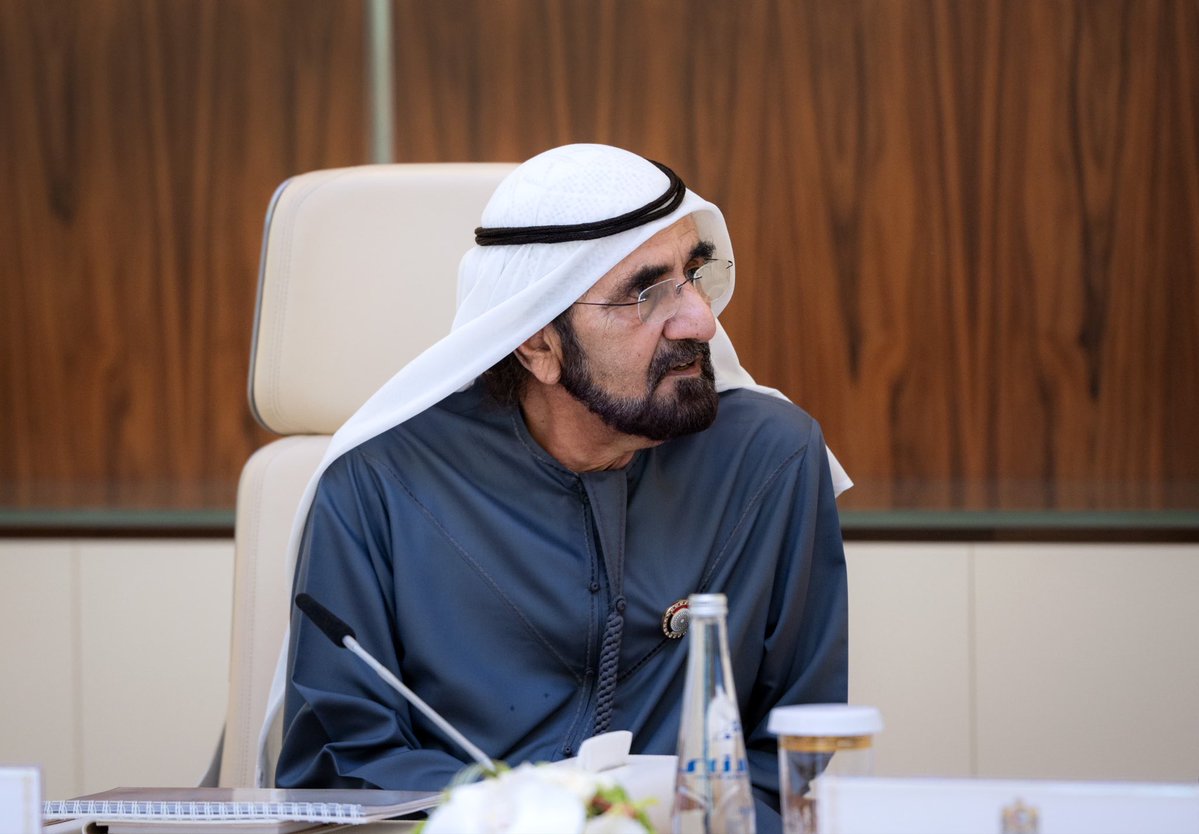
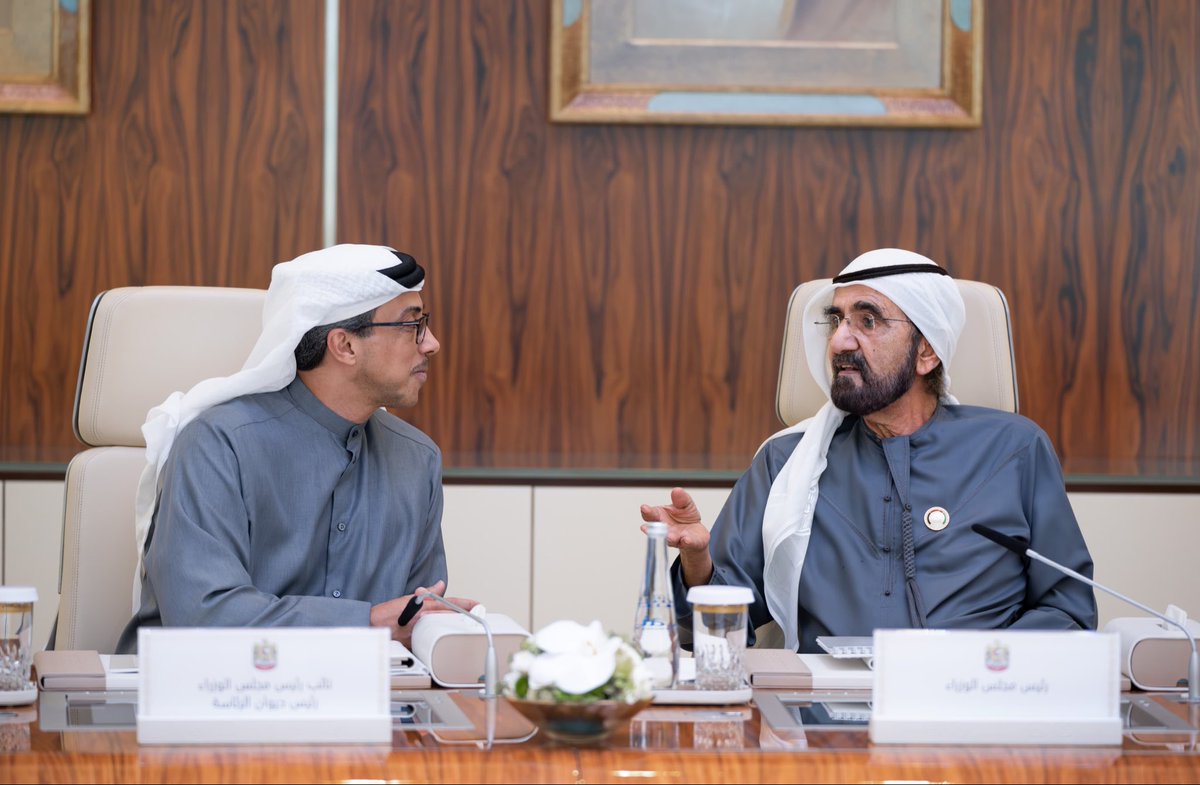
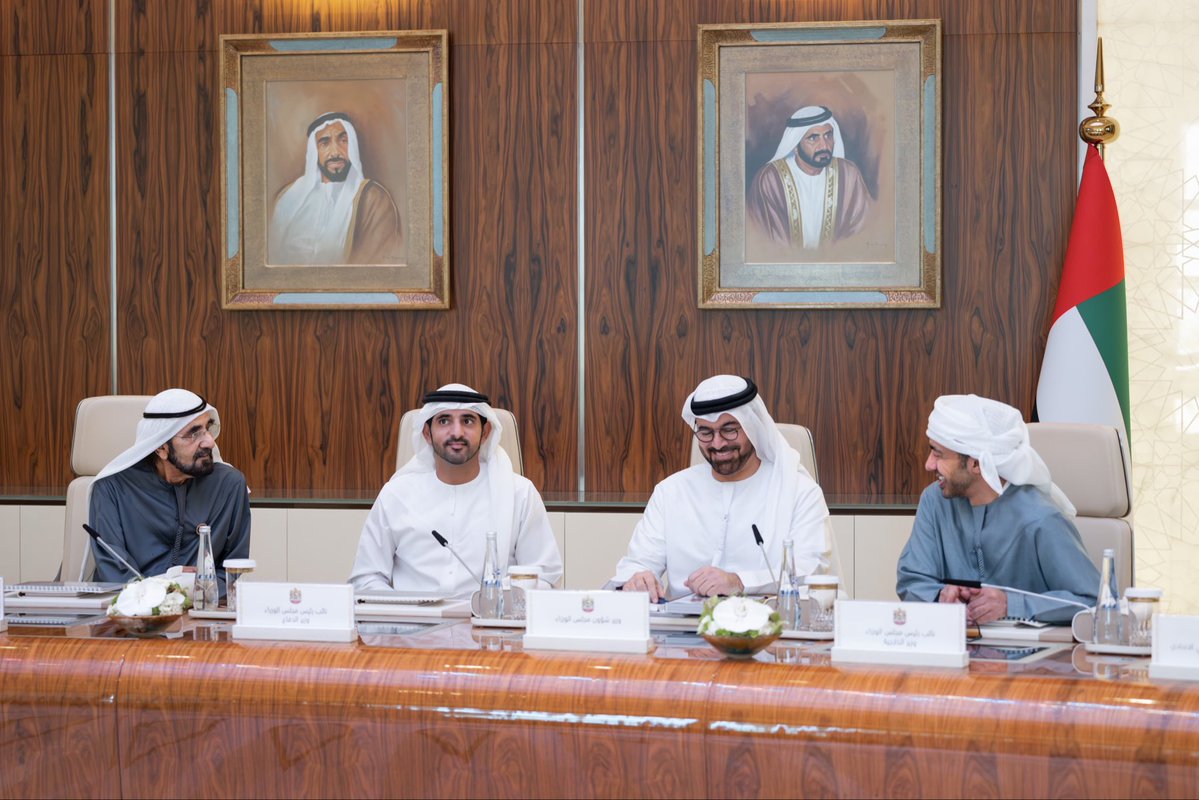
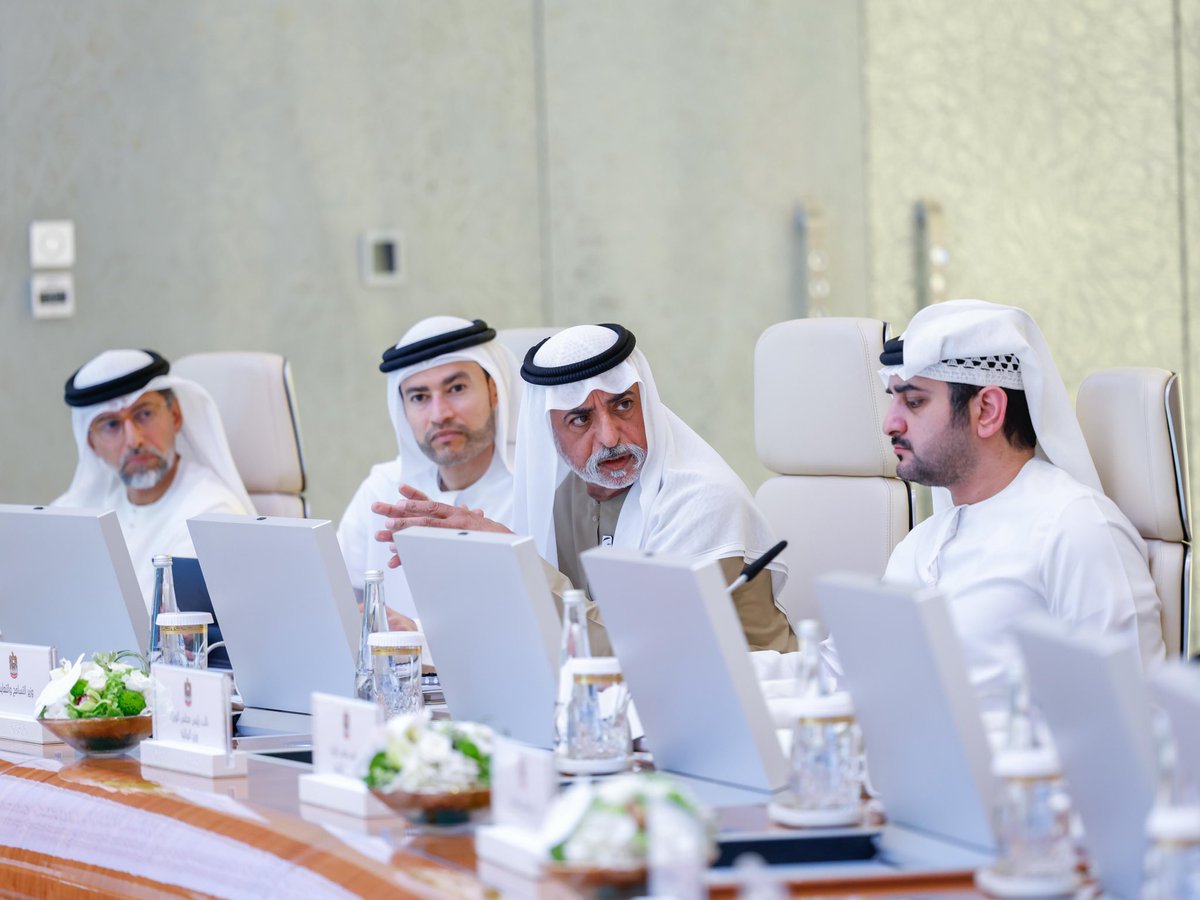
Under the directives of the President of the UAE, we launch a new government model. Within two years, 50% of government sectors, services, and operations will run on Agentic AI, making the UAE the first government globally to operate at this scale through autonomous systems.
AI is no longer a tool. It analyses, decides, executes, and improves in real time. It will become our executive partner to enhance services, accelerate decisions, and raise efficiency.
This transformation has a clear timeline. Two years. Performance across government will be measured by speed of adoption, quality of implementation, and mastery of AI in redesigning government work.
We are investing in our people. Every federal employee will be trained to master AI, building one of the world’s strongest capabilities in AI-driven government.
Implementation will be overseen by Sheikh Mansour bin Zayed, with a dedicated taskforce chaired by Mohammad Al Gergawi driving execution.
The world is changing. Technology is accelerating. Our principle remains constant. People come first. Our goal is a government that is faster, more responsive, and more impactful.
Must read for anyone building in AI re what it takes to win as an independent AI startup.
Would add a 4th point to Differentiation, Focus, and Velocity: AMBITION.
The market for feature companies is gone. The labs will eat them sooner or later. The only startups that survive the next 5 years are the ones where every decision, from day one, is sized for a huge outcome.
# The Path Forward for AI Startups
A lot of founders are messaging each other after the SpaceXAI <> Cursor “IPO-deferred acquisition”. Common discussion topic: what is the future for independent startups? Must ~everyone ultimately be acquired by a frontier lab or go extinct?
The data from our direct experience @cognition suggests the opposite. The more startups in a category that defect from independent competition by selling to a lab, the stronger the remaining ones become. We experienced this firsthand last year with Windsurf. When the founders went to Google and we acquired the remaining company, it dramatically accelerated our product roadmap and GTM. Now, cloud agents are ready for prime time, and our usage has exploded. (We’re in the fastest rate of usage growth in Cognition’s history - almost 50% month-over-month growth in Devin enterprise.) We already see the next round of acceleration with yesterday’s news, from prospects and customers to candidate inbound.
In just about every category, there’s a clear market for a winning independent offering that’s not tied to models from any one lab. Especially in a space as dynamic as software engineering, where customers value model flexibility as the rankings from different providers are constantly changing.
For startups to seize that independence opportunity, here are the lessons we’ve learned so far:
1. DIFFERENTIATION
You need to have extremely clear differentiation vs. what’s already offered by the labs. Cursor had stiff competition from Claude Code in self-serve, in part because one tool was substitutable for the other, which presented a challenge.
Our approach has been to differentiate heavily for enterprises, which is the largest market for software engineering. Specifically:
1. We invest as much in forward deployed engineering and AI enablement as we do in core R&D. Our customers treat us as a change management partner, not just an AI software engineering platform. We run 1000-person workshops all around the world to help train developers inside companies on frontier AI adoption. We target specific use cases and outcomes in addition to providing developer tooling.
2. We focus on accelerating the *entire software development lifecycle* at large company scale, not just the writing of code. Devins now spin up automatically for everything from ticket scoping to DeepWiki codebase indexing to security vulnerability remediation and application monitoring alert response.
3. We eat the pain of deployment complexity to work well in the largest and most complex environments imaginable. Cognition can run inside a customer’s virtual private cloud, has a permissioning and team collaboration model that can scale to 100,000+ developers inside one company, runs as well for COBOL mainframes as it does for modern Python. From day 1 each Devin ran in a microVM on its own machine, vs running locally as a CLI tool, which allows arbitrary horizontal scaling and is a better fit for event-driven automation.
Of course, one element of startup differentiation will always be model independence. This is particularly powerful in large enterprises, who value supplier continuity and the ability to centralize tooling without taking on the business risk that they committed to the wrong foundation model. And useful for individual developers, who always want to try the latest models. (If you haven’t yet tried the Windsurf 2.0 release which came out last week, it’s a good day to give it a shot!)
I expect the labs will catch up on some of these fronts at some point. But at that point, we’ll have already made the next leap in differentiation, because…
2. FOCUS
You won’t outcompete the labs in everything, but you can outcompete the labs in *your* thing. Every application domain has fractal complexity at the edges. Lean in to what makes your domain special and offer things no one else can. Does it make sense for a lab to devote training resources to a specialized code review model? Probably not - they’re working on AGI. But for the 3-6 month window where the latest frontier models don’t solve that use case at acceptable performance, cost, or latency, do it yourself and build a better product experience than would otherwise be possible. Rinse and repeat as the frontier of what’s possible via specialization continues to evolve.
3. VELOCITY
One of our values at Cognition is: “Every second counts.” Maniacal urgency helps in every startup, but it counts extra in today’s accelerated AI times where advantages compound faster than before. With sufficient focus, you can out-accelerate the AI labs on any one specific feature or workflow. Do this consistently to stretch the overhang of what’s enabled by each new generations of models, and you can maintain your edge on a differentiated product experience.
-
In many ways the SpaceXAI <> Cursor news is a win for everyone. SpaceX gets a new research team and the chance to become competitive in coding. Cursor gets a meaningful exit and the opportunity to accelerate their research roadmap with much more compute. And the whole ecosystem benefits from increased competitiveness among the foundation model labs. Congrats to the teams on the outcome.
@russelljkaplan This is excellent. Would add a 4th point which is AMBITION. You only have a chance if you think big and bold on every step / decision along the way. There's no more market for "feature companies" like there was 5y ago. Go big (huge) or go home.
@lucasbagnocvaz Nice one @lucasbagnocvaz and something we're thinking about a lot - as a fund focused on leading at inception, the biggest paranoia I have is around adverse selection at the top of our funnel due to ownership targets / our fund model.
Anthropic made its first dollar three years ago. last month it crossed $30B in revenue. that money is coming from somewhere, and your CFO probably can't tell you where.
the problem isn't the spending. the companies on Ramp investing the most in AI have more than doubled their revenue since 2023. the problem is that no one can see where it's going: which team drove the spike, whether it's COGS, Opex or R&D, if commitments are actually being used.
your AI providers aren't going to help you spend less. they're not going to tell you a competitor's model does the same job for a fraction of the cost. or that an open-source alternative works just as well.
so we built something. Ramp pulls token-level usage data directly from Anthropic, OpenAI, and OpenRouter into the platform where you already manage cards, bill pay, and procurement. connect an API key — five minutes, no engineering — and finance can see every dollar by provider, model, team, and project. free for all Ramp customers. if you want it too, Veeral shows how to set it up in minutes.
the companies building financial discipline around AI now will know where to double down and where to cut. everyone else will be explaining to their board why their fastest-growing cost is also their least well understood.
@BillAckman I know a company working on making sure your odds of getting cancer (plus Alzheimer, diabetes or any genetic disease) are significantly lower in the first place - would love to introduce them to you @BillAckman










![PascalUnger's tweet photo. If you are building a consumer business and know your consumer better than you know yourself, that is a sign that you should have this early-stage investor on your radar!
This week's #findfunding spotlight is on @adlebovitz, Principal at BAM Ventures.
🌄 Based in Venice, CA
⛷️ During COVID, he skied 115 days over two winters, and was still at his desk every morning by 9am PT!
🌊 In college he played on the Men's Varsity Water Polo team and was Captain of the Men's Varsity Swim Team
Among founders, @adlebovitz and his team at BAM Ventures, including Brian Lee, Shamin Walsh, and Maurice Maschmeyer, are known for being the ones to call with any problem and for finding the best person, whether that’s them or someone else, to help solve it.
To get in touch:
✉️ Warm intro is fastest and easiest, but also checking LinkedIn DMs and happy to look at cold inbound!
📰 Check out the Bam Portfolio -> bam[dot]vc/companies
For more, check out our funder spotlight card below along with BAM Ventures' profile on findfunding[dot]vc (link in comments).](https://pbs.twimg.com/media/HJcRiy7a0AAGXKy.jpg)