🧭 Your phone whispers:
“You’re above a 2,000-year-old temple.”
No manual search. No battery-draining GPS.
PastPath auto-detects your stops → 28K+ verified hidden gems.
It doesn’t just show history. It makes YOU walk through it. ⏳
#WalkThroughHistory#HiddenGems
That's the secret of Sintra.
The oldest site is the one most people rush past. The two that scream "magic" and "mystery" are the youngest of all.
It's what happens when huge wealth and imagination fall in love with the past and build a better version of it. ✨
Full guide 👇
https://t.co/eh5Bw8rofu
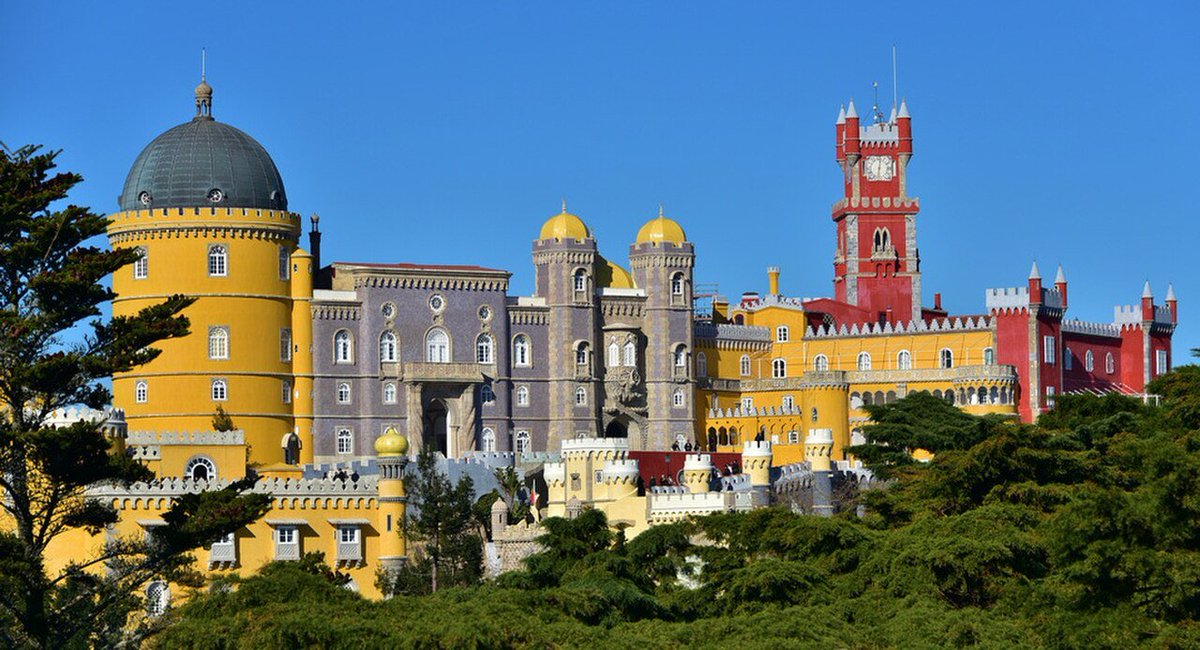
This looks like a 1,000-year-old fairy-tale castle. 🏰
It's younger than the railway.
Welcome to Sintra the most magical hilltop in Europe, where almost nothing is as old as it looks. 🇵🇹🧵
So what in Sintra is actually ancient?
One thing: the Castelo dos Mouros. 🪨
Serpentine walls built by the Moors the Muslims who ruled Iberia around the 8th–9th centuries, taken by Portugal's first king in 1147.
Walk its ramparts for the best view on the hill.
Nope.
Built between 1904 and 1910 by a rich collector obsessed with secret societies. The Templar, Masonic and alchemical symbols are HIS fascinations not real history.
No Templars ever set foot here. It's a millionaire's puzzle-box.
And it's unforgettable. 🗝️
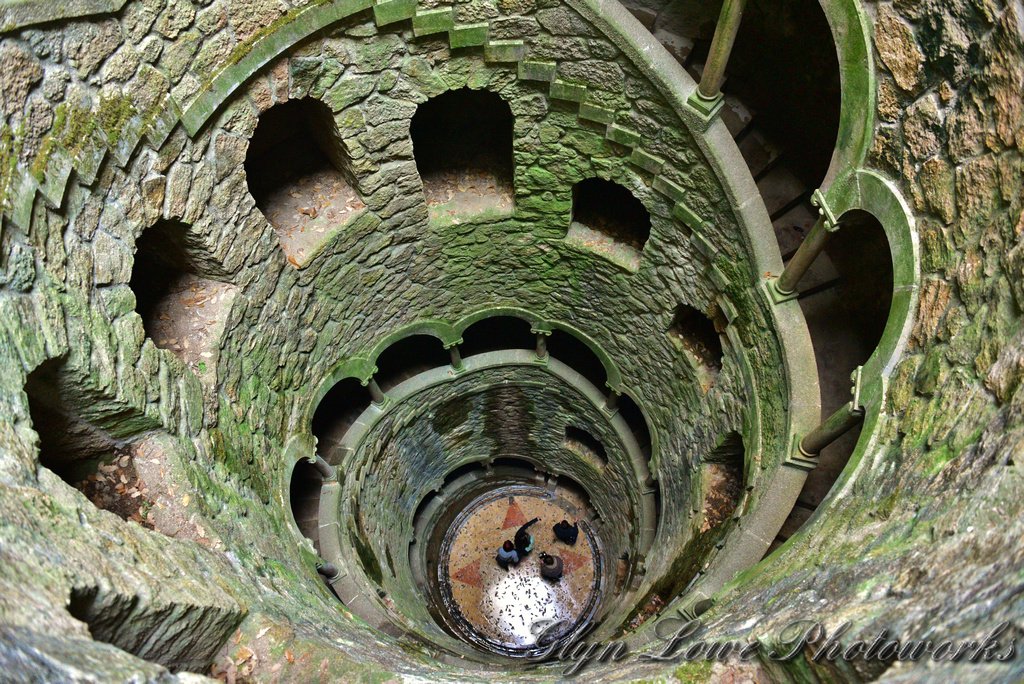
Then there's Quinta da Regaleira and its "Initiation Well." 🌀
An inverted stone tower spiralling 27 metres straight DOWN into the earth. Nine landings. A Templar cross at the bottom. You climb down into the dark and out through a hidden tunnel.
Ancient Templar ritual site?
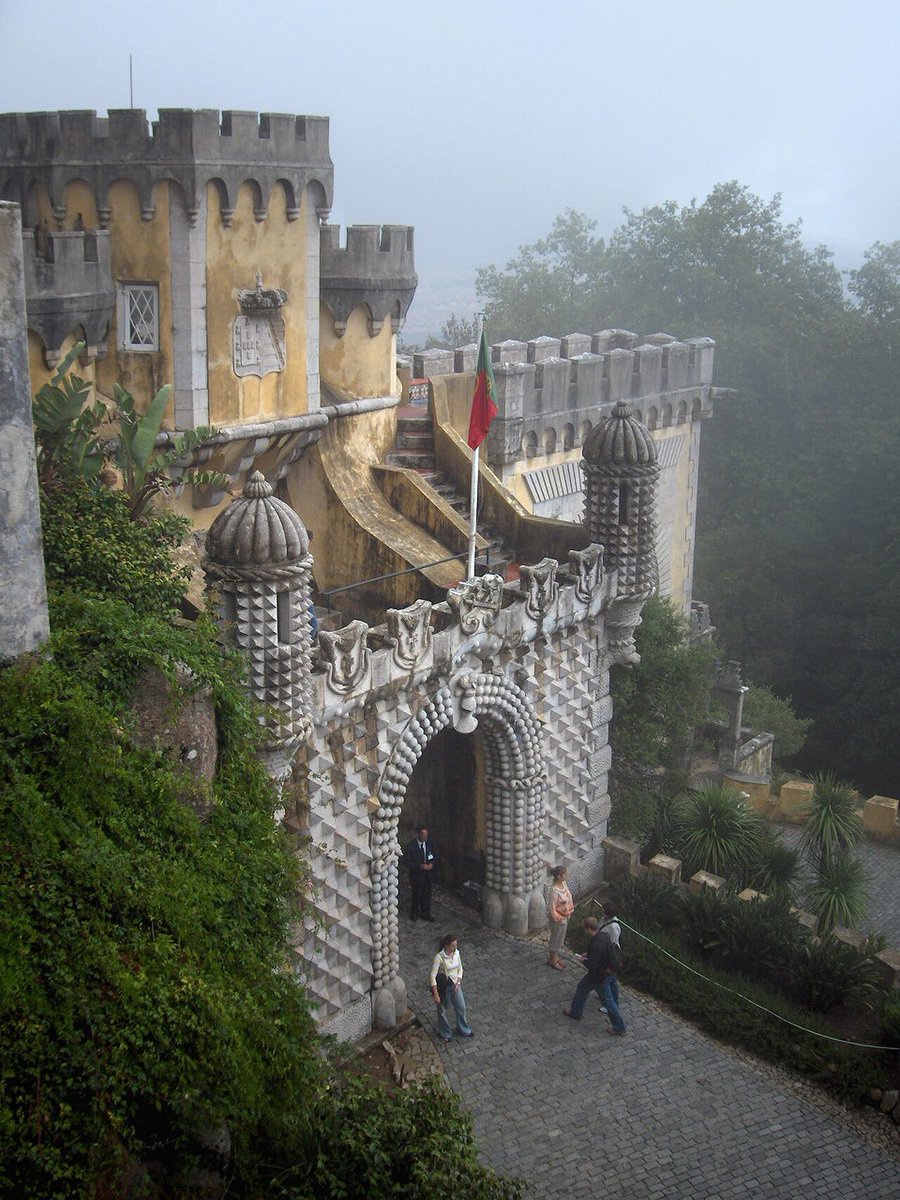
Pena Palace. Red towers, a blue dome, a drawbridge that never defended anything.
Everyone thinks it's medieval.
It was built in the 1840s–50s by an artist-king, Ferdinand II on the ruins of a monastery the 1755 earthquake had flattened.
It's a daydream in stone. 🎨
Pena Palace. Red towers, a blue dome, a drawbridge that never defended anything.
Everyone thinks it's medieval.
It was built in the 1840s–50s by an artist-king, Ferdinand II on the ruins of a monastery the 1755 earthquake had flattened.
It's a daydream in stone. 🎨
Almost everything else of Muslim Spain is gone. But on its red hill above Granada, the Alhambra still stands its fountains still running, its carved walls still whispering their poetry, the snow still falling on the mountains behind it.
The conquerors couldn't destroy it. So it's still here.
Full guide + a route 👇
https://t.co/ZZwhrV8GnX
Would you visit?
When Christian kings conquered Granada in 1492, they destroyed much of Muslim Spain. 🕌
But the Alhambra was so beautiful they couldn't bring themselves to tear it down. Its last emir wept as he rode away. A thread on the masterpiece of Moorish Spain 🧵
👑 1492: the last sigh
By 1491, Granada was the last Muslim kingdom in Spain. On 2 January 1492, its emir Boabdil surrendered the keys without a final battle, ending nearly 800 years of Muslim rule. Tradition says that as he looked back for a last view of the Alhambra, he wept the spot is still called "the Moor's last sigh."
🕌 And where it all began — Córdoba
To see the height of Moorish Spain, go north to Córdoba, once one of the largest, most cultured cities on Earth. Its Mezquita is a forest of 850 columns and red-and-white arches marching into infinity with a Christian cathedral built, astonishingly, right into its centre. Nowhere shows Spain's layered history so vividly.
🌿 A garden built as a rehearsal for paradise
Beyond the palace lie the Generalife gardens. To Islamic culture, a garden of water, shade and greenery was a foretaste of paradise itself and here long pools and fountains run everywhere, fed by a canal the Nasrids built to bring water up the whole hill. In a dry land, water was the true luxury.
🦁 The Court of the Lions
At the peak of Nasrid art: a fountain held up by twelve marble lions, ringed by a forest of impossibly slender columns. The walls around it are carved into lace-like stucco Qur'anic verses and Arabic poetry running across every surface, so delicate they seem impossible in solid plaster.
🏰 The Red Fortress
For nearly 800 years, much of Spain was Al-Andalus a Muslim civilization of poetry, science and dazzling architecture. Its greatest masterpiece still stands above Granada: the Alhambra, "the red fortress," a whole palace-city of courtyards, halls and gardens built by the Nasrid kings between 1238 and 1492.
For 65 kilometres, one river runs beneath a crown of 40 castles — built by lords who grew rich robbing the ships below, wrecked by armies, rebuilt by dreaming kings.
You can drive it, cruise it, or sleep in one.
Full guide + a route to follow 👇
https://t.co/gq741krTqU
Which would you visit?
Along one 65-km stretch of a German river stand more than 40 medieval castles. 🏰
The highest concentration of fortresses on Earth — built by "robber barons" who strung chains across the water to rob every passing ship. A thread on the castles of the Rhine 🧵
🧜♀️ And the rock of the Loreley
Between the castles rises the Loreley, a steep slate rock at the river's narrowest, most dangerous bend. Legend says a beautiful maiden sat here, combing her golden hair and singing — luring boatmen to wreck their vessels on the rocks below, distracted by her song. The valley's real danger, wrapped in myth.
⚔️ Rheinfels — the mightiest of all
Founded in 1245, Rheinfels grew into the largest fortress on the Rhine — so strong that in 1692 it held off an assault by 28,000 French troops. A century later, another French army finally reduced it to the vast, dramatic ruin you can explore today, with tunnels, mines and ramparts above the river.
🐱 Cat Castle vs Mouse Castle
Two rival castles face each other across the valley. The bigger one, Burg Katz — "Cat Castle" — was built to guard its lord's tolls. When a rival bishop built a smaller castle nearby, it was mockingly nicknamed Burg Maus — "Mouse Castle." The cat, forever poised to pounce on the mouse. Medieval trash talk, in stone.
🏰 Marksburg — the one that never fell
Almost every castle on the Rhine was destroyed at some point — by the French, by wars, by time — and later rebuilt. Marksburg is the exception: in 700 years it has never been destroyed. So it's the best place on Earth to see a real medieval castle exactly as it was, torture chamber and all.
⛴️ Pfalzgrafenstein — a castle on the river itself
The strangest of them all doesn't sit on a hill — it sits in the middle of the Rhine, on a tiny island, shaped like a great stone ship with a pointed prow cutting the current. Built in 1326 as a toll station: it worked with a castle on the bank and a chain across the river to trap ships and make them pay.