$NEAR market structure is bullish at monthly & weekly timeframes and monthly order block is sitting at 2.2$ level that will be strong reversal point accumulate in following levels:-
1) 2.3$
2) 2.2$
3) 2.1$
4 2$
5) 1.9$
first target will be 6$ in coming months 🚀 🚀
$NEAR #NEAR
Bitcoin closed green, but it's still below TBO support at $76,388.88 and approaching the rising cloud bottom. A bullish RSI reset and bullish divergence support my dip-buy thesis, even while on-balance volume shows sellers in control. I'm watching $81,000 and potentially $87,000 as rebound scenarios, not confirmed targets. Ethereum remains strongly bearish below its cloud, but its rising slow line makes this look like a countertrend drawdown within a macro bullish trend.
📈 Kalshi Perpetuals
Trade Kalshi Perpetuals: https://t.co/qAYXZUoEvo
I’m an independent Kalshi affiliate and may earn a commission. Perpetuals trading carries a high risk of loss; availability and eligibility may vary.
Combined stablecoin dominance has touched its weekly fast line after a close-long signal; I'm looking for a retreat toward 8.95% support. Small-cap dominance is improving, but BTC dominance's four-hour breakout means altcoin rotation isn't confirmed. DXY's return inside the cloud and falling VIX and MOVE support my recovery outlook. S&P futures still need to reclaim the daily cloud: its tightening TBO squeeze warns of an explosive move, not a guaranteed direction. Gold is outperforming Bitcoin for now, while the gold/BTC weekly fast-line test could offer a rotation opportunity.
AVAX and ARB are showing recovery signals, PEPE remains strong bullish, and PIEVERSE is extended after its surge. XMR's return into the cloud illustrates why I use TBO Pro to distinguish strength from an overstretched trend. IONQ's bounce is a reminder to take partial profits at the fast and slow lines rather than round-trip a recovery. INTC and MRVL have bullish RSI resets, but a V-shaped recovery isn't assured. QUBIC has lost TBO support, PONS remains strongly bearish, and AAVE still needs to reclaim its fast line. Buying an oversold chart doesn't remove the need for confirmation, profit targets and risk management.
CHAPTER MARKERS
00:00 Bitcoin Support and Bullish RSI Divergence
02:08 Ethereum's Countertrend Drawdown
03:22 BTC Dominance and Altcoin Rotation
04:27 Stablecoin Dominance and Altcoin Market Caps
09:18 DXY Pullback and EUR/USD Recovery
11:23 S&P Futures: TBO Squeeze and Recovery Levels
15:55 VIX and MOVE: Volatility Exhaustion
20:03 IWM, NVDA, TSLA and SPCX Bounces
23:30 Oil, Gold, Silver, Platinum and Copper
26:43 Gold Versus Bitcoin Rotation Signals
28:00 Free Resources, Trading Journal and Kalshi
32:15 AVAX, PEPE, ARB and PIEVERSE
35:19 USELESS, BEAM and XMR Trend Strength
37:15 PI, CC, HBAR, STABLE and FLOKI
39:31 RKLB, IONQ and MU: Plan Your Profits
42:52 AIOZ, FET, LTC, NIGHT and ONDO
44:21 QUBIC, STRK, VIRTUAL, ZEC and ZIG
45:51 AMZN, BN, CIBR and DRUP
47:58 E3B, EOAN, INTC and ENRG
50:18 GSK, LSX, MRVL, PAVE and S0LR
51:57 UMDV and Visa: Trend Exhaustion Risk
52:57 COHR, CRDO and VRT Bounce Setups
55:12 PONS, PEARL, ORCA and AAVE
57:01 GATO and Meme-Coin Risk
58:04 Using the Better Traders Journal
WATCH: Charles Schwab is expanding its cryptocurrency offerings by adding $LINK, $AVAX, and $SOL for trading.
The $13 trillion asset management giant will make the three digital assets available to eligible U.S. retail customers, giving investors more access to major cryptocurrencies through its platform.
The move signals growing institutional acceptance of digital assets and further strengthens the connection between traditional finance and the crypto market.
Opportunity Is Not Enough: Why AI Trading Agents Need Hard Limits
AI agents are getting better at identifying trades. That does not automatically make them safer to give capital to.
An agent can correctly spot an opportunity and still lose money through poor position sizing, bad entry timing, or repeatedly re-entering the same setup. In those cases, intelligence is not the binding constraint risk control is.
This is the distinction @meetmotes is trying to address. Instead of focusing only on making the agent smarter, the system emphasizes what the agent is allowed to do. Owners set parameters such as maximum capital per trade, daily exposure limits, permitted assets, and stop conditions. These are designed to be enforced by the smart account itself rather than relying on the agent (or a frontend) to respect them.
That architecture is more interesting than pure autonomy. The agent proposes. The policy layer decides whether the action is allowed. The owner retains the ability to pause or revoke permissions.
Still, enforceable limits are not the same as perfect protection. Market gaps, liquidity issues, latency, and open positions can all cause an account to breach a theoretical stop. The practical question is whether the system degrades gracefully under those conditions rather than simply assuming the rules will always hold.
Smarter agents are useful. Agents that cannot easily destroy capital when they are wrong are more useful.
MY WEDDING DRESS WAS READY. THE VENUE WAS BOOKED. EVERYONE HAD ARRIVED. THEN MY FUTURE MOTHER-IN-LAW PULLED ME ASIDE AND SAID, “IF YOU MARRY MY SON TOMORROW, YOU WILL REGRET WHAT I DIDN’T TELL YOU.” 😳
PART 3
I zoomed in on the document Vanessa had sent me. My name was printed at the top, followed by my address, identification details and a signature that looked disturbingly similar to mine. Beneath it was an application for a business loan worth $85,000. I had never applied for that loan, never authorised anyone to apply on my behalf and certainly never agreed to become responsible for Daniel’s business debts. I called Vanessa immediately. She answered on the first ring, as though she had been waiting for me. Her voice was calm, but I could hear the exhaustion in it. She told me she had found my name while reviewing documents connected to Daniel’s company. Apparently, he had been using relationships as a way to gain access to financial information and then presenting his partners as willing participants in business arrangements they knew nothing about.
I asked her how she knew so much. Vanessa explained that during their marriage, Daniel had convinced her to sign documents for what he described as a joint investment. He promised they were building something for their future. Months later, she discovered that he had used her information to secure loans and had moved money through accounts she didn’t recognise. When she confronted him, he told her she had misunderstood the paperwork. By the time she realised how serious it was, she was already facing financial consequences. She had spent years trying to clear her name. “I don’t care if you marry someone else,” she told me. “I don’t even want him back. But I refuse to watch another woman discover the truth after she has signed away her future.”
I asked why she hadn’t contacted me earlier. She said she had tried to reach me through social media, but Daniel had blocked her from my accounts and told his family she was harassing him. She had eventually contacted his mother, hoping someone would listen. Then she sent me copies of the original documents from their marriage and a message Daniel had sent her after their separation. In it, he warned her that nobody would believe her if she spoke publicly about what happened. I read the message twice. The man who had held my hand during our engagement and promised to protect me had once used the same hands to threaten another woman into silence.
I didn’t confront him again that night. Instead, I contacted a lawyer and reported the suspicious loan application. I also secured my financial accounts and requested that the lender flag the application as fraudulent. My lawyer advised me not to sign anything and to preserve every message and document. By morning, I had made a decision. I wasn’t getting married. It wasn’t an easy decision because both families had travelled, guests were arriving and the wedding venue was already decorated. My mother cried when I told her. My bridesmaids kept asking whether I was absolutely sure. I was sure about one thing: I couldn’t begin a marriage by pretending I hadn’t discovered a serious betrayal.
Daniel arrived at my parents’ house shortly after 9 a.m. He was furious. He demanded to know why I had allowed Vanessa to interfere with our wedding and accused me of humiliating him. I told him the wedding was cancelled and that I had contacted a lawyer about the fraudulent loan application. For the first time since I met him, he looked genuinely frightened. He tried to hug me, but I stepped away. Then he changed his approach. He said he had made mistakes in his previous marriage but that he was a different man now. He promised to explain everything after the wedding and begged me not to make a permanent decision over something we could resolve privately.
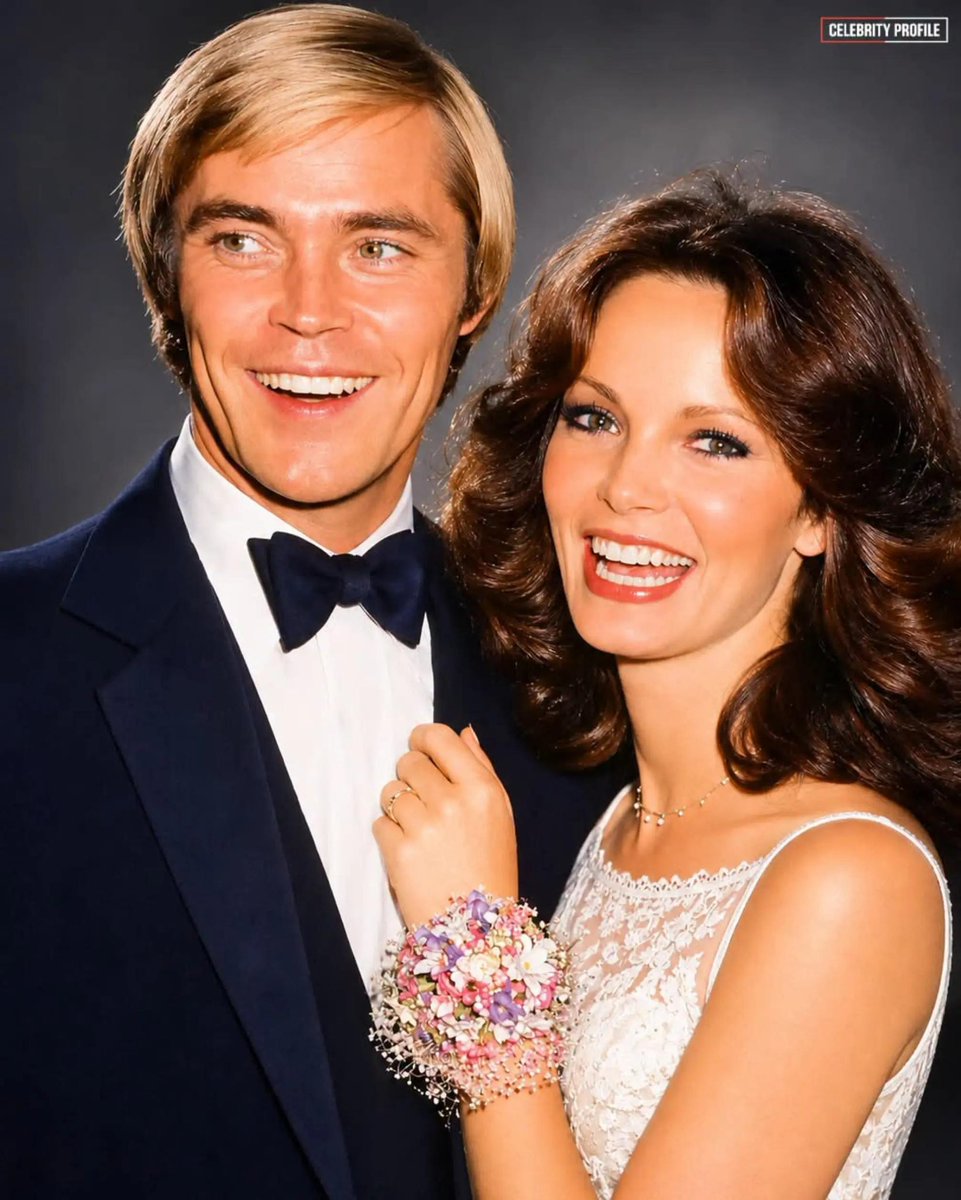
In 1970, outside a New York apartment she and her husband were considering, 24-year-old Jaclyn Smith found herself talking with Warren Beatty about a possible film role.
Her first husband, actor Roger Davis, was upstairs with their realtor. She would only learn the full truth later.
They had met at a commercial casting call in 1968 and married within months.
Smith later described how well-matched they seemed at the time: neither drank, both loved architecture, both were Southern actors, and they liked the same food.
She was young, romantic, and still believed marriage meant permanence. Then Beatty appeared and offered her an audition.
Before she could answer, Davis materialized and shut it down, telling Beatty that his wife only did commercials. What Smith later discovered made the moment cruel: while she stood on the sidewalk, Davis had been upstairs with the realtor.
The realtor’s husband eventually exposed the affair; the realtor confirmed it. Davis denied and deflected. Smith reached her limit after finding him with another woman on their fourth wedding anniversary.
They divorced in 1975.
She tried again with actor Dennis Cole. They met through Charlie’s Angels, dated for about a year and a half, and married in a deliberately secret New York ceremony in 1978 with only 25 guests, phone invitations, and decoy hotel reservations.
By then Smith was no longer the same wide-eyed bride. She discovered Cole’s infidelity through a note in his pocket; career tension added to the strain. The marriage ended in 1981.
What came next was different. While filming Nightkill (1980), she met British cinematographer Anthony B. Richmond.
He proposed after only a month or two. Their small wedding included three friends and three dogs. They married in 1981. Their son Gaston was born in 1982; daughter Spencer-Margaret followed in 1985.
Smith has spoken of those years with genuine affection and credited Richmond as a devoted partner, but alcohol and drugs eroded the marriage.
She could not live inside the chaos addiction brought with it. They divorced in 1989. Years later she spoke of his eventual sobriety with respect rather than bitterness.
In 1991, while her father was undergoing heart surgery, Smith met surgeon Brad Allen, who was part of the medical team. They dated for years—including a long stretch of long-distance living while he worked in Chicago and she raised her children in Los Angeles.
After three marriages, two children, betrayal, and addiction, she was still willing to believe that marriage itself had not been the mistake.
When they married in Los Angeles in 1997, her children were part of the day: 11-year-old Spencer-Margaret served as maid of honor and 15-year-old Gaston gave his mother away.
Nearly three decades later, Allen remains the man she points to when she talks about finally getting it right. She has said he is the best stepfather she could have hoped for and that he truly loves her children.
She kept believing long enough to find the family she wanted. 🌹
early projects on @Enter_Elysium worth a look (P2)
> @eqxlabs
– tokenized US stocks on hyperliquid, 11 live (SPY, QQQ, NVDA, SPCX…)
– backed 1:1 by custodied shares, no extra fees, on elysium day one
> @Stockium
– launchpad on hyperevm, tokens graduate to elysium paired w/ tokenized stocks (NVDA, SPY, QQQ…)
– 1–3% of every trade buys real stocks for holders. 7.9% of $Stockium supply burned so far
> @navodotfamily
– token launchpad backed by @HybraFinance, creators get 70% of trading fees
– 1% buys HYPE for the assistance fund, 1% buys back KNTQ
> @aegis_hedge
– auto-hedges your borrow w/ a perp short on hypercore before you get liquidated
– public testnet live, token launching on @AscendLaunch
> @Hyperion_RPG
– risk-to-earn RPG, 85% of in-game HYPE spend goes to the season pot
– alpha pass mint nov 9, 0.05 HYPE, 444 supply
> @elysiumant
– 1,111 NFT collection, building a prediction market on testnet
– WL quests live rn
TBC
I'm genuinely bullish on $VAR beyond the airdrop
@variational_io has the potential to build something much bigger than a points farming campaign
Strong trading activity, competitive execution and real buybacks could make $VAR worth holding long term.
A $10K airdrop isn't just free money
Holding it after TGE is another $10K decision 👀
I've seen people planning to hold their entire allocation until Variational reaches a $5B FDV
But what's the actual reason to keep holding?
For $VAR I'd be watching three things:
1. Trading volume after the points program ends
2. Whether execution remains competitive against other perp DEXs
3. Real buybacks creating demand for $VAR
If the product keeps growing and real users stick around I'll happily hold some $VAR long term.
But I also need a clear plan to take profits and protect my capital
Being bullish doesn't mean holding everything forever
What's your $VAR strategy after TGE?
Full hold for $5B FDV or taking profits along the way? 👀
He arrived in Los Angeles with a portable typewriter, a stack of unfinished pages, and the quiet certainty that the rest of his life would be decided by whether anyone ever asked to read them.
Michael Blake was already past the age when most people stop treating ambition as a full-time job. The city did not notice him.
In 1981 he met Kevin Costner at an audition neither of them got. They were the same age, equally unknown, and both stubborn enough to treat rejection as temporary weather.
They stayed in touch. Two years later Blake wrote a low-budget gambling story called Stacy’s Knights and put Costner in it.
The film vanished. The friendship did not.
Costner’s luck turned first. Roles multiplied. Doors opened. He kept holding them for Blake—introductions, recommendations, quiet favors—while Blake’s own doors stayed shut.
The longer it lasted, the more Blake treated every “no” as proof that the industry itself was the problem. He grew sharp in meetings, slow to return calls, quick to decide a project was beneath him before anyone else could. One afternoon Costner stopped the performance.
“If you hate writing scripts this much,” he said, “stop writing them.”
Blake left the room. A week later he called from a pay phone. He had nowhere to sleep. Costner told him to come over. For almost two months Blake lived on the couch, read to Costner’s daughter at bedtime, and wrote after the house went quiet.
When the invitation ran out he drove east until the money did. He stopped in Bisbee, Arizona, took a dishwashing job at a Chinese restaurant, and slept in the car when the nights were cold enough that the restaurant’s back room was locked.
Every evening he set the typewriter on the passenger seat or the kitchen table of whatever room he could rent for a few days and kept going.
The pages were about a Union officer who drifts west after the war and is absorbed, slowly and completely, by a Lakota band. It was long.
It required horses, buffalo, and dialogue in a language most studio readers could not pronounce. Westerns were already considered finished. Blake kept writing anyway.
Costner suggested he turn the screenplay into a novel first. Thirty publishers said no. In 1988 a small house said yes. The book appeared, sold modestly, and was largely ignored. Costner read it in a single sitting that ran past dawn.
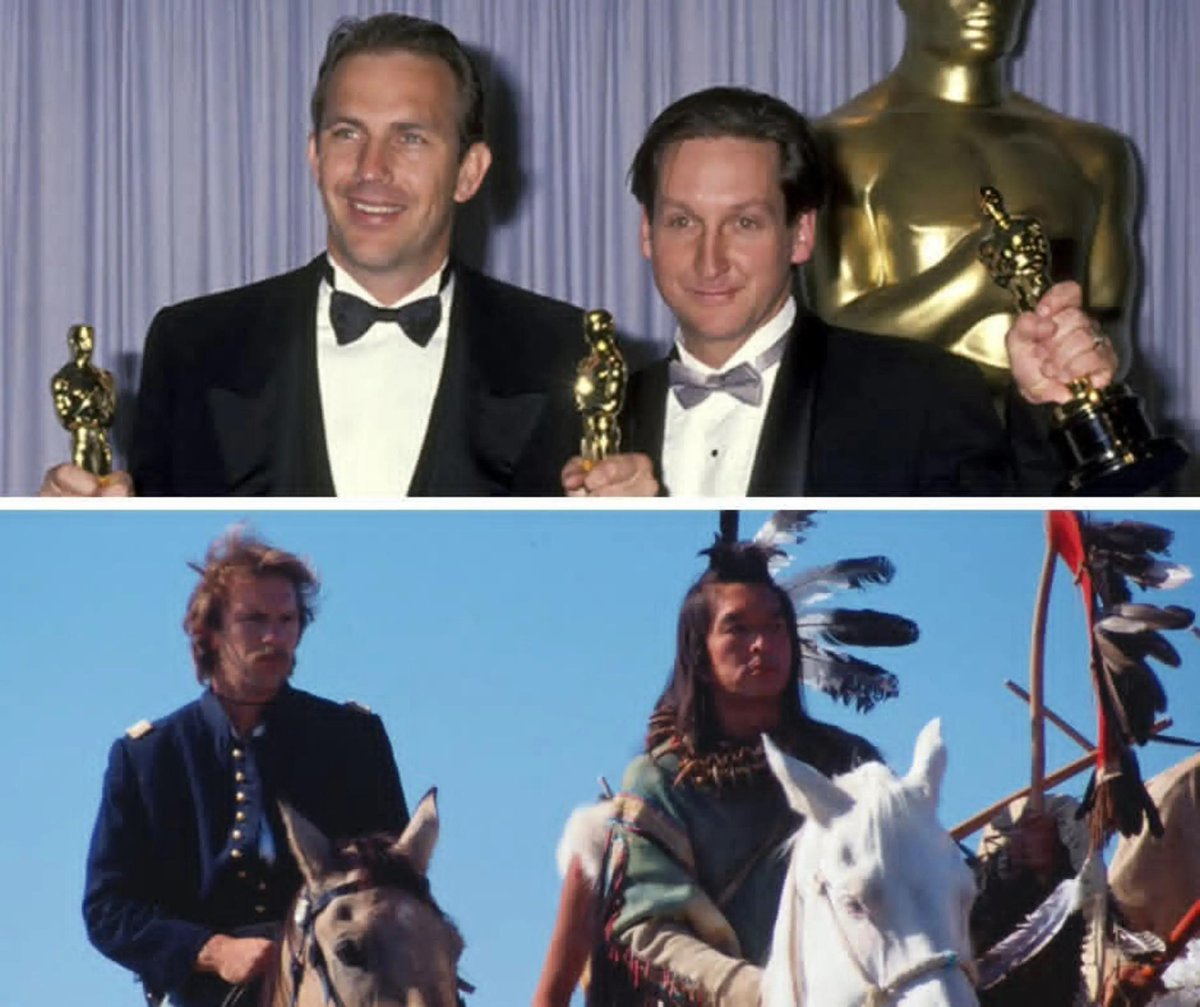
The next morning he called Blake and told him he was going to make the movie. He bought the rights with his own money, asked Blake to adapt the novel, and then made the decision that looked, to almost everyone else in the business, like career suicide: he would direct it himself.
The shoot lasted five months in South Dakota. Weather swung between extremes. Thousands of buffalo had to be managed. Horses got sick.
The budget kept climbing past what anyone had approved. Costner put more of his own money in to keep the cameras running.
When the film opened on November 21, 1990, the industry that had treated the project as a cautionary tale watched it become one of the biggest successes of the year.
It earned twelve Academy Award nominations and seven wins, among them Best Picture, Best Director, and Best Adapted Screenplay.
The screenplay Oscar went to the man who had been washing dishes and sleeping in his car.
The more durable part of the story is everything that happened before the ceremony: the years in which almost no one else believed the work was worth finishing, and the single friendship that refused to treat that disbelief as final.