The DS toolkit - Steps for regime change:
1) Leverage a real grievance as the hook, amplify the discomfort even if it is resolved, then broaden it
Start with a concrete, emotional issue, affecting many. Amplify it and keep it alive even after it is addressed and resolved. Aggregate it with other pain points to incite more people. Create a wider audience.
2) Use social media reach, virality and memetic warfare as the accelerator
Launch with satire/memes to go viral fast (low barrier with Google form sign-up, humorous branding, social marketing). Create an identity to boost belonging. Incite emotional responses (anger, fear for the future). Use skilled digital strategists to create and push content.
3) Hybrid online-to-offline escalation and sustainement
Online outrage -> Small offline actions -> Gauge public response -> Time the offline escalation (months after initial issue and its resolution) -> Use online tools to gather support and bring more offline support at site. Install a well known public face as the leader of the protest. For future puppet leader needs as well.
4) Astroturfing and Amplification
True protestors with real concerns - few thousands. Astroturfing online farm accounts - millions. Simulate organic support, incite with new ideas, direct the protest using a cyber command, non-native cyber troops pushing narrative, and micro-targeted digital content. Use plants inside platforms and media to amplify an one sided narrative.
5) Political opportunism and piggybacking
Use country's politics to amplify the protests. Provide opposition with a platform to piggyback on to help galvanize more offline protestors. Incentivize them to use the opportunity to full extent showing them the possibility of a regime change.
6) Timing and goalpost-shifting for longevity
Build slowly or time actions after an issue peaks but while anger lingers. If the core problem is addressed, pivot to broader/political demands or "systemic change" to keep relevance. This prevents quick fizzling. Keep issue alive and galvanize more support.
7) Use the created protests and planted narrative to incite violence and blame it on the govt
Create a pre-emptive narrative of "govt going to crackdown" using force and violence. Plant a narrative of govt infiltrating protests. Orchestrate violence and blame it on the govt. Incite the general public and the world to condemn and get involved. Justify actions like storming the parliament, taking over govt institutions, and arson by protestors. Amplify protests multi-fold and make the regime buckle.
Saw all this executed in Ukraine, Sri Lanka, Bangladesh, and Nepal. Can India be regime changed like this? The clueless supremacist master of the DS and its dog who are trying this imagine so. What they don't understand is the dog is going to be destroyed and the master made to manage a crisis never seen before in the coming years.
Nothing is more important than the welfare and future of our youth!
We have decided to set up fast-track courts to ensure swift and stringent punishment for those involved in paper leaks. Have directed the concerned authorities and officials to take all necessary steps in this regard. This continues our series of steps for safeguarding the interests of students.
Those who try to harm the future of our youth will not be spared.
देश के युवाओं का हित और उनका भविष्य हमारी सर्वोच्च प्राथमिकता है।
पेपर लीक के सभी मामलों में दोषियों को जल्द से जल्द कठोर दंड देने के लिए, केस के त्वरित निस्तारण के लिए फास्ट ट्रैक कोर्ट्स का गठन किया जाएगा। इस संबंध में निर्देश दे दिए गए हैं कि संबंधित विभाग आवश्यक कार्रवाई सुनिश्चित करें।
विद्यार्थियों के हितों को सुरक्षित करने के लिए, सरकार द्वारा लिए जा रहे निर्णयों की श्रृंखला में ये एक महत्वपूर्ण कदम है।
युवाओं के भविष्य के साथ खिलवाड़ करने वाले किसी भी व्यक्ति को बख्शा नहीं जाएगा।
Please amplify these success stories instead of amplifying their propaganda; they want to spread negativity and no logic will work in these times; but these postive stories are there in plenty and they are the reality of India, not those 5000 arsonists resorting to violence in the name of students.
If you want to go after govt for paper leak, do that by all means but how will you explain when folks who are responsible for making Q papers go abt sharing them with their handlers for greed!
How will you address this greed or that of parents who are willing to pay for papers in lieu of money?
When will we as a society take responsibility for our actions. Who in society shud be resigning for this?
India has approved its first #dengue#vaccine, with the Drug Controller General of India (DCGI) granting market authorisation to vaccine QDENGA, developed by Takeda Biopharmaceuticals India.
The vaccine is approved for people aged 4 to 60 years and can be given regardless of whether a person has previously been infected with dengue.
More details 🔗 https://t.co/1vmOmWwVmt
Stay informed, stay ahead – download the TOI app today 👉 https://t.co/ogFaRsVinV
Reliance Jio to Build Its Own Satellite Service Competing Against Elon Musk’s Starlink
- Jio has received official approval to launch 1,600 satellites into space.
- Satellite internet promises high-speed connectivity across every region.
#Jio#JioNews#RelianceJio #InternetService #SatelliteInternetService #Jioupdates #Telecomupdate #Telecom
A train that emits water, not smoke. How cool is that? This is India's first Hydrogen Cell Powered Train 🚆
What's cooler? India is one of only 6 nations to develop this technology ⚡
What's even cooler? India has developed the most powerful hydrogen train in the world 🔥
June 2020. The nation was facing the humongous crisis of COVID-19. In those tough times, PM Narendra Modi opened the space sector for private players.
Congress leader Anand Sharma criticized the move, calling it a “cruel joke.” Jairam Ramesh described the government’s push for planetary exploration and outer space travel as “bizarre.”
But that’s exactly the difference between a politician with a tentative outlook and a leader with long-term vision.
PM Modi knew the tough times inflicted by COVID would pass. He believed in India. Read that again: he believed in INDIA. And that belief has delivered, in the form of Vikram-1.
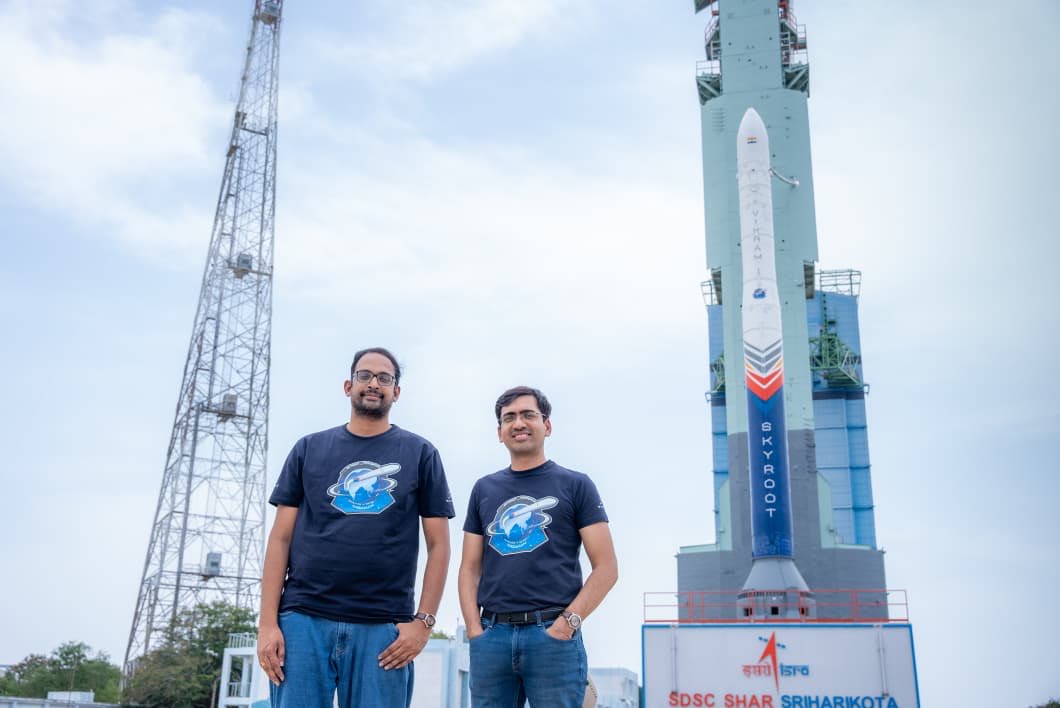
On 18 July 2026, Skyroot Aerospace’s Vikram-1 became the first privately built Indian rocket to successfully reach orbit on its very first attempt. With this, India became only the third country in the world, after the United States and China to achieve orbital launch through a privately built vehicle.
This is not luck. This is vision.
While others were busy mocking reforms during a national crisis, PM Modi was busy guiding and help build the foundation for India’s future as a space power.
India doesn’t need doomsday prophets who thrive on despair; we need leaders who believe in her potential, even in the darkest hours.
@SkyrootA@narendramodi
24 hours to lift-off. 🚀
Eight years ago, @SkyrootA started with just two people with an idea.
There was no policy framework for private spaceflight in India, no real funding ecosystem for space startups, and we were taking on one of the world’s hardest engineering challenges. The odds of success seemed incredibly small.
Today, India’s first privately developed orbital rocket stands on the launch pad, ready for lift-off.
This moment belongs to every member of our team, our investors, the Government of India,@PMOIndia, @isro, @INSPACeIND, our partners, suppliers, customers, and everyone who believed in us long before this day.
We have done everything we possibly could.
Now we let physics do its job.
Whatever tomorrow brings, every second of flight will teach us something invaluable. Reaching the launch pad and attempting an orbital launch is a landmark milestone for India—and an achievement only a handful of companies worldwide have reached. Every milestone we cross will advance not just Skyroot or India’s space journey, but the global commercial space ecosystem.
Tomorrow, we take the next step. 🇮🇳🚀
A historic new frontier for India’s space journey!
At 11:30 AM today, Skyroot Aerospace will undertake the maiden orbital launch of Vikram-1, India’s first privately developed launch vehicle.
This four-stage rocket is designed to provide rapid and on-demand launch services. This mission highlights the talent, determination and entrepreneurial spirit of our youth. It also shows how our space-sector reforms are unlocking new opportunities for innovation and enterprise.
My best wishes to the entire Skyroot Aerospace team for a successful launch. May Vikram-1 soar high, create history and inspire a generation of innovators.
I urge all Indians, especially my young friends, to follow this historic mission and join in wishing Team Skyroot success using #IndiaWithVikram1.
@SkyrootA
Let me explain what this whole fight is about, because it is very different from what the tweet by the Japanese official makes it sound like.
Back in 2015, India and Japan signed the Mumbai to Ahmedabad bullet train deal. 508 km.
India would use Japan's Shinkansen trains and Shinkansen technology. Japan put up a massive soft loan, covering most of the cost, at almost no interest, 0.1 percent, to be repaid over 50 years.
On paper it sounded amazing. Cheap money, world class trains.
But every such loan has a catch. Cheap Japanese money came tied to buying Japanese things.
Their trains. Their coaches. Their signal system. Their price, largely on their terms. That is normal. No country lends billions out of pure love. They lend to sell their own industry.
Then two things went wrong, and this is where his anger comes from.
One, the price.
The Japanese Shinkansen trainsets turned out to be extremely expensive. India felt it was being overcharged for the rolling stock. So, talks hit a wall.
Two, the timeline.
The newest Japanese trains, the E10 series, would reportedly only be ready for India around 2032. India did not want to sit on a finished 1.08 lakh crore track with no trains to run on it.
So India made a call. And this is the part I am proud of.
Instead of waiting and overpaying, India decided to run its own trains first. BEML in Bengaluru got an order to build indigenous high speed trainsets at about 866 crore each, designed to run at 280 kmph.
India will open the line with Indian made trains on the Surat to Vapi stretch around 2027, and bring in the Japanese Shinkansen later.
And the signal system, the thing he is bitter about, India switched from Japan's DS-ATC to the European ETCS Level 2 system.
The same family already used on the Delhi Meerut rapid rail. That is what he means by Japan being excluded from the signal system. India looked at the Japanese option, found it too costly and too slow, and picked a different one.
Now let me be fair, because I cannot be blind just because I am pro India.
He is not lying about everything.
India is genuinely a tough, frustrating negotiator. We change our mind. We push for our own interest till the last minute. We renegotiate things others thought were settled.
To a Japanese official raised on politeness and fixed agreements, this feels like betrayal.
But flip it around and look at it from our seat.
Our job is not to protect Japanese honour. Our job is to get India a bullet train at a fair price, that runs soon, and that builds Indian factories in the process.
On all three, changing course was the right call. Waiting till 2032 and overpaying for imported trains would have been the polite choice. It would also have been the stupid choice.
There is a bigger thing hiding under his frustration, and I think it is the real reason for the anger.
For decades, the deal was simple. Rich countries gave loans and technology, and poorer countries said thank you and bought whatever came bundled with it.
You took the money, you took their trains, you did not argue.
India argued. India took the loan, then insisted on its own trains, its own signal system, its own factories getting the work. We used their money to build our capability instead of just renting theirs.
That is what stings them. Not that we were reckless. That we refused to stay the junior partner in our own project.
I will give the Japanese side genuine credit.
Their engineering is world class. In 60 years, the Shinkansen has never had a passenger death from a derailment or collision.
That safety record is worth respecting. Their frustration with our chaos is also probably fair on a human level. Working with India can be maddening. Anyone who has managed an Indian project knows this.
For me, the real issue is what’s in it for our country.
India has the track. India is building its own trains for it. India picked its own signal system.
India got a 50 year loan at almost zero interest. And India will still get the Shinkansen later, on better terms than the original bundle.
If that is what Indian recklessness produces, I will take it every single time.
Be tough. Be a nightmare to negotiate with. Just make sure the country wins at the end of it. :)