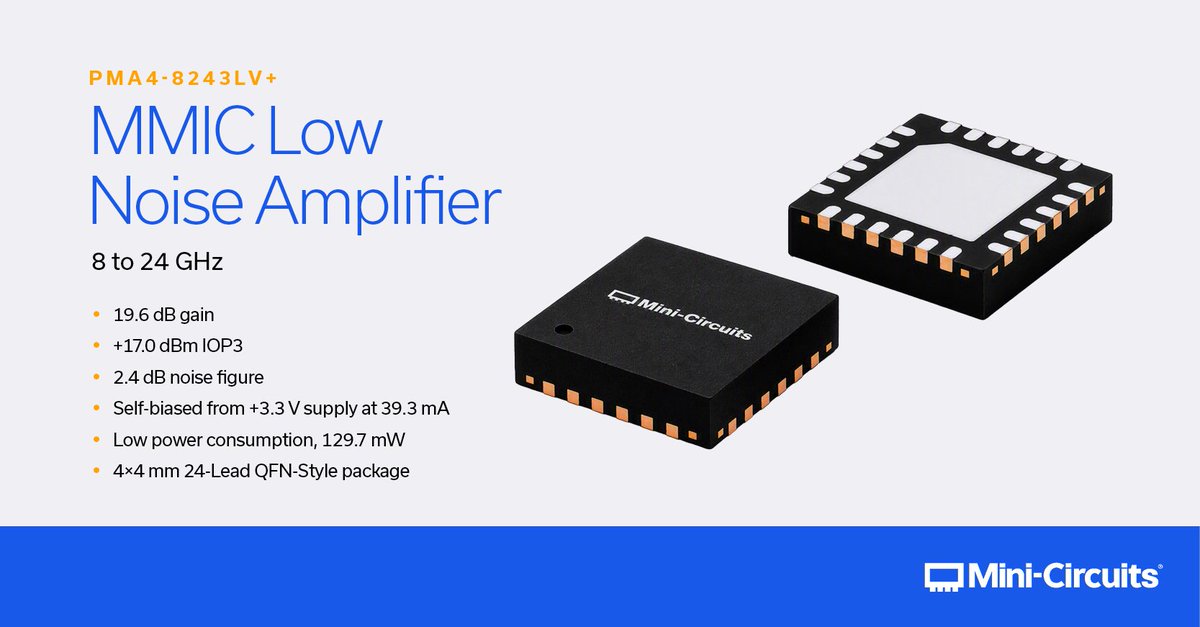
PMA4-8243LV+ is a pHEMT-based low-noise MMIC amplifier with high gain and low power consumption. Operating from 8 to 24 GHz, this amplifier is ideal for backhaul radio systems, satellite communications and more.
https://t.co/Y0QXoDRnQd
#rf#engineering#technology
SSG-33GHP-RC is a USB & Ethernet and daisy-chain signal generator operating from 0.1 to 33 GHz, ideal for 5G FR1 & FR2, WiFi 6E, millimeter wave radio infrastructure, semiconductor high power burn-in & life testing and more.
https://t.co/YANTx5VSEk
#rf#engineering#technology
Choosing the right filter is critical to ensuring cohesive functionality of any given application, influencing aspects such as insertion loss, selectivity, power handling and bandwidth. Read our article to find out more.
https://t.co/0I1tKXJefr
#rf#engineering#technology
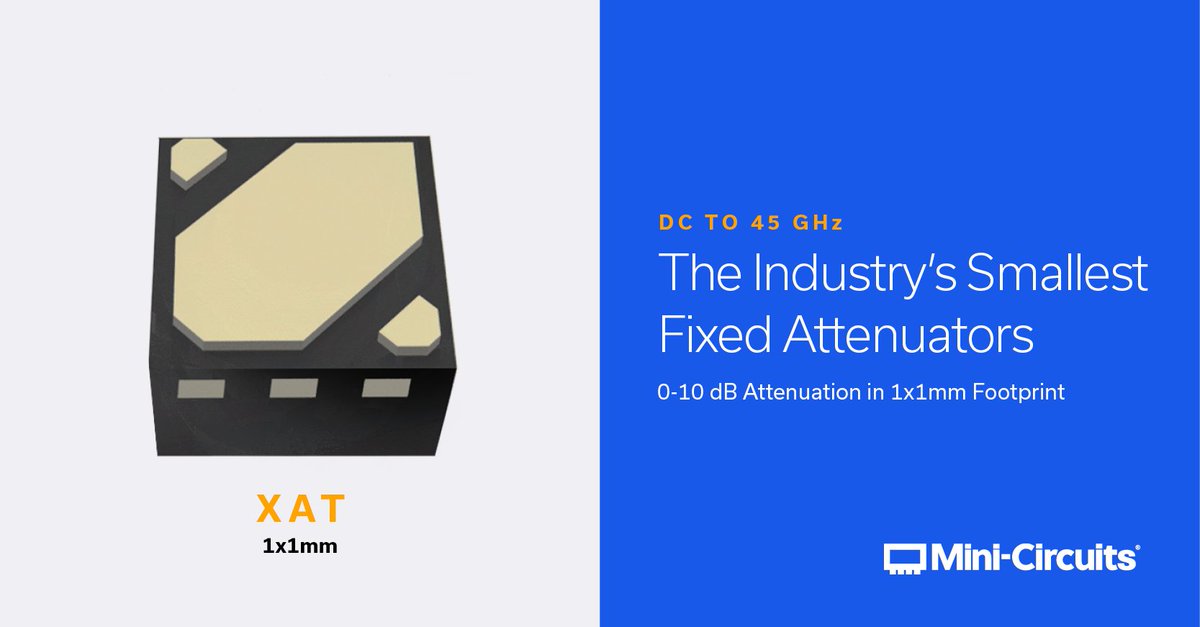
The new XAT-Series redefines RF miniaturization with the industry's smallest MMIC fixed attenuators. Housed in an ultra-compact 2-lead, 1×1mm QFN package, these attenuators enable significant PCB space savings.
https://t.co/pV0RaKcFX2
#rf#engineering#technology
The Microwave Journal September Automotive & Connected Vehicles issue, plus the EW, Radar & MilCom
Supplement are now live! https://t.co/9VWXjCyw5r
Welcome to Mini-Circuits’ premier episode of our new pod cast, Above the Noise, with host Pat Hindle. In this episode, Pat interviews Jim Cable, the semiconductor leader behind Peregrine’s RF CMOS breakthroughs.
https://t.co/0GJMdLm39x
#rf#podcast#semiconductor
New Podcast series, Above the Noise from @MiniCircuits: How RF CMOS Won: Jim Cable on Peregrine, Murata, and the CMOS Switch Rev... https://t.co/mQDtm6HnhW via @YouTube
Tom Kole, VP of Sales & Marketing @IntegraRF_PWR, talks with @pathindle about the evolution of high voltage #GaN from 50 to 150 V with the release of the industry's first single device 10 kW transistor operating at VHF and L-Band. Watch now: https://t.co/GS0gwPh4cO
My last Frequency Matters Video - Get your dose of FM before the long weekend: Satellite/Space, @ADI_News Interview, Industry News/@IEEE_IMS https://t.co/smoR55VAl3