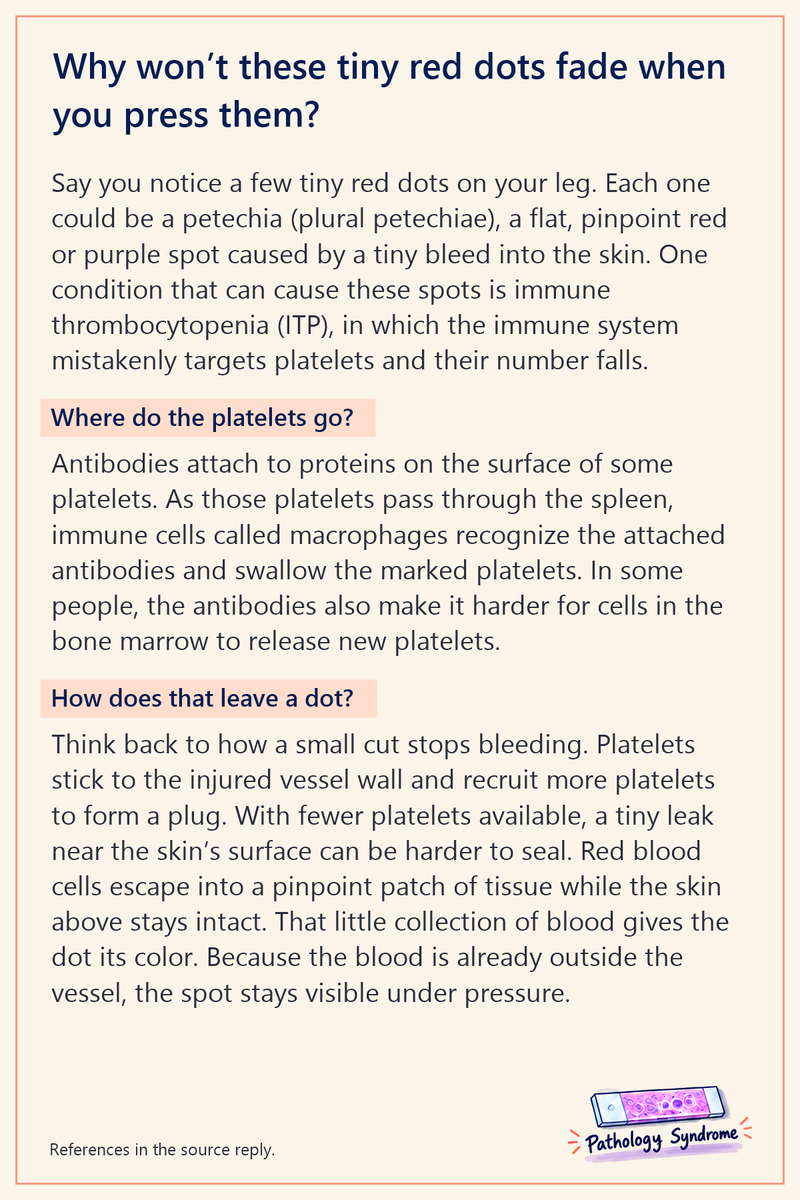
Why won’t these tiny red dots fade when you press them?
In immune thrombocytopenia (ITP), losing platelets can leave pinpoint bleeds in the skin. Swipe to see how a petechia forms.
Why won’t these tiny red dots fade when you press them?
In immune thrombocytopenia (ITP), losing platelets can leave pinpoint bleeds in the skin. Swipe to see how a petechia forms.
Why does a bruise change colors?
A bump can break tiny vessels under intact skin. Here’s why the same bruise can look purple in one spot and yellow in another.
Swipe for the full explanation.
Why does a bruise change colors?
A bump can break tiny vessels under intact skin. Here’s why the same bruise can look purple in one spot and yellow in another.
Swipe for the full explanation.
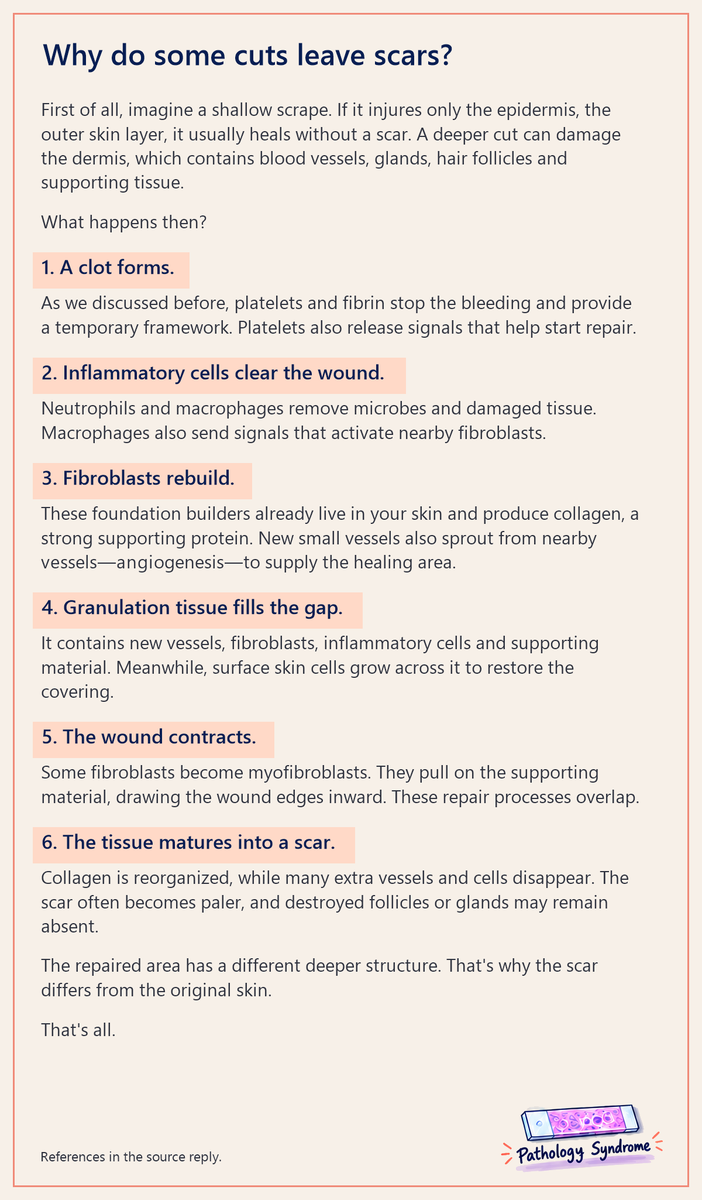
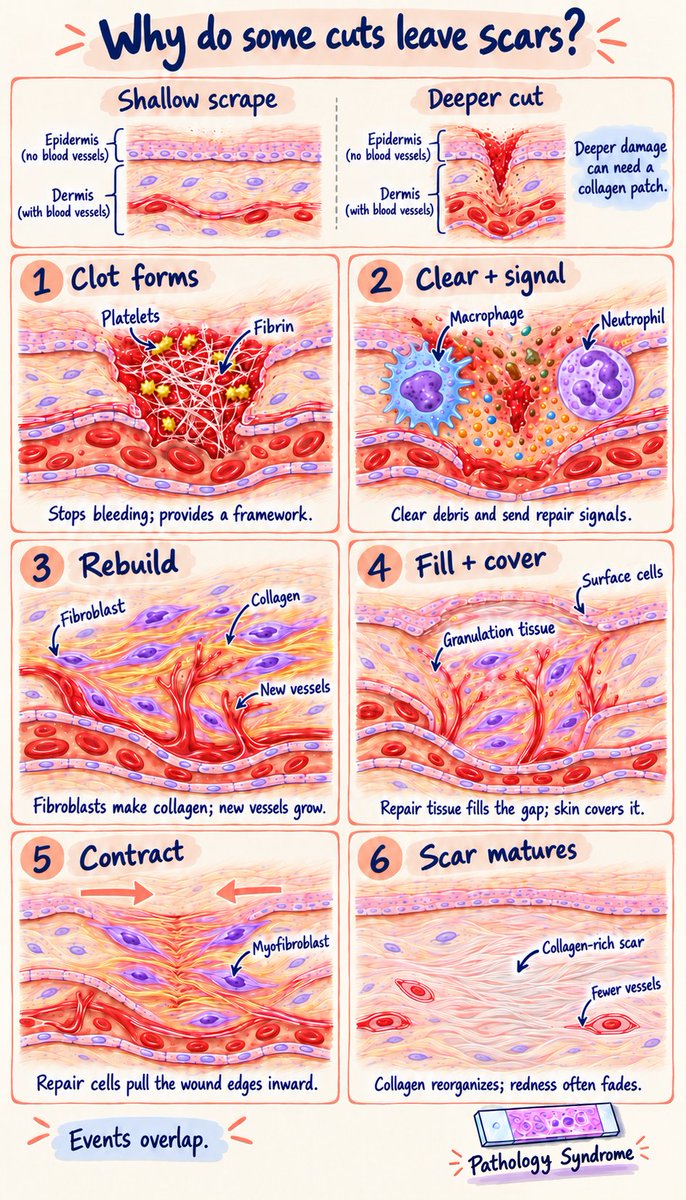
Why do some cuts leave scars?
A shallow scrape can heal with new skin. A deeper cut may need a collagen patch. Here’s how that repair happens.
Swipe for the full explanation.
Why do some cuts leave scars?
A shallow scrape can heal with new skin. A deeper cut may need a collagen patch. Here’s how that repair happens.
Swipe for the full explanation.
Our most recent study demonstrates the assembly of a molecular clutch mechanism at apically positioned integrins of the retinal pigment epithelium. An unusual epithelium in that it faces an extracellular matrix at its apical side called the interphotoreceptor matrix.
Sources
Müller’s original comparison — English translation, p. 23:
https://t.co/W434KxfmZx
Historical description of carcinoma alveolare:
https://t.co/St92fvhh3L
1/6
Why does inflammation cause redness, swelling, warmth, and pain?
First of all, microbes or tissue injury can trigger acute inflammation, a rapid defense response. Two parts work together: changes in blood vessels and the activity of immune cells.
1/6
Why does inflammation cause redness, swelling, warmth, and pain?
First of all, microbes or tissue injury can trigger acute inflammation, a rapid defense response. Two parts work together: changes in blood vessels and the activity of immune cells.
6/6
After that, there are three main outcomes:
- Resolution: tissue returns toward normal.
- Scar: tissue that cannot fully regenerate is replaced with connective tissue.
- Chronic inflammation: the trigger or response persists.
And that's all.