@Jennifer55gt At this point I’m so sick of seeing these posts; every sit down restaurant should just charge 20% more starting July 1; get the non tippers out of the system or in forced compliance. Great service and you can add another 10-20%. This is exhausting
Wouldn’t we need for dangerous events to occur combined with litigation,insurance determinations, rulings and precedent establishment before any of this impact even begins to occur? Doesn’t seem like an overnight type impact. Possibly a slow drip that drives prices up and more new qualified operators and drivers as backfills.
@JohnB1009@ChuckECheese_1@FreightAlley If compliance software and subscriptions will put you out of business, how much business are they doing. Not much is the answer.
@GafGaffey@easydigita Yes, the combined record of his opponents was 308-20 from Berbick to Douglas including multiple fights against undefeated opponents including this fight.
@TigersJUK Golf. There’s 125 or so global PGA pros globslly. Maybe a handful of new members per year. Usually none of significance. Thousands of collegiate studs every year.
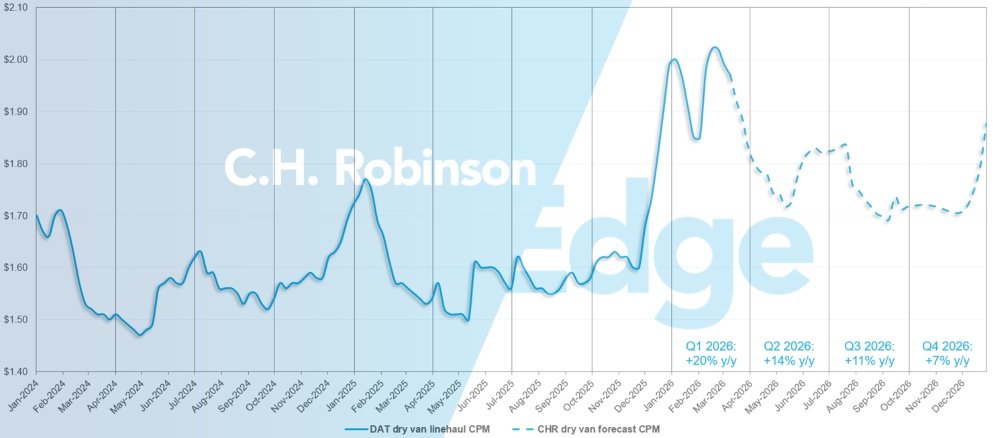
📈 C.H. Robinson Just Raised Its Rate Forecast
The world's largest freight broker updated its 2026 outlook this month: dry van truckload rates are now expected to run 12% higher than last year, up from their prior estimate of 10%.
They also raised the floor on how low spot rates will get, with the new bottom at $1.72 per mile, up from $1.65. Three years of carriers going out of business has thinned the truck supply to the point where even modest demand is moving prices.
Flatbed load-to-truck ratios hit 60-to-1 in late February, the highest since mid-2022, meaning 60 loads competing for every available truck.
Carriers are parking equipment they can't staff and refusing loads.
Source: C.H. Robinson
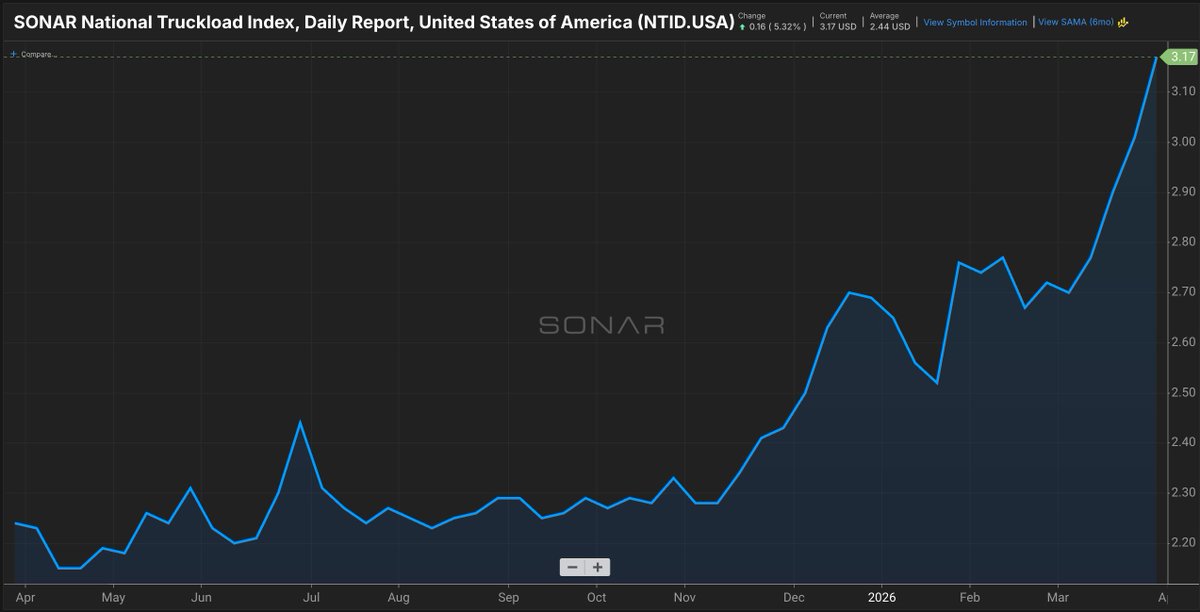
Flatbed trucking spot rates hit new all time high at $3.80/mile. Flatbed spot rates are +$.36/mile in the past week alone.
Flatbeds = industrial strength
Exogenous events are the prerequisite to freight market price increases. Low price is stability not “recessionary”. High price is reactionary not a new normal.
The EIA has updated diesel this week and the national average added another $0.212 per gallon. That's up $1.52 per gallon versus last year.
More importantly, the data is showing that small carriers are capturing less than 50% of this increase in fuel. This necessarily means that fuel expenses are eroding their bottom lines.
Dry van spot linehaul rates are now at the lows of the year. They're still up 15-16% YoY, which is great, but have come down from their highs of +23-25% YoY.
I've also been hearing a ton of feedback from shippers that their tender acceptance rates have increased substantially, partially due to normalization after the storms but also due to carriers rotating back to contract freight with dedicated FSC programs.
Citi studied the impact of surging oil prices on domestic freight demand and concluded that they could stimulate more freight rather than hurt.
The reason: the outsized proportion of the US goods economy tied to oil exploration/refining and petrochemical manufacturing.