⚡️August 15, 1971. The Nixon Shock.
Mainstream version:
Nixon “temporarily suspended” dollar convertibility into gold because speculators were attacking the dollar and the Bretton Woods system needed adjustment.
Real version:
the United States defaulted on the monetary promise underlying the postwar global order, then renamed the default a policy adjustment.
That is the event the mainstream still does not metabolize.
The U.S. had promised foreign governments they could redeem dollars for gold at $35 an ounce.
But America had issued more dollar claims than it could honor in gold. Vietnam, welfare-state expansion, global military commitments, domestic spending, and reserve-currency privilege stretched the system past its backing.
Foreign holders saw the mismatch and started demanding gold.
Nixon closed the gold window.
That was not a technical adjustment. That was the empire refusing redemption.
The phrase “temporary suspension” was the spell. It made a structural default sound like administrative prudence. The suspension became permanent. The world moved onto fiat rails. The dollar survived because the U.S. still had military power, energy-system leverage, financial depth, institutional momentum, and no immediate replacement.
The mainstream frames 1971 as modernization.
The real event was the birth of managed debasement as the operating system of global finance.
After 1971, money became explicitly political. No hard settlement constraint. No external redemption discipline. No final anchor outside state discretion. The system shifted from “trust but redeem” to “trust because there is no alternative.”
That changed everything:
Asset inflation became structurally easier.
Debt expansion became the main growth engine.
Financialization exploded.
Labor’s share weakened over time.
Real assets became long-term escape vehicles.
Gold became a political memory.
Bitcoin eventually becomes the digital answer to the broken promise.
The deepest truth:
1971 was the moment the old monetary contract died and the public was told it had been upgraded.
That is the event.
Not ancient enough to feel mythic.
Not dramatic enough to look like a battlefield.
But probably one of the most consequential breaks in modern history.
The most comprehensive Hermes Desktop tutorial on the internet NOW is LIVE.
You'll learn sessions, profiles, artifacts, cost savings, and real use cases for making money and building startups with Hermes agents.
Whether you're already running Hermes or haven't started yet, this is the episode for you.
@AlexFinn says this is the moment Hermes overtakes OpenClaw. S/o to Alex for walking me through it.
"It's now the best way to use AI agents on your computer"
I do think the desktop app of Hermes looks almost like an Apple product.
Everything you need to know about Hermes Desktop App/agents in 43 minutes
This episode is 100% free. No ads. @startupideaspod
I just want to see you win on the internet. And I think Hermes can help.
Plus, It's fun thing to play with this weekend. Share this with a friend. Link below.
YT: https://t.co/O4Ih4K87SQ
Watch
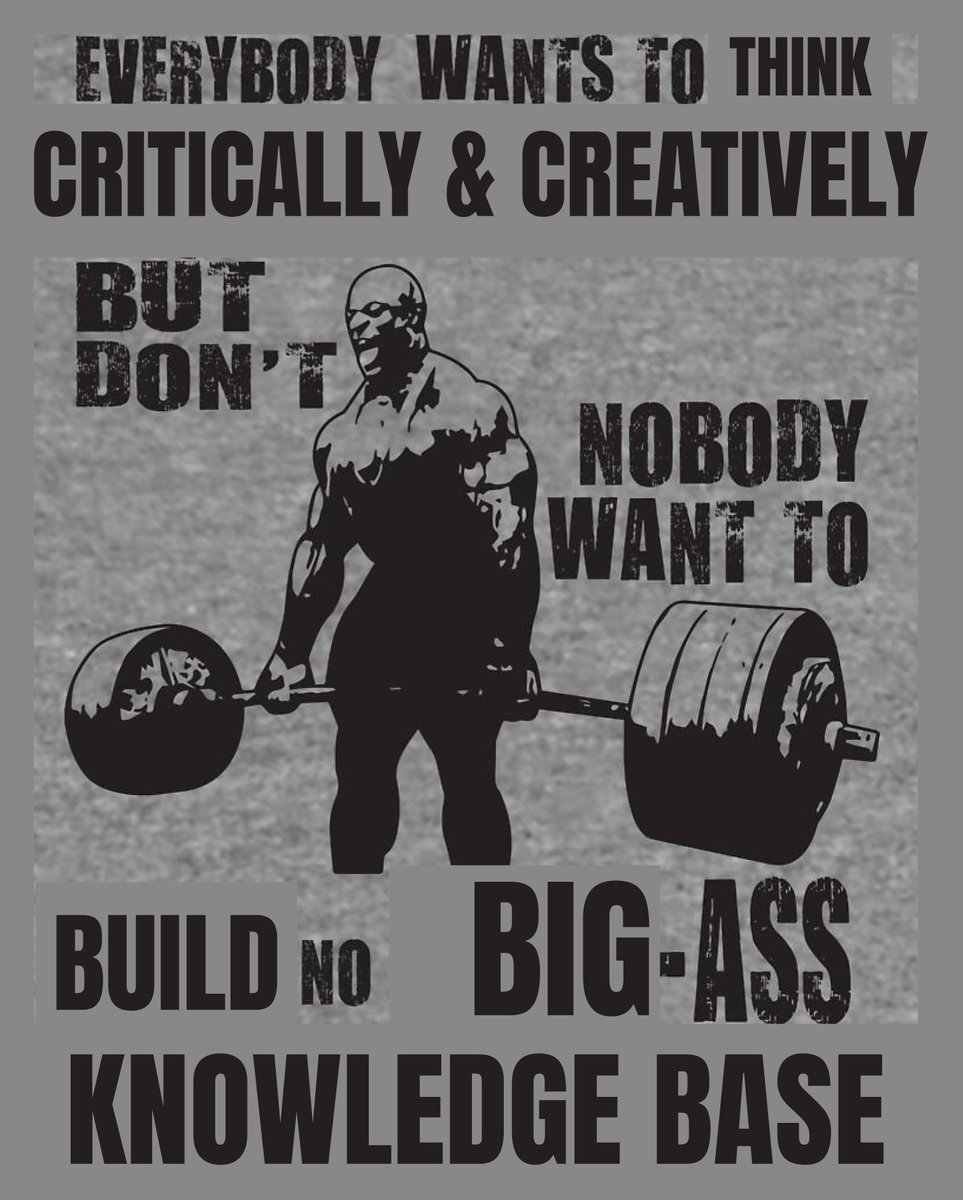
"Everybody wanna think critically and creatively, but don't nobody wanna build no big-ass knowledge base!"
-- Ronnie Coleman, had he become a teacher
Critical/creative thinking involves combining elements of a knowledge base, and you can't cook with ingredients you don't have.
When I first became a dad I was genuinely worried my career would suffer.
The opposite happened. 3 things changed that I wasn't expecting.
First, a child cuts the filler from your life instantly.
I used to sit at my desk for 14 hours and feel like I was crushing it when in reality maybe 4 of those hours were actual work and the rest was meetings that didn't need to happen, scroll sessions I told myself were research, and "quick calls" that turned into 90 minutes of nothing. A child deletes all of that overnight.
Because you literally don't have the time anymore. Every hour matters in a way it didn't before. You could be with your kid, working on your startup, exercising, having dinner with your wife, sleeping. When your time is actually full of things you care about, the filler can't survive. I'm shipping more now than before my kid was born. Half the meetings. Faster decisions.
I stopped saying yes to things out of politeness because my time has a very real cost now that I can feel in my bones.
Second, your risk tolerance goes up, not down.
Everyone assumes having a kid makes you play it safe. For me it created this urgency to build something real while my kid is young enough to not remember the hard parts. That urgency is more useful than any productivity system I've ever tried.
Third, your thinking just gets clearer.
I don't know how else to explain it. You stop deliberating for days and just make the call. You stop chasing every opportunity and only chase the ones that actually excite you.
Something about being responsible for another human being gives you this filter that cuts through the noise instantly. Before my kid, I'd go back and forth on a decision for a week. Now I make it by lunch and move on.
I used to think having a kid was the thing I'd do after I built the company. Turns out the kid made me better at building the company. Wish someone had told me that sooner. So I'm telling you.
I know this sounds like something a new dad says to justify it. I thought the same thing when other dads told me. Then it happened to me and I understood.
I think you will too.
You can now use Devin on your desktop! You can use a Devin Local has context about the project you're working in, files included.
Downloadable now! https://t.co/btK2QRErBr
@Jack2LOneill@AmazonMGMStudio Just saw the news. Had exactly this thought.
I was 90/10 "It's going to be woke and awful" and am now 90/10 "oh it would have been good"
@CynicalPublius Nothing cooked in highly refined soybean oil is the pinnacle of any culinary endeavor.
Swapping with tallow (or coconut oil if you care about vegans as a customer segment) is an immediate, obvious, improvement.
@TheProjectUnity It's an inverse of the "green needle/brain storm" video.
Reading the subtitles, I couldn't understand anything after the lightning.
Eyes closed second playback, no problem.
@Jason_A_Scharf They are going after earned media from Matt and Shane's Secret Podcast.
AI is a recurring theme on the show. Someone made a 2.5 hour supercut of the discussion so far:
https://t.co/xGHWd4ZkuN
https://t.co/HqxcGGBJ6C
You can’t outwork the whole world. There’s always going to be someone somewhere willing to work as hard as you. Someone just as hungry. Or hungrier.
Assuming you can work harder and longer than someone else is giving yourself too much credit for your effort and not enough for theirs. Putting in 1,001 hours to someone else’s 1,000 isn’t going to tip the scale in your favor.
What’s worse is when management holds up certain people as having a great “work ethic” because they’re always around, always available, always working. That’s a terrible example of a work ethic and a great example of someone who’s overworked.
A great work ethic isn’t about working whenever you’re called upon. It’s about doing what you say you’re going to do, putting in a fair day’s work, respecting the work, respecting the customer, respecting coworkers, not wasting time, not creating unnecessary work for other people, and not being a bottleneck. Work ethic is about being a fundamentally good person that others can count on and enjoy working with.
So how do people get ahead if it’s not about outworking everyone else?
People make it because they’re talented, they’re lucky, they’re in the right place at the right time, they know how to work with other people, they know how to sell an idea, they know what moves people, they can tell a story, they know which details matter and which don’t, they can see the big and small pictures in every situation, and they know how to do something with an opportunity. And for so many other reasons.
So get the outwork myth out of your head. Stop equating work ethic with excessive work hours. Neither is going to get you ahead or help you find calm.
[The Outwork Myth — It Doesn't Have To Be Crazy At Work, 2018]
Elon Musk: “The reason I felt that it was important to acquire Twitter was because I could feel the walls closing in. It was outrageous that they suspended the account of a sitting president
And I think it was only a matter of time before they suspended my account.
Twitter and, well, pretty much all the social media companies, and Google and everyone, are controlled by far-left activists. That’s the truth of it.
How do you know what’s real when it’s all filtered through a far-left San Francisco Berkeley lens?
They just manipulate the truth constantly."