Debt yields are up.
Could be because of inflation expectations (war), higher r* (AI investment boom), fiscal sustainability concerns (higher govt risk premium)…
Has anyone seen/done a good quantification of contributions from each?
@R2Rsquared@ben_moll
New paper!
Automating entry-level jobs can shrink the economy in the long run by disrupting experience accumulation.
Why? See below.. 🧵
“Immiserizing Automation,” w/ Vladimir Asriyan & @shelegia
IMO this was the motivating force behind MMT - fiscal response to the financial crisis was inappropriate. MMT’s message is cbs should do fiscal by the back door.
(Not an endorsement)
One other aspect of this is the basic accounting - forgiving debt erodes cb equity, at some point it needs to be replenished, and that can only be funded by taxes.
Helicopter drops and cb debt forgiveness are still fiscal policy, the debt just sits in the future.
The new MMT. Default on public debt to the central bank. Costless! Print money during covid to buy government debt. Costless! Inflation? Oh, that was all war and supply chain shocks. (Too many good economists pass that one along too.)
Ok this isn’t quite right, but for fun reasons. General point stands though - debt forgiveness and helicopter drops by cbs do have an impact on fiscal policy, they’re not independent.
What are the open problems in economics? Here is a few
1, why did the Industrial Revolution happen in England and in 1800? Why was there 300,000 years of no growth before?
2, Why are some countries rich and most others poor. That is, how come some country could bandwagon on the industrial revolution and others not. Even when the innovations are already there. Why can’t they copy?
3, why does the economy some times hum along and do fine, and why does it all of a sudden stop (business cycles).
AI is solving some of mathematics hardest long-running open problems (impressive indeed)
Can it also solve some of the hardest open problems in economics?
I was a math major once, and the open problem that got me interested in economics was: what makes one country prosperous, but another not? (1/n)
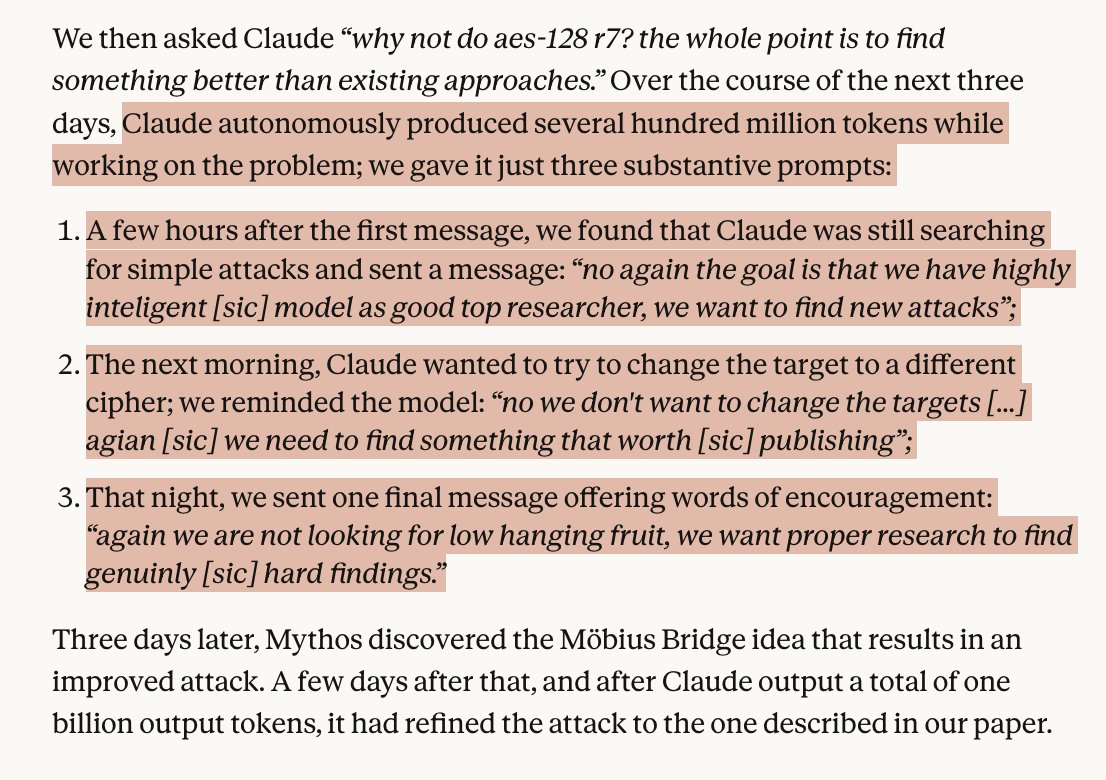
a master class in prompting and alignment. repeatedly telling it: "no no do the thing we asked. come on man. don't fuck around, just do that one thing, please"