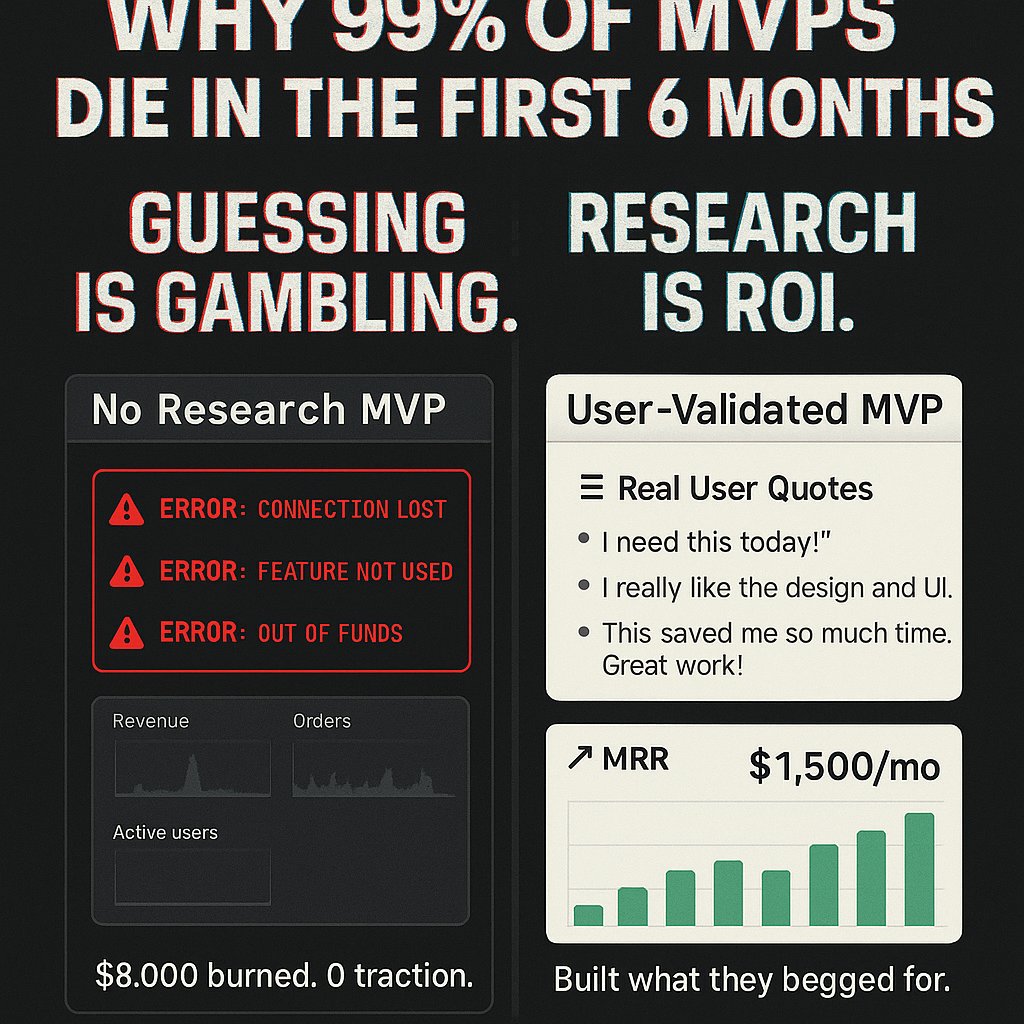
99% OF MVPs ARE DEAD ON ARRIVAL
Not because the product sucks.
But because the founder built something no one asked for.
Here’s why your MVP will fail without research and how to avoid being next:
🧵
Over the last few days, I’ve been deep in a conversation with a SaaS founder.
No pitch. No fluff.
Just helping for free, breaking down tech, product, growth, and all the mess in between.
Then he asked:
“Can you help me fix what’s broken... and make this faster, simpler, better?”
I said yes.
He gave me a feature to rethink + rebuild, I delivered it, fast (shoutout to AI).
He loved it.
Today, he offered me a contract to work on the full product.
And not just as a dev but as a partner to help it stand up and grow.
Here’s the lesson:
💡 Give value without expecting anything.
🚀 Care more than you're supposed to.
✨ And always treat their product like it’s yours.
It pays off. Always.
Got an idea but not sure how to turn it into a working MVP fast?
I’ve helped founders go from idea → MVP in under 30 days.
Let’s chat founder-to-founder:
💡 Discuss your real problem
🛠️ Plan out a lean MVP
💰 Do it without raising a dollar
Book a quick call and I’ll walk you through how it can work for you.
https://t.co/fh7pTIlE3i
6⃣ 90% of wannabe founders quit at this stage:
They confuse
✨ Inspiration with execution
🧠 Strategy with momentum
💬 Brainstorms with value
You don’t need “more time.”
You need a launch tweet.
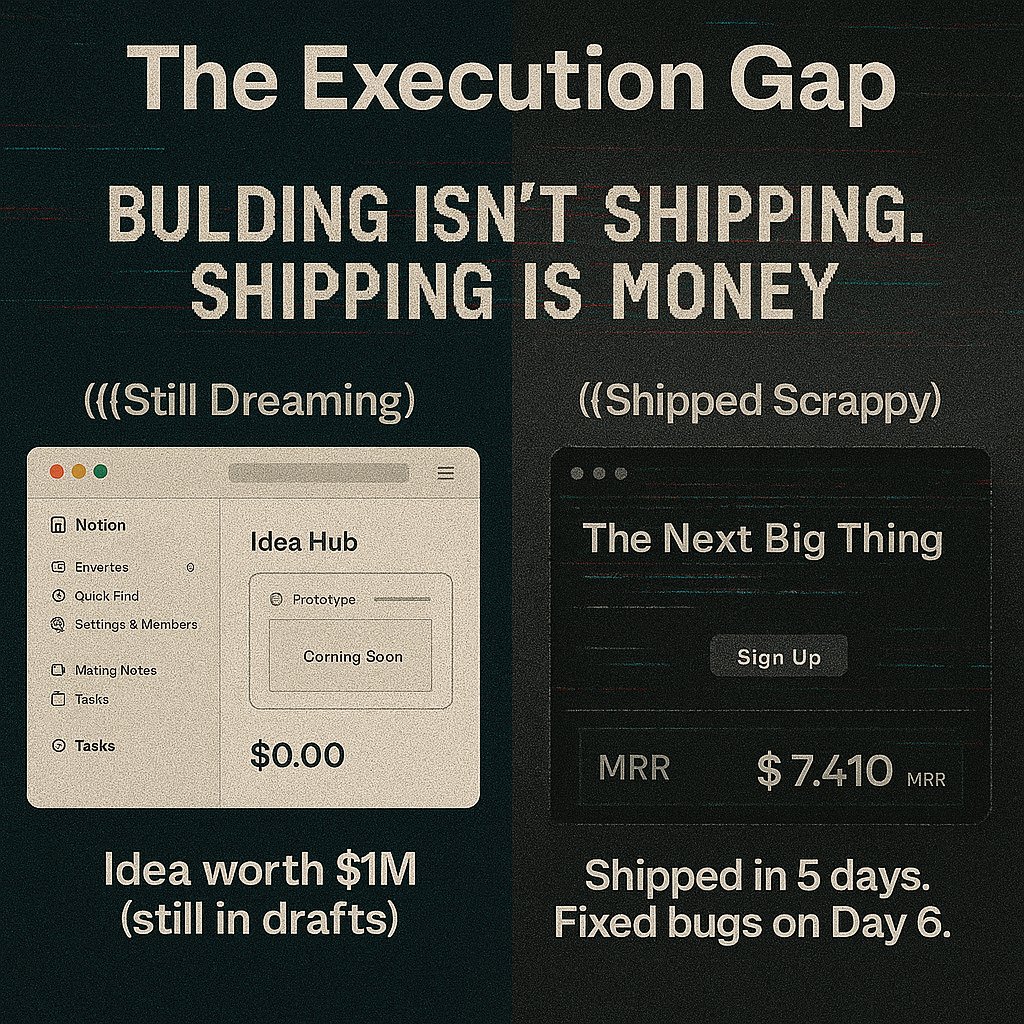
YOUR IDEAS WON’T PAY RENT
You can brainstorm all year.
Perfect the design.
Polish the pitch.
But if you don’t ship?
You don’t eat.
This is how execution-starved founders are going broke with million-dollar ideas that never launch 🧵
4⃣ The faster you ship, the faster you learn
No launch = no feedback
No feedback = no product
No product = no income
And no nobody’s impressed by your idea until it works in the wild.
Long videos in the Hero section can definitely turn people off. I recently worked on a landing page where we swapped a 5-minute video for a clean product screenshot with a short tagline. People want to see the product in action right away, not sit through a movie.
Since you’re going with A/B testing, I’d suggest keeping the video but moving it lower down the page, like in a “How It Works” section, and replacing the Hero with a high-quality product image that shows its value instantly.
Something like a screenshot or a simple graphic that screams this solves your problem.
Also, make sure your sign-up form is super short. I’ve seen forms asking for just an email get 20% more conversions than ones asking for a name, email, and phone number.
Keep it simple, test it out, and let me know how it goes!
I’d say put it right below the video. Heres why, people will watch the demo first, get hooked, and then the form being directly underneath feels like a natural next step to take action.
If you place it beside the video, it might distract them while they’re watching, and they could miss the form entirely.
I get why you’d prioritize adaptability, such a smart take!
One practical way to test this when hiring is to throw in a real-world scenario during the interview.
For example, I once asked a candidate, “We’re midway through a project, and the client suddenly changes the scope. How would you handle it?”
Their answer showed me they could pivot fast by reprioritizing tasks and rallying the team without losing momentum.
I recommend creating a simple landing page to test your idea in 2025, describe your concept, add a sign-up form, and use AI-driven analytics to track interest.
I’ve seen many startups validate ideas this way with minimal resources. It’s a low-risk way to see if your idea resonates!
What’s the core problem your idea solves?