Reba amashusho:
Umuyobozi Mukuru wa NESA, Dr Bernard Bahati, yagaragaje ibyavuye mu bushakashatsi bwa LARS 2025, ubushakashatsi bwakozwe hagamijwe gupima urwego rw’imyigire y’abanyeshuri bo mu Rwanda no kureba uko bahagaze mu masomo y’ingenzi arimo Imibare, Gusoma na Siyansi.
#LARS2025
@Rwanda_Edu@RTB_Rwanda@REBRwanda@rbarwanda
Uyu munsi, Minisitiri @nsanzimanasabin yagiranye ikiganiro n’Abasenateri bagize Komisiyo Y’Imibereho y’Abaturage n’Uburenganzira bwa Muntu ku bikorwa n’ingamba zo guteza imbere ubuvuzi bw’abageze mu zabukuru.
Mu Rwanda hari inzobere z’abaganga bita ku bageze mu zabukuru, serivisi zihariye, na gahunda yo kongera umubare w’abaganga bo muri iki cyiciro. Hakomeje gukorwa byinshi bigamije kunoza no kwegereza serivisi z’ubuvuzi abageze mu zabukuru.
-------
Today, Minister @nsanzimanasabin met with the Senate Committee on Social Affairs and Human Rights to discuss Rwanda’s progress in geriatric care.
With rising life expectancy, the country now has qualified geriatricians, dedicated clinics, and an accredited fellowship to train more specialists. Efforts continue to decentralize services and strengthen policy frameworks.
Rwanda Space Agency CEO, Gaspard Twagirayezu, has been appointed Vice President of @iafastro during the ongoing International Astronautical Congress in Sydney, Australia.
Founded in 1951, the International Astronautical Federation (IAF) is the world’s leading space advocacy body, bringing together space agencies, industry, research institutions, universities, and professional societies to advance global cooperation in space.
By switching to pellet stoves, families not only cut carbon emissions but also protect forests, improve air quality, and reduce health risks from smoke.
At MC-GREEN, we’re on a mission to make sustainable energy accessible and affordable. Join us in accelerating this transition.
Hey #cPenNetwork community,
✅ The $CPEN token verification is complete! Check your verified token balance now on the Wallet page in the cPen app (update to v1.2.20+ required).
Ensure your BSC Wallet address is correct and secure. Wallet address entry closes on March 29 at 20:00 UTC—update yours ASAP to avoid losing your mined $CPEN tokens.
Token distribution begins on March 30. Total supply details will be announced soon.
🆕 We've switched to $INK mining this month. Haven't started yet? Join now: https://t.co/3gkTDZJLzU
Thanks for your continued support—stay tuned for more updates!
Check out the latest article in my newsletter: The Crucial Role of Delegation in Business Success: A Lesson for Leaders and Entrepreneurs https://t.co/DPJLo9ye6h via @LinkedIn
“When I was 40, I was actually thinking of maybe doing something and then retiring. Then I became 50, I found there was more to do than retiring, went to 60, the same story. Now I’m about to be 70 in a few years, so I think there is still some work to do.
But we can keep changing ideas and places and where we operate from. But if I retire, still I will have something to do, at least I am going to be a cheerleader for those upcoming young people who are doing different things, and giving them a bit of advice here and there and reminding them to be a little careful about this, about that.
You know when you are still very young, you feel like you can do anything. You can climb a mountain and they tell you jump and you can fly without a parachute, you think you can do that.
We went through that, there was a time you felt you could. But as you grow you start making sense of all these things and want to be a little more careful and then looking at what you’re doing and where you are headed, making sense of all that.” President Kagame | Youth Connekt Africa Summit 2024 #YouthConnekt2024
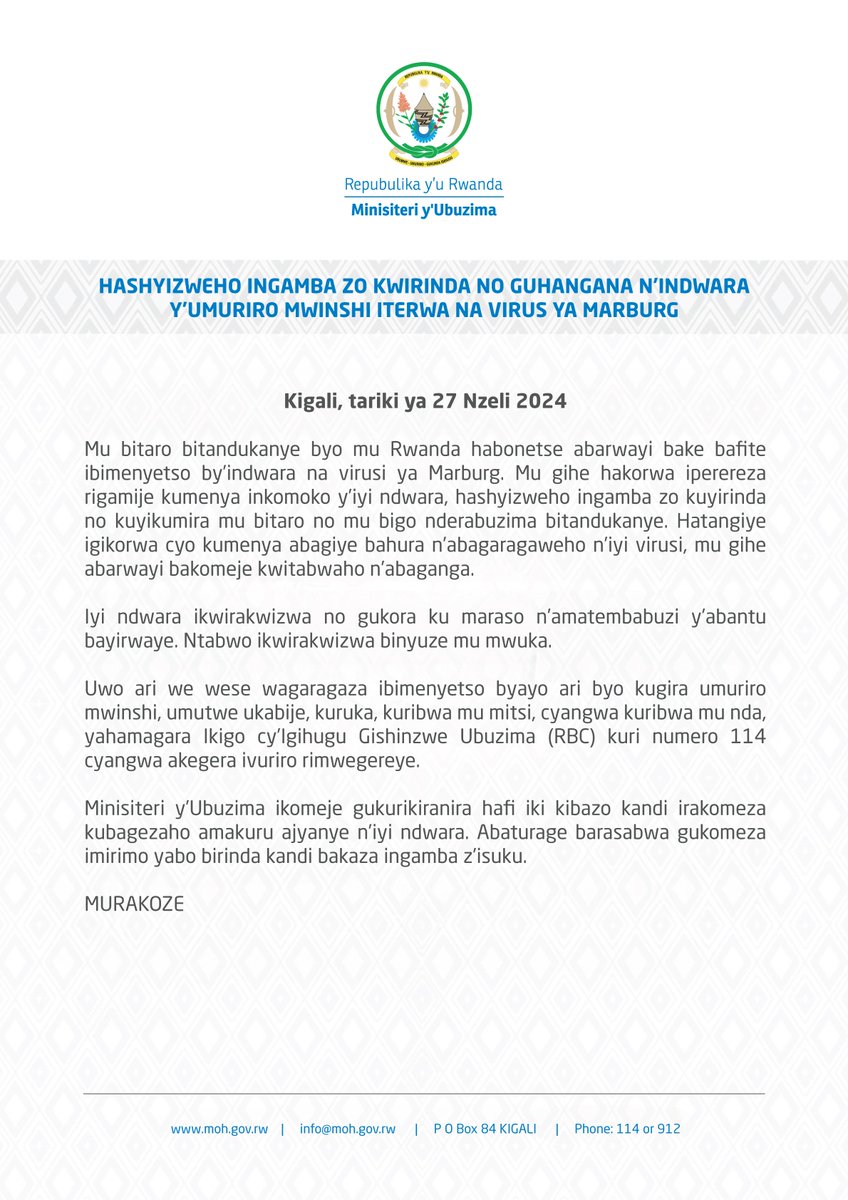
🚨Hashyizweho Ingamba zo kwirinda no guhangana n'indwara y'umuriro mwinshi iterwa na virusi ya Marburg
----
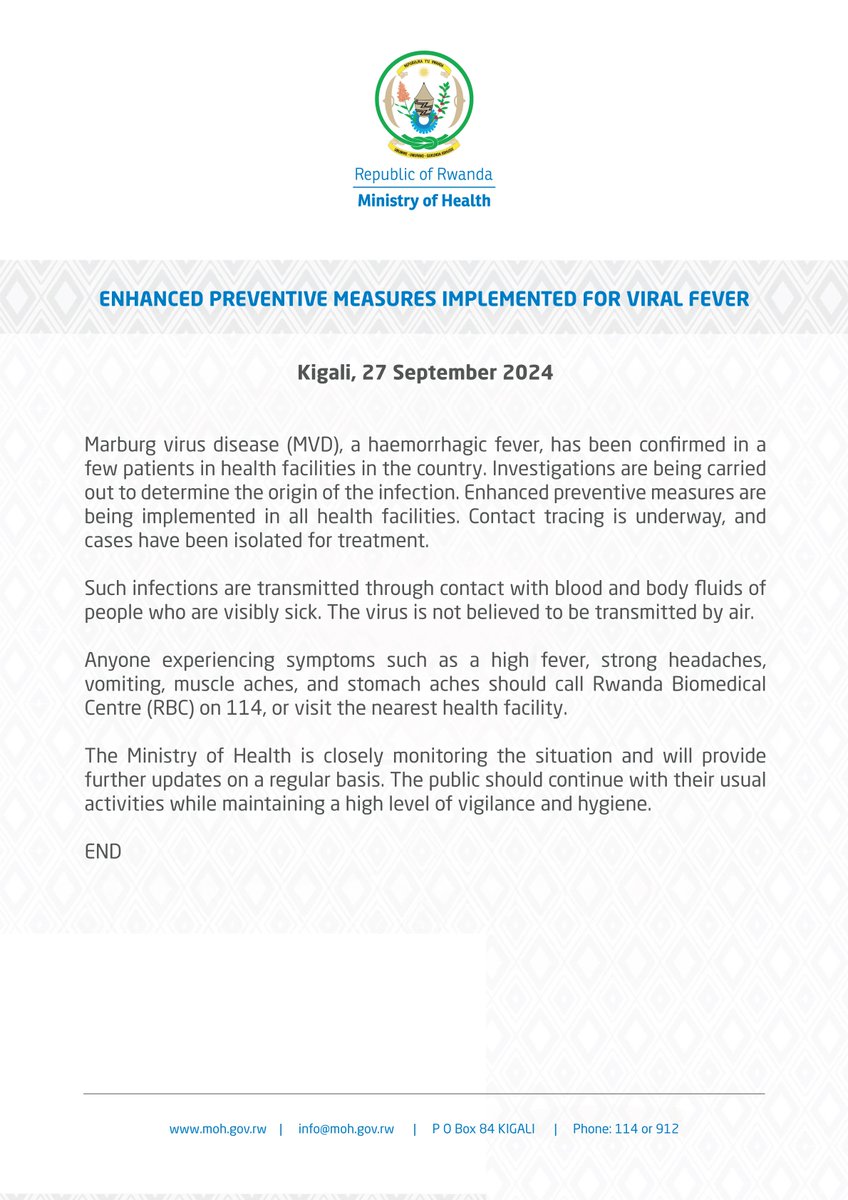
Enhanced preventive measures implemented for viral fever🚨
Happening this morning:
The Kigali Innovation City Groundbreaking Ceremony, hosted by @RwandaGov in collaboration with @Africa50Infra.
📺 Join us at 10 AM CAT for key insights into the development of a pan-African technology hub.
🔗 https://t.co/u3nu8m1XBK
#InvestInRwanda🇷🇼 | #Africa50
"Jye ntabwo nifuza ko umuntu apfa, nta wifuriza umuntu ko yapfa, (Twagiramungu) ntabwo yari umwanzi ahubwo yari ’adversaire’(uwo muhanganye), ariko nubwo yaba umwanzi ntabwo wifuza ko umuntu apfa, nubwo yatuvugaga nabi ntadukunde." - Muzehe Tito Rutaremara wiganye na Faustin Twagiramungu
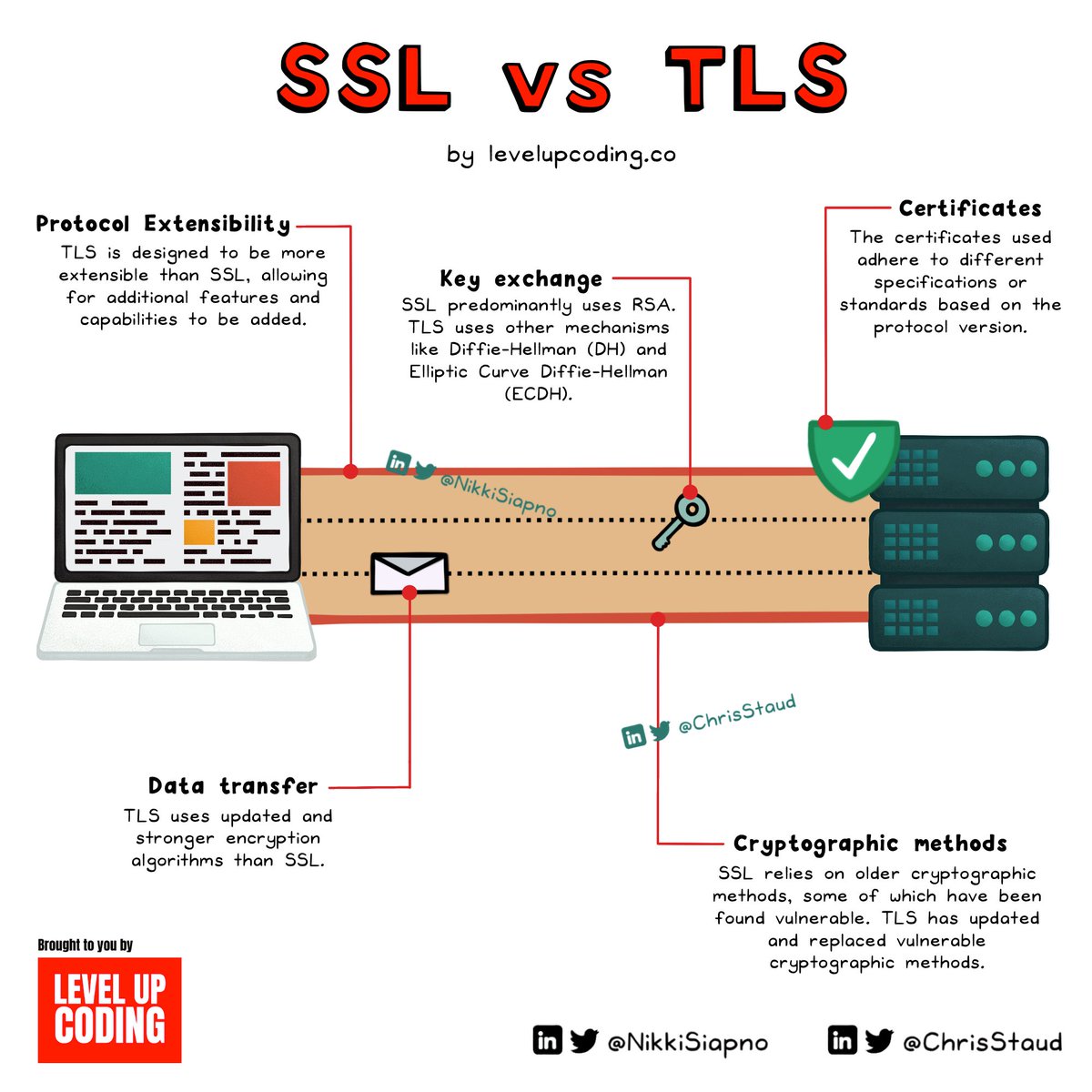
SSL vs TLS — what’s the difference?
SSL (Secure Sockets Layer) and TLS (Transport Layer Security) are cryptographic protocols designed to provide secure communication over a network. TLS is the successor to SSL and has addressed the vulnerabilities present in SSL.
To understand the differences, let’s walk through the workflow of how data is sent using these protocols:
1) Initiating communication
SSL & TLS: Before data can be sent, a connection must first be established. Both protocols work very similarly at this stage. The client and server establish a connection, usually on port 443 for web traffic (default port for HTTPS).
2) ClientHello & ServerHello messages
After establishing a connection, the client and server need to agree on security settings. SSL: The client sends a list of supported cipher suites, and other settings. The server then sends a response selecting the SSL version, cipher suites, and other settings. TLS: Along with supported cipher suites, and other settings, the client can also send "key share" for Diffie-Hellman (DH) or Elliptic Curve Diffie-Hellman (ECDH) (if supported). The server then sends a response selecting the TLS version, cipher suites, & other settings.
3) Server certificate
SSL & TLS: After the “ClientHello” and “ServerHello” messages have been communicated, the server sends its digital certificate to the client.
4) Key exchange
At this phase, the protocols significantly differ. SSL: Predominantly uses RSA for key exchange. TLS: Uses other mechanisms like DH and ECDH.
5) Client Certificate (optional)
SSL & TLS: After keys have been exchanged, the server can request a client certificate if it must validate the client's identity.
6) Client and Server Finished messages
SSL & TLS: Once the authentication phase is complete, “Finished” messages are sent. The only difference between the protocols here is that the cryptographic computations behind the message can differ.
7) Encrypted Data Transfer
The connection has been established, settings agreed upon, & authentication has been completed—data transfer can finally begin. SSL: Uses older encryption algorithms, some of which are vulnerable. TLS: Uses updated & more robust encryption algorithms.
8) Termination
SSL & TLS: After the data transfer has been completed, alert messages can be sent by the client & server to terminate the connection.
Whilst SSL and TLS protocols have many similarities, TLS has overcome the vulnerabilities that came with SSL. The refined digital handshake, key exchange mechanisms, & cryptographic methods used in TLS have led to more robust encryption, enhanced security, & better extensibility.
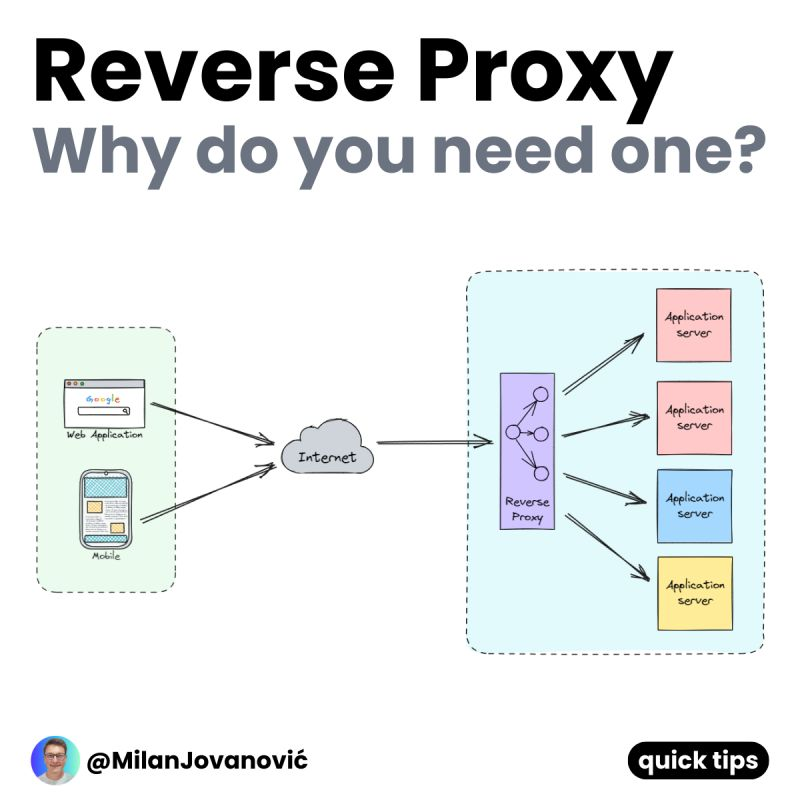
Why do you need a Reverse Proxy?
A reverse proxy acts as a middleman between clients and servers.
The clients can only call the backend servers through the reverse proxy.
The proxy forwards the request to the appropriate server.
Reverse proxies hide the implementation details of individual servers in the internal network.
So, one of the roles of a reverse proxy is improved security.
But it's also used for:
- Caching
- Load balancing
- SSL termination
Here is a fun fact for you.
You can build a reverse proxy in .NET in 3 lines of code.
Here's how to do that with YARP: https://t.co/GXBCw9gJFP