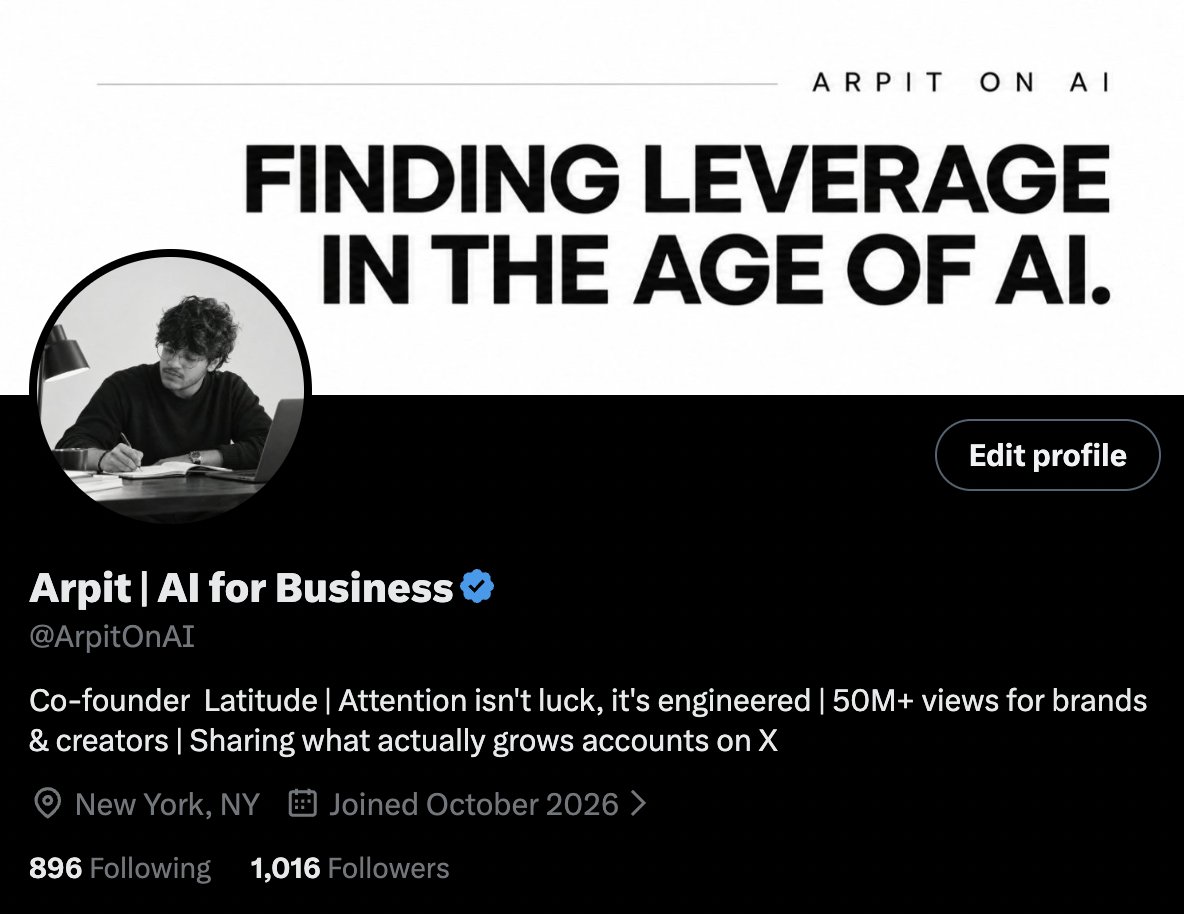
1,000 followers.
A few days ago I was talking to myself on here.
Now there are 1,000 of you, and honestly? I'm a little emotional and a lot suspicious.
What I learned getting here:
→ Replies grew this account more than posts did
→ Questions beat opinions. Every single time
→ Posting more doesn't mean more reach. Posting better does
→ The people in your replies are the whole game
Founders, creators, builders: if you've been here since day one, thank you. If you just walked in, you're early.
Next stop: 5,000. Let's see how fast we can make this weird.
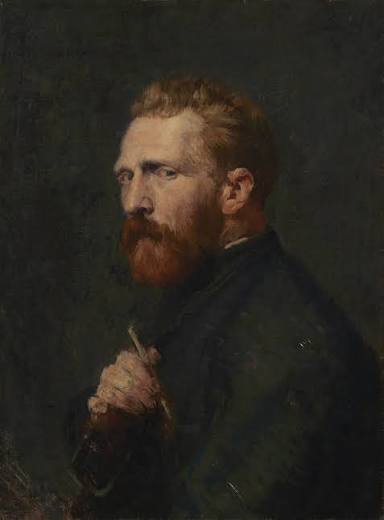
Van Gogh made around 2,100 artworks.
He sold one painting we know of for certain. The Red Vineyard. 400 francs. Brussels, March 1890. Four months before he died.
His brother Theo died six months after him.
Everything went to Theo's widow, Jo van Gogh-Bonger.
→ She inherited the paintings and the letters
→ She arranged the sales
→ She published Vincent's letters, most of them in 1914
The letters turned a painter into a story. People fell for the man first, then the paintings.
Vincent made the work.
Jo built the distribution.
@vangoghmuseum how much of Van Gogh's fame do we owe to Jo?
The first famous work of Michelangelo's career was a lie.
He's 21, broke, and nobody in Rome knows his name.
He carves a sleeping Cupid in marble. Beautiful. But a new sculpture from an unknown Florentine kid is worth almost nothing.
Ancient Roman statues, though? Collectors were paying fortunes for those.
So the Cupid gets buried in a vineyard, aged until it looks 1,500 years old, and sold through a dealer as a genuine antique.
The buyer: Cardinal Raffaele Riario, one of the biggest antiquities collectors in Rome.
He finds out. He demands his money back.
And then he does something strange.
He invites the forger to Rome.
→ He becomes Michelangelo's first patron
→ 2 years later, Michelangelo signs the contract for the Pietà
→ At 24, it's installed in St. Peter's and Rome calls it a masterpiece
Then he overhears visitors praising it, and crediting it to someone else: Cristoforo Solari, "the Hunchback of Milan."
That night he locks himself in the church with a lamp and his chisels, and carves his name across the Virgin's sash.
It's the only work he ever signed. He later regretted it.
Think about that.
The first time, he had to hide his name to get noticed.
The second time, he had to break into a church to get his name back.
Same hands. Same marble. The only thing that changed was the label.
527 years later, nothing has changed.
In 2023, researchers ran 6 experiments with 2,965 people. They showed them the exact same art, labelled either "human-made" or "AI-made."
The "AI-made" label made people value it less. Every time. Even when they couldn't tell the difference.
The work was never the whole story. The name on it is distribution.
@grok, if Michelangelo were alive today, would he put "made with AI" on his work, or bury it in a vineyard?
I never really thought of Aristotle when thinking about marketing. But apparently, there's a connection.
More than 2,300 years ago, he came up with three ideas about persuasion. And honestly, they still make a lot of sense when you look at how brands sell today.
He called them Ethos, Pathos and Logos.
Ethos is trust.
It's why we often go with a brand someone recommended instead of taking a chance on a random one.
Pathos is emotion.
Think about the ads you actually remember. Most of the time, it's not the product that sticks with you. It's the feeling the ad left behind.
Logos is logic.
Because no matter how good an advertisement looks, people still want to know what they're getting for their money.
The funny thing is, marketing has changed so much since Aristotle's time.
We now have AI, social media, algorithms and tools that can tell us almost everything about our audience.
Yet we're still trying to understand what makes another human being trust something, feel something or make a decision.
I think that's what makes these ideas so interesting.
We keep finding new ways to market things, but the basics of understanding people haven't gone away.
Two people can open Netflix, search for the exact same movie, and see two completely different posters.
Sounds like a small detail, right?
But think about it for a second.
Netflix knows that the same image won't catch everyone's attention.
Someone might click because they recognise an actor. Someone else might be more interested in a particular scene or character.
So instead of showing everyone the same artwork, Netflix personalises what they see.
I find this genuinely clever.
Most brands spend so much time trying to create one perfect ad that works for everyone.
Netflix takes a different approach.
It understands that people have different interests, different preferences and different reasons for clicking.
And sometimes, changing just the way you present something can change whether someone gives it a chance at all.
The product hasn't changed.
The movie hasn't changed.
Only the way it's presented has.
I think there's a pretty big lesson here for brands:
Maybe you don't always need a better product or a bigger marketing budget.
Sometimes you just need to understand the person on the other side of the screen a little better.
What’s one thing consumer brands spend too much money on?
Influencer marketing?
Packaging?
Discounts?
Brand awareness?
Curious what founders and marketers think.