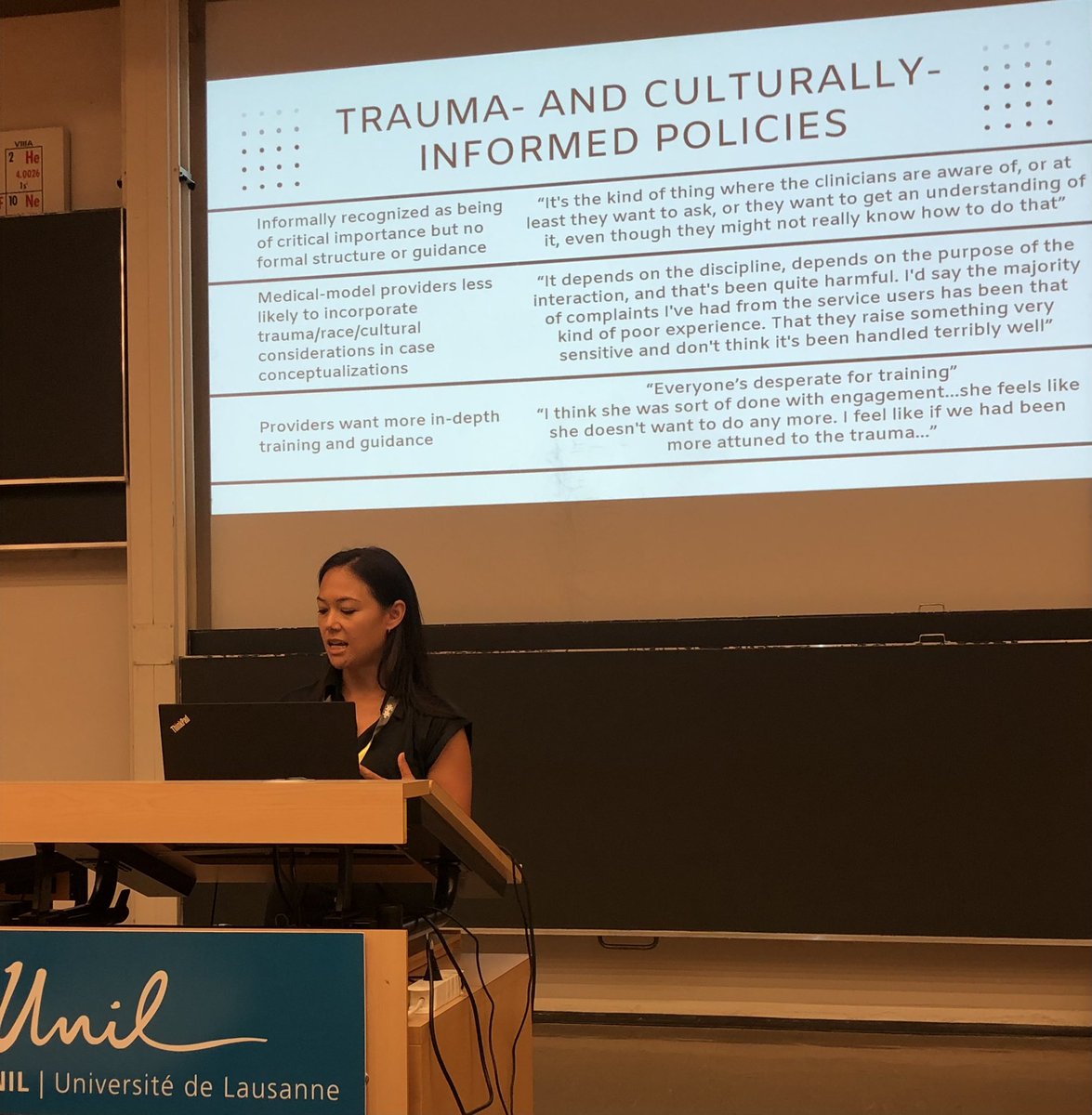
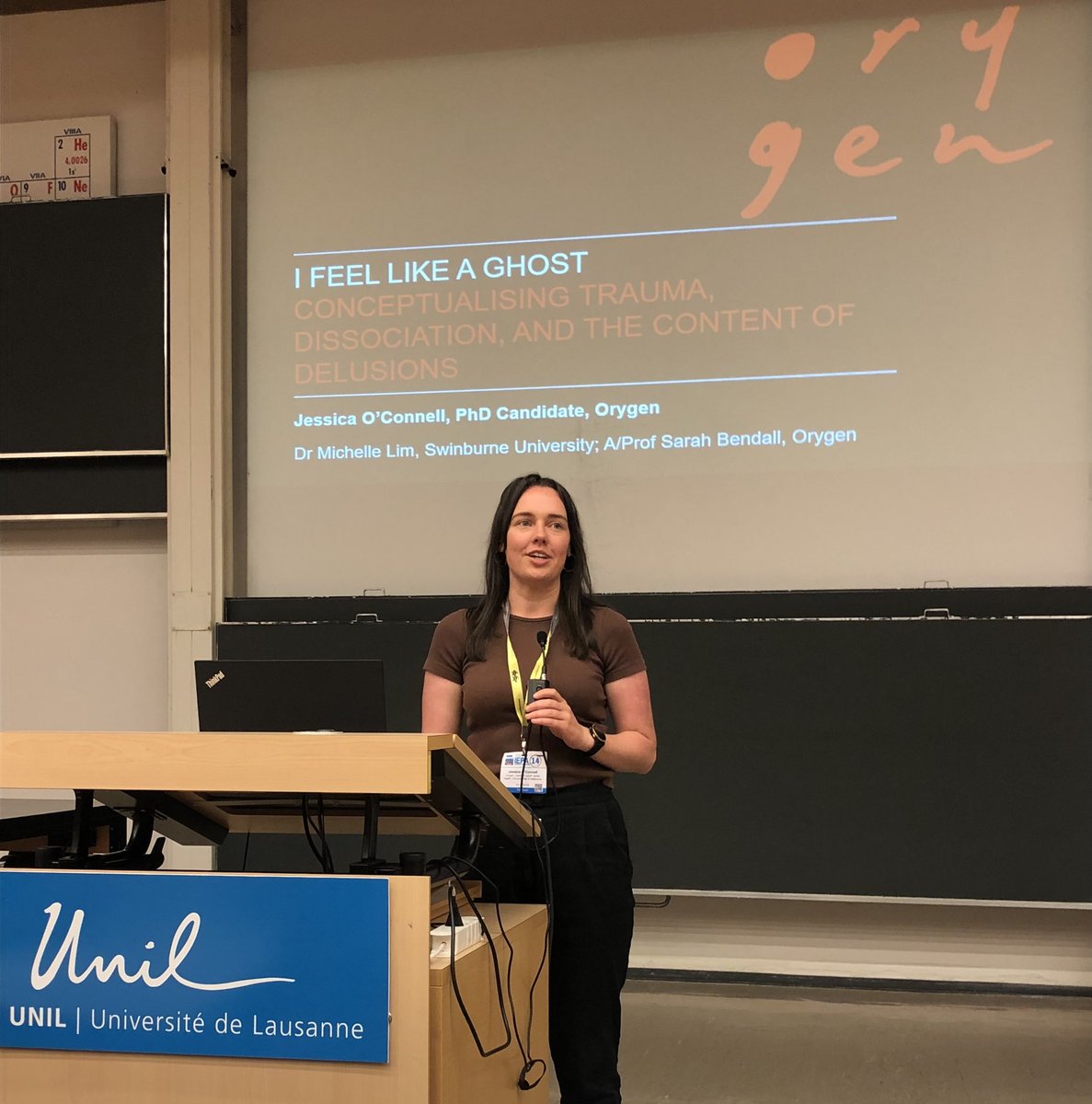
Such an honour to present my dissertation work today on #adversity, #psychosis, and #substanceuse alongside brilliant co-presenters and in the presence of a roomful of people who informed my work! #IEPA14
@D_M_Clark_ There’s certainly lots more work to be done in this area, we’re on the same page there! I think the people working in this area have worked hard to sort out why psychosis happens, and, as a field, everyone is working hard to figure out how best to help with recovery!
Outcomes of psychosis are much worse in the presence of persistent SUDs, as well as homelessness, and trauma is prevalent in this group. We need to be conscious of housing needs and SUDs when working with folks with psychosis #IEPA14
Thrilled to present my thesis work at #IEPA14 this Tuesday, July 11 at 11:15am in Auditorium A!
Come join the discussion around interventions for people with #adversity, #psychosis and #substanceuse
There is still a strong stigma surrounding #mentalhealth and #schizophrenia. The more we talk about these important issues, the more we can spread the message of what helps people get better. #SupportMentalHealth
Thrilled to have matched at Hamilton Health Sciences (McMaster Children’s Hospital) for internship ✨ grateful to my mentors, cohort, and loved ones for helping me get here! #APPIC#APPICmatchday
The process of confronting, celebrating, and centring researcher bias is necessary for all methodologies, including quantitative research. New paper with @themichjam and @GiselaGovaart, where we provide a rationale, worked examples, and reflexive prompts
https://t.co/rFhomsj2aL
This study aims to examine the outcomes of an adversity treatment trial for people with early phase psychosis, substance misuse, and a history of adversity. 3/3
People with early phase psychosis are often left out of adversity/trauma intervention studies, and substance use challenges are another common exclusion criteria. 2/3