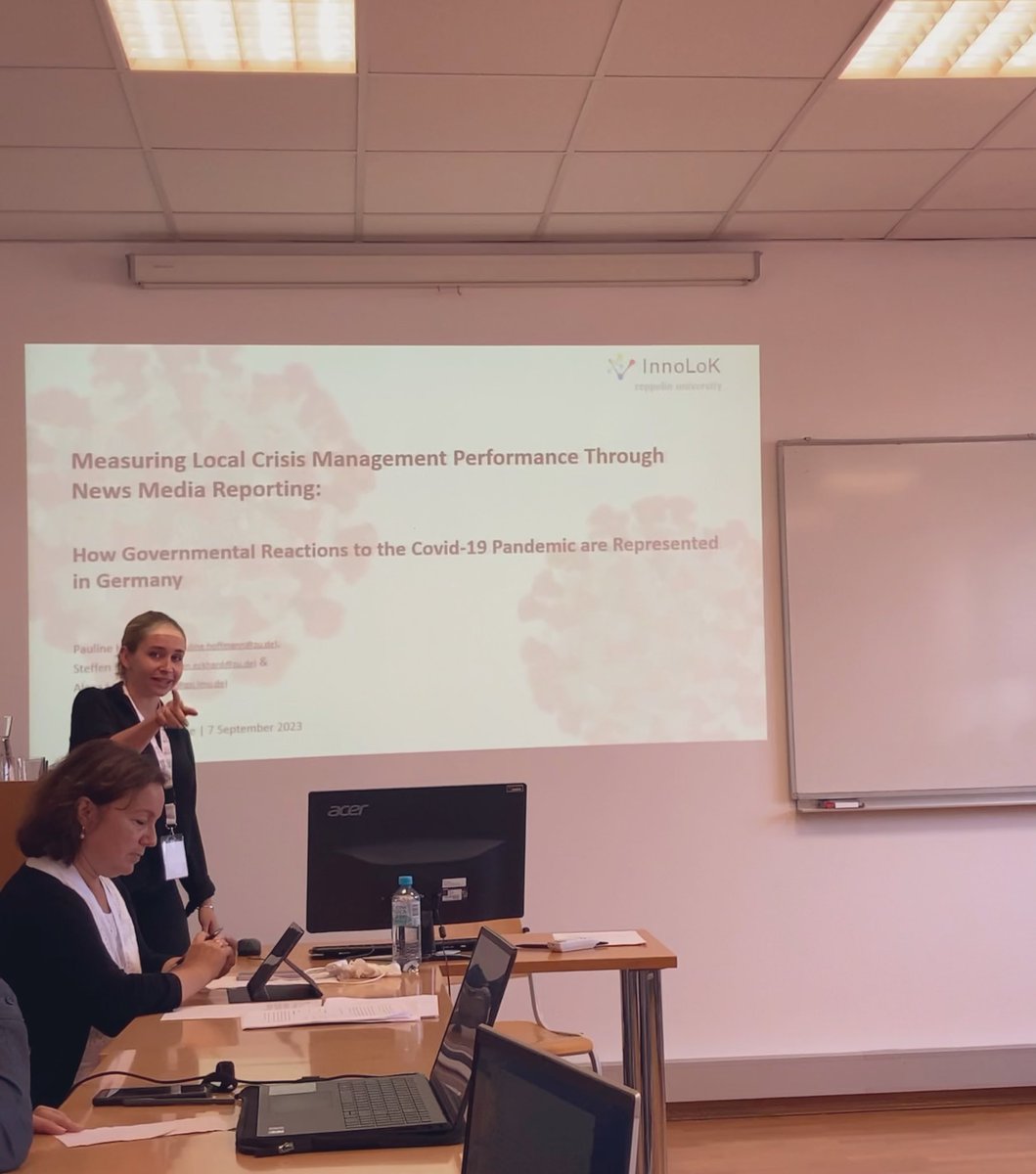
Bei der heutigen Abschlussfeier unseres #JungeDGAP-Fellowships präsentierten @Hannah_Soph, @pau_hoffmann, Louisa Brög & Michelle Grunwald ihre Projekte mit dem Fokus auf #DataScience, in Zusammenarbeit mit Mentor*innen aus unserem Forschungsinstitut. Gratulation und vielen Dank!
Out now: Wie nimmt die Bevölkerung im ersten Jahr der #Covid19 Pandemie das Krisenmanagement wahr? Diese Frage beantwortet der Forschungsbericht des @HyborgProjekt @UniKonstanz. Mehr Informationen ➡️ https://t.co/R0E4Qxm0Q2.
Die Kritik am #Föderalismus nimmt erneut zu. Dieses und weitere Ergebnisse der vierten Erhebungswelle zur öffentlichen Wahrnehmung des #Krisenmanagements während der #Covid19 Pandemie @HyborgProjekt @UniKonstanz unter ➡️ https://t.co/wbzHErX0Sl
@Hofmann_Livia @IdeanSalehyan @IdeanSalehyan shows that refugee flows from neighboring countries increase the risk of intrastate violence. Can this explain the conflict onset in more contemporary cases? 15 years later, are there any new spill-over mechanisms we should consider? #OurClass asks @IdeanSalehyan
@kea80886439 @Journal_IS @aruggeri_eu Very interesting paper! I was wondering whether it could also be the case that individuals with a specific pre-defined ideology are more likely to detach themselves from the previous status quo in response to an emotional event than individuals without any ideological tendency?
@l_nonnenmacher@jaylyall_red5 States’ use of indiscriminate violence seems to diminish insurgencies, but what if this suppressing effect is highly dependent on the nature of the insurgents? Would only specific types of insurgent organizations react by reducing violent attacks?
@jaylyall_red5@l_nonnenmacher Recently, the IS took over swathes of Africa. Is this development attributed to the fact that the use of indiscriminate violence in Iraq and Syria created enormous logistical problems for insurgencies and thus undermined the IS’s military effectiveness in these countries?
@llschenoni@AnkeHoeffler More studies are required that go #BeyondGreedAndGrievances. As @AnkeHoeffler demonstrates, other factors than motivation for rebellion make countries prone to war. In circumstances in which rebellion is financially and military feasible, it'll occur without special inducements.