In this essay I look at what Sam Walton did to keep his finger on the pulse of his customers — and how he chose to make it a priority over everything else fighting for his attention. If he could do it while running one of the largest companies in the world, we can do it, too.
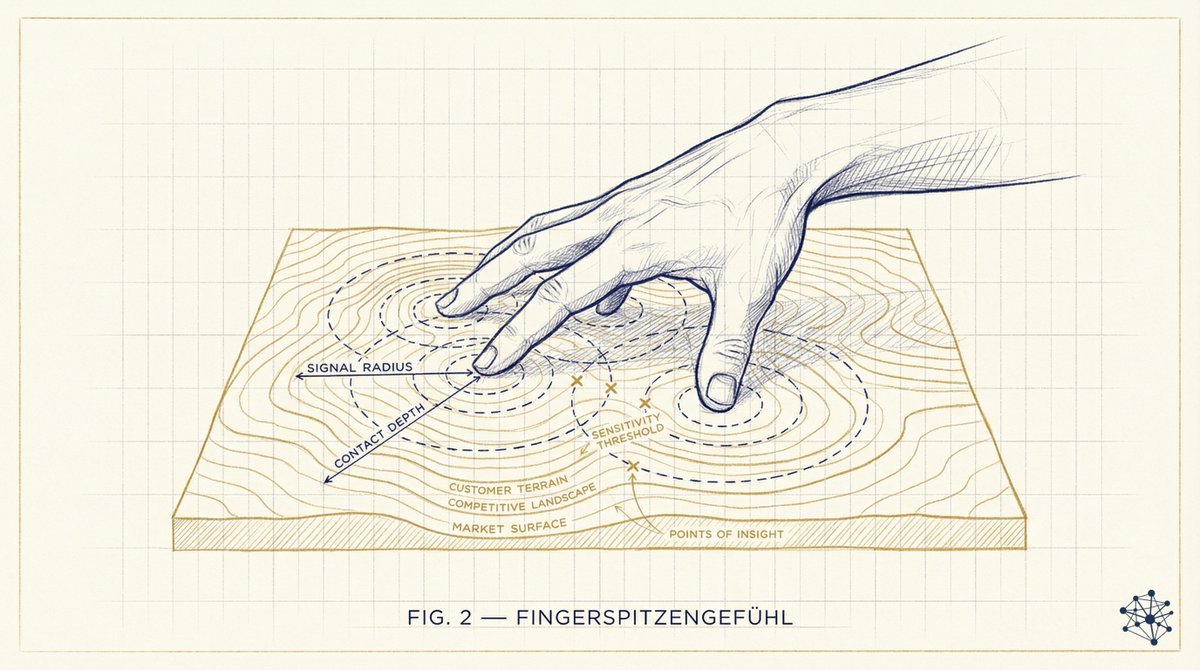
The German language has some truly great words. The most inventive is probably backpfeifengesicht — "face in need of a smack." Though I struggle to pronounce it, fingerspitzengefühl is my favorite — literally "fingertip feeling."
For product owners, fingerspitzengefühl is what you develop by getting out of the office and being in the room with your customers. You can't replicate it with analyst reports, dashboards, or AI. It needs direct contact. But the pressures of staying in the office can be powerful.
The term comes from the German military. A commander with fingerspitzengefühl could hold a map of the battlefield in his mind and update it continuously — not through reports or briefings, but through direct contact with what was happening on the ground.
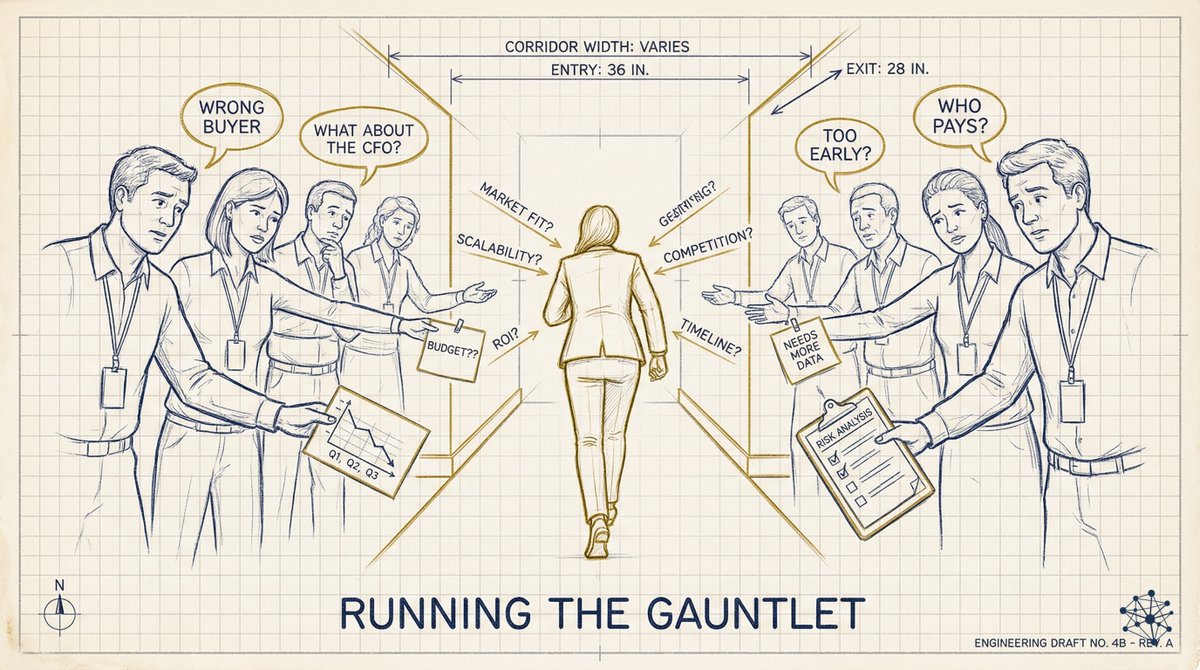
I did this earlier this month with the core ideas behind Metis Discovery. I lived to tell about it, and I'm doing it again — only this time I'm a lot smarter. I wrote up the five lessons from running the gauntlet. https://t.co/lyr5Z84uYp
The trick is to expose the idea to the market before you're ready. Skip the instinct to polish the deck one more time. Go discuss it with smart, opinionated people and let them tear it apart. It's like running a gauntlet — you'll make it through, but you'll feel it.
Here's why. We fall in love with our ideas when we spend too long inside our own heads. The impulse is to defend the idea, to prove it right. Companies do the same thing — committing to new products and services internally before the market ever weighs in.
I wrote about how that pause saved the company — and what JFK's handling of the Cuban Missile Crisis taught me about fixing the rooms where big decisions get made.
https://t.co/3VWoZjD6Uw
In 2007 my company almost committed to building a product no one was going to buy. We were smart, experienced people running a good process. It felt like alignment.
It was groupthink.
What saved us was an almost accidental pause. We talked to customers before committing. Every single one told us we were about to make a mistake. We scrapped the product, built what the market actually needed, and exited a few years later.
Here's what happened. The idea with the most momentum wasn't backed by the best evidence. It was backed by the loudest voice — the boss's. And every one of us had learned the same unwritten rule: argue your point twice, then fall into line.
A prosthetic thumb rewired people's brains in five days. AI does the same thing to how you think — but you have to do it yourself. No one is coming to do it for you.
Last week I talked to high school juniors and seniors about AI and startups. I left them a self-training plan.
Three phases, built on how the brain actually rewires: wear it everywhere, do things you couldn't do before, build something real.
Built for 17-year-olds. Works just as well for anyone ready to stop circling AI and start teaching themselves.
Here's why. The job world these kids are walking into in a few years is nothing like what I saw coming out of college 30 years ago. And the institutions they're counting on — school, college, first employer — aren't going to give them the skills they most need to compete.
I wrote about this with help from Joel Mier — former Netflix Director of Marketing, now a prof at University of Richmond.
He was there when Netflix built the culture they're still known for. His research names exactly why most companies lose it.
Essay 👉 https://t.co/2S9dSR240t
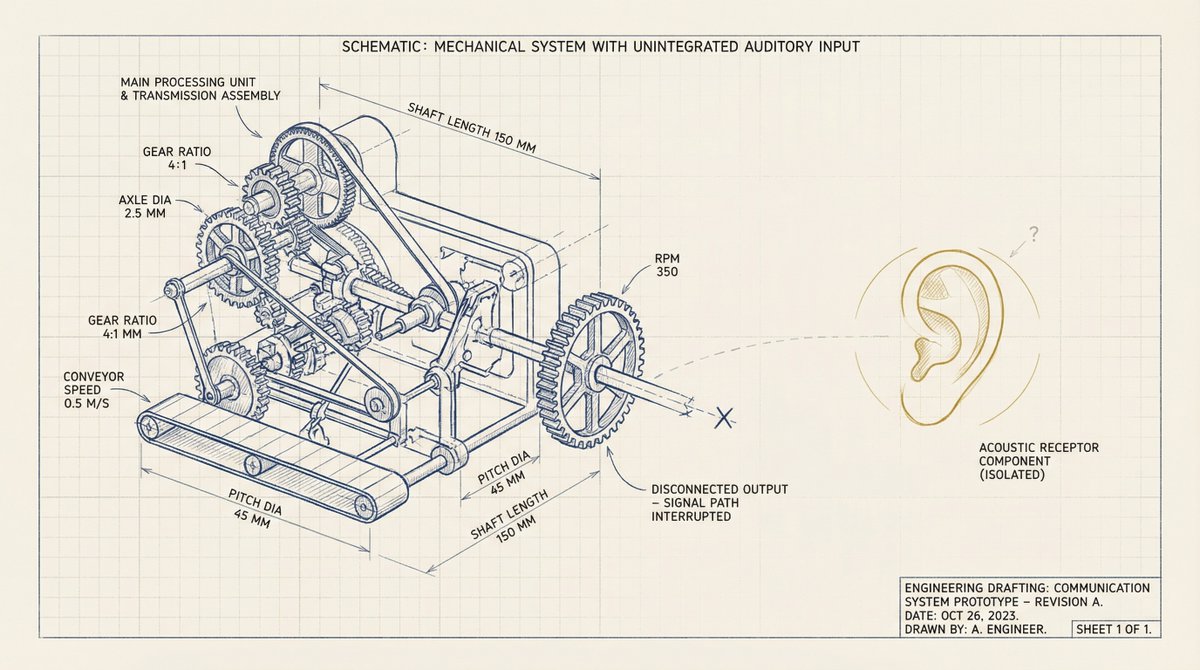
Companies don't stop talking to customers when they scale.
But the orientation flips. The question quietly shifts from "what should we build?" to "does this thing we've already decided to build sound good to you?"
That's the gap where bad bets get made.
@dougglanville Beautiful feature by The Assembly on Kenny Glanville, half of a brotherly powerhouse baseball duo with deep roots in the Raleigh area. (Perhaps we can rally to get Doug and Tiffany to move back here again?)
Kenny Glanville started playing baseball 50 years ago in an era when African-American players thrived. The complexion of the game has changed, but he keeps coming back for another season. By all-stars @ByTimBrown & @cornwhizzle for @TheAssemblyNC. https://t.co/9GuUrVYHFw