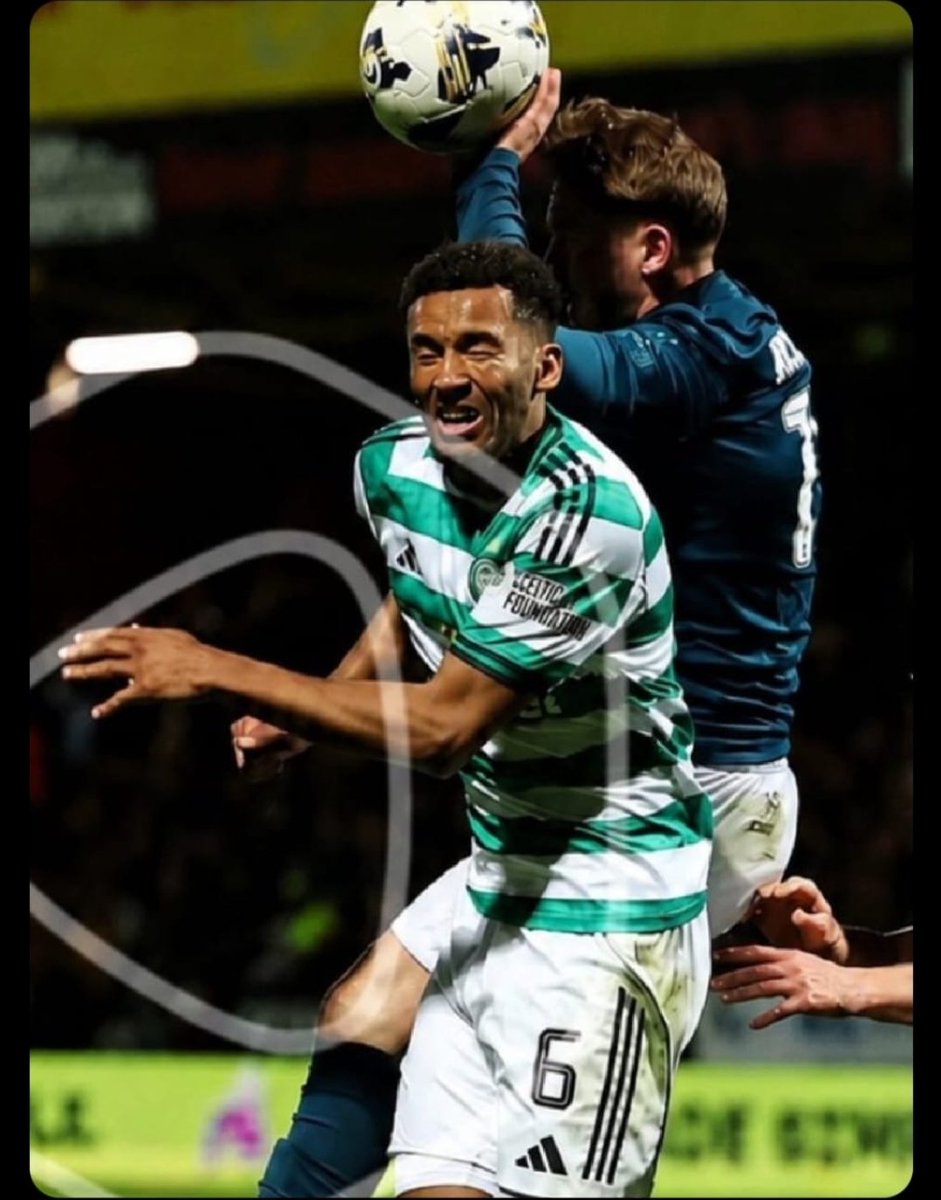
@davidstoker_lfc I agree that a handball has now become a massive grey area that is too open to interpretation due to VAR. That is definitely something that has to be addressed. But to coin an old adage, ye see them given for that all the time.
@EwenDCameron What have the pics of the over the line/ not over the line ball got to do with anything? Fair enough to disagree but why try conflate two completely different matters to prove a point of view that is simply wrong?
@AndyRobsonTips The rules of the game apply up until the final whistle. It's a handball and stonewall penalty. Yes, the grey area of handballs needs to sorted. If that was my defender I'd be wondering wtf he is playing at with 8 seconds to and the ball going nowhere.
The outrage over last night is very telling. The rules of the game apply till the final whistle.
If I seen my centre half doing that with 8 seconds to go and the ball going nowhere I would be absolutely furious.
@JimDelahunt Don't be that guy Jim. It was a stonewaller. VAR gives these decisions all the time. I agree it over-scrutinises the game and without it that penalty would have never happened but it does exist and that was the right decision.
🇵🇱✝️ 21 years ago, John Paul II passed away, a figure whose influence extended far beyond religion and helped reshape European history.
He became one of the key figures of the 20th century, playing a vital role in the fall of Poland’s communist regime.
His impact is recognized even by those outside of Catholicism: the Pope’s moral authority and his support for society became a powerful force that weakened the system from within.
The election of Polish cardinal Karol Wojtyła to the Holy See in 1978 shocked the Soviet Union and the entire socialist bloc.
In Moscow, there was a longstanding concern about Polish Catholicism and its influence on society, while communist authorities in Warsaw repeatedly sought to limit the Church’s role.
His visits to Poland were especially significant. His first trip in 1979 proved to be a turning point: millions took to the streets, and his words “Do not be afraid” sounded like a political signal.
These visits strengthened society and catalyzed the rise of the Solidarity movement.
On April 2, 2005, the day he died, Poland essentially stopped. Thousands gathered in streets, squares, and churches across the country.
In Warsaw, Kraków, and other cities, people held spontaneous vigils, lit candles, and stood in silence. Television broadcasts were interrupted, streets emptied, and the nation experienced a rare moment of unity.
His influence was not only political or religious, but it was deeply personal for millions.
His legacy encompasses not only faith but also freedom, dignity, and resistance to oppression.