What June 12 Should Mean to Us Nigerians
Today, we observe a day that should mean a great deal to us as a people who cherish democratic principles. Every year on June 12, the conversation inevitably turns to a critical assessment of the state of our nation. It serves as an annual benchmark for asking important questions: Are our elections today as transparent as they were in 1993? Is the social contract being honoured? Are the institutions of governance truly serving the people?
Ultimately, June 12 is a powerful blend of reflection and aspiration. It honours a fractured past while serving as a constant and foundational reminder of the immense power inherent in the collective democratic will of the Nigerian people.
For us in Nigeria, June 12 is not merely a date on the calendar; it is the emotional and structural bedrock of our modern democratic identity. Officially recognised as Democracy Day, June 12 carries deep historical, political, and social significance, representing both a monumental tragedy and the ultimate triumph of the collective will of the people.
To understand what June 12 means to Nigeria, one must examine its history, its evolution, and its enduring symbolism.
A new era of true democracy is POssible. -PO
Despite Three Years of Tinubu's Food Emergency, Nigeria hungriest ranking index declined to among the worst nations globally.
In celebrating his supposed successful three years in office, President Bola Ahmed Tinubu listed some achievements in the agricultural sector, firstly, his declaration of emergency on food security in July 2023, followed by the acquisition of 2,000 tractors and 9,000 farming implements, stated as Nigeria's largest agricultural mechanisation programme.
Yet the outcome of this has been the opposite. Nigeria's hunger index has worsened significantly. Nigeria's hunger index ranking was 103rd out of 123 countries surveyed in 2022/2023, and this figure had since worsened to 115th out of 123 countries surveyed in 2025/2026. Consequently, Nigeria is now classified among the world's most hungry or food-insecure nations in the world, with the World Bank forecasting that 33 million Nigerians could experience severe hunger.
In fact, Nigeria has the highest number of hungry people in the world.
I have always maintained that Nigeria have no reason to be seen among the hungriest nations in the world when we have fast, uncultivated land in the north, which is our greatest asset today.
We must transparently invest in Agricultural production, which will guarantee food security, but create huge employment.
A new Nigeria is POssible. -PO
In continuation of my quest to deepen knowledge and impact positively on our society, yesterday June 10th, in London, I held a series of important engagements, including a fruitful meeting with Alex Vines, Director of the Africa Programme at the European Council on Foreign Relations (ECFR).
Our discussions focused on strengthening strategic relationships and fostering a deeper understanding of Africa’s evolving role in global affairs. It was emphasized that Africa must no longer be viewed merely through the prism of statistics or humanitarian concern, but as a serious and equal partner in shaping the future global order, much like India, Indonesia, and other emerging centres of influence.
During our engagement, it became increasingly clear that Africa, and Nigeria in particular, must be placed at the centre of international conversations on partnership, trade, governance, innovation, and sustainable development.
Constructive dialogue and mutual respect remain essential to building meaningful cooperation between Africa and the international community.
A New Nigeria is POssible. -PO
Sad: Our Children Are Now Pawns in a Deadly Ransom Economy
It’s heartbreaking to report yet another bandit attack on a school, barely three weeks after over 40 schoolchildren and their teachers were abducted and are still languishing in the forest.
The security situation in Kogi State has taken another tragic turn with a brutal bandit attack on Government Secondary School, Iluke, in Kabba-Bunu LGA. Armed bandits disguised in military uniforms invaded the school during an ongoing WAEC examination, killed the Vice Principal, Mr. Gani Anifowose, and attempted a mass abduction of students.
Reports from the scene indicate that local security personnel and vigilantes actively resisted the attackers and frustrated their abduction attempt.
Making educational institutions soft targets is a direct assault on the nation’s future. It creates a psychological barrier to school enrolment and worsens Nigeria’s out-of-school children crisis, disproportionately forcing young girls out of formal education due to fear. There is nothing more heartbreaking for a nation than being unable to protect its children.
My heartfelt condolences go to the family of the Vice Principal, who lost his life while gallantly defending the children entrusted to his care. May God grant his soul eternal repose.-PO
Excessive Borrowing Without Accountability: Further Affirmation of Imprudent Governance.
President Bola Tinubu's administration has engaged in remarkably imprudent borrowing, escalating Nigeria's total debt to approximately N200 trillion. This represents an increase of over N100 trillion within a mere three years, a stark contrast to the roughly N49 trillion accumulated during President Muhammadu Buhari's eight-year tenure, which would have projected to around N80 trillion. As millions of Nigerians grapple with the shock of this unsustainable debt accumulation, the situation is exacerbated by the government's reckless approach to borrowing and a profound absence of accountability and transparency in the utilisation of these funds.
For instance, data from the Federation's Budget Office reveals that the Bola Tinubu government borrowed N11.89 trillion in the first three quarters of 2025 (January to September), exceeding the planned borrowing target of N10.34 trillion by approximately N1.54 trillion. Under a responsible and accountable government, such an overshoot would necessitate rigorous scrutiny and explanation from relevant governmental bodies. Regrettably, this is not the reality under the current administration.
Compounding this issue, only N3.10 trillion of the borrowed funds was allocated to capital expenditure during the same January-September 2025 period. This constitutes a mere 17.66% of the N17.58 trillion earmarked for capital projects, leaving a deficit of roughly N14.48 trillion, or 82.34% of planned capital expenditure unfunded.
The most disturbing aspect of the financial management fiasco under Bola Tinubu is that there is no explanation or information regarding how the balance was utilised or deployed. The question that Nigerians are rightly asking and deserve an answer to is what happened to the balance? Was it deployed for recurrent expenditure/ consumption, for the entertainment of guests to Aso Rock or transferred to the Renewed Hope Agenda 2027 Election Campaign Fund? Nigerians deserve an answer on how our economy and resources are most unpatriotically managed.
A New and Productive Nigeria is POssible, and Nigeria will be OK!
-PO
Exponential increase in revenue with excessive borrowing: Yet more hardship for Nigerians!
In celebrating three years of his administration, President Bola Tinubu included, among his achievements, an increase in revenue from N16.8 trillion in 2022 to N35 trillion in 2025. An increase of over 100%.
Shockingly, while Nigerians expected a reduction in borrowing with the exponential increase in revenue, the opposite is the case. In just three years, President Bola Tinubu’s government seems to be obsessed with excessive and imprudent borrowing, with our total debt currently about N200 trillion—a deeply disturbing increase of over N100 trillion.
In addition to the exponential increases in both revenue and debt, it is also important to note that Nigeria has earned far more than the budget revenue targets due to global and regional geoeconomic and political tensions.
Alarmingly, even with the astronomical increase in both revenue and debt, almost all key socio-economic and governance indicators are worse than in 2023. Multi-dimensional poverty has increased from 87 million people in 2023 to over 140 million people in 2025. Rapidly increasing unemployment and a decline in GDP per capita from $1,597 in 2023 to $1,223 in 2025, and the list goes on.
Just more and more hardship for Nigerians! The question Nigerians and even the international community are asking is, “Where did all the money go?”
Nigerians deserve a detailed and transparent explanation of what happened to our economy and financial resources since 2023, and a stop to the imprudent, unaccountable, and opaque management of our common patrimony.
A new and productive Nigeria is POssible, and Nigeria will be OK! -PO
Building a Healthier Nigeria Through Stronger Healthcare Systems
As part of our desire and commitment to building a healthier Nigeria, I met with some healthcare professionals and experts in the United States on Friday, June 5, 2026. The meeting was essentially to deepen my understanding of how successful health insurance systems deliver improved healthcare, especially in the areas of primary and emergency care.
One of our key health objectives remains unchanged: to expand health insurance coverage, strengthen primary healthcare across our electoral wards, train more healthcare workers, and make quality healthcare accessible and affordable for all Nigerians.
A New Nigeria must be a healthier Nigeria.
A New Nigeria is possible. -PO
What Our Pervasive Insecurity Requires: A Holistic not Reactive Approach.
In a hasty effort to be perceived as attentive and courageous, it is reported that President Bola Tinubu has approved the recruitment of about 1000 forest guards for Oyo State. This is a further demonstration of poor leadership and attending to very serious governance and security issues with a reactive approach. It is the same reactive approach that led to the sudden removal of fuel subsidy and floating of the Naira that has caused irreparable damage to ordinary Nigerians and the economy.
While recruiting more security personnel for Oyo state and the country is important, it should be done in a more organised and well-thought-out manner. Presently, almost all the 36 states in Nigeria are experiencing different forms of insecurity, with Oyo, Plateau, Kwara, Kogi, Borno, Katsina, Anambra, Niger, Imo, and Sokoto being very alarming.
The question, such as the reactive approach of our President, is whether all the states will receive the same approval to recruit 1000 forest guards per state, that is 37, 000 forest guards for the 36 states and Abuja or is the recruitment approval based on the mood of the President? Moreover, with the approval for Oyo, what will happen to the Amotekun Corps that is trying its best to secure South-West Nigeria?. Will they be disbanded in Oyo state?
The pervasive insecurity we currently have is directly related to the failure of our ecosystem, particularly leadership. It is only failure in leadership that can lead to the death of over 10,000 innocent Nigerians since 2023, and Nigeria is ranked among the top-most terror-affected countries in the world.
Addressing our insecurity situation requires a holistic or what can be described as an ecosystem approach. With failure in leadership, there is failure in unifying our dear nation, failure in industrialisation, failure in harnessing our abundant resources in agriculture, minerals, tourism, water, sports and even oil and gas to effectively generate required revenue, growth and particularly jobs for our exponentially growing youth population.
A New and Productive Nigeria will be POssible, and we will be OK! -P0
Please release these children for the sake of our shared humanity
I am deeply shocked and heartbroken by the condition in which these abducted school children are, as seen from their flagellated bodies. It is a painful reminder of the depth of insecurity in our land.
I have always made it clear that the society we abuse today will take its revenge on our children tomorrow. When I first began making that statement, some of these children were not even born. This is a classic example of how the abuse of governance and society today can produce devastating consequences long after the abusers are gone.
It is on the same line that I argue that the loans our leaders take today will hurt our children in the future, as many of them will mature for repayment and consequences long after we are gone.
To those holding these children, I make a direct appeal to your conscience. Remember that these are innocent children - sons and daughters of people who have placed their hopes, dreams, and entire future in them. In every one of them, you will find reflections of your own children, your own family, and your own humanity.
No grievance, no hardship, no justification can ever outweigh the sanctity of a child’s life and innocence. Whatever path has led to this moment, there is still room for remorse, for humanity, and for a change of heart.
I therefore appeal to your sense of mercy: release these children immediately. Let them go. Return them safely to society to reunite with their families. -PO
Concerns About Deteriorating Security
Two weeks have passed since schoolchildren were kidnapped in Borno and Oyo States, yet they remain in captivity. Meanwhile, the government is promoting the formation of a thousand-member rescue team through the media while the children continue to suffer in the wilderness.
Today, the security situation across the nation continues to deteriorate. On Sunday, terrorists killed at least seven people and injured ten others in Gwon-Ajang Village, located in the Foron District of Barkin Ladi Local Government Area of Plateau State.
In Kogi State, armed assailants kidnapped over 25 individuals and killed one resident during a coordinated raid on the Ayegunle-Igun Community in Kaba-Bunu Local Government Area. These heavily armed attackers carried out their operation in a commando-style manner, terrifying residents in the early hours of Monday.
In Anambra State, we also mourn the loss of two police officers who were killed in a bandit attack.
We still remember the painful incident in which armed individuals targeted three schools—Community Grammar School, Yawota Baptist Nursery and Primary School, and L.A. Primary School in the Ahoro-Esinle Community (Oriire Local Government Area near Ogbomoso)—and kidnapped 46 people, including 39 students, seven teachers, and the school principal.
On the same day, between 48 and 51 pupils and students in the Mussa Community (Askira-Uba Local Government Area) were abducted by suspected Boko Haram insurgents. The victims, who included young children from nursery classes as well as primary and secondary school students, were taken on May 15, 2026, and have now remained in captivity for two weeks.
Meanwhile, amid all these tragic developments, we politicians remain consumed by the next election, paying far more attention to political ambitions than to the safety and well-being of our children and fellow citizens.
In a nation that is not at war, the ongoing insecurity that endangers schoolchildren signifies a profound and serious challenge. -PO
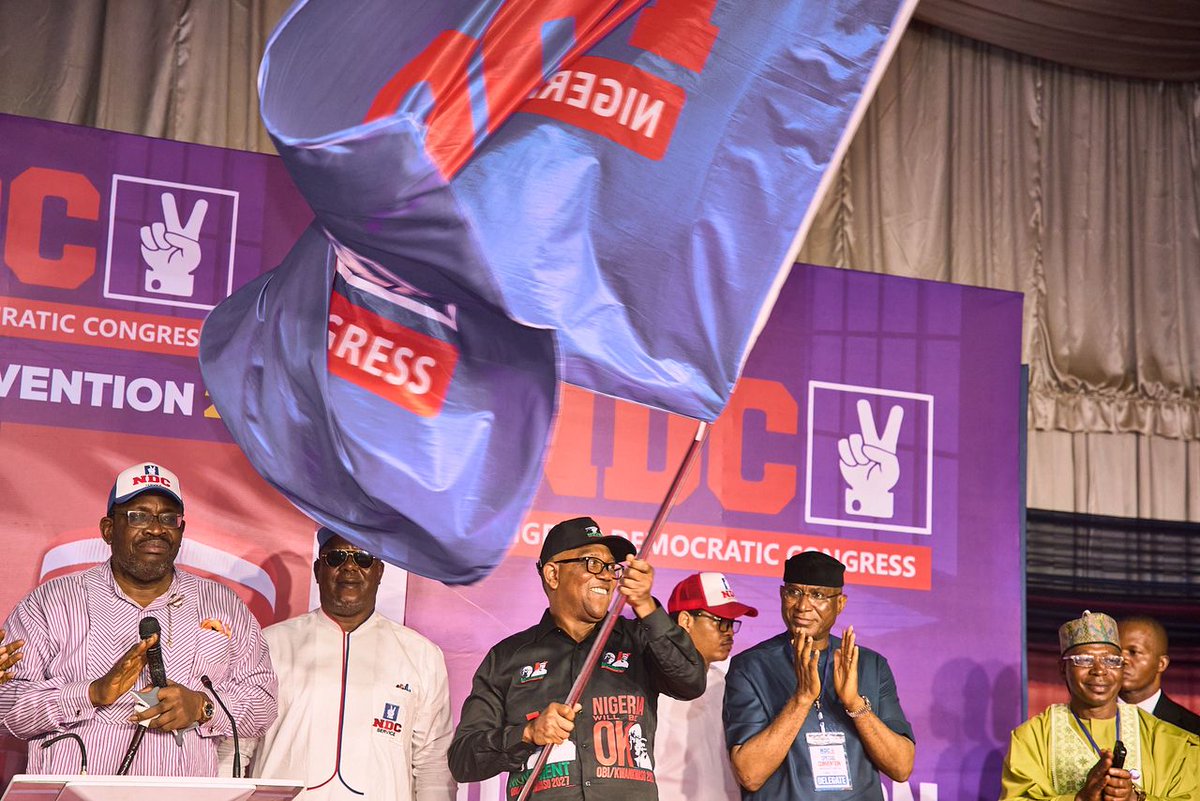
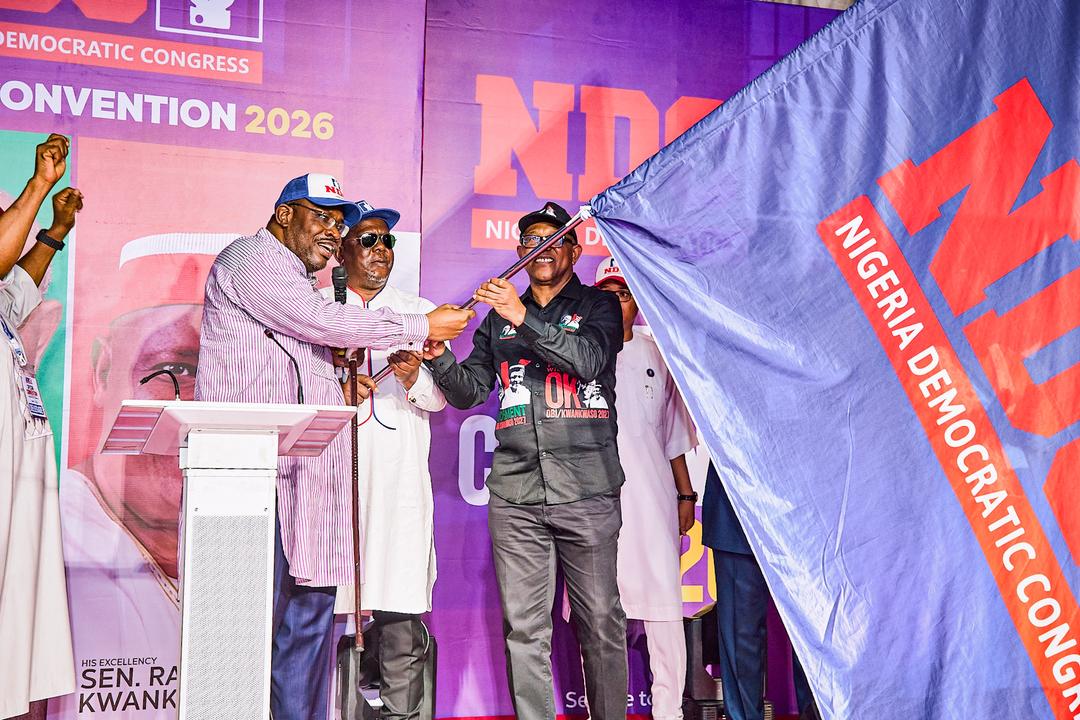
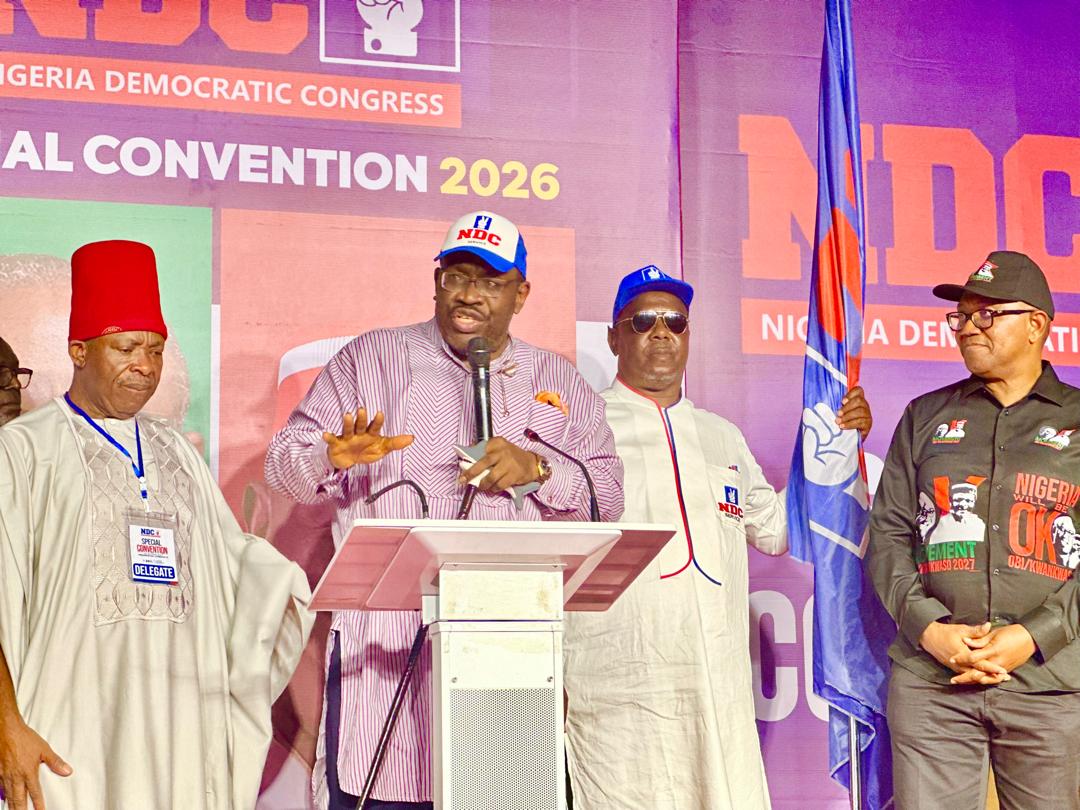
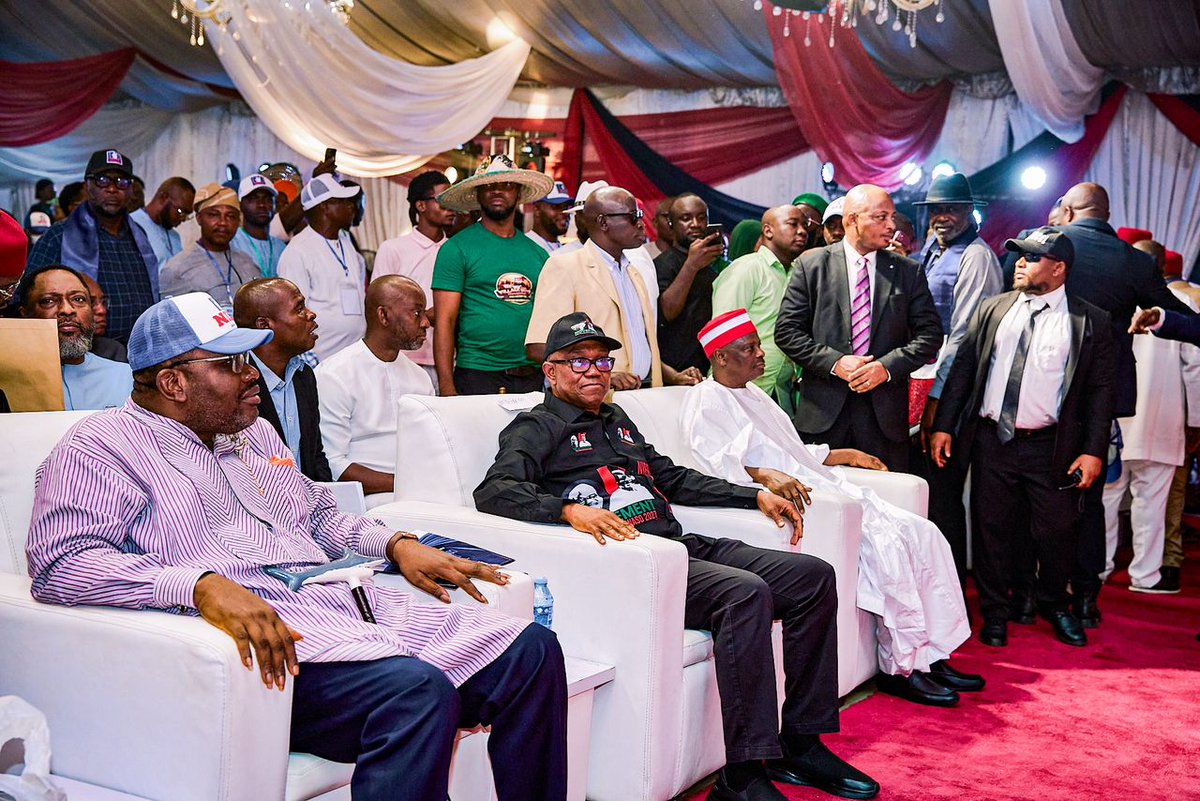
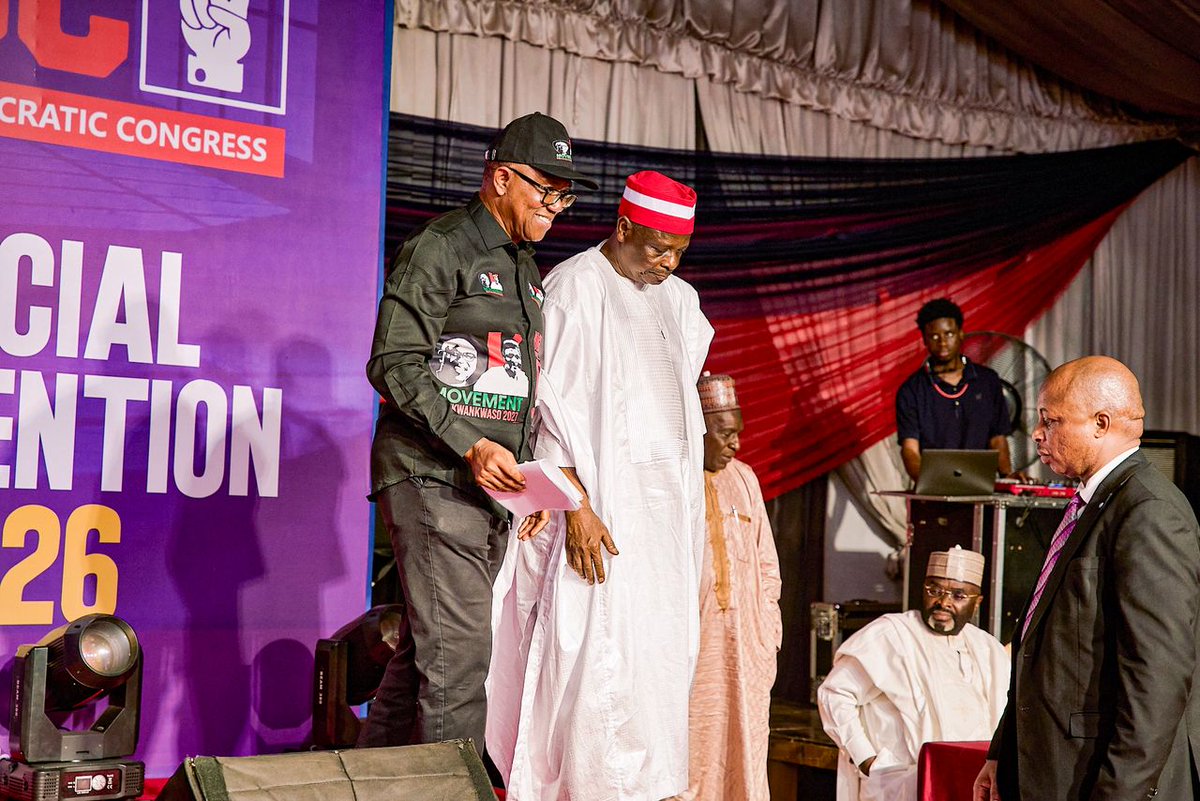
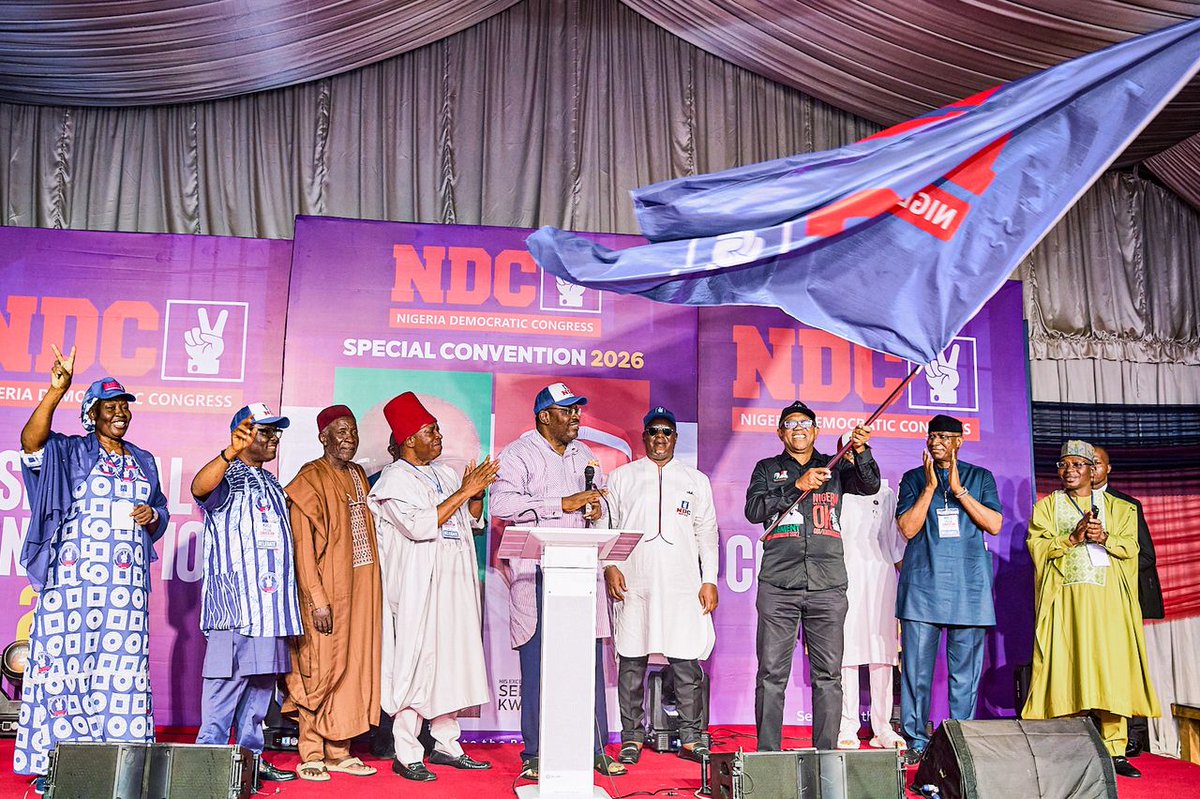
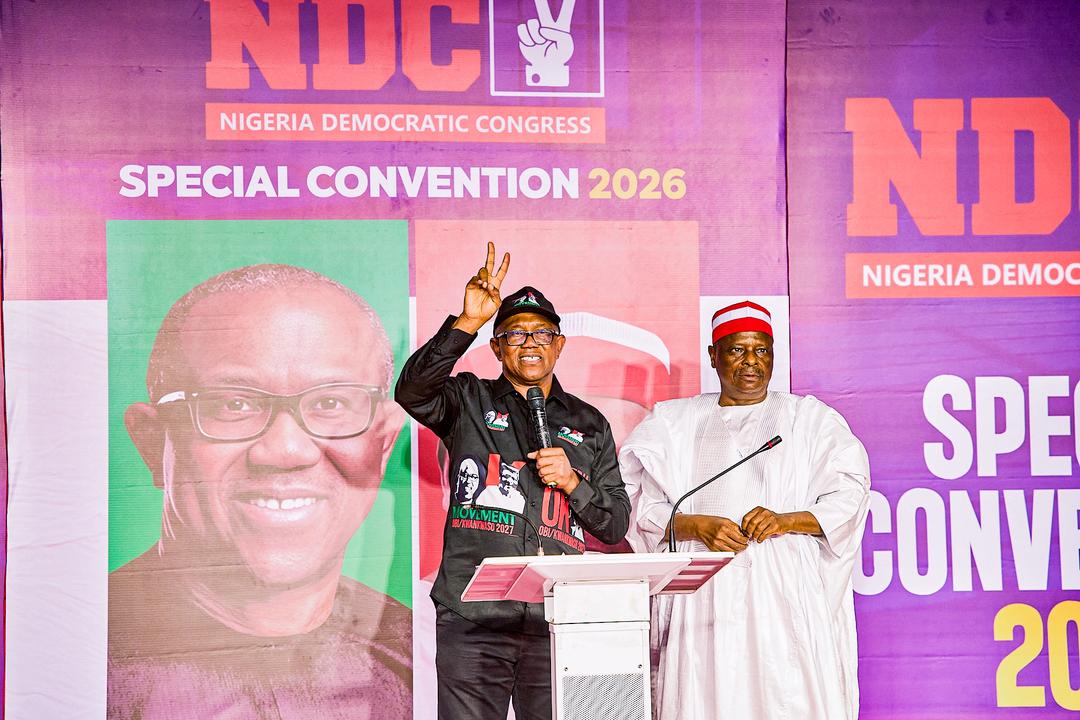
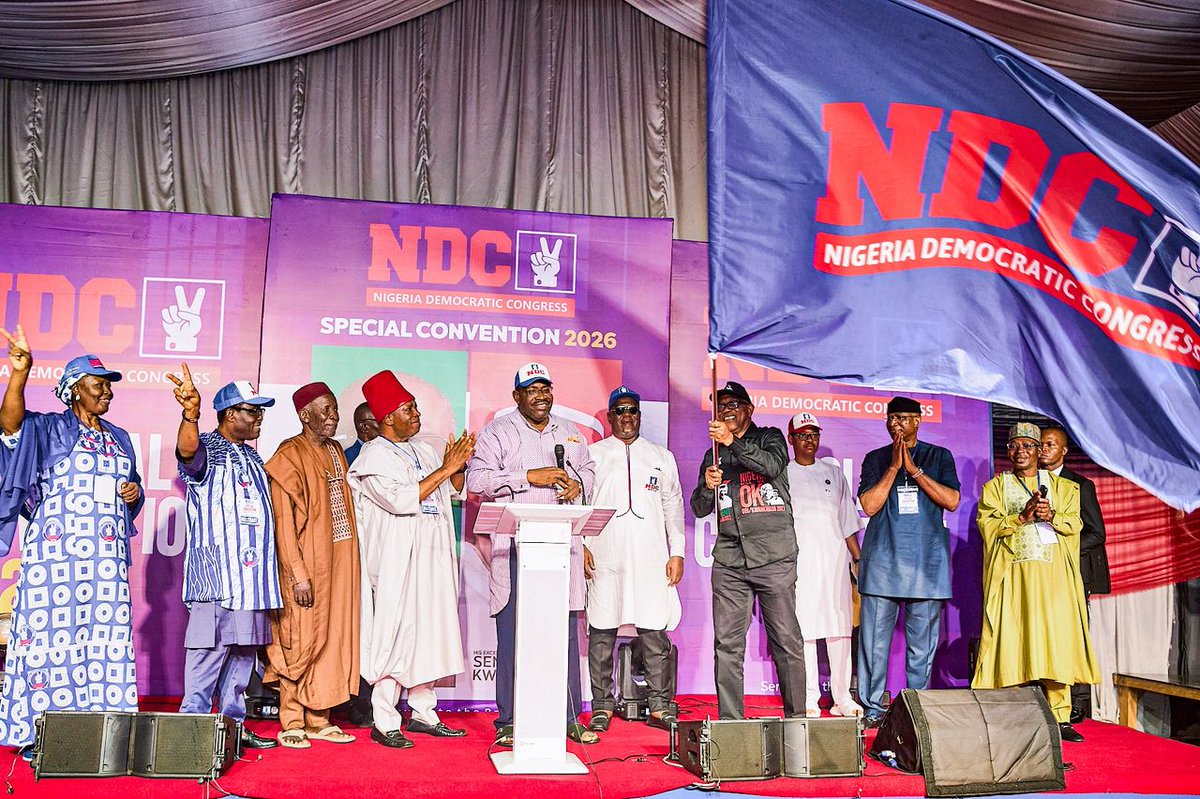
At today's Special National Convention of the NDC, after a motion was moved and a resolution passed unanimously, it was an honour and privilege, in the company of the National Chairman and other leaders of our party, to affirm His Excellency, Peter Obi, CON, as the NDC Presidential Flag Bearer of our great party.
It was an honour to have been asked to present the flag to him, which I did, assisted by the National Chairman of our party. As I stated at the convention, this affirmation is not merely a party exercise; it is a reflection of the confidence, trust, and hope that members of our party and millions of Nigerians have reposed in the NDC.
Significantly, while accepting the party’s nomination, he also announced his running mate for the 2027 presidential election in the person of His Excellency Senator Rabiu Musa Kwankwaso, CON. The announcement was received with enthusiasm by delegates and party members, who viewed the ticket as a strong demonstration of national unity, inclusiveness, and a shared commitment to national transformation.
I congratulate both His Excellency Peter Obi and His Excellency Senator Rabiu Musa Kwankwaso on this historic milestone and assure them of the full support of the leadership, members, and stakeholders of our party as we work collectively towards a successful campaign and victory at the polls.
I thank our delegates, party officials, and members across the country for the peaceful and democratic manner in which they conducted themselves throughout the primary elections and the convention process. Let us remain united, focused, and committed to the ideals upon which our party was founded.
Together, we shall offer Nigerians a credible alternative and usher in a new era of hope, progress, and national renewal. May God bless our party and the Federal Republic of Nigeria.
~HSD
Nigeria has a massive landmass of 923,768 square kilometres. Divided by our population of approximately 230 million, this results in about 4.00 square metres per person. The foregoing clearly illustrates that we have absolutely no justification for being among the world's hungriest nations.
Transitioning our nation from a state of consumption to one of production, through significant investments in agriculture, is the sole dependable strategy to escape the current depths of hunger and poverty. As I often emphasise, the uncultivated lands in our northern region represent our most substantial tangible assets. Transforming this sector is our direct pathway to prosperity.
ENERGY SECTOR
Nigeria today is the nation with the highest number of citizens lacking access to electricity globally. We currently generate and distribute a mere 4,000 megawatts (MW) of electricity for a population exceeding 200 million. In contrast, comparable nations worldwide - including several African peers such as South Africa and Egypt - each generate and distribute over 40,000 MW, despite both countries having less than half of our population. This considerable power shortfall continues to cripple businesses, choke industries, and stall overall economic growth.
Over the next four years, I commit to ensuring a minimum of 10,000 Mof W power increase generation and distribution.
UNEMPLOYMENT AND UNDEREMPLOYMENT
Our large pool of talented youth remains largely unemployed. The current official unemployment rate of 4% grossly misrepresents the true situation; actual underemployment and unemployment in Nigeria exceeds 30%, with youth unemployment sitting at over 40% - among the highest globally, necessitating urgent intervention. We will address this by aggressively supporting the growth of micro, small, and medium enterprises (MSMEs) through targeted tax incentives, special interest rates, and accessible funding in sectors such as agriculture, manufacturing, entertainment, sports, and distribution. These improvements will be both measurable and verifiable.
CORRUPTION AND GOVERNANCE COSTS
Nigerians will witness a tangible and verifiable reduction in corruption and the baseline costs associated with governance. Public resources will be managed with absolute transparency, prudence, and accountability to ensure that every naira spent yields demonstrable value for citizens.
RULE OF LAW
The rule of law will be fiercely upheld, and adherence to it will be sacrosanct for both government officials and citizens alike, strictly in accordance with our constitutional frameworks.
DEMOCRACY
Our democracy will exemplify true governance of the people, by the people, and for the people, completely free from interference by the ruling party. Instead, we will institutionalise deep respect for opposition parties and foster constructive engagement in governance.
Under my leadership, democracy will be pursued with integrity, fairness, and transparency.
Following this i will make democracy work and the Vice president will be partner not a spare tyres. I hereby accept my affirmation and nominate Senator Rabiu Kwankwaso @KwankwasoRM as my Vice President.
May God bless you all, and may God bless the Federal Republic of Nigeria.
Farmers must be able to return to their fields securely; students must be able to learn without fear; communities must be able to rest peacefully; and investors must regain their confidence in Nigeria.
Our strategy will be intelligence-driven, technology-enhanced, proactive, and community-focused. We will fortify our security institutions, enhance operational coordination, support our courageous personnel, and tackle the underlying causes of insecurity—name, ly poverty, unemployment, and marginalisation.
HEALTHCARE
Regarding health, Nigeria is currently ranked 157th globally, placing it in the lower echelon of healthcare worldwide. Primary healthcare, the cornerstone of our medical system, remains severely underfunctioning, al with only 10% to 20% of approximately 30,000 primary healthcare centres operational.
As a result, Nigeria suffers from one of the highest infant mortality rates in the world. Furthermore, health insurance coverage in Nigeria hovers around a mere 10%, in stark contrast to countries like Indonesia, which boast over 90% coverage. This situation is regrettable.
I pledge that within four years, our health insurance coverage will more than double to over 20%.
Within these four years, we will increase our healthcare budget to a minimum of 10% of our GDP, up from the current level of below 5%. We will invest heavily in and support our healthcare institutions to ensure the massive training of our healthcare workers, including nurses and other professionals. We shall also adequately staff our medical facilities.
In four years, there will be a fully functional and properly managed primary healthcare centre in all 8,809 wards across the nation. By the conclusion of our term, Nigeria will ensure that at least 50% of its 30,000 primary healthcare centres are fully functional, properly manned, and dedicated to serving the populace.
EDUCATION
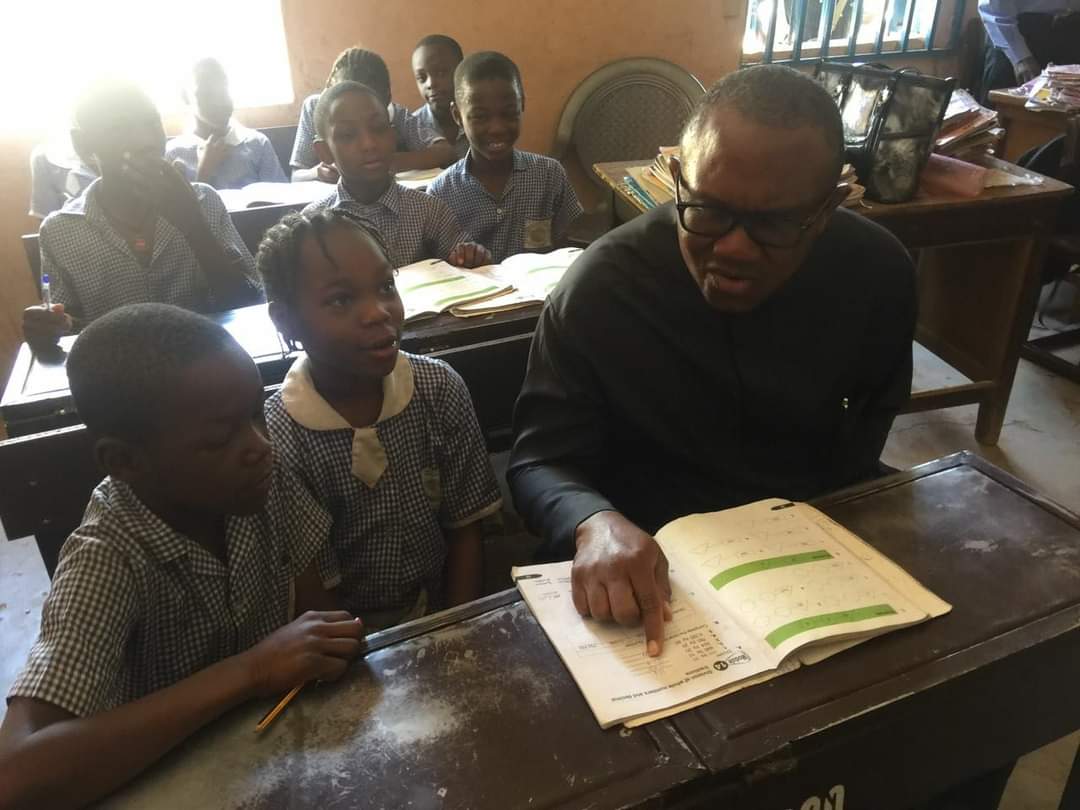
Education will remain at the forefront of our national revival, as no country can grow beyond its educational system. Nations that have transformed successfully have done so through sustained investment in human capital. Our children are not burdens; they represent our most valuable assets. We will invest heavily in schools, teachers, technology, and vocational training, ensuring that education equips our youth not only to seek employment but also to generate it. We must pivot Nigeria from a cycle of shared poverty to one of collective prosperity through knowledge, innovation, and productivity.
HUNGER AND AGRICULTURE
In 2023, when the present government took office, Nigeria ranked 109 out of 150 nations on the Global Hunger Index.
And by 2025, our ranking further plunged to 115th, placing us among the hungriest nations globally. Currently, the World Food Programme estimates that over 35 million Nigerians will face acute hunger and food insecurity this year. This is unconscionable, given our vast expanses of uncultivated land.
Rice remains the most consumed food in Nigeria. To illustrate our level of unproductivity, let us compare our capabilities with those of leading rice-producing nations. India is the largest producer of rice, yielding approximately 200 million tonnes of unmilled rice.
Bangladesh is the third largest producer, producing around 60 million tonnes of unskilled Rice, while Vietnam is the 5thproducinges about 42 million tonnes. Let us consider the land-to-population ratios:
India has a landmass of 3,287,263 square kilometres. Distributed across its population of 1.4 billion people, this equals roughly 2. 34 Square meter per person.
Bangladesh, with a landmass of around 148,460 square kilometres and a population of 170 million, has less than 1 square metres per person.
Vietnam’s landmass covers 331,000 square kilometres. Divided by a population of 102 million, it yields about 3.25 square metres per person.
ACCEPTANCE SPEECH BY MR. PETER OBI FOLLOWING HIS NOMINATION AS THE PRESIDENTIAL CANDIDATE OF THE NIGERIAN DEMOCRATIC CONGRESS(NDC) – MAY 30, 2026
Protocols,
Esteemed citizens of Nigeria,
It is with deep humility that I accept the role of presidential candidate for our party.
I express my profound gratitude to the leaders of our party. His Excellency Seriake Dickson, the National Chairman, National Secretary and the National Working Committee, NWC members and members of our relentless supporters, and the Nigerian populace who have steadfastly kept the spirit of hope alive. I commend those who have made the journey from every region of our nation to convene here in Abuja.
I wish to assert unequivocally: a New Nigeria is Possible. This conviction has united us; it must serve as our compass on the challenging road ahead and sustain us through all trials we may face. This pivotal moment transcends the individual ambitions of Peter Obi; it concerns the essence of our nation and the future of our children. It is about rekindling hope for millions who have faced adversity yet remain committed to Nigeria.
Today, our nation finds itself at a crucial juncture, enveloped in uncertainty. Families are anxious about their safety; parents are concerned for their children's futures; and talented youth increasingly question their prospects in their homeland.
Businesses are struggling, communities are suffering, and an alarming number of citizens have lost faith in the very concept of governance. Yet, I stand before you filled with optimism and strong faith in the resilience of our people, for I firmly believe that a New Nigeria is possible.
UNITY
To realise this New Nigeria, we must first mend the foundational elements essential for the success of any nation.
Nigeria cannot advance while fragmented by ethnic, religious, regional, or narrow political divides. We may communicate in different languages and practise diverse faiths, but we share a singular destiny under one flag. Our diversity should not be a source of division; rather, it is among our greatest strengths.
We should build bridges where others erect barriers, replace mistrust with confidence, division with understanding, and resentment with a collective purpose. A united Nigeria is indispensable. As Will Durant wisely pointed out, "A great civilisation is not conquered from without until it has destroyed itself from within." We must never self-destruct. We must heal, unify, and progress together.
INSECURITY
In terms of security, the situation in Nigeria has considerably worsened. The global terrorism impact assessments ranked Nigeria as the 8th most affected nation in 2022, 6th in 2024, and 4th in 2026.
Yet, for many years, Nigeria garnered global recognition as a reliable contributor to peacekeeping, regional stabilisation, and conflict resolution. Our troops have not only displayed bravery but have also shown professionalism, discipline, resilience, and empathy in the most challenging operational contexts. Our officers and personnel have successfully commanded multiple international forthe ces, safeguarded vulnerable civilian populations, monitored ceasefires, reinstated constitutional order, and contributed to rebuilding efforts.
Nigeria became one of the leading contributors of troops from Africa to UN peacekeeping missions and earned widespread admiration for operational effectiveness and leadership in various countries, including Rwanda, Sudan, Liberia, Sierra Leone, Mali, Western Sahara, Congo, Lebanon, Cambodia, Haiti, and Kuwait. At one pointin a Nigeria, Lt. General Isaac Obiakor (rtd) even led global peacekeeping initiatives.
We must address insecurity with resolve and urgency, for no nation can thrive while its citizens live in trepidation. The primary responsibility of the government is to ensure the safeguarding of lives and property.
CONTINUOUS ABDUCTION OF NIGERIAN SCHOOLCHILDREN AND THE COLLAPSE OF SCHOOL SAFETY
After congratulating Nigerian children as they celebrate their day today, my heart remains heavy and troubled, knowing that some Nigerian children have remained in captivity for years. It is a shame that days, weeks, months, and even years have passed while our children continue to languish in kidnappers’ dens, with their heartbreaking images still circulating on social media.
A nation that cannot protect its children from criminals has little but shame to present to the global community. No parent can bear the shame of being unable to protect his or her children, yet here we are as a nation, moving on while our children continue to suffer in forests and captivity for years. -PO
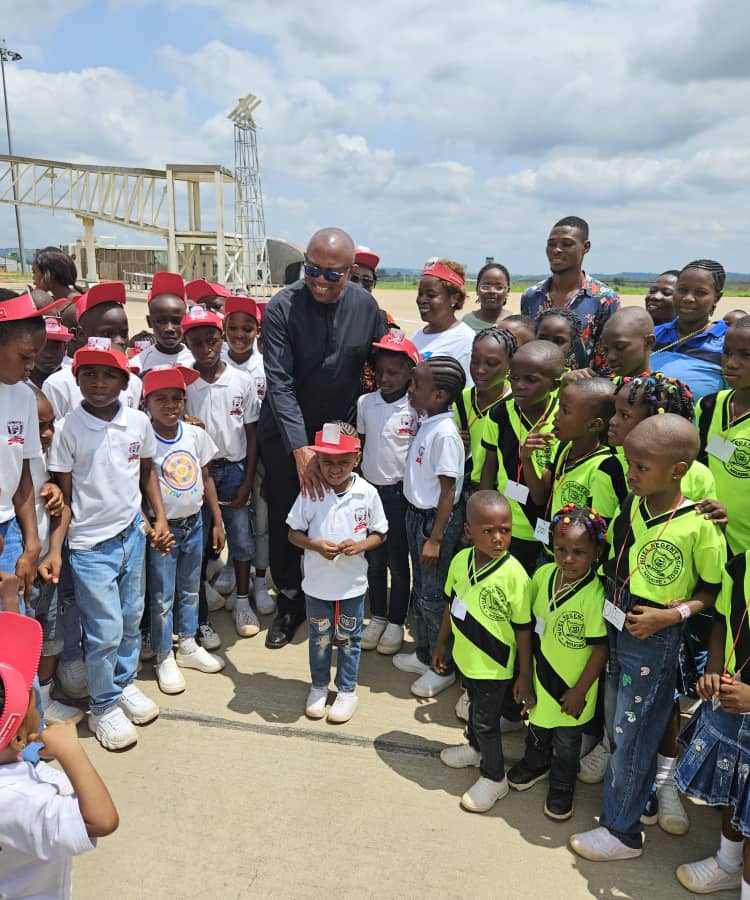
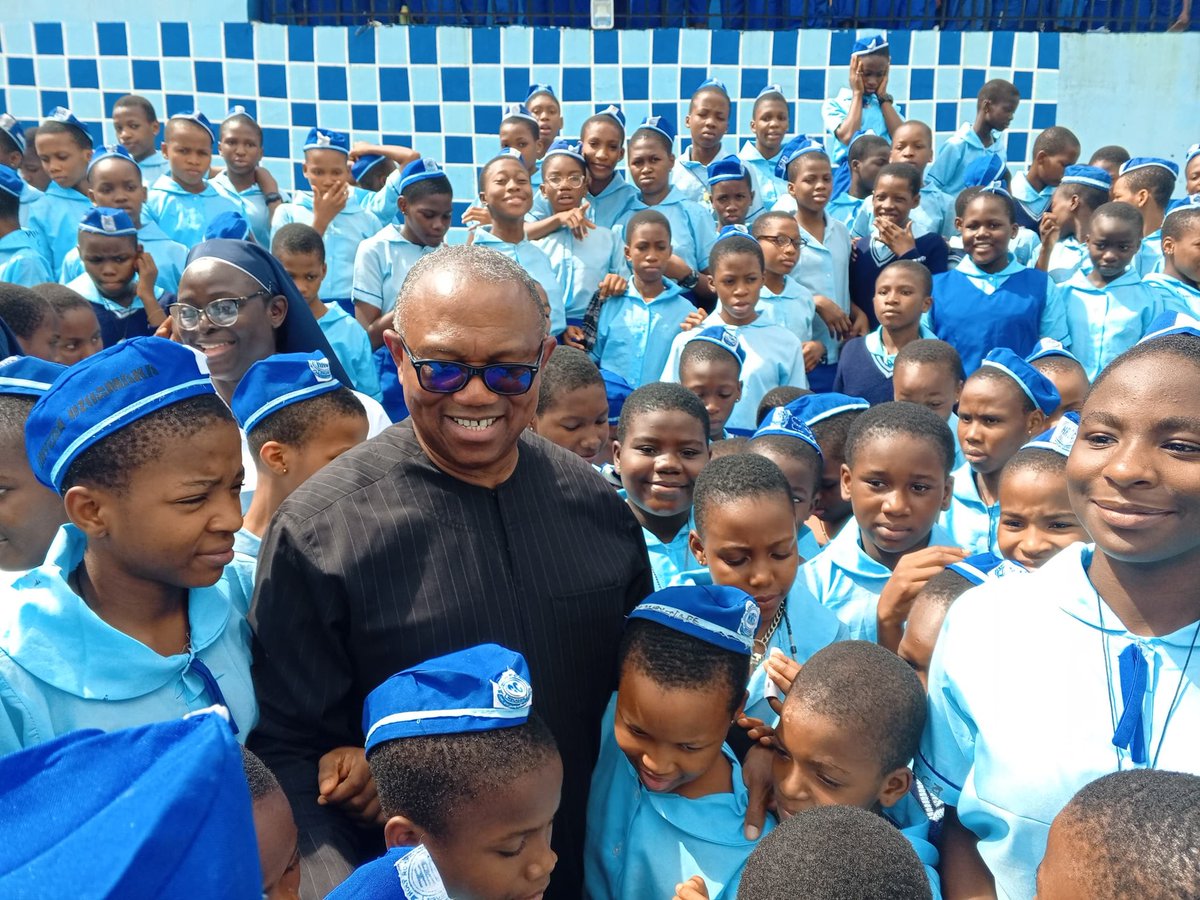
Dear children, happy celebrations!
As we honour you today, I reflect on the incredible talent, energy, and resilience you possess. You are not only the future of our nation but also its vibrant pulse in the present. Each time I look into the eyes of a child in Nigeria—whether in a classroom, a displaced persons' camp in Benue, or on the streets of Lagos—I see unparalleled potential. I envision future scientists, tech visionaries, leaders, and builders who can stand toe-to-toe with the world’s best if they have access to the right resources.
The true measure of a nation's leadership lies in how it cares for its youngest members. It is unacceptable that countless children remain out of school, and that essential healthcare and safety are seen as privileges instead of rights. To transform Nigeria from a nation of consumption to one of production, we must begin by investing significantly in you.
Leaders, parents, and educators, we must acknowledge that the best investment a nation can make is in developing its human capital, particularly through foundational education and healthcare. Failing to invest in our children today is akin to borrowing from our future.
To you, my dear children:
• Always keep dreaming: Your current situation does not limit your potential.
• Remain curious: Engage in reading, learning, and adopting new technologies. The world is evolving rapidly, and you have the intellect to lead that evolution.
• Take pride in your identity: As Nigerians, you embody resilience, brilliance, and the promise of greatness.
We will continue our efforts to cultivate a new Nigeria—one where your dreams are recognised, schools are safe, and your future is assured.
Blessings to all, and may God bless the Federal Republic of Nigeria. -PO
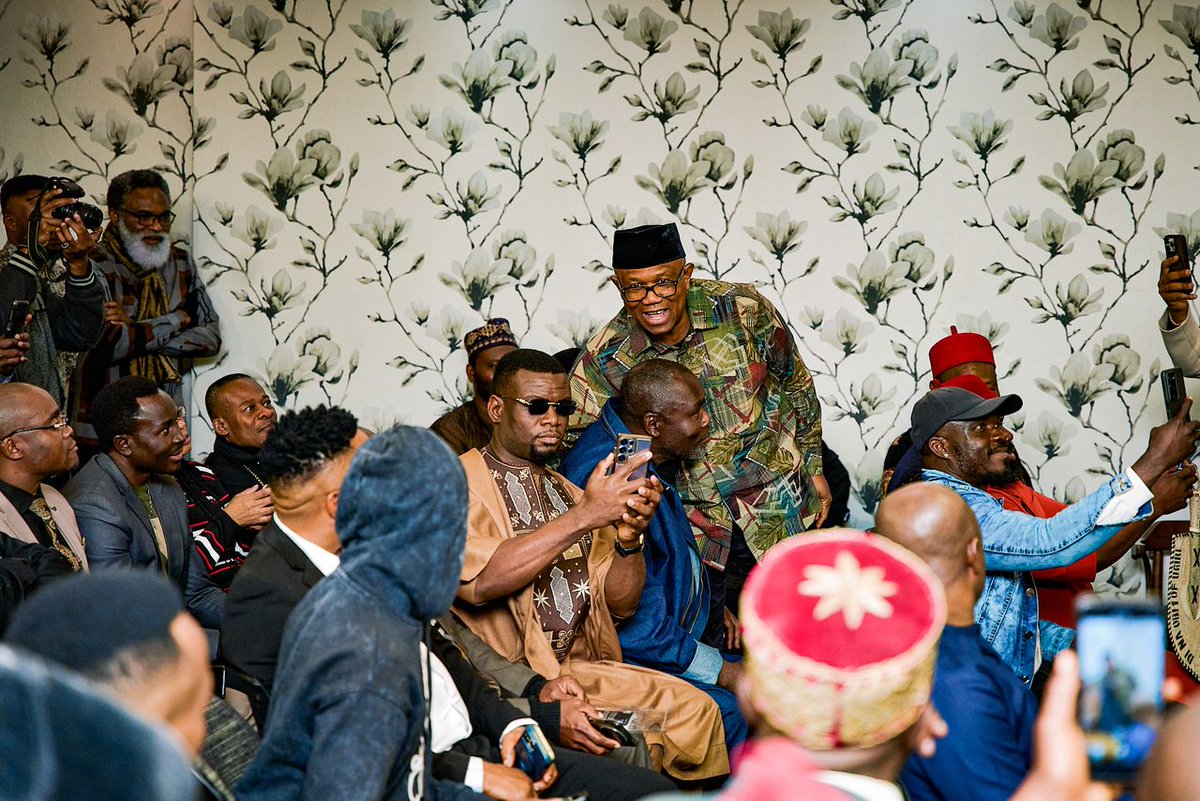
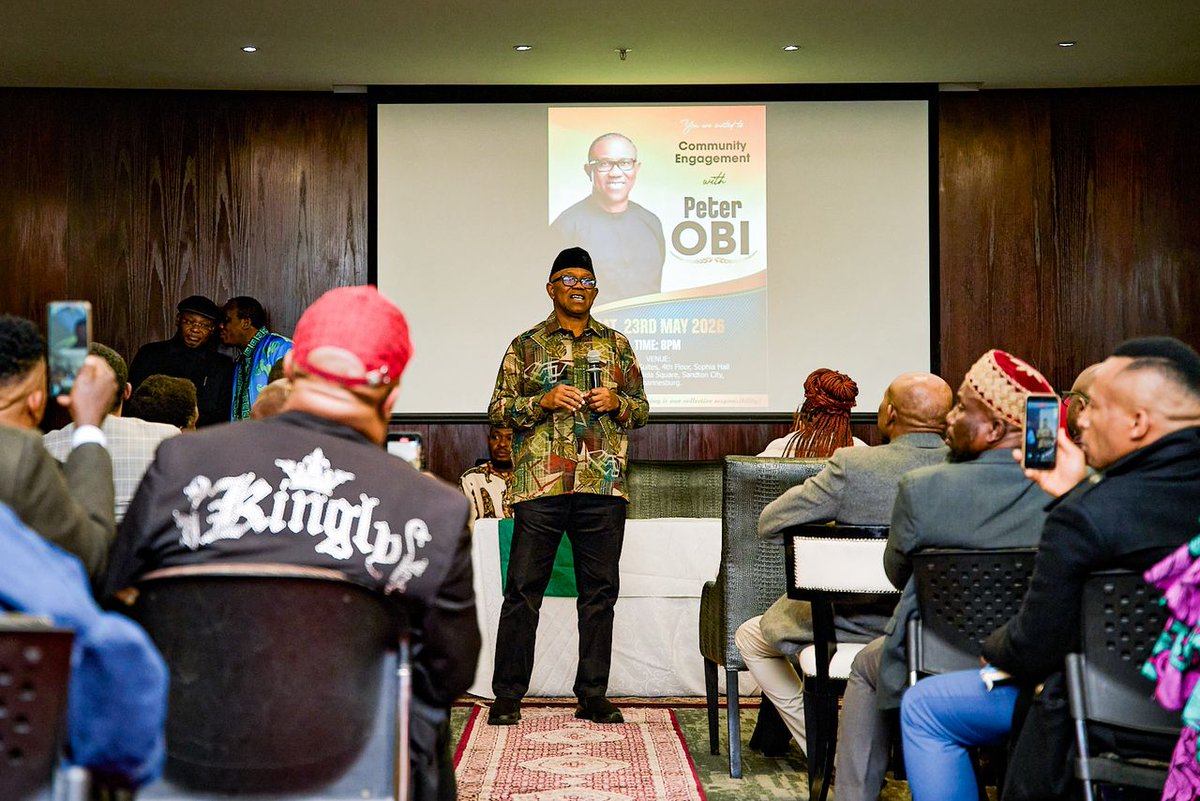
My final engagement in South Africa was yesterday in Johannesburg with my interaction with Nigerians in the diaspora. The discussions were frank, emotional, and deeply reflective of the realities confronting our people both at home and abroad.
The conversation was interrupted several times by passionate questions bordering on diplomacy, the treatment of Nigerians in foreign countries, the political situation back home, and the growing desire of many young Nigerians abroad to return home and contribute meaningfully to nation-building, if only the environment becomes conducive.
I also reminded our people that the respect any citizen receives abroad is often tied to how respected their nation is at home. A country that works, protects its institutions, upholds justice, and cares for its people naturally commands global respect. This is why leadership and governance must remain people-oriented, accountable, and rooted in competence and integrity.
While acknowledging the frustrations and pains many expressed, I emphasized the need for all of us to continue to conduct ourselves within the ambit of the law, irrespective of the provocation or difficulties we face. Nation-building demands discipline, civic responsibility, and the willingness to pursue change through constructive engagement.
The interaction further reinforced my belief that Nigerians across the world remain hopeful about the future of our nation despite the present challenges. Our task as leaders is to inspire that hope with sincerity, measurable action, and a commitment to building a secure, productive, and inclusive Nigeria.
A new Nigeria is POssible. -PO
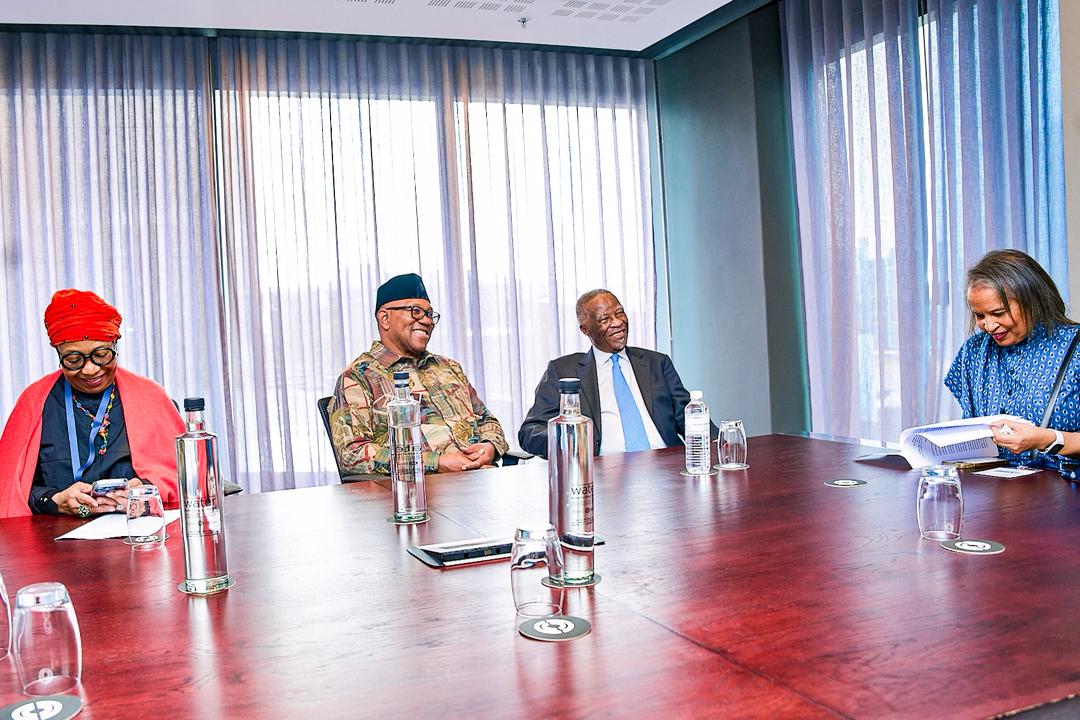
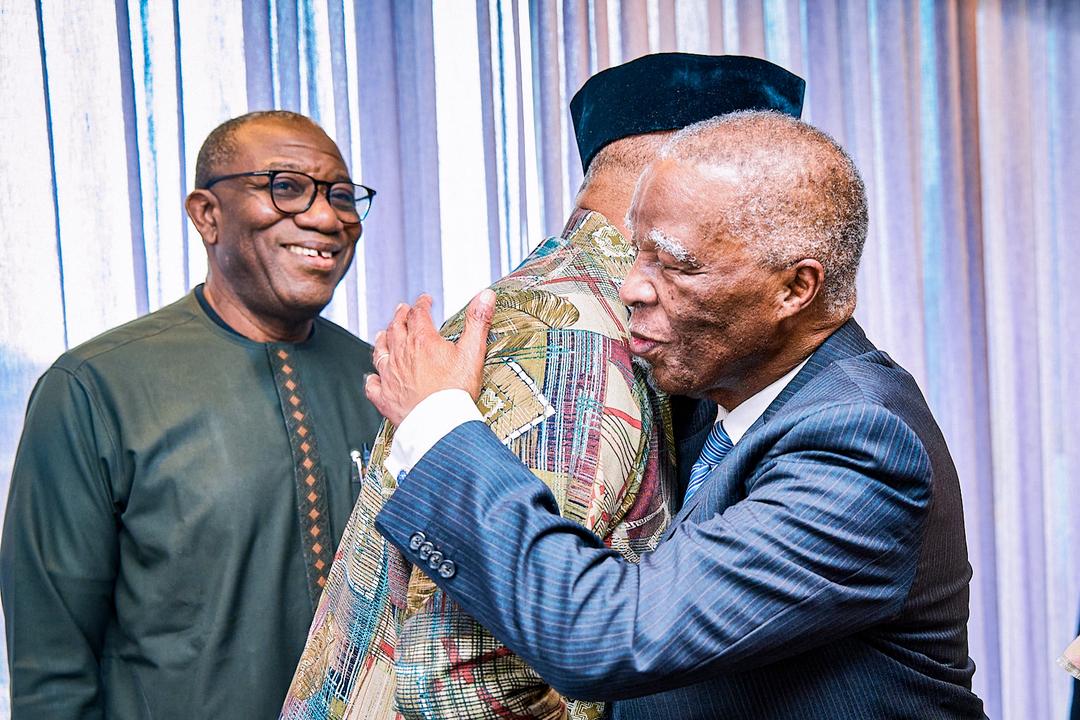
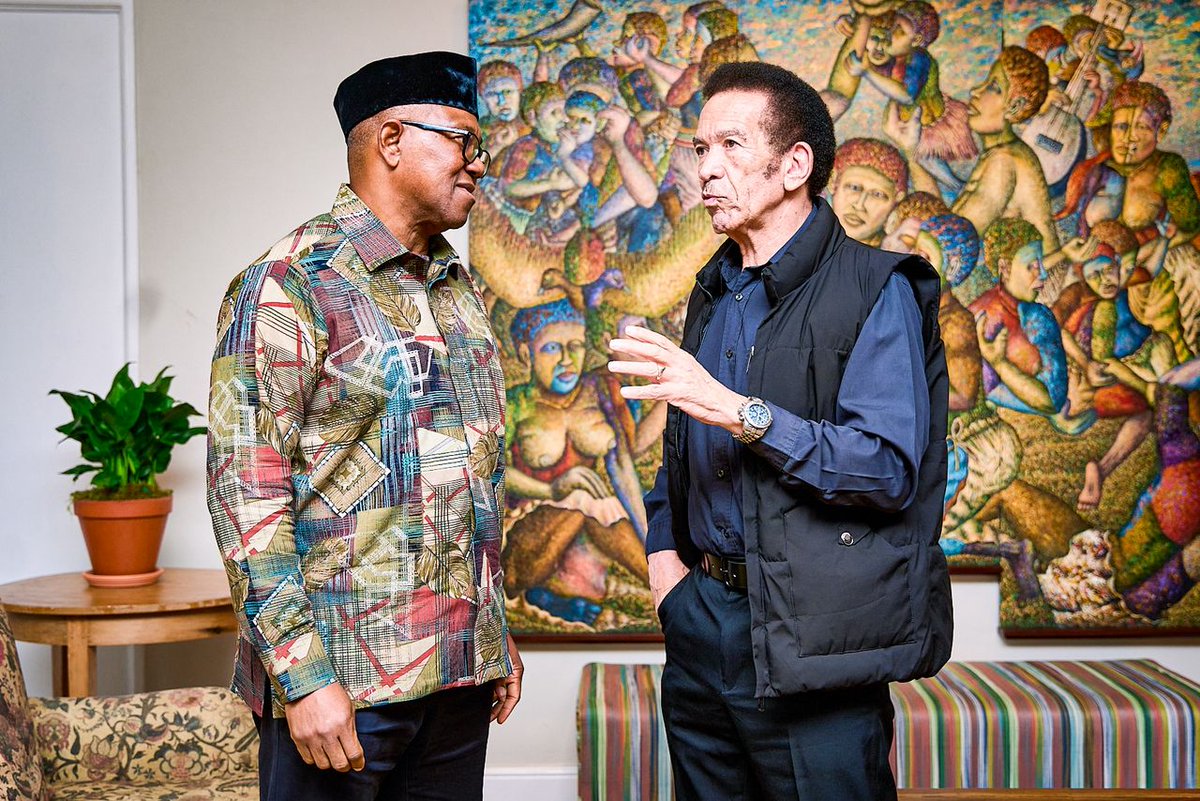
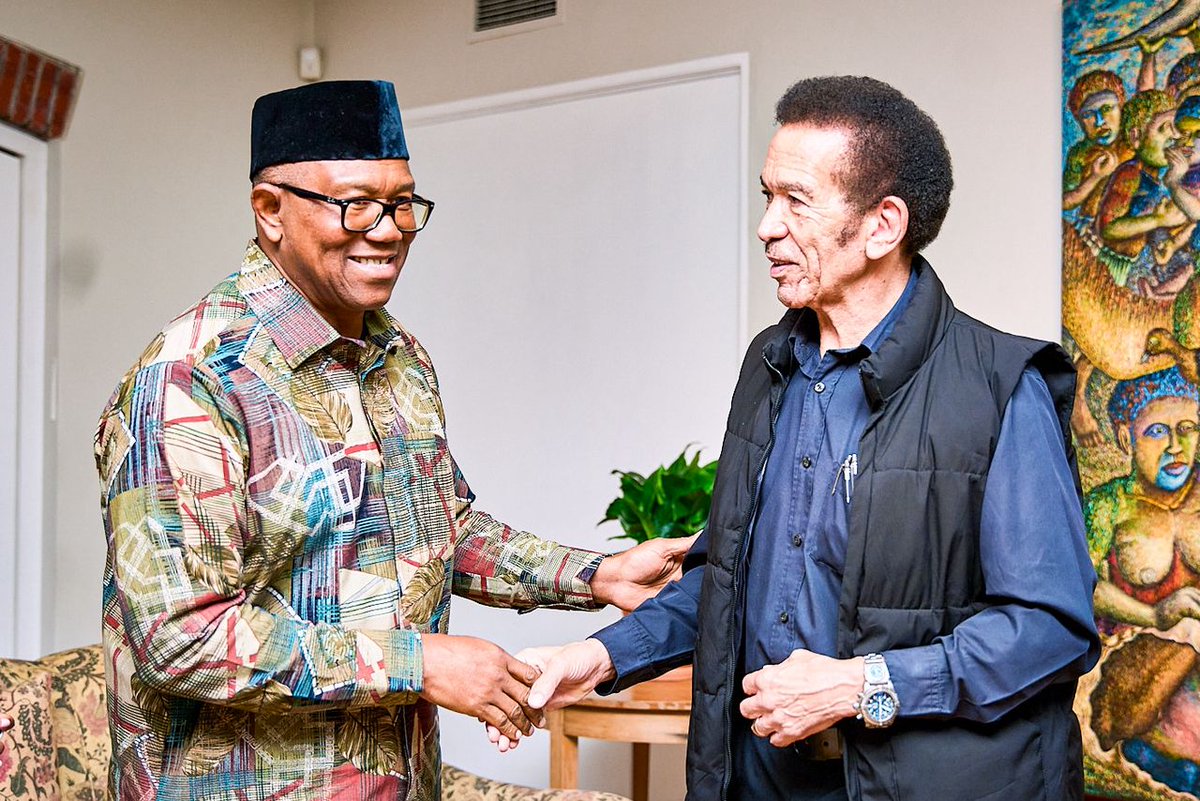
My final engagement before leaving Capetown for Johannesburg yesterday, I had the privilege of meeting two distinguished former leaders, President Ian Khama of Botswana and President Thabo Mbeki of South Africa, before departing Cape Town for Johannesburg yesterday.
This meeting was an opportunity for me to express my heartfelt appreciation for their positive comments on the recent immigration issues in the region and their continued advocacy for peace and unity among African nations.
Both Mr Khama and Mr Mbeki continue to hold significant respect across the continent due to their remarkable contributions, both during and after their presidencies.
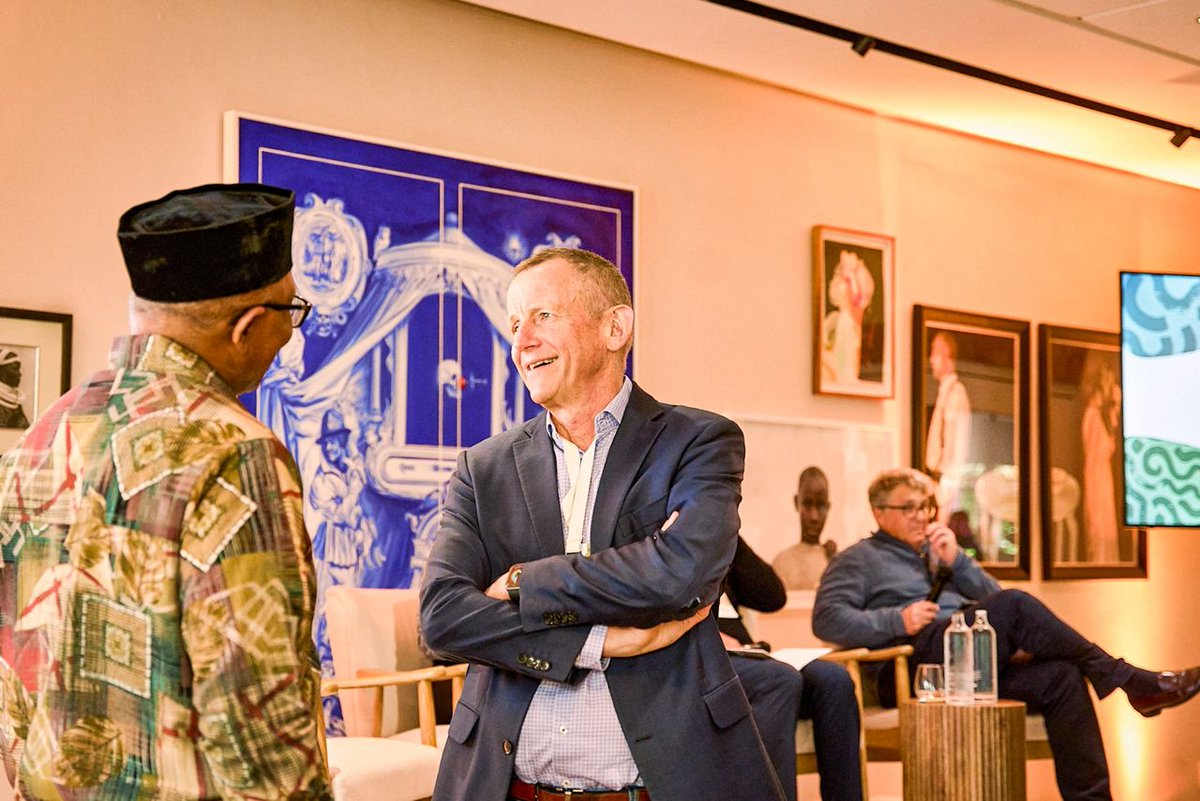
During my audience with Mr Mbeki, I also reconnected with my good friend, former Ekiti State Governor Dr Kayode Fayemi, who delivered a keynote address at the Thabo Mbeki Africa Day lecture, focusing on the themes of rebuilding unity and revitalising institutions throughout the continent.
This event was organised by the Thabo Mbeki Foundation. -PO