A community college professor named Marty Lobdell taught the same study skills lecture for 30 years. The video quietly became one of the most watched educational recordings online, with over 10 million views.
He spent his career watching students fail not because they were lazy, but because no one had taught them how their brain actually works when learning something difficult.
The lecture, “Study Less Study Smart,” contains a powerful framework.
Your brain cannot sustain focus the way most people believe. Studies show the average learner hits a wall between 25 and 30 minutes. After that, efficiency collapses. You’re still sitting there, but almost nothing is being absorbed.
Lobdell told the story of a student who planned to study 6 hours a night, 5 nights a week. Thirty hours total. She failed every class. She was not lacking effort. She was confusing time near books with actual learning. The fix is simple: when focus drops, stop, take a 5 minute rewarding break, then return. That reset makes a massive difference.
He also destroyed the myth of highlighting and re reading. Recognition is not the same as recall. To prove it, he read 13 random letters. Almost no one remembered them. Then he turned them into “Happy Thursday.” The entire room recalled them instantly. The brain stores meaning, not repetition.
This is why elaborative encoding works so well.
Finally, he shared the most important principle: 80 percent of study time should be active recitation. Close the book and explain the material in your own words. Teach it to someone else or an empty chair. Retrieval is where real learning happens.
His closing line stuck with me: If this information does not change your
behaviour, you have not actually learned it.
The best students do not study more hours. They stop confusing the feeling of studying with the reality of learning.
The three mental processes of attention are alertness, orienting and executive control.
If You Want Students to Learn, Don’t Tell Them 'Pay Attention!' Try This Instead
https://t.co/pV6NnYUtzT
Luke Falk shared a Mike Leach story that stopped me cold:
Two kids. One rich. One poor.
Every training camp, Coach Leach told his team about these 2 kids.
The rich kid has two choices.
Get soft. Get entitled. Expect everything handed to him because he was handed more.
Or take the resources, the coaching, the opportunities, and compound them into something greater.
The poor kid has two choices too.
Say nobody gave him anything. Blame the world. Make his circumstances the reason he never became what he could have been.
Or outwork everyone in the room.
Luke said the locker room had both. Kids from wealth. Kids from nothing. Kids with every advantage. Kids who scraped for every inch.
Same choice for all of them.
Ownership or victimhood.
Fuel or excuse.
The rich kid can waste the head start or build on it.
The poor kid can drown in the deficit or weaponize it.
Greatness doesn't come from where you start.
It comes from which kid you choose to feed.
Credit to @coachlukefalk for continuing to share golden nuggets about Coach’s legacy
“Thank you to the people of Wisconsin & Green Bay fans all over. Go Pack Go. That was 3 of the best years of my life.”
- Julius Peppers during his HOF speech
Explore 6 steps for creating a Crisis Handbook that can help your school community respond to significant disruptions – including mapping out specific roles, structures and routines.
(Via @edutopia)
https://t.co/X9kIugSJdp
"A lack of support is a top factor contributing to novice teachers’ early exit from the job."
Explore what effective mentorship requires, via @LearningForward:
https://t.co/13x36tXRKo
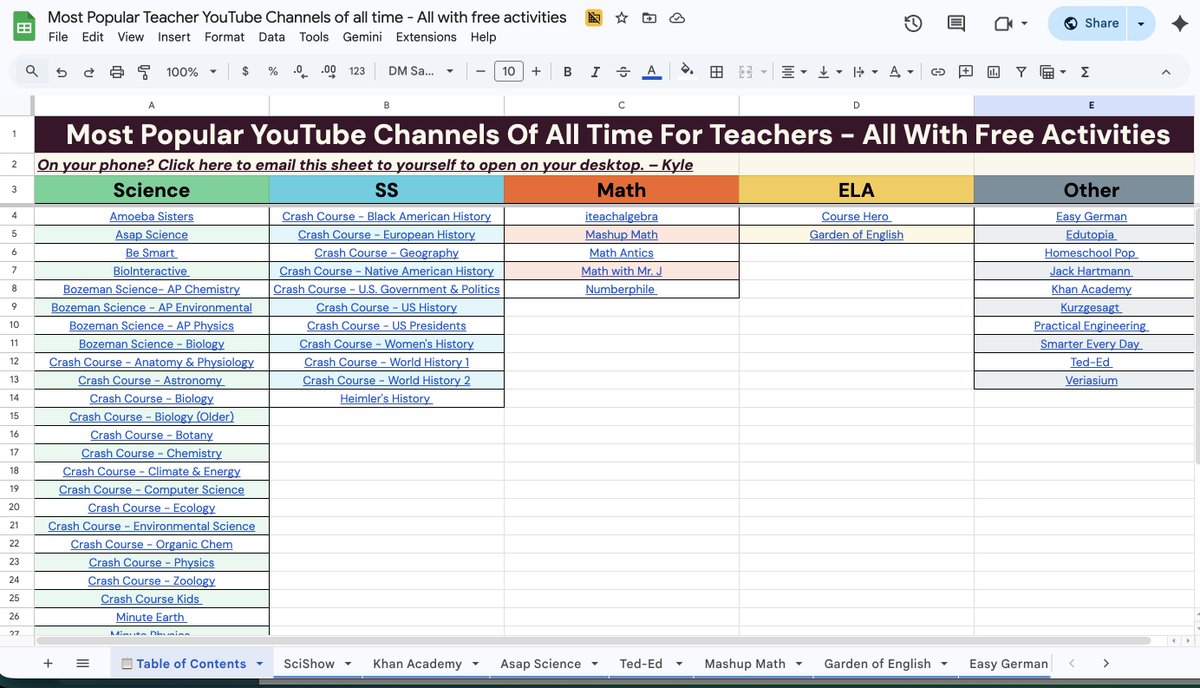
I’ve shared a handful of sheets I’ve been proud of… but nothing like this! 😀
Here are 50+ of the most popular YouTube channels for teachers, all on one sheet, with free activities connected to their most popular videos 😎
https://t.co/SdYBkNx2Jp
Huge props to everyone who helped bring this one to life. Thank you!
@waygroundai #edtech #edchat #teachers #letsfindaway #wayground #quizizz #teachertwitter
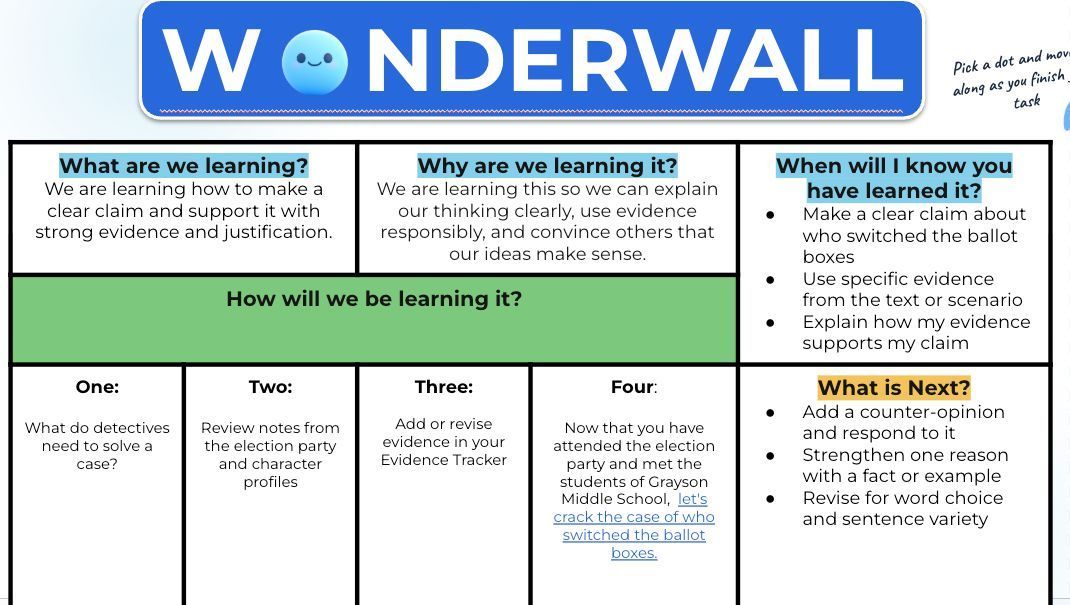
When students know what they’re learning, why it matters, and what’s next — engagement changes.
The Wonderwall keeps learning visible:
🧠 Clear goals
🧭 Purposeful tasks
📈 Transparent success criteria
No guessing. Just learning with intention.
https://t.co/3bFhMESCKN
Need a quick 2-minute example showing how to implement the science of learning? Use these techniques for any content. Evidence-informed strategies seen in this video:
Spaced retrieval, think and write, wait time, turn and talk, choral response, verify.
#learning
The “science of reading” movement isn’t slowing down.
Throughout 2025, Education Week has covered how states and districts are continuing to put new instructional methods and materials into practice, with the goal of better aligning reading instruction to the approaches research has found are most effective.
And increasingly, the field is debating what best practice looks like beyond shoring up foundational skills instruction for early elementary school students—with educators asking which curricula are best for teaching reading comprehension, and how to support older readers who are struggling, too.
Education Week followed these stories and others in reading this year. Watch the video below for three highlights.
Support for this reporting provided in part by
"Curriculum-based professional learning" invites teachers to engage with their material as learners – and can renew educator energy!
Read on to find out more via, @LearningForward:
https://t.co/5A7s6GHEc2
How do you direct your focus during classroom observations?
Click to learn why leader Alan Schoenfeld considers these 5 factors so essential to learning:
https://t.co/b7uIrH85li
Could the PLCs in your school community use more support?
This tool from @TNTP is designed for all educators who join a PLC, including teachers, specialists, school leaders and support staff.
https://t.co/b0p6YF8CMK