Don't trust software. Make it post bond.
$PBI is live on Solana. An operator puts $USDC and $PBI behind a promise, backers add theirs for a premium, and a break costs money by formula.
CA: 4sKYjLEPsNDgD77opEeo7fGPjoHdZ7VgWuPodVvepump
https://t.co/q6tEJGetLx
Parameters change after 48 hours. Capital never moves.
New probers, every setting and every reserve withdrawal wait in a public queue inside the program, each within bounds set in code, and none of it can touch bond capital or what customers are owed.
The $PBI mint is bound once.
Every service is probed once a minute.
Results are posted onchain every 10 minutes, 144 times a day, each anchored to a recent Solana slot and its blockhash.
If 50% of services fail in the same window, it is voided, so the prober's own outage can't slash a $PBI-backed service.
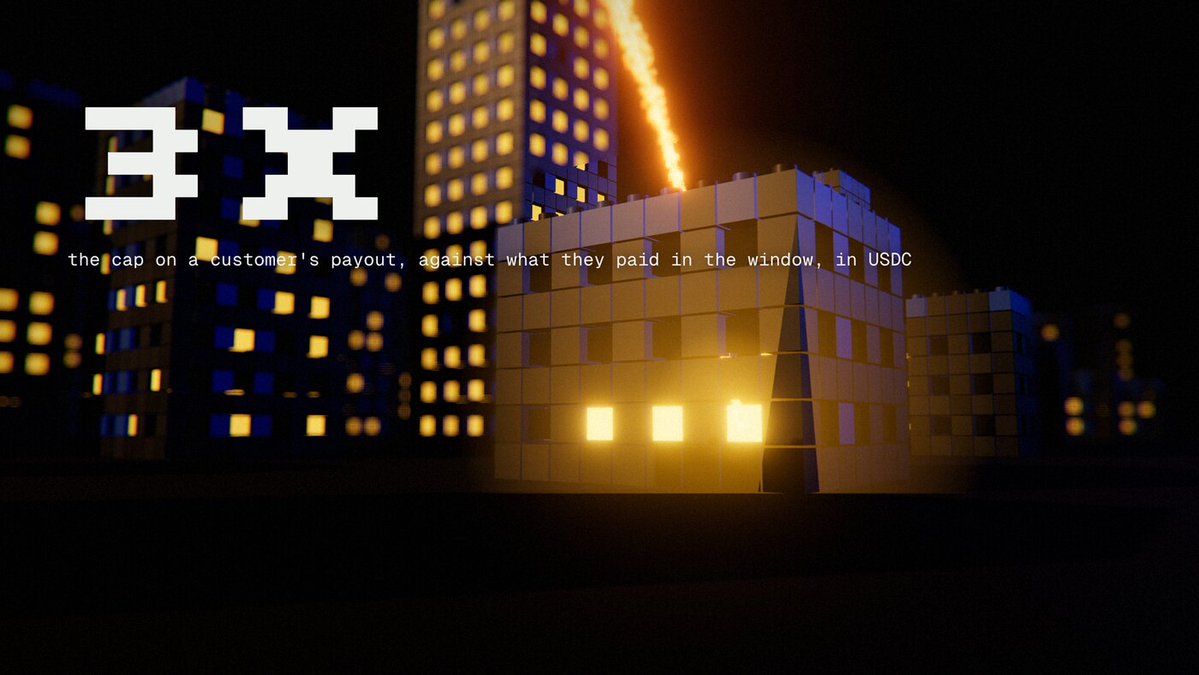
Whoever paid a service during a breached window is compensated in USDC, up to 3 times what they paid, from the slash. Payers are read from public USDC transfers into the service's account, and each claim carries a Merkle proof anyone can recompute.
The rest goes to the reserve.
A real breach, on the record.
The house canary, a $0.001 x402 endpoint, was switched off for half an hour: 30 of 60 probes failed, 3% of its bond was slashed, and 0.015 USDC went to the customer who paid in that window.
That is the path $PBI backers sign up for.
A promise on the board is a number: availability at or above a target, p95 latency under a ceiling, freshness against a public reference. Break it and 10 bps of the bond is slashed per failed probe beyond the allowance. $PBI behind it burns by the same formula.
What a $PBI backer earns and risks.
The operator posts at least 20% of every leg as first loss before any backer joins; backers are hit only after it. A slash is capped at 30% of a leg per epoch, and exits wait for the next settlement, so nobody leaves ahead of a breach.
A breach burns $PBI. When a service misses its promise, the program slashes the bond by formula, up to 30% of a leg per epoch.
The slice on the $PBI leg is burned by the token program, out of supply for good, the operator's first-loss tranche first.
$PBI's protocol, live on Solana now: the canary charges 0.001 USDC a call over x402, four house bonds sit in USDC escrows, every service is probed each minute, and each ten-minute batch is anchored in a Memo, 144 a day.
A breach pays up to 3x and burns $PBI.
Let's look at an actual demo.
Posting a bond on https://t.co/H5SPJaXIfs: claim your endpoint, write the promise as numbers (99.5% availability, p95 under 1 s), put USDC in an escrow the keeper key holds, sign.
A breach takes 30% of it at most per epoch, pays customers up to 3x and burns the $PBI share.
The loop behind $PBI.
An operator bonds a service with 20% of each leg at its own risk. Agents pay a service they can check, in USDC over x402. Backers earn 90% of the premium. A breach pays customers and burns $PBI, so the supply behind the record only goes down.
What $PBI does: you put it behind a service you believe in and earn that service's premium in USDC, by the second.
The operator sets the premium on its face value (8% a year on the quotes feed) and pays it in; 90% goes to the legs and their backers, 10% to the reserve.