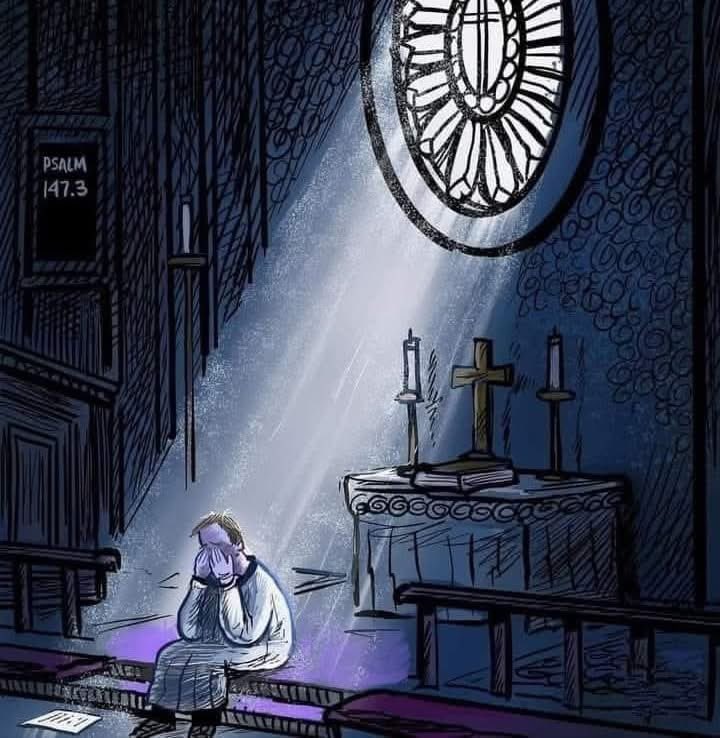
WHEN YOU VISIT A PRIEST, PLEASE REMEMBER...🇻🇦
That a priest isn't married, nor will he have a family of his own. No wife, no children. His family is his parishioners. He is a spiritual father in faith to the community he serves. His future is in celebrating the Eucharist at mass every day, listening to confessions, anointing the sick, serving those who come to him for help.
A priest may serve a parish only for a minimum of five to seven years. After that he may be transfered to another parish or assigned a different role in the Church. He relies on his team of volunteers, staff and the lay faithful. Don't expect him to be there all the time for you.
When you give money to the Church, you may be surprised to know that the money isn't for him because no priest earns a fixed salary. They receive a stipend to meet their basic expenses of food, clothing and travel. They save every penny to go for a vacation and much of the money is gifted by friends, relatives and well wishers as they don't get paid leave like the rest of us who work. While we work for a fixed amount of hours with two days off a week , priests are expected to be on stand by 24/7. So don't be angry if they don't respond to you when you need them. They are humans as well with the same frailty as us.
If you hear anyone speaking badly about a particular priest, please correct that person and don't engage in idle gossip without knowing the facts. Remember that they are alone and at times would need company. Pay attention to their emotional, physical and mental needs. Accompany them if needed or offer a helping hand or even a lift.
It's not easy to go out alone at 2 or 3 in the morning especially in dangerous neighborhoods for counseling or even anointing someone on their death bed. If someone comes to them at such an hour for help, they have to get up from their deep sleep and still be expected to celebrate Mass in the morning. Who is there for them when they are ill or have emergencies in the middle of the night? Yet they are required to perform their duties because if not them, who?
Remember their birthdays, ordination anniversaries and important events in their lives. Celebrate with them, cry with them. Offer a shoulder to lean on. If they fall, don't judge or criticize. Lift them up and help them on their journey in life. Don't be offended if they don't live up to your expectations. No priest is perfect.
So take care of your priests, remember the ones who baptized, confirmed, married and anointed you. The ones who offer masses for your intentions and pray for you. May God bless our priests in Jesus name, our eternal High Priest. Amen.
I understand that one of the topics under consideration at the Consistory of Cardinals is synodality. I’m speaking as a bishop who was an elected delegate to both rounds of the Synod and Synodality in Rome and who has just presided over a local synod in my own diocese. Synods are good and useful tools for the determination of practical pastoral strategies, but they oughtn’t to be forums for debate regarding doctrine. When settled teaching becomes a subject for synodal determination, the Church devolves into relativism and self-doubt—as is clearly evident in the misconceived “Synodal Way” in Germany. I’m sympathetic with the founders of the journal “Communio”—Joseph Ratzinger, Hans Urs von Balthasar, and Henri de Lubac—who broke with the journal Concilium the stated purpose of which was the perpetuation of the “spirit of Vatican II.” The great Communio theologians said that councils are indeed sometimes necessary in the life of the Church but that one sighs with relief at the end of a council, for the Church can then return to its essential work. As long as it sits in council, the Church is in suspense, unsure of itself, wringing its hands. It was precisely the perpetuation of the spirit of Vatican II that led to so much vacillation and drift in the years when I was coming of age.
So, if we must continue with synodality, let it be dedicated to the consideration of practical means by which the Church can more effectively do its work of worshipping God, evangelizing, and serving the poor. And let it not be a defining and permanent feature of the Church’s life, lest we lose our verve and focus.
¡Buenas tardes! Para dar la bienvenida al 2026 os traemos un SORTEO INTERNACIONAL 🎉✈️🌎
¡¡El ganador se llevará todos estos libros!! 🏆📚😎
Para participar:
✅Síguenos
🔁Repostea
❤️Dale like a esta publicación
📖Comenta qué libro estás deseando leer primero
El ganador lo anunciaré el día 7 👑
¡Mucha suerte! 🍀
Lo habéis pedido. SORTEO ESTE MAPA DE LA TIERRA MEDIA ILUSTRADO con 50 localizaciones dibujadas en miniatura y caligrafiado por Bilbo, Frodo, Sam, Aragorn y Gandalf. Para participar:
📲 Sigue esta cuenta
🔁 Retuitea
❤️ Da Me Gusta
🏷️ Etiqueta a 2 amigos en comentarios
🏆 Ganador el miércoles 3 de septiembre
🇪🇸 Solo válido para España
Sé que es un tema peliagudo, pero como me gusta meterme en berenjenales, aparte que es muy necesario, aquí va:
🧵 Los sacerdotes rotos: la depresión en los sacerdotes
¿Por qué hay sacerdotes que parecen desmotivados o que no hacen lo correcto en el momento oportuno? ¿Es vagancia o algo más profundo? Hablemos de un problema real:
1️⃣ Un peso difícil de cargar:
El sacerdocio es una entrega total, pero no deja de ser ejercido por hombres con límites y heridas. La presión pastoral, la soledad y el desgaste pueden llevar a muchos sacerdotes a una profunda crisis interior.
2️⃣ Depresión en el sacerdocio: un tema tabú:
Muchos sacerdotes sufren depresión, ansiedad o agotamiento. Pero pocas veces se habla de ello. Se espera que el sacerdote "siempre esté bien", lo que hace difícil que busquen ayuda.
3️⃣ Síntomas que pueden pasar desapercibidos:
-Falta de iniciativa o energía pastoral
-Desmotivación en la oración y en el ministerio
-Sensación de inutilidad o fracaso
-Aislamiento de la comunidad
-Predicación o liturgia mecánica, sin vida
4️⃣ ¿Son vagos o están heridos?
A veces juzgamos rápidamente a un sacerdote por su aparente desgana o frialdad. Pero detrás puede haber un gran dolor, un cansancio extremo o una lucha interna.
5️⃣ Causas de la depresión en sacerdotes:
-Soledad: Aunque rodeados de gente, muchos sacerdotes se sienten solos.
-Exceso de trabajo: Sin tiempo real para descansar o cuidar su salud.
-Desilusiones pastorales: Falta de frutos, crisis de fe en los fieles, conflictos internos en la parroquia.
-Ataques y críticas: Muchos son juzgados constantemente, sin que se valore su entrega.
-Problemas afectivos o espirituales: Dudas, crisis vocacional, heridas del pasado.
6️⃣ El riesgo del "activismo vacío".
Algunos sacerdotes, para no enfrentar su dolor, se llenan de actividades. Pero esto no cura, solo tapa la herida por un tiempo. Sin sanación, tarde o temprano llega el colapso.
7️⃣ Los sacerdotes rotos también necesitan ser sanados.
Cristo no vino solo para sanar a los fieles, sino también a sus pastores. Como Iglesia, debemos cuidar a nuestros sacerdotes, rezar por ellos y ayudarlos a encontrar apoyo.
8️⃣ ¿Cómo ayudar?:
-Rezar por los sacerdotes, especialmente por los que parecen desanimados.
-Ofrecer una palabra de ánimo o cercanía.
-No ser críticos sin conocer su realidad.
-Fomentar espacios de acompañamiento sacerdotal y descanso pastoral.
9️⃣ Jesús también sufrió la soledad y el agotamiento:
En Getsemaní, Jesús vivió la angustia profunda. Él comprende a los sacerdotes rotos y quiere sanarlos. Pero necesitan abrir su corazón y pedir ayuda cuando la necesiten.
🔟 Conclusión final:
Si ves a un sacerdote apagado, antes de juzgar, pregúntate: ¿está roto? ¿Necesita ayuda? La Iglesia necesita sacerdotes santos, pero también sacerdotes humanos. Ayudémoslos a no hundirse en la oscuridad.
🙏 Recemos por nuestros sacerdotes, especialmente por los que sufren en silencio. #Sacerdotes #Depresión #Iglesia
Hemos alcanzado 4.000 seguidores así que vamos a celebrarlo con el sorteo de 1 mapa de la Tierra Media ilustrado. Para participar:
👥 Sigue esta cuenta
🔁 Retuitea
🏷️ Etiqueta a 2 amigos en comentarios
Ganador: jueves a las 12:00 Solo 🇪🇸
Descripción del mapa en siguiente tuit ⤵️