Clinical Director Vasc & Endovasc Surg Care Hospital Hyderabad INDIA. Past President @Vascular_India Course Director @VascAnatCourse Past President @World_fvs
Dear friends, as promised, the citizens funded generics vs. branded drugs project is now published after 4 months in peer review. It was hardwork, but worth the effort because all of you helped us realize this important work.
You can read the full detaild paper here: https://t.co/jZhm8ZcPCq
Here is a simplified summary:
Do cheaper generic medicines work as well as expensive branded ones? It's a question that worries patients and even many doctors, who often quietly assume that a low price must mean lower quality. This doubt has real consequences in India, where medicines make up nearly two-thirds of what families spend out of their own pockets on healthcare — a burden that pushes millions into poverty and forces people to split doses or stop treatment altogether.
To put the question to a fair, independent test, our team at the Mission for Ethics and Science in Healthcare (MESH) carried out a fully citizen-funded study, paid for entirely by donations from ordinary members of the public, with no money or influence from any drug company.
We bought 131 samples of 22 commonly used medicines — covering heart disease, diabetes, infections, pain, acidity, and more — from seven different kinds of outlets across Kerala, including government stores like Jan Aushadhi, private generic chains, and premium branded pharmacies. Every sample was then coded, blinded, and sent to a top accredited laboratory for rigorous testing against the Indian Pharmacopoeia 2022 standards. What makes this study unusual is that very few before it have tested branded and generic versions from the same market side by side, included government-supplied medicines, and combined strict quality testing with a hard look at price — all at the same time.
The result was striking in its simplicity: every single one of the 131 medicines passed every quality test. 100%. It made no difference whether a pill was generic or branded, cheap or expensive — they were all equally good in their active ingredient content, their purity, and how they dissolve in the body.
Yet the prices told a completely different story. Generic medicines were, on average, 48.6% cheaper than their branded twins, and the most expensive brand cost up to 13.9 times more than the cheapest generic of the very same drug. Government Jan Aushadhi stores were the cheapest source for 18 of the 22 medicines tested, with potential savings running into thousands of rupees a year per medicine — for instance, over ₹16,000 a year on a single liver drug.
For doctors, this is reassuring, hard evidence that prescribing a quality-assured generic is not a compromise on care; it is the same medicine at a fraction of the cost. For patients, it means you can stay on your treatment without it draining your savings, which is exactly what keeps people healthier over the long run.
And this is precisely why independent, publicly funded projects like this matter so much for the future of healthcare in India: they answer the questions ordinary people actually have, free from commercial pressure, and they build the trust that programmes like Jan Aushadhi need to truly succeed. Affordable and high-quality are not opposites — in a well-regulated market, they go hand in hand.
More here: https://t.co/jZhm8ZcPCq
Our President, Dr. Neelima Katragunta of @UTChattSurgery invites you to join us at our Annual Meeting on June 11 at 6:30 PM.
Held alongside @VascularSVS’s #VAM26, this event brings together vascular professionals for an evening of community.
Register: https://t.co/oZojJ9WmGe
Robotic/laparoscopic-assisted management of an aberrant right subclavian artery in a patient with dysphagia lusoria is featured in this week’s #VAM26 Video Abstract.
🔗 Register today for VAM26: https://t.co/3nEG2cLyji #VascSurg
There's still time to register for the 14th Annual SAAVS Meeting, held in conjunction with @VascularSVS's #VAM26 in Boston!
Join vascular surgeons, trainees, and researchers for an evening of education, mentorship, networking, and community.
Register: https://t.co/oZojJ9WmGe
This @JVascSurg article features a study evaluating the safety of nonheparin anticoagulant use in carotid artery interventions.
📰 Read it through the link in the comments!
This week @ESVSmembership guidelines abdominal vascular graft infection writing group was reunited in Bordeaux. Great exchanges with Ivika Heinola from Finland Thomas Wyss from Switzerland and Karl Sörelius from Sweden on MDTwork and open surgical techniques in our OR #aortaEd !
❤️ Your heart, brain, and blood vessels work tirelessly for you—don't let tobacco damage them.
🚭 Tobacco narrows blood vessels, reduces blood flow, and significantly increases the risk of heart attacks, strokes, and even limb loss.
🌍 World No Tobacco Day
📅 31 May 2026
Join us for the 27th Congress of the Asian Society for Vascular Surgery (ASVS 2026)
Click to Register: - https://t.co/ccXciluH8b
Click to Submit Abstract: - https://t.co/kmnErNwVBU
Stay tuned—exciting updates are coming your way!
#ASVS2026#ASVSINDIA#ASVSDELHI#VSI-ASVS2026
A machine-learning–based risk model for predicting wound healing after revascularization in patients with chronic limb-threatening ischemia https://t.co/fujKHamFNN
A recent poll found that 17% of U.S. adults prefer extra hot showers. SVS ambassador Dr. Xzabia Caliste told @DailyMail that hot water can widen blood vessels, lower blood pressure, & make the heart work harder. Learn more: https://t.co/JdfeQ6eaVL #HighwaytoHealth
⭐ This week's Voices of Vascular profile highlights Dr. Sunita Srivastava!
As an immigrant and first-generation physician, Dr. Srivastava believes diversity, mentorship & community are essential to the future of vascular surgery.
🔗 Full profile: https://t.co/6wBHpALPV8 #AAPI
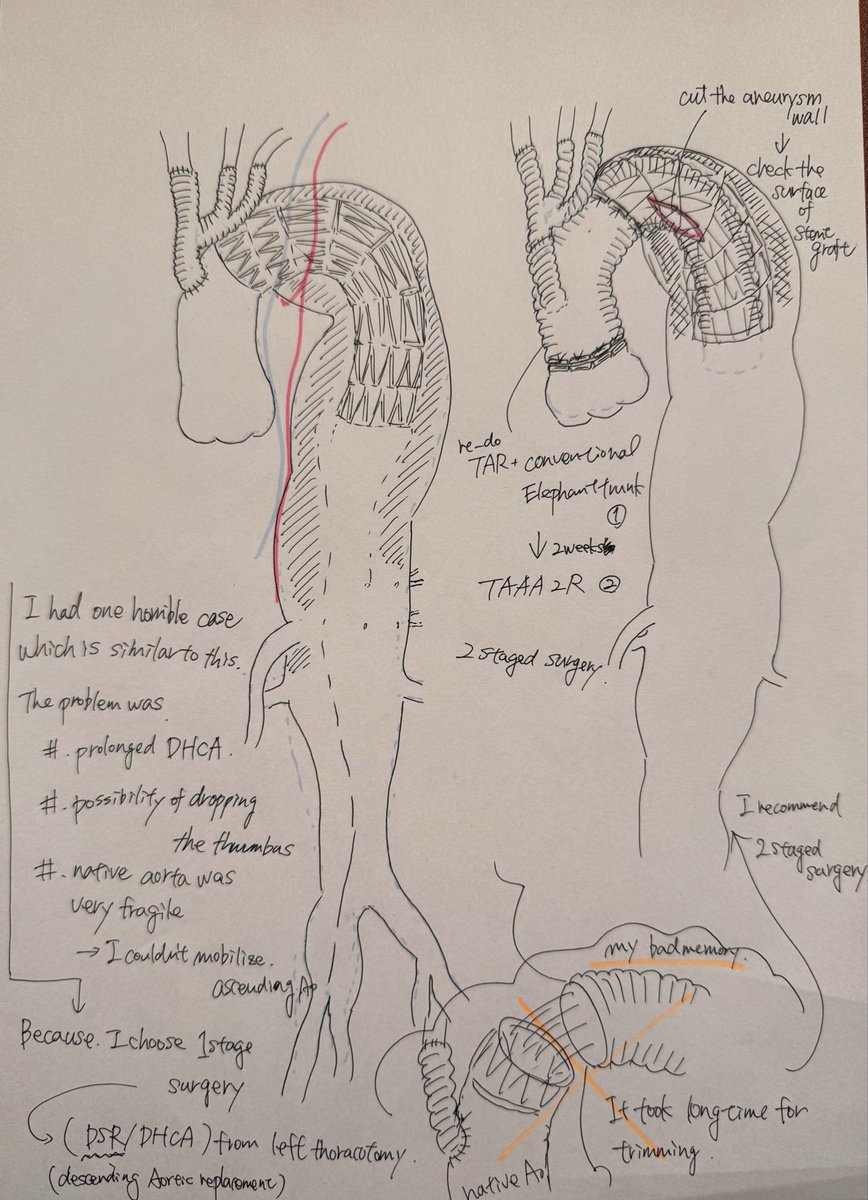
I sometimes receive CT scans from colleagues overseas and am consulted on various cases involving aortic disease. In those situations, I often create my own sketches to think through the surgical approach. Before the operation, I visualize the three-dimensional structure of the aorta in my mind, and use my drawings as a basis for identifying the optimal clamping sites, perfusion points, and potential pitfalls. I firmly believe that this kind of mental and visual preparation is an invaluable part of surgical practice.
Delighted to congratulate Dr. Soumya Swaminathan, former Secretary, DHR and former DG, ICMR, on being elected Fellow of The Royal Society !!
A proud and historic milestone - she is only the second Indian woman scientist to receive this prestigious honour in its 400+ year history.
⚠️ A tiny wound today can become a major complication tomorrow.
Don’t ignore the early signs of a diabetic foot ulcer. Awareness, timely care, and proper treatment can save lives — and limbs. 🩺👣
✨ Stay alert. Stay protected.
🔗 Learn more:
https://t.co/VflzrRlPlH