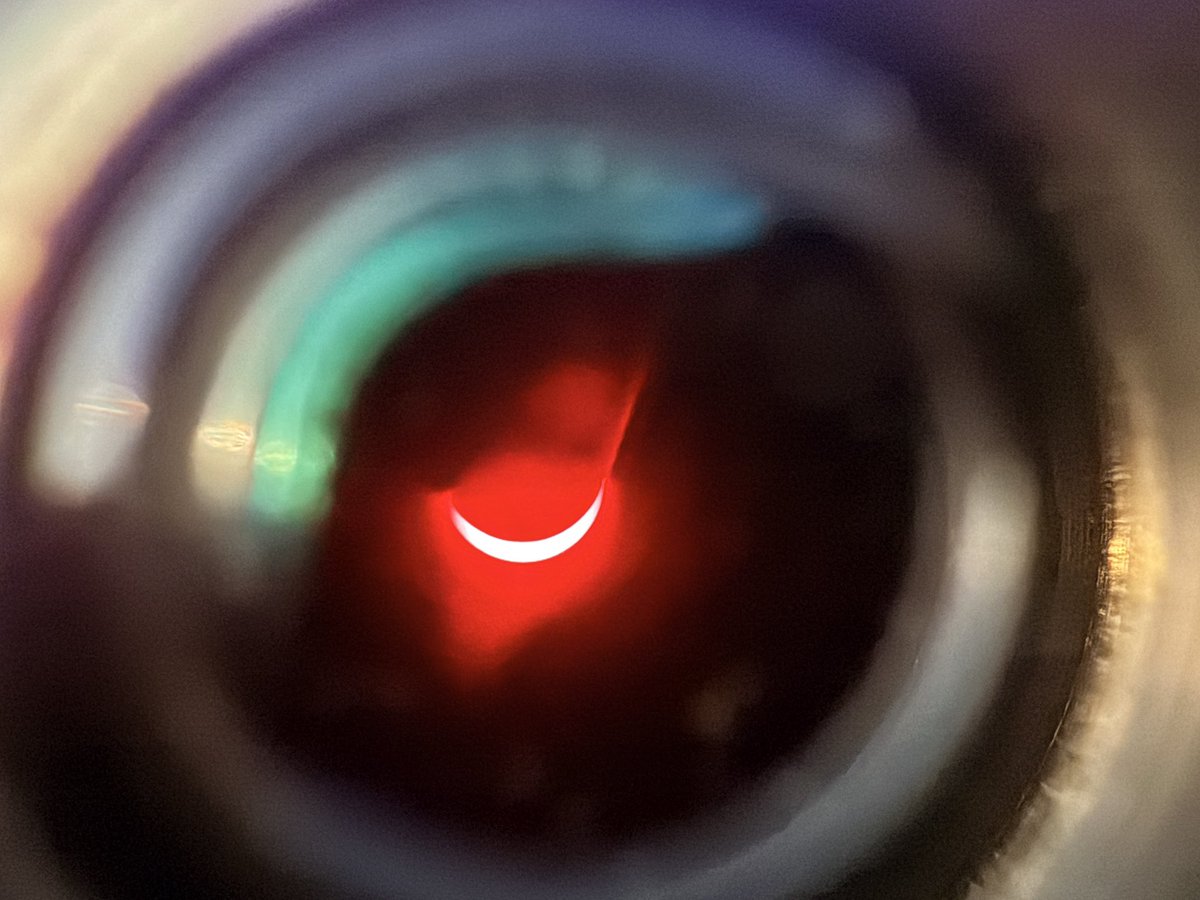
Look at this cool thing I’ve added to the Allsky camera.
I now have two sniper scope that show me where the telescopes are pointing—pretty neat, right? You can even see how they change their target.
At 4 a.m., due to the clouds, it closes.
#Astrophotography
Saturn under near-perfect conditions on Tuesday morning; a truly staggering sight to behold.
By far the most stable night I’ve experienced in a ~decade of doing astrophotography. The visual view at the eyepiece was something out of science fiction!
Info on the last slide.
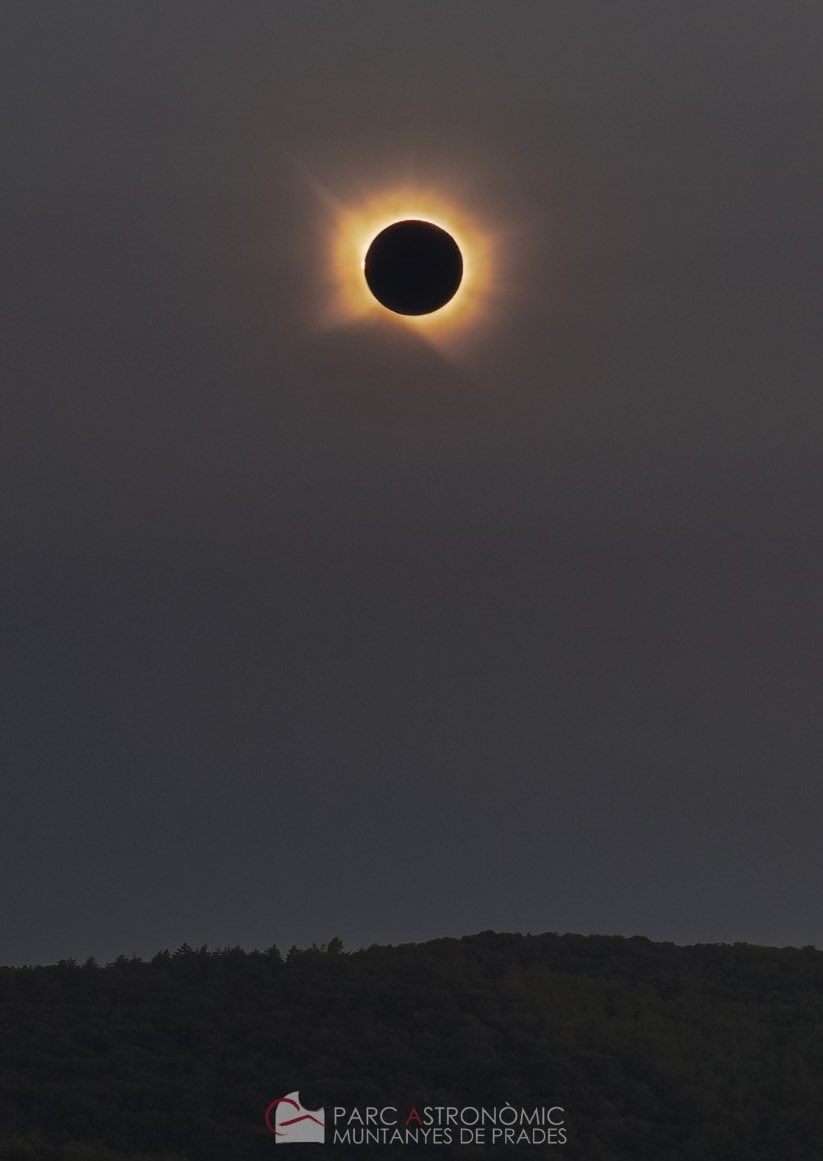
My favorite capture of the night: The moment the moon's shadow split the sunset in half, leaving a diamond ring in the sky and a breathtaking view. I call it "Shadows on the Balearic Sea".
I'll have prints available for this one linked in my bio for a few days only.
Fantastic BADAS partial solar eclipse event yesterday at Rossall Beach Promenade - we had perfect weather for the circa 250 people that came along for our free glasses and to see through our solarscopes #eclipse@BBCNWT@badas_tweets
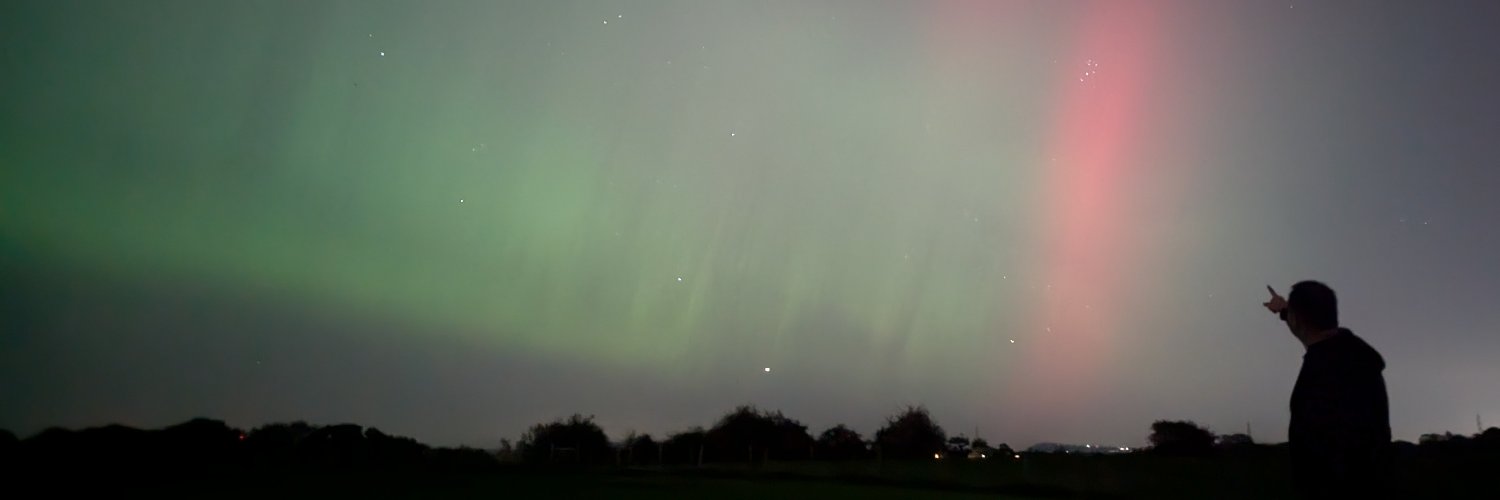
Despite the bright moon, gorgeous multi-colored aurora pillars are visible over Opossum Bay, Tasmania during the peak of this solar storm! Thanks to John Obrien for the report! https://t.co/lWA9LWO7aj
Here is Mars from the same night.
Despite the tiny 4.7" angular diameter much could be seen under excellent conditions. The bright North Polar Hood is seen at top, while the prime meridian of Mars - Sinus Meridiani is visible at centre.
The planet will continue to grow in apparent size on its way to opposition in early 2027.
Like many colleagues across our community, I’m dismayed by these cuts. The UK should be building on its scientific strengths, not retreating from them, especially as a new government and new science minister seek to define the country’s future ambitions.
https://t.co/J2FWPZuJPT
#NoctilucentCloud timelapse from the amazing display after sunset 28 June 2026 Oxfordshire, UK. I used a Canon 1100D + Sigma 300mm lens for close ups and a Sony A7iii with 14mm Samyang lens / Sigma 24-105mm lenses for widefield #NLC#PolarMesosphericCloud Music by Dave Simpson
My first view of Saturn since last year, crude video taken at the eyepiece @ 900x. Rings are opening up again which is a welcome sight.
Relatively stable conditions this morning given the low elevation above the horizon.
Look at this incredibly intense airglow I recently captured at Carnegie Las Campanas Observatory in the Atacama Desert in Chile 🇨🇱 You can see these vast red and green bands spanning across the sky from Orion all the way to the Southern Cross and Centaurus. We don’t get to see aurora here in the desert, but airglow still puts on quite a show for us at times. Taken as a single frame on a Sony a7IV and @AstrHori 6/2.8 lens. Has anyone else caught something like this from where you are ?
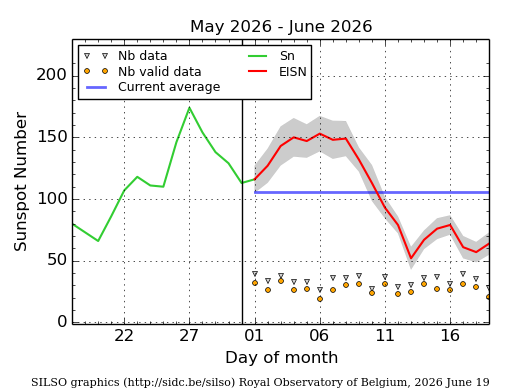
Solar activity has plummeted over the last week with SSN < 50. This doesn't affect the aurora directly, but it means the chances for solar flares spawning CMEs is very low. Spontaneous eruptions and filament releases generating CMEs are still possible, but there is nothing staring at us worth tracking.