!NEW ISSUE ALERT! Our 3rd collection for this year is out now, with a wide range of #peacebuilding topics: heritage restoration, non-violent engagement with criminal groups, territorial autonomy, and civil society consultations.
https://t.co/OUsndiYaJL
What meanings do people with lived experience of conflict & displacement ascribe to peace?
@NSegadlo, @EdlerHannah & I explore this in "Making sense of peace in exile" with an intersectional approach in @Peacebuilding_.
Research was funded by @dsfrieden
https://t.co/OTV0tkklVs
!NEW ISSUE ALERT! Our 3rd collection for this year is out now, with a wide range of #peacebuilding topics: heritage restoration, non-violent engagement with criminal groups, territorial autonomy, and civil society consultations.
https://t.co/OUsndiYaJL
The editors at #Peacebuilding are interested in how dominant ‘peace’ paradigms produce political subjectivity, and how this is responded to by their recipients.
Visit the link for our full Aims & Scope: https://t.co/Ogvbg4IPqT
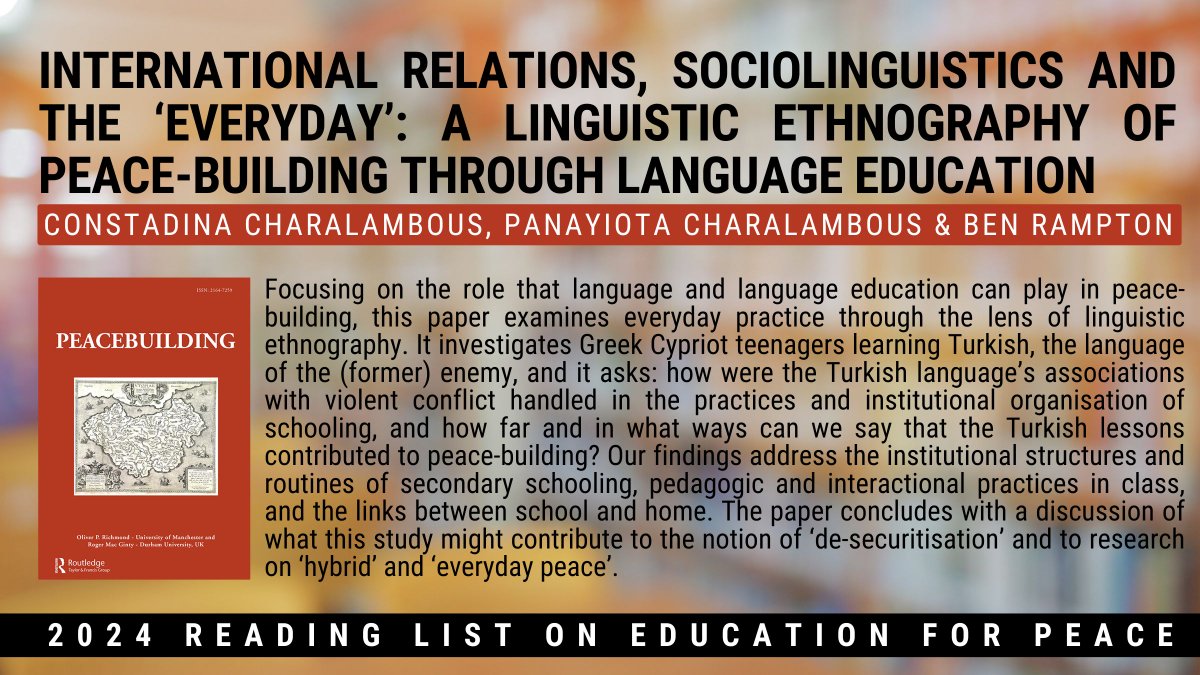
📑2024 Reading List on Education for Peace
How can Turkish lessons for Greek Cypriot teenagers contribute to peacebuilding? Constadina Charalambous, Panayiota Charalambous & Ben Rampton find out using the lens of linguistic ethnography.
https://t.co/3NKrLGVOvC
📑2024 Reading List on Education for Peace
Christian Gordillo shows the positive impact among students of the Education for Peace programme in Colombia but also reveals operational issues and other areas for improvement.
https://t.co/i1MGIopdhX
📑2024 Reading List on Education for Peace
@Katerinasyoga proposes "Encounter Theory," which "describes the relational space of interaction and the process of engaging with difference within that space non-violently – not the result of the process."
https://t.co/t1U0SsUZe6
📑2024 Reading List on Education for Peace
@SimoneDatzberge & @OutiDonovan's fieldwork reveals that the "absence of reconciliation through the education sector" could undermine inclusive reconstruction and incite new forms of structural violence.
https://t.co/voBgnhNytg
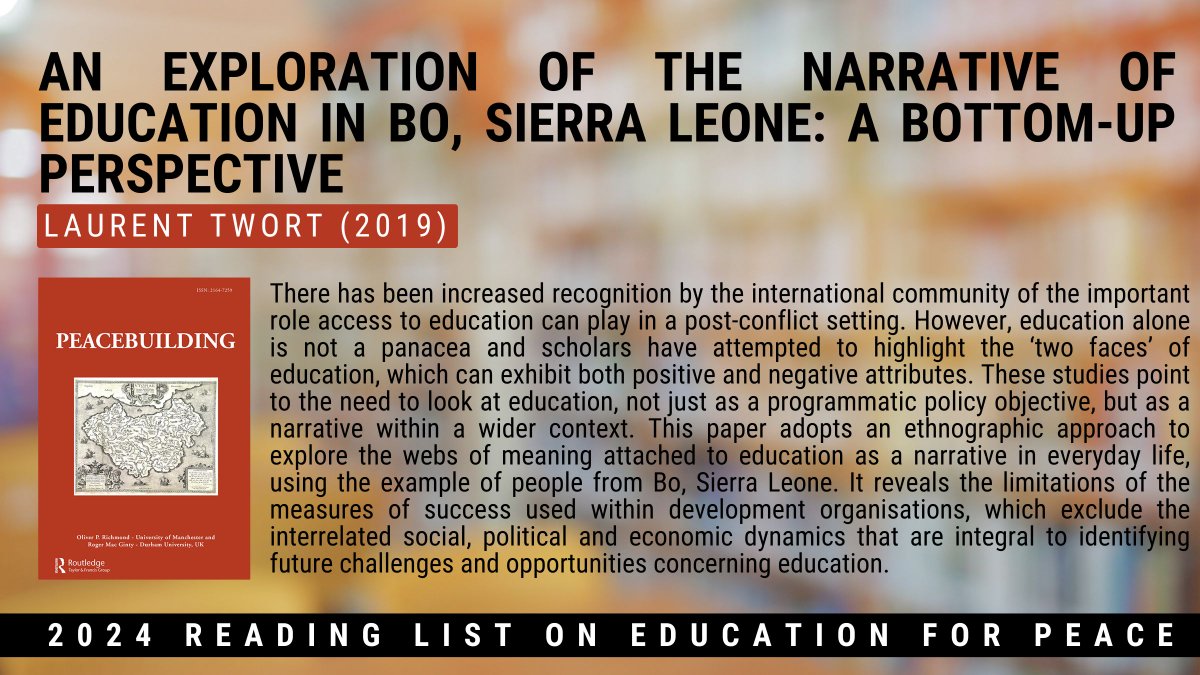
📑2024 Reading List on Education for Peace
Lauren Twort explores the "webs of meaning attached to education as a narrative in everyday life" in Bo, Sierra Leone.
https://t.co/PFFDWaCwcl
Happy International Day of Peace!
To celebrate this year's theme, Cultivating a Culture of Peace, we put together some of the research articles on peace for education published in #Peacebuilding journal. We will feature each of them in the next few days.
@UN
OPENACCESS
@oliver_walton & Andrew Johnstone examined the security-development nexus in UK policy and revealed its diffusion and fragmentation since 2015, reflecting similar "international trends in security and development policy."
🔓https://t.co/JxYtFLsmAP
OPENACCESS
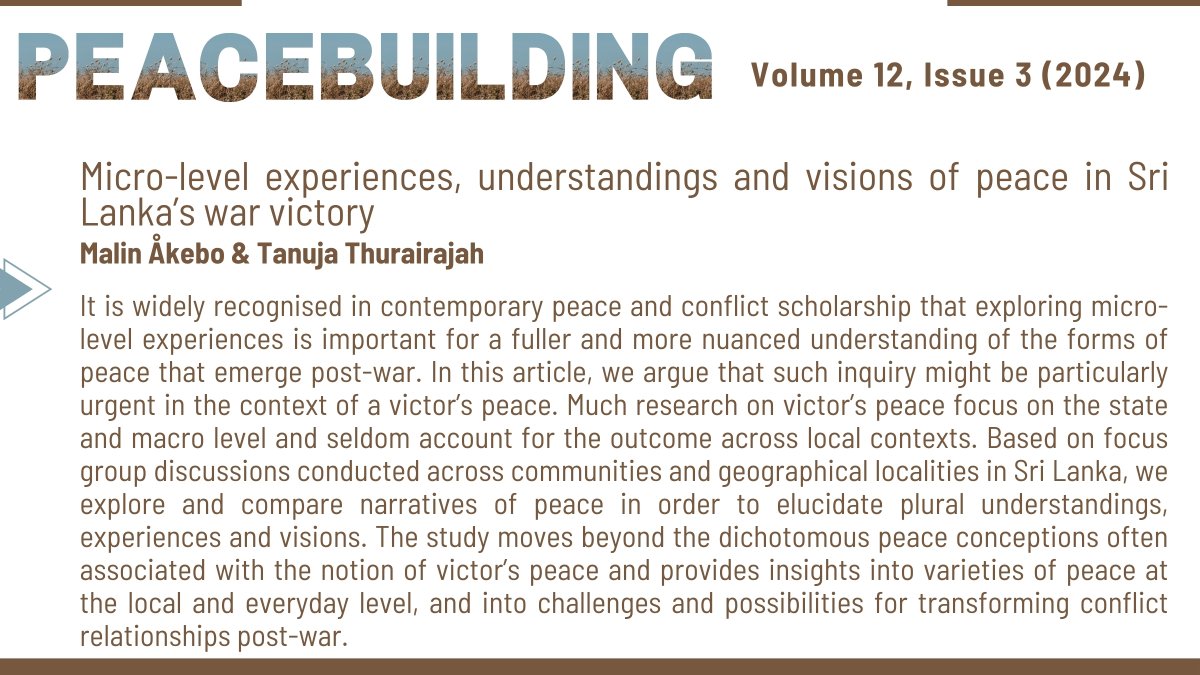
@m_akebo & Tanuja Thurairajah demonstrate "the plurality of micro-level narratives of peace across groups and localities," using the case of victor's peace in Sri Lanka. 🇱🇰
➡️https://t.co/j2i1xJ2Czl
OPENACCESS
"Violence after peace cannot be read apart from the range of socio-economic, demographic and material processes that comprise the urban assemblage in transition from war," wrote Brendan Murtagh, @emmaelfversson@ivan_gusic@MarieTh_Meye
https://t.co/BqSfjsRjxB
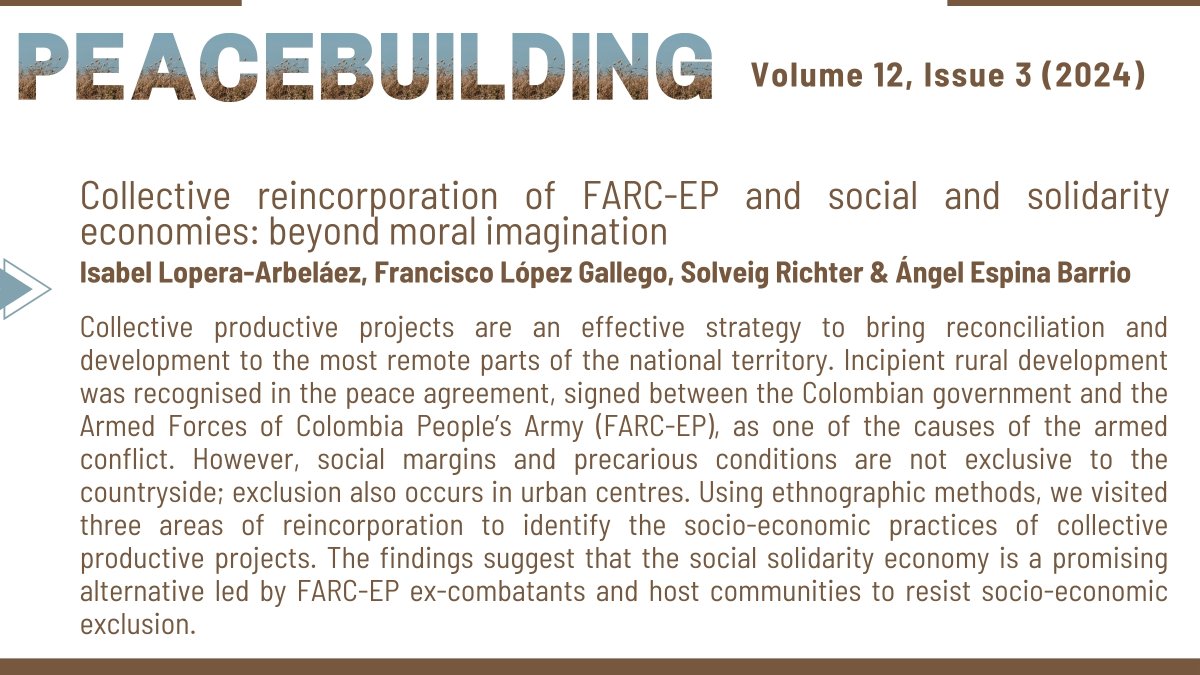
Social solidarity economy allows a path for former FARC-EP combatants in Colombia to resist exclusion. This piece by Lopera-Arbeláez, Gallego, @SolveigRichter & Barrio shows how collective productive projects contribute to reconciliation & development. ➡️https://t.co/RAKLML1i2A
Jusaima Moaid-Azm Peregrina evaluates Syrian civil society consultations in the UN-led mediation process in this article for our latest issue in #Peacebuilding. Access it here: https://t.co/oA2NIhxPJ8
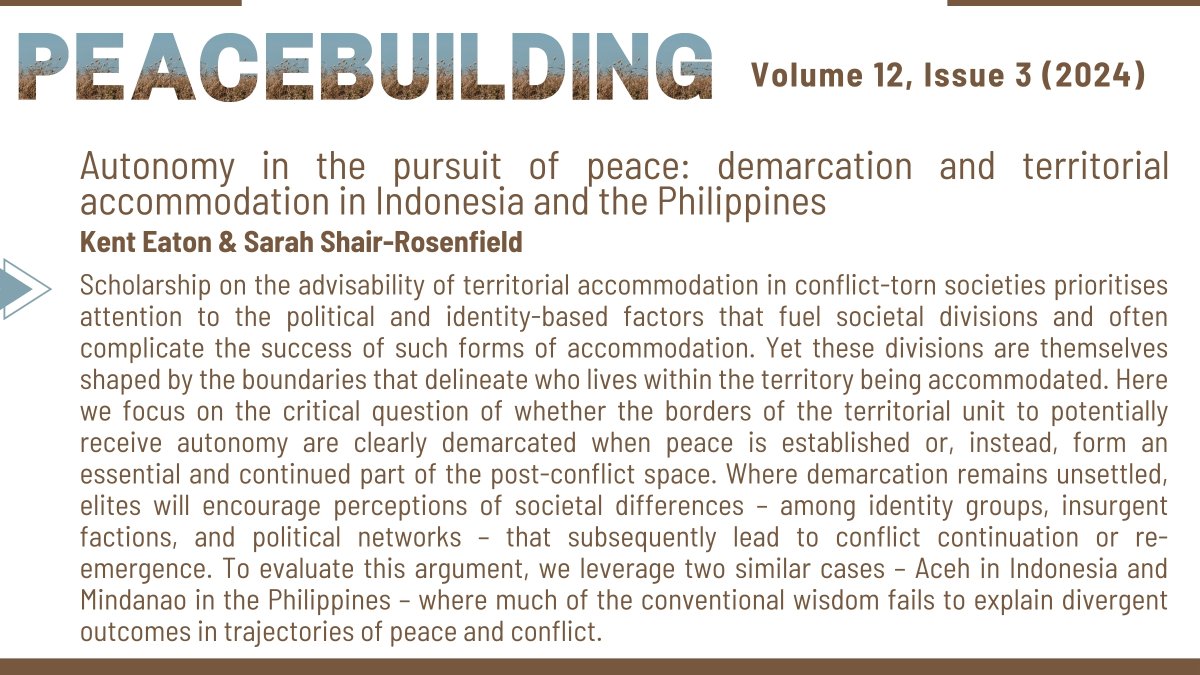
The demarcation of spaces influences the the establishment of peace or the continuation of conflict. Eaton & Shair-Rosenfield examine the link between territorial demarcation and social division in Aceh in Indonesia and Mindanao in the Philippines. https://t.co/bQt0rfFgzF
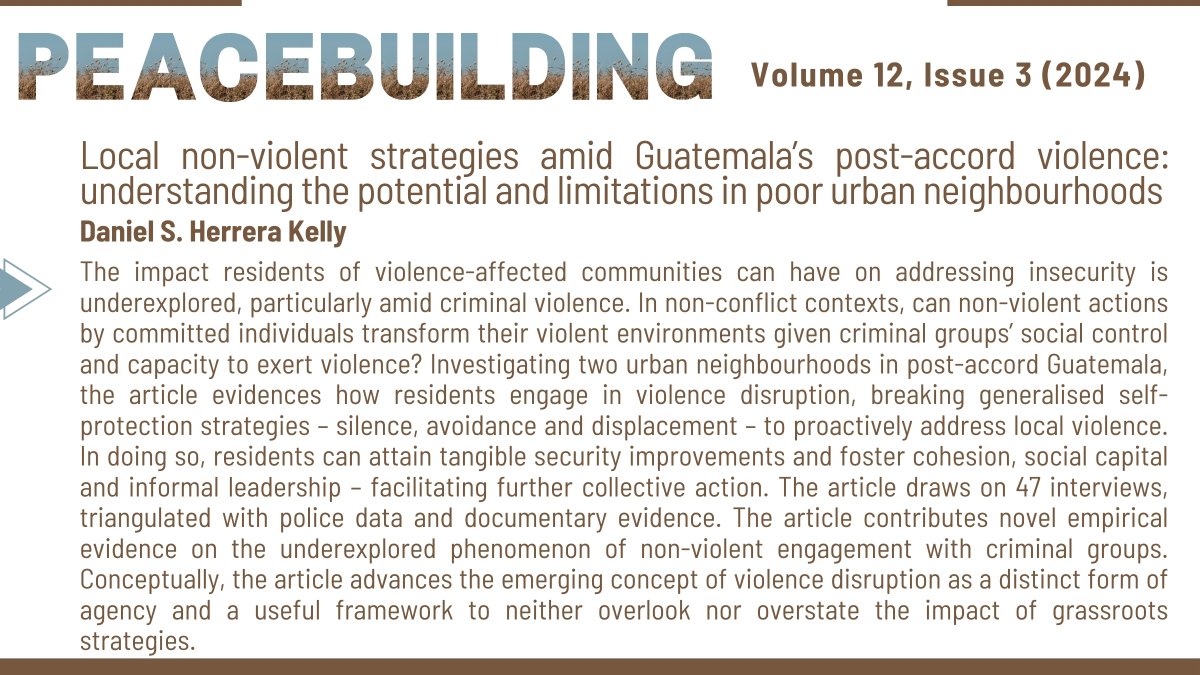
Forms of local agency in addressing criminal violence are risky but important in understanding non-conflict contexts. Such is the case in urban areas of post-accord Guatemala, in this piece by Daniel S. Herrera Kelly. https://t.co/9AQIHpESB8
"How can and should post-conflict cities be rebuilt after traumatic violence and forced displacement?" @irisharab7@inna_veleva respond to this question using the case of Mosul's reconstruction.
➡️https://t.co/lip4mZXYUu
The latest issue also features pieces on social and solidarity economy, urban violence, micro-level peace, and the security-development nexus.
https://t.co/OUsndiYaJL