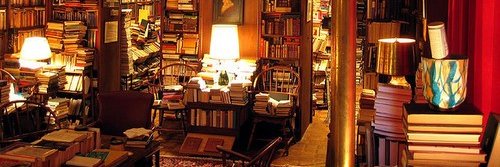
Why do American students learn so much about the Egyptian pyramids and almost nothing about the great cathedrals that took far longer to build and were infinitely more complex.
This one took more than 600 years to build.
@AuraLeeHarvey@samstein@brianbeutler We normally feed 250-300 families at our church’s monthly food distribution. This past Tuesday, we had TWICE as many. We ran out of food and had to turn people away. It will only get worse in November. Thanksgiving’s gonna be bleak this year.
@DontPreachOnMe@John_Faker@dieworkwear I also find it fascinating, and I’m a woman who doesn’t really care about fashion, but I find his threads fashionating!!!
@acvanderpool@fakehistoryhunt He USED the people as a conduit to power (just as all members of the wealthy elite populares faction did). To propose that he was motivated in ANY large way to improve the status of the common everyday Roman is to vastly misunderstand Roman Republican politics.
@acvanderpool@fakehistoryhunt No, he was not. He was assassinated after declaring himself “dictator for life” in complete violation of mos maiorum, the unwritten “way we have always done things.”
Lollie Yeats (11 March 1868 London-16 Jan 1940 Dublin)🎨teacher/published🎨📚! Founder Dun Emer/Cuala Press; published several works by brother WB! Dad bad with money, mum ill, brothers earn little, so Lollie, & sister Lily's embroidery important to family https://t.co/6lGO95hFIV
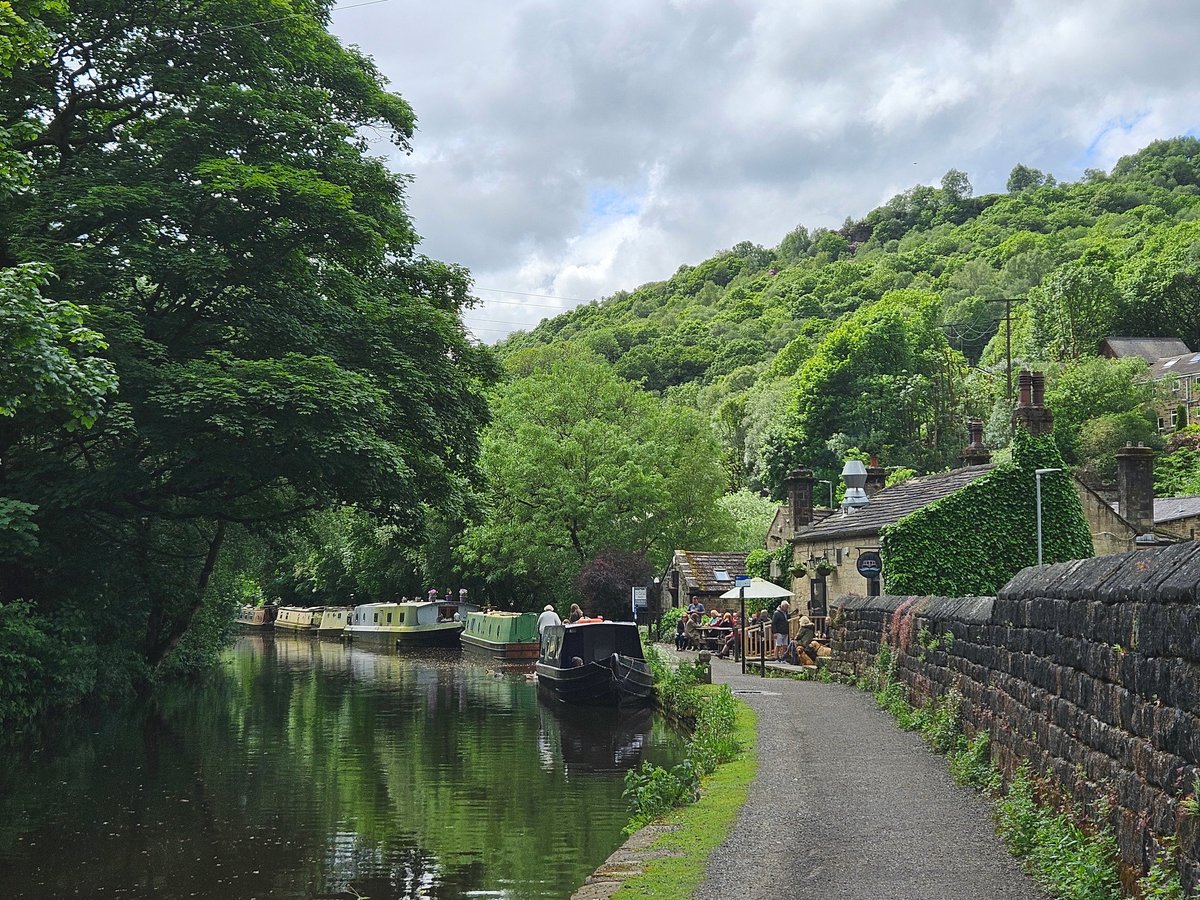
The Stubbing Wharf is a pub by the Rochdale Canal on the outskirts of Hebden Bridge, West Yorkshire. One winter's day in 1959, the poets Ted Hughes and Sylvia Plath, recently married, sat in the bar and argued about where they would live. Plath was American, but Hughes's family had lived in the area for generations.
Nearly forty years later, Hughes remembered that day in his collection 'Birthday Letters':
'Between the canal and the river
We sat in the gummy dark bar.
Winter night rain. The black humped bridge and its cobbles
Sweating black, under lamps of drizzling yellow.
And the hillsides going straight up, the high woods,
Massed with tangled wintry wet, and the moorland
Almost closing above us. The shut-in
Sodden dreariness of the whole valley,
The hopeless old stone trap of it.
Where shall we live?
That was the question, in the yellow-lit tap-room
Which was cold and empty. You having leapt
Like a thrown dice, flinging off
The sparkle of America, pioneer
In the wrong direction, sat weeping,
Homesick, exhausted, disappointed, pregnant.
Where could we start living? Italy? Spain?
The world was all before us. And around us
This gloomy memorial of a valley,
The fallen-in grave of its history,
A gorge of ruined mills and abandoned chapels,
The fouled nest of the Industrial Revolution
That had flown. The windows glittering black.
If this was the glamour of an English pub, it was horrible.
Like a bubble in the sunk Titanic.
Our flashing inter-continental sleeper
Had slammed into a gruesome, dead-end tunnel.
Where could we camp? The ideal home
Was trying to crawl
Up out of my Guinness. Where we sat,
Forty years before I was born
My drunken grandad, dragged out of the canal,
Had sat in the sheet singing. A house of our own
Answering all your problems was the answer
To all my problems. All we needed
Was to get a home – anywhere,
Then all our goblins would turn out to be elves,
Our vampires guides, our demons angels
In that garden. Yes, the garden. The garden
Swelled under all our words – like the presence
Of what swelled in you.
Everything
Was there in my Guinness. Where, exactly?
That was the question – that dark
Peculiar aftertaste, bitter liquorice
Of the secret ingredient. At that black moment
Prophecy like a local owl,
Down from the deep-cut valley opposite
Made a circuit through its territory –
Your future and mine. ‘These side-valleys,’ I whispered,
‘Are full of the most fantastic houses,
Going for next to nothing. For instance
Up there opposite – up that valley – ‘
My certainty of the place was visionary,
Waiting there, on its walled terrace – an eyrie
You had no idea what I was talking about.
Your eyes were elsewhere –
The sun-shot Atlantic lift, the thunderous beaches,
The ice cream summits, the whispers of avalanches,
Valleys brimming gentians – the Lawrentian globe
Lit the crystal globe you stared into
For your future – while a silent
Wing of your grave went over you. Up that valley
A future home waited for both of us –
Two different homes. Where I saw so clearly
My vision house, you saw only blackness,
Black nothing, the face of nothingness,
Like that rainy window.
Then five bowlers
Burst in like a troupe of clowns, laughing.
They thumped down their bowls and ordered. Their star turn
had a raging ulcer, agony.
Or the ulcer was the star. It kept
The five of them doubled up – tossing helpless
On fresh blasts of laughter. It stoked them
Like souls tossing in a hell, on a grill
Of helpless laughter, agony, tears
Streaming down their faces
Like sweat as they struggled, throats gulping,
To empty their glasses, refilling and emptying.
I had to smile. You had to smile. The future
Seemed to ease out a fraction.'
In the end, they lived in London. Hughes and Plath separated in July 1962 when he had an affair, but they were not divorced. In February 1963, after a couple of apparent attempts, Plath killed herself with coal gas in their London flat. She is buried a mile or so above the Stubbing Wharf pub in Heptonstall new churchyard:
' ...while a silent
Wing of your grave went over you. Up that valley
A future home waited for both of us –
Two different homes.'
In 1961, Hughes and Plath had bought a house as a retreat at North Tawton, Devon, but in 1970 he and his new wife Carol bought a second house in Hebden Bridge.
Hughes became recognised as one of the finest English poets of the second half of the 20th Century, particularly with regard to his work about nature. he was made Poet Laureate in 1984, a post he held until his death in 1999. His ashes were scattered on Dartmoor, Devon.
I was, I must admit, disappointed to discover that the Stubbing Wharf is now a fairly high end Gastropub, but I suppose that is inevitable in modern Hebden Bridge. My photograph shows it on a early sumer day a couple of months back, quite different to the occasion of Hughes and Plath's discussion. And no, there is no blue plaque to the meeting.
Plenty of criticism is aimed at Hughes, and I'm sure that much of it is valid. Nonetheless, I think that 'Birthday Letters' was a remarkable achievement, a collection from the old century that will last long beyond us.
💘🌺🏹 PRINCESS BRIDE meets ROBIN HOOD & MULAN in 14th-century BELGIUM 🏹🌺💘
https://t.co/LJUixlOLws
Marieke disguises herself as a boy at the all-male archers' guild of St. Sebastian to learn the truth about her father—
Why does she stay?
The answer's obvious!
💗 Longing, pining
💗 Love unrequited
💗 Action, Humor, Gorgeous boy shenanigans!
Read it #free on #KindleUnlimited
#Banter #Tropes #SummerReading #Travel #Fun #Light #Action #Romance #Suspense #Mystery #SciFi #Series #LoveStory #WritingCommunity #Readers #readingcommunity #TuesdayMorning #TuesdayPeace #TuesdayFeeling #TuesdayVibe #Writers #readerscommunity #ChickLit #LoveStory #AdventureTravel #AdventureBook #Laughter #RomanticComedy #RomanceNovel
Why does Paris look the way it does?
Well, until the year 1853 it was a diseased and overcrowded Medieval city — then the biggest urban renovation in history was announced.
This is the story of how Paris was transformed into the world's most popular city...