🚨Gladiators, ready! Primary teachers, ready ⚡️!
The BBC Gladiators micro:bit Competition arrives on 15 October!
👉 Don’t miss our @BBC_teach special Live Lesson with star guests.
🔗 https://t.co/6IC4pXe1h6
#Gladiatorsmicrobit#bbcmicrobit
Primary Computing Leaders in Bucks, Berks and Oxfordshire have you seen this?
You are invited to come to Oxford Brookes on 12th Dec for a day of fantastic workshops and keynotes on leading computing.
I hope you can come.
Book Here: https://t.co/dYnIOJG44X
Just fed the text of a book—Student Assessment, co-authored with Nancy Frey and Doug Fisher—into Google's Notebook LM (HT @emollick) and it produced a ten-minute podcast as well as a list of FAQs and a study guide. As Ethan says, "Seriously, just listen": https://t.co/nZLmXPYEYn
Here’s one of the most fascinating child development videos I’ve ever shared.
As your baby learns language, they begin by approximating the examples you set.
After a period of early experimentation with sound (including cries, coos and gurgles), infants begin babbling - making speech-like sounds (which often include components of conventional speech) that are - nonetheless - not yet conventionally meaningful.
This babbling phase is a precursor to the use of formal words. And it happens in all languages.
Including sign language.
This video shows an infant (who, by the way, is not hearing impaired) “babbling” to her deaf grandparents.
As they sign to her, she responds in kind, using her hands to approximate the signed communication that they are modeling.
It’s a whole serve and return conversation, just as if they were conversing verbally.
If you’ll watch carefully, you’ll note distinct turn taking.
And - interestingly - that with her grandparents she largely avoids vocalizations, in favor of gesture.
What a treat to see this rich example of bilingual language development.
This fascinating video was shared to TT by mara_mccullough.
To primary teachers who teach computing, secondary computing teachers and teacher educators who teach computing - Please have your say and complete the @TPEA education survey 2024. https://t.co/bI8luENCXk
Please retweet and share to get people's voices heard.
@teacherhead@VEverettmfl@PieCorbett If it’s done well it’s more like ‘warm-calling’. Maybe time for a name change 😆 lots of oversimplification of this on here recently.
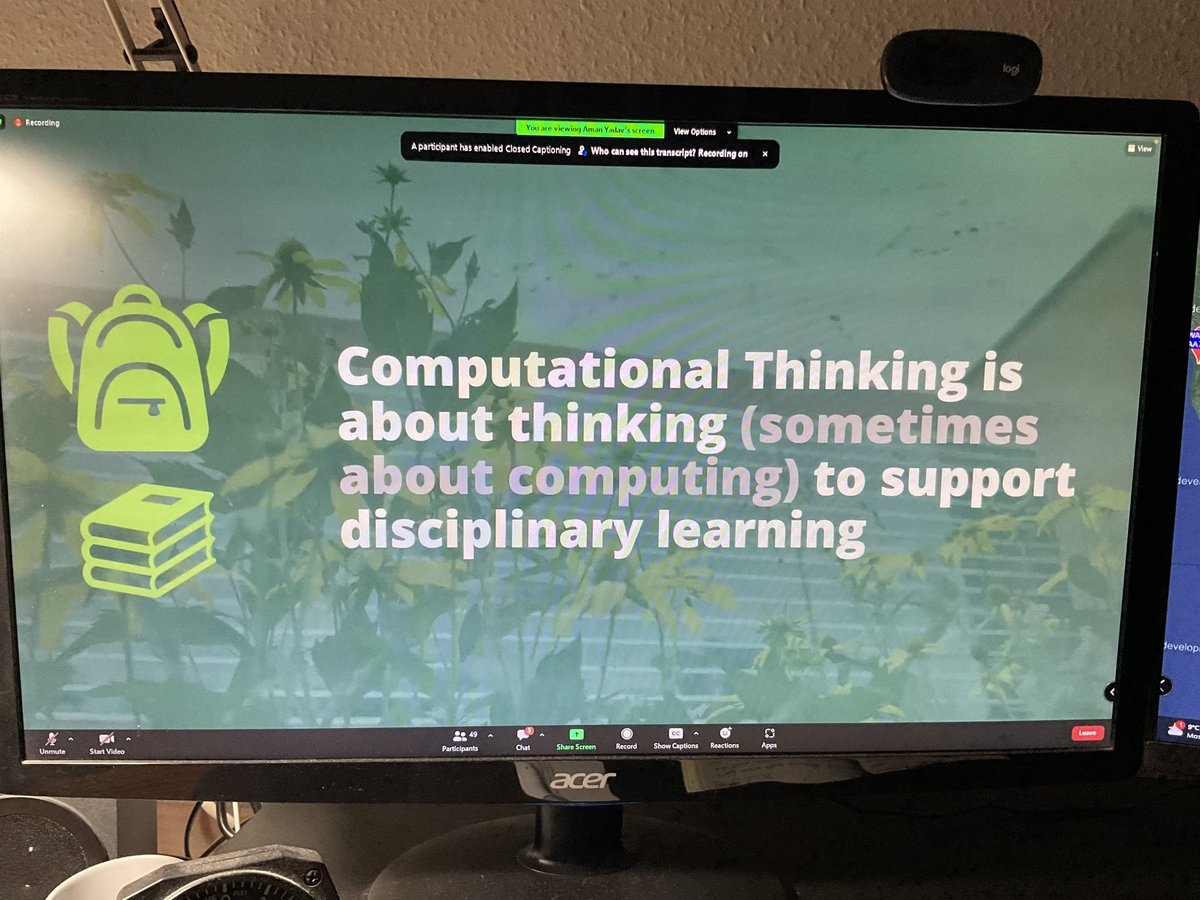
Another fascinating and important computing research seminar from the team at @RaspberryPi_org and computing research centre. This session was about computational thinking and how it can be used across the curriculum to support thinking and problem solving. #rpfseminars#CSed
📣Primary teachers! Join @maddiemoate as she talks you through the ins & outs of the #BBCmicrobit 👍
‼️Don’t forget to register for your 🆓classroom set of 30 micro:bits & keep an eye out for upcoming teaching resources🙌
Register now: https://t.co/YwfqLgFRcv
@BBC_Teach@Nominet
@PepsMccrea A little theatrics (especially for characters when reading), tricks like “woah look out the window! woah look at me! Right, now I’ve got your attention…” asking them to share jokes as regulation breaks, comedy word problems to engage, emulating their humour for relationships