De entre todos las obras maestras que pueblan Piazza della Signoria en Florencia tal vez la estatua ecuestre de Cosimo I de' Medici, que nacía #Taldíacomohoy de 1519, sea de las menos contempladas. Y sin embargo, muchas están ahí gracias a él. 🤷
No llegó a cumplir los 45 años pero seguro que no tuvo una vida aburrida.
Hermana de Napoleón, moría en Florencia #Taldíacomohoy de 1825, Paulina Bonaparte. La obra de Canova, que la representa desnuda (e idealizada) fue un escándalo en su momento.
(sigue)
#onthisdayinhistory 8 June 1492
Elizabeth Woodville died (born. 1437)
Elizabeth Woodville was born around 1437. Elizabeth was Queen consort of England as the wife of King Edward IV from 1464 until his death in 1483.
At the time of her birth, her family was mid-ranked in the English aristocracy. Her first marriage was to a minor supporter of the House of Lancaster, Sir John Grey of Groby; he died at the Second Battle of St Albans, leaving Elizabeth a widowed mother of two sons.
Her second marriage, to Edward IV, was a cause célèbre of the day, thanks to Elizabeth's great beauty & lack of great estates.
Edward was only the second King of England since the Norman Conquest to have married one of his subjects, & Elizabeth was the first such consort to be crowned queen. Her marriage greatly enriched her siblings & children, but their advancement incurred the hostility of Richard Neville, Earl of Warwick, 'The Kingmaker', & his various alliances with the most senior figures in the increasingly divided royal family.
This hostility turned into open discord between King Edward & Warwick, leading to a battle of wills that finally resulted in Warwick switching allegiance to the Lancastrian cause.
Elizabeth remained politically influential even after her son, briefly proclaimed King Edward V of England, was deposed by her brother-in-law, Richard III, & she would play an important role in securing Henry VII's accession to the throne in 1485, which ended the Wars of the Roses.
However, after 1485 she was forced to yield pre-eminence to Henry's mother, Lady Margaret Beaufort, & her influence on events in these years, & her eventual departure from court into retirement, remains obscure.
________
#ElizabethWoodville #royalhistory
#WarsoftheRoses
OTD in 1492 - Elizabeth Woodville, widow of #EdwardIV & mother of #EdwardV & Elizabeth of York, died at Bermondsey Abbey. Intriguingly, she had retired to the abbey in 1487 when her son-in-law #HenryVII was under threat from a Yorkist claimant (see linked post.)
Some historians argue that Elizabeth herself had made a long term plan to retire to Bermondsey & left court of her own free will due to deteriorating health. However, this is contradicted by the fact that she had recently taken out a lease on the Cheyneygates mansion in Westminster (where she had previously lived in sanctuary in 1470 & 1483) suggesting that she intended to remain at the political centre & continue influencing events as she had for the previous two decades. This adds weight to the assertion from the Tudor court historian Polydore Vergil that Henry himself sent his mother-in-law away & was punishing her for ‘her inconstancy.’
This suggests Henry believed Elizabeth was either involved or at the very least sympathetic to the 1487 rebellion against him. He also took the precaution of imprisoning her eldest son from her first marriage (& his own brother-in-law) Thomas Grey, Marquess of Dorset, in the Tower of London.
If the 1487 claimant was truly an imposter as Henry claimed, it makes little sense that Elizabeth Woodville & Dorset would risk their lives & positions to support him. As the mother & brother of Henry’s own Queen Consort & maternal relatives of Arthur, Prince of Wales (born in 1486) their futures looked bright. They would also have had little motivation to support the claim of Edward, Earl of Warwick either, as Warwick was the son of George, Duke of Clarence, one of Elizabeth’s greatest enemies.
However, if the 1487 claimant was Edward V then Henry feeling compelled to move against Elizabeth & Dorset makes perfect sense. The restoration of their son & half-brother would have been a tantalising prospect for them & offered a second opportunity to seize power for themselves as they had been attempting to do in the spring of 1483.
The only time a foreign head of state has appeared on a US coin. The Isabella Quarter, minted in 1893 for the Columbian Exposition depicts Isabel I of Castile, who sponsored Christopher Columbus’ 1492 voyage of discovery.
Although legal tender, the coins were sold as souvenirs for $1. They did not sell well with many returned by the vendors for melting down after the Exposition.
You can read more about Isabel of Castile in Women Who Ruled the World: 5000 Years of Female Monarchy, which explores reigning queens/female kings from across the world and across time.
#womenwhoruledtheworld #isabellaquarter #isabellaofcastile #isabelofcastile
@ladycrocs Felicidades, Señoría.
A los ciudadanos,aunque nuestro silencio pueda confundir a los criminales,nos indigna que su profesión esté sufriendo ataques interesados con la intención de mediatizar la acción de la Justicia.
Gracias por estar ahí y cumplir, sin titubear,con su obligación
@Luismilopez5@CDCastellon Que maravilla. La definición es muy buena, pero el control y pase, es obra de un fuoriclasse. Al alcance de los elegidos. Enhorabuena
#TalDíaComoHoy de 1252: muere, en Sevilla, Fernando III de Castilla , llamado «el Santo». Fue rey de Castilla desde 1217 hasta 1252, y de León, del 1230 al 1252. Uno de los reyes más importantes de la historia de España.
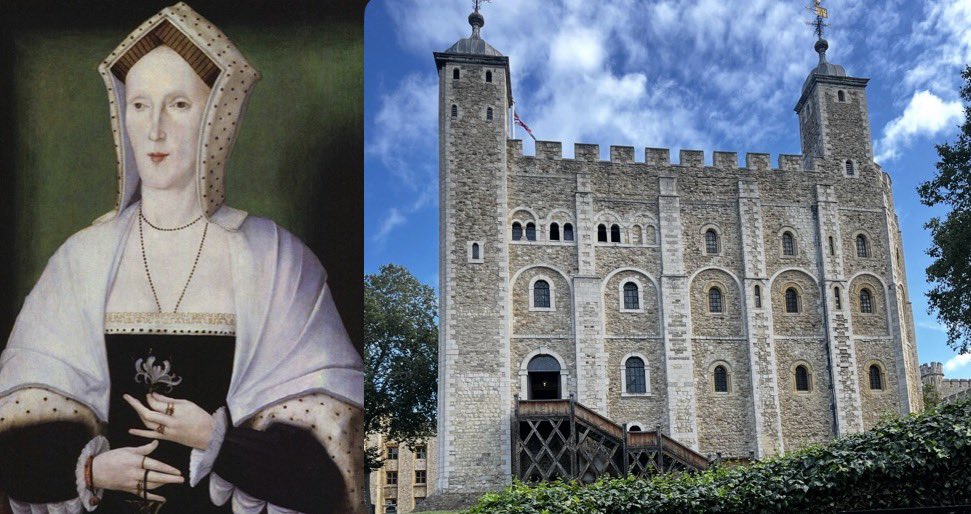
OTD in 1541 - Margaret Pole, Countess of Salisbury (a potential Queen Regnant of England) was brutally executed at the Tower of London on the orders of her cousin #HenryVIII, despite never claiming the crown.
Margaret was the daughter of George, Duke of Clarence (brother of the Yorkist Kings #EdwardIV & #RichardIII) & Isabel Neville, the eldest daughter of Richard Neville, Earl of Warwick (the Kingmaker.)
Margaret was born in 1473 after her father had been reconciled to Edward IV & helped him fight his way back to the throne in 1471. But tragically for Margaret this stability didn’t last. Her mother Isabel & younger brother Richard died suddenly in December 1476 & Margaret’s father Clarence suspected foul play ordered by his sister-in-law Queen Elizabeth Woodville. He accused Ankarette Twynho, Isabel’s lady -in-waiting who had connections to the Queen, of witchcraft & murder. Twynho was found guilty & hung in April 1477.
Most modern historians believe Twynho was innocent & her conviction stemmed from Clarence’s own mental instability & paranoia, especially about the Queen. But he also had good reason to be nervous. He & his late father-in-law the Earl of Warwick had executed the Queen’s father & brother in 1469 & while Edward might have been prepared to forgive George for his previous behaviour as the price of their reconciliation in 1471 it seems unlikely that the Queen would have been able or willing to do so.
Clarence himself was executed for treason on the orders of his brother Edward IV on 18 February 1478 & allegedly drowned in a butt of malmsey wine. Interestingly, Margaret is wearing a bracelet depicting this incident in her portrait, lending some credence to the story. Clarence was convicted of plotting against his brother. He may also have discovered Edward’s prior marriage to Eleanor Talbot, which if true invalidated the King’s union to Elizabeth Woodville. Bishop Stillington who would claim to have married Edward & Eleanor was imprisoned in the Tower at the same time as Clarence in 1478.
Her father’s attainder meant that Margaret & her brother Edward, Earl of Warwick were barred from the succession. Otherwise they rather than Richard III would have been the next Yorkist heirs when Edward’s sons were revealed to be illegitimate in June 1483.
After Edward IV’s death Margaret lived first in the care of her double aunt Richard III’s wife Queen Anne Neville & then after 1485 her cousin Elizabeth of York, wife of #HenryVII & mother of Henry VIII. She was married to Sir Richard Pole, a loyal & relatively lowly Tudor supporter, who Henry VII judged unlikely to ever want to pursue his wife’s dynastic claim.
Margaret became a close lifelong friend of Catherine of Aragon & served as governess to Princess Mary (later #MaryI.) Her relationship with Henry VIII deteriorated following his break from Rome, which Margaret’s son Reginald Pole was unwilling to accept.
Pole became a thorn in Henry’s side. He was proposed as a husband for the Princess Mary by the Spanish who envisioned them as alternative Catholic rulers of England. In 1537 he was made a Cardinal by the Pope & continued to be a focal point for opposition to Henry with English agents attempting to assassinate him.
There is no evidence Margaret was involved in any of the conspiracies hatched by her sons. But her Plantagenet blood alone was sufficient for Henry to want her removed once he reached the peak paranoia of his later reign. Margaret was debarred from the succession by her father’s attainder, but this could easily have been reversed with another act of Parliament as Titulus Regius had been. Margaret died protesting her innocence & refused to kneel at the block, resulting in a botched execution which took eleven blows to remove her head.
Fue hijo ilegítimo, nació, #TalDíaComoHoy de 1478, justo un mes después del asesinato de su padre en el Duomo de Florencia. No conoció a su padre, por lo tanto, y seguramente, tampoco a su madre.
Pero, 45 años más tarde, era papa en Roma con el nombre de Clemente VII.
(sigue)
#WarsoftheRoses
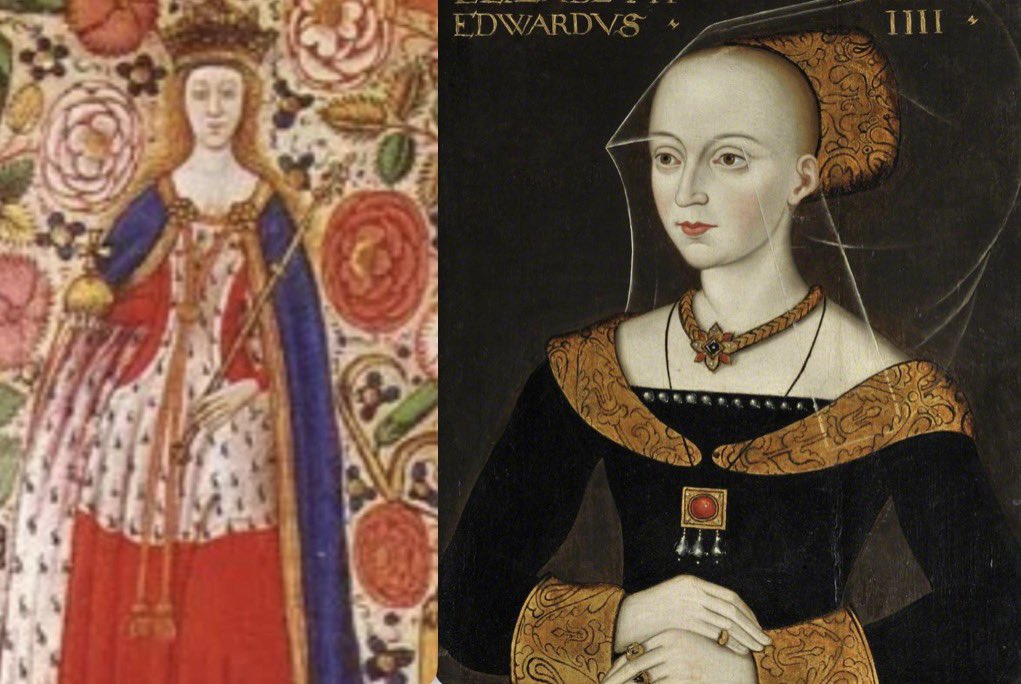
OTD in 1465 - Elizabeth Woodville was crowned Queen of England. This followed her secret marriage to the Yorkist King #EdwardIV (traditionally said to have taken place on 1 May 1464) & its revelation to the King’s disapproving family & closest supporters in September 1464.
Elizabeth’s Lancastrian predecessor Margaret of Anjou had been crowned after only 37 days of marriage to #HenryVI. Although Margaret wasn’t universally popular at the time of her marriage, especially not with the faction who had wanted to continue the #HundredYearsWar, her status as a French princess ensured her marriage was acceptable to the King’s subjects & she didn’t face the level of disapproval which Elizabeth did. This disapproval likely explained the longer gap before Elizabeth’s own coronation. Her husband Edward IV was having to reconcile key players at his court to their marriage first.
Edward’s mother Cecily Neville, Dowager Duchess of York made no secret of her disapproval of her son’s choice of bride & Elizabeth’s unsuitability. These sentiments were shared by Edward’s mentor & cousin, the man who had helped to make him King in 1461, Richard Neville, Earl of Warwick (the Kingmaker.) Edward had also humiliated Warwick by keeping his marriage a secret from him & only revealing it when Warwick had in good faith brokered a betrothal for Edward to the French princess Bona of Savoy on the instructions of the King & the Privy Council.
It is often said that Elizabeth’s low social status as the widow of a knight, Sir John Grey, lay at the root of the disapproval she encountered from those closest to Edward. But this was only half the story. Elizabeth Woodville’s mother, Jacquetta of Luxembourg was a European princess & had become part of the extended Lancastrian royal family through her first marriage to John, Duke of Bedford. As a widow, Jacquetta had gone on to marry Sir Richard Woodville, Elizabeth’s father, & a man far below her on the social scale.
For Warwick & other long term Yorkist supporters, Elizabeth’s Lancastrian connections were likely more problematic than her low birth. Jacquetta & Richard Woodville had been close to both Henry VI & his Queen Margaret of Anjou. In this capacity Richard Woodville had been one of Warwick’s opponents for control of the English Channel in 1458-60.
Understandably, those who had sacrificed so much in the service of the House of York during the difficult years from 1455 to 1461, were not best pleased by the prospect of Edward’s marriage diverting rewards & lands into the hands of former opponents once his kingship had finally started to be secure in 1464. These views were not restricted to Warwick alone with the chronicler Jean de Waurin recording how the Privy Council responded to the revelation of Edward’s marriage to Elizabeth by telling him that ‘he must know that she was no wife for a prince such as himself.’
As King, Edward’s choice of bride should have been a matter of state rather than personal preference, hence the angry response from the Privy Council. By marrying Elizabeth he had squandered the opportunity of making an advantageous foreign alliance with a French, Castilian or Scottish bride which could have enhanced his own & England’s security. (Assuming he was truly free to marry of course & not already secretly married to Eleanor Talbot, which seems likely.)
Nonetheless, by May 1465 Edward’s family & closest supporters had reconciled themselves to his marriage & accepted Elizabeth as Queen. The greater & more dangerous future problem would stem from the size of Elizabeth’s family & Edward allowing her to corner the marriage market for her sisters & other female relatives leaving a lack of eligible male heirs for Warwick’s daughters, but that’s a story for another post.
This figure wears the red crown of Lower Egypt and the face appears to reflect the features of the reigning king, most probably Amenemhat II or Senwosret II. However, the divine kilt suggests that the statuette was not merely a representation of the living ruler. Together with its counterpart wearing the white crown of Upper Egypt, now in the Egyptian Museum, Cairo, the figure was discovered standing behind a shrine that contained an object sacred to the god Anubis, the so-called Imiut (14.3.18 and .19), and the two figures could be understood to have functioned as guardians of the Imiut. https://t.co/H7nvYCFJZW