This “temporary” platform at Adare Station is being constructed using a planning exemption provision. However, there are serious legal and ecological concerns regarding how this project has been progressed.
This development should not lawfully have qualified as exempted development under Article 6(3) of the Habitats Directive.
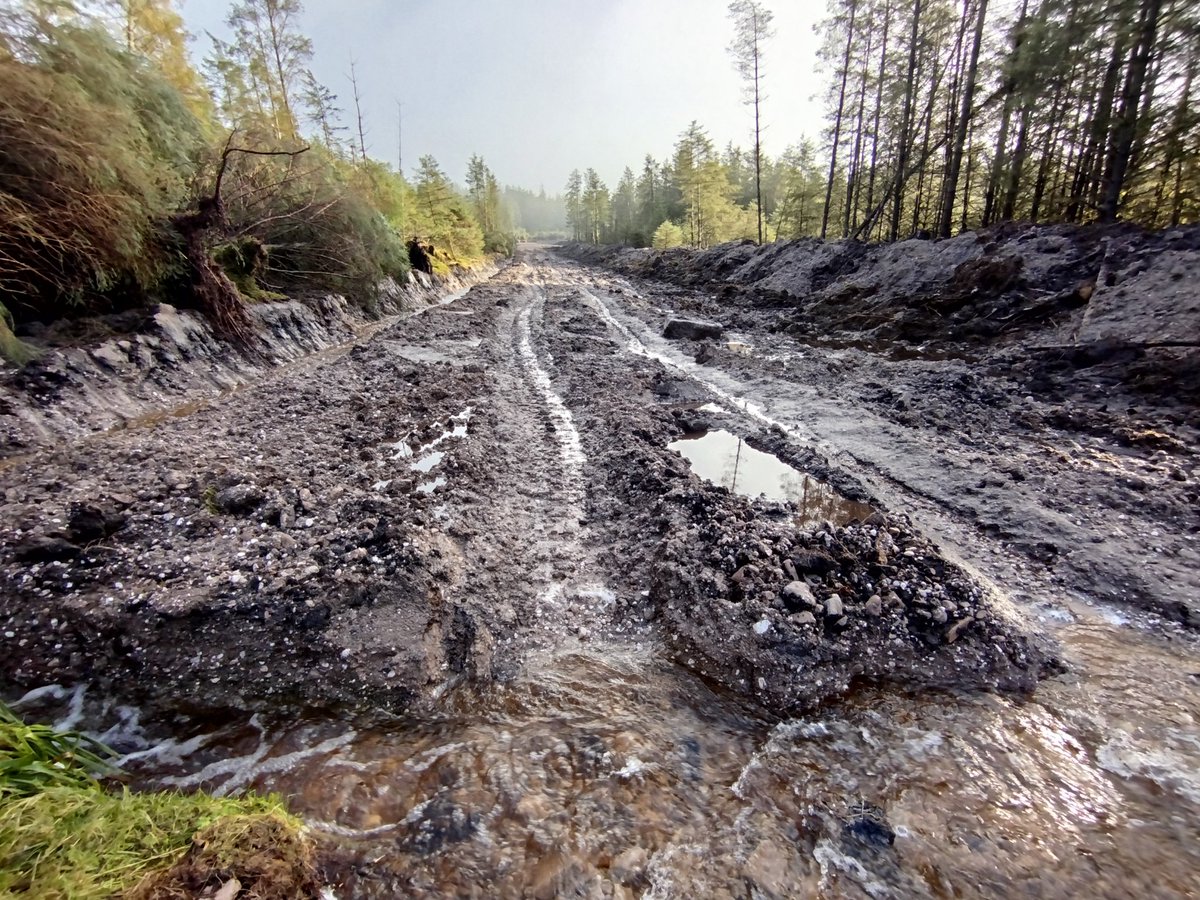
The platform is not an independent project - it is entirely dependent on the Limerick to Foynes railway line redevelopment. That wider project has involved extensive vegetation clearance, drainage alteration, major construction works, and habitat disturbance along the long abandoned 44km rail corridor. However, it was not assessed as a single integrated project under the Habitats Directive. Instead, elements were advanced separately through questionable exemption provisions and isolated applications for two of the new bridges. However, like the “temporary” platform at Adare, these bridges do not have "functional independence" from the overall project.
European case law is very clear that projects cannot be artificially divided into smaller parts (“project splitting”) in order to avoid environmental assessment obligations.
A project requiring Appropriate Assessment cannot lawfully proceed as exempted development. The project documentation for the Adare platform itself acknowledges a direct hydrological connection to the Lower River Shannon SAC, via drainage pathways leading towards the River Maigue and ultimately into the SAC. This alone triggers the requirement for Appropriate Assessment under the Habitats Directive. This is before you get to the issue of cumulative impacts from the wider railway redevelopment.
The ecological surveys completed for the station platform are also highly problematic. Surveys were undertaken after substantial railway clearance and disturbance had already occurred. In other words, the “baseline” conditions used to assess ecological impacts had already been altered by ongoing works. The bat survey confirmed the presence of multiple Annex IV bat species and moderate bat activity, yet survey effort was limited and constrained. Conclusions of “negligible impact” again rely heavily on assumptions regarding mitigation and construction controls rather than objective scientific exclusion of risk.
The reliance on mitigation measures at screening stage, the failure to assess cumulative impacts, clear project splitting, and the deficiencies in ecological baseline data all point towards the same conclusion: Appropriate Assessment was required, and the reliance on exempted development provisions is highly questionable.
This is also clearly not a genuinely “temporary” structure. The platform itself is a substantial development with an estimated cost of approximately €3 million, despite the Ryder Cup event lasting only one week.
Indeed, public statements by Iarnród Éireann and others already indicate that the infrastructure is viewed as part of potential future passenger rail development for Adare and the wider Foynes line. The project is being publicly presented as both “temporary” and as a long-term transport investment at the same time.
That significantly undermines the credibility of the claim that this is merely a short-duration temporary structure associated with a single event. If this is not genuinely a temporary structure, then the legal basis for treating it as exempted development is also highly questionable.
I want to be clear that I am not opposed to rail development. Providing sustainable public transport infrastructure and improved passenger rail connectivity is clearly beneficial. However, no matter how desirable a project may appear, that does not provide a legal entitlement to circumvent planning and environmental law or to bypass the protections required under the Habitats Directive.
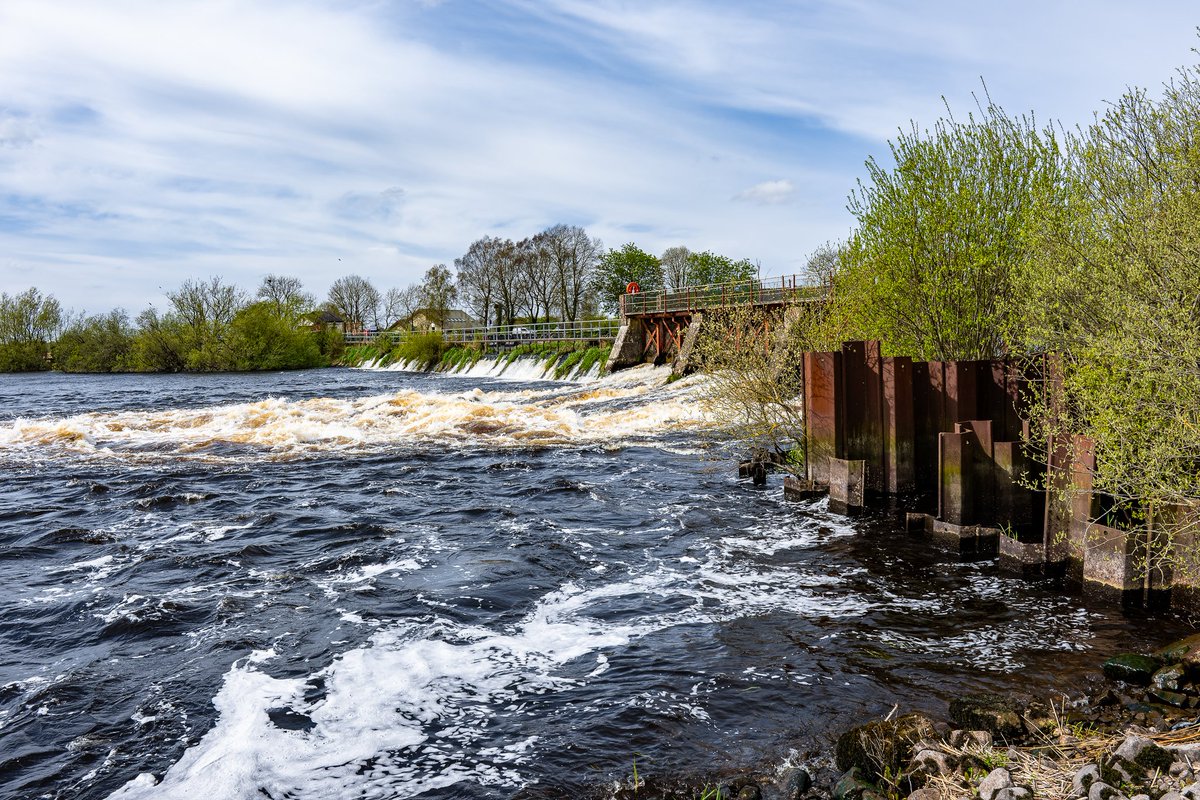
Termonbarry weir on the upper River Shannon yesterday. A "temporary" fish pass was installed here 25 years ago. This fish pass does not work and fish migration remains blocked at this site. None of the dams and weirs along the River Shannon have adequate fish passes.
🌎 it’s EARTH DAY today. I thought I’d show you this!
The FV Margiris, one of the world’s largest supertrawlers. It catches 250 tonnes of fish per day,
Since Brexit, Britain has had the power to stop ships like this from plundering our waters, but we haven’t.
The government says there’s no definition of a “super-trawler,” …. while continuing to let these giants destroy marine ecosystems.
They tax us more to “save the planet” while helping to destroy it 🤡
Good to hear the Forestry Industry challenged on RTEliveline today. Sending inaccurate information to Primary Schools about Sitka Spruce, is a new low for the Forest Industry. A reminder to all Primary School Teachers today is World Curlew day. Two sides to every story.#Curlew
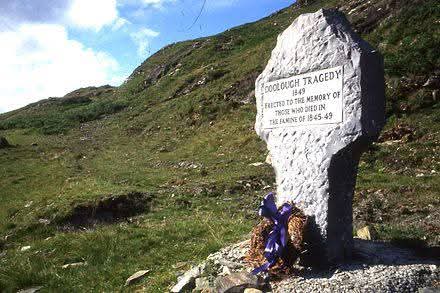
Today in 1849, hundreds of starving men, women, and children set out on a harrowing overnight death march from Louisburgh, Co. Mayo, to Delphi Lodge, a hunting retreat nestled deep in the mountains. They had no choice.
Two government officials had arrived in Louisburgh to determine whether famine relief, an essential lifeline of grain, would continue for the destitute. Yet, without conducting an inspection, the officials departed for Delphi, ordering the desperate crowds to follow. Their names were Captain Primrose and Colonel Hogrove.
The people were given a deadline. Present themselves at Delphi Lodge by seven o'clock the following morning, or be struck off the relief list entirely. A timed ultimatum, dressed up as procedure.
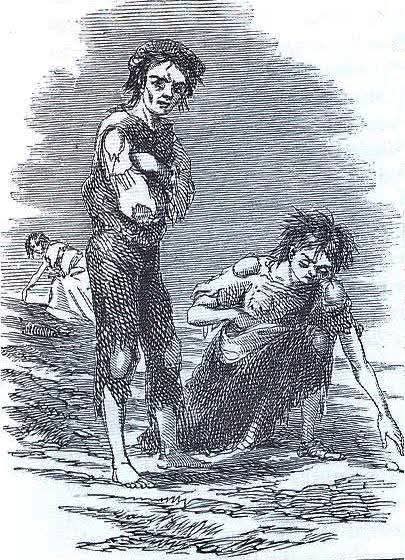
In the darkness, hundreds of emaciated people, described as "living skeletons", struggled through the treacherous Doolough Valley. The brutal wind and rain showed no mercy. Some were found afterwards with grass still in their mouths, eaten in a final, desperate attempt to keep moving.
By morning, at least 16 lay dead along the roadside, their bodies abandoned to the elements. Among them was a woman named Dalton, found lifeless with her son and daughter. Two unnamed men, who perished just a mile from Louisburgh, were left exposed for days, prey for dogs and ravens.
Those who survived the march and reached Delphi Lodge were told the officials could not be disturbed. They were at lunch. When the meeting eventually took place, the people were sent away with nothing.
The whole affair might have been quietly buried in that mountain pass, forgotten like the dead, were it not for a letter published in the Mayo Constitution, signed only as "A Ratepayer."
The local relieving officer, Michael Carroll, was later dismissed. His books were not in order, which was offered as the official explanation for why no inspection ever took place at Louisburgh. Carroll lost his job. Primrose and Hogrove kept theirs.
The Doolough Tragedy became a searing symbol of government neglect and cruelty during the Great Famine. A memorial stone near the lake now stands as a solemn reminder, etched with the haunting words:
"How can men feel themselves honoured by the humiliation of their fellow beings?"
From 1988 onwards, the harrowing inhumanity has been remembered with an annual Famine Walk, retracing the desperate route of those who perished. Figures such as Archbishop Desmond Tutu and Waylon Gary White Deer of the Choctaw Nation have walked in solidarity. Their nation donated to Irish Famine relief in 1847, having survived the Trail of Tears themselves just years before.
In 2013, Delphi Lodge, once the site of such inhuman indifference, finally acknowledged its past. For the first time, it welcomed the walk onto its 1,000-acre estate, stating:
"By opening our gates to the Afri Famine Walk, Delphi Lodge is acknowledging our part in what happened in 1849, instead of ignoring it." Today, a Famine Exhibition Centre in Louisburgh tells the full story.
Support the DTM Book https://t.co/U7jtCrOTtb