Um cliente me deu ghosting por 3 semanas seguidas.
Mandei três emails do tipo "Alguma novidade?". Silêncio total.
Aí mudei minha abordagem. Mandei um email de uma frase usando um gatilho psicológico específico.
Ele respondeu em 4 minutos.
Vou fazer um self-jabá não solicitado.
Tenho literalmente uns 100 desafios e explicação de conceitos publicados. E muitos deles são de system design que é o que mais sei/gosto nesse mundo de tecnologia.
Vou colocar o link nos comentários. 👇🏻
Um quase manual de 1:1
agora não tem mais desculpas, se esse vídeo chegou até você, você deve marcar 1:1 com seu senior ☝🏽🤓
espero que inspire e ajude alguém, video simples mas sincero e com participação do meu gato
n sei tirar o negocio do capcut
Onde Ver a Copa: os 104 jogos, horários, canais, link pra transmissão e mais...
dá uma olhada, qualquer feedback tô por aqui construindo!
https://t.co/dZI2dJS9jJ
Eu acabo de descobrir o soft-reboot do Linux e é lindo demais.
Parte do sistema operacional reinicia, mas não o Kernel. O initrd também não roda de novo, só o user space reinicia. Um reboot quase completo acontece em poucos segundos. Em geral, é o que você precisa, não do setup completo da máquina!
Rode com `systemctl soft-reboot`. Coloquei até um botão no menu de desligar, é o que vou usar agora.
Imagine you decided to build your first AI agent:
> complete confusion, frustration
> no idea how they actually work
> then you find an article by @hooeem
> a guide on building your first AI agent
> fully explained, in simple terms
> you get it working, turn agents into a system
> based on insights from Anthropic, OpenAI, and experts
all it takes is 1-2 hours to read and 10-20 hours to practice
AI agents can optimize 20-40% of your time
while giving you space to work on something bigger
the choice is yours
Kubernetes is beautiful.
Every Concept Has a Story, you just don't know it yet.
In k8s, you run your app as a pod. It runs your container. Then it crashes, and nobody restarts it. It is just gone.
So you use a Deployment. One pod dies and another comes back. You want 3 running, it keeps 3 running.
Every pod gets a new IP when it restarts. Another service needs to talk to your app but the IPs keep changing. You cannot hardcode them at scale.
So you use a Service. One stable IP that always finds your pods using labels, not IPs. Pods die and come back. The Service does not care.
But now you have 10 services and 10 load balancers. Your cloud bill does not care that 6 of them handle almost no traffic.
So you use Ingress. One load balancer, all services behind it, smart routing. But Ingress is just rules and nobody executes them.
So you add an Ingress Controller. Nginx, Traefik, AWS Load Balancer Controller. Now the rules actually work.
Your app needs config so you hardcode it inside the container. Wrong database in staging. Wrong API key in production. You rebuild the image every time config changes.
So you use a ConfigMap. Config lives outside the container and gets injected at runtime. Same image runs in dev, staging and production with different configs.
But your database password is now sitting in a ConfigMap unencrypted. Anyone with basic kubectl access can read it. That is not a mistake. That is a security incident.
So you use a Secret. Sensitive data stored separately with its own access controls. Your image never sees it.
Some days 100 users, some days 10,000. You manually scale to 8 pods during the spike and watch them sit idle all night. You cannot babysit your cluster forever.
So you use HPA. CPU crosses 70 percent and pods are added automatically. Traffic drops and they scale back down. You are not woken up at 2am anymore.
But now your nodes are full and new pods sit in Pending state. HPA did its job. Your cluster had nowhere to put the pods.
So you use Karpenter. Pods stuck in Pending and a new node appears automatically. Load drops and the node is removed. You only pay for what you actually use.
One pod starts consuming 4GB of memory and nobody told Kubernetes it was not supposed to. It starves every other pod on that node and a cascade begins. One rogue pod with no limits takes down everything around it.
So you use Resource Requests and Limits. Requests tell Kubernetes the minimum your pod needs to be scheduled. Limits make sure no pod can steal from everything around it. Your cluster runs predictably.
line diffs needs to stop
I can't understand why everyone's building codex/claude desktop wrappers now but they're still doing line diffing
for reference this is preferred: https://t.co/40PAwGui1F
🚨 Someone built a full virtual computer that runs inside your browser.
No downloads. No installs. No VMs. Just a Docker command.
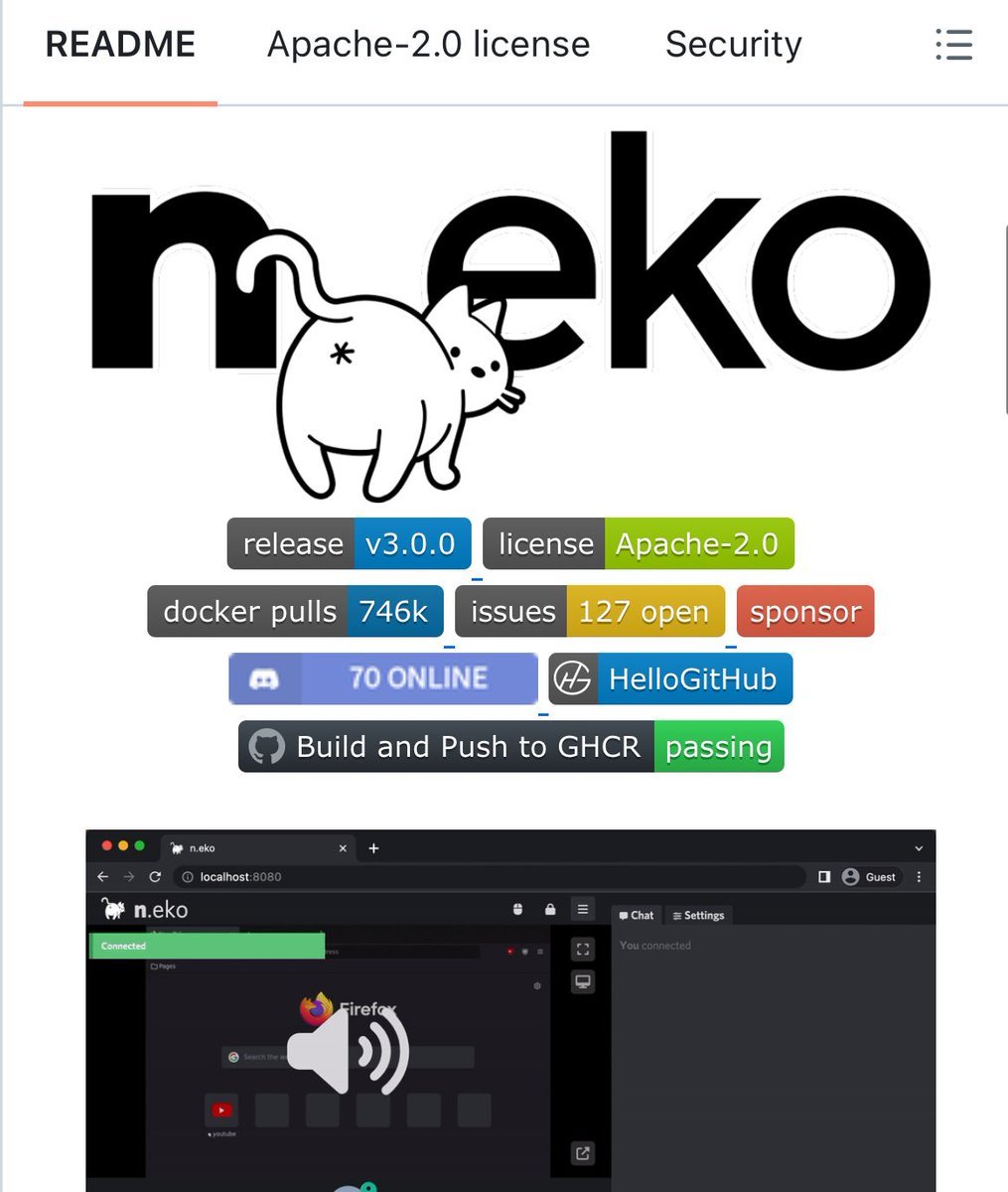
It's called Neko. It runs a complete desktop environment inside a Docker container and streams it to your browser using WebRTC.
Not a screen share. Not a remote desktop. A real computer running in a container that you control from any browser tab.
No VNC lag. No RDP setup. No TeamViewer watermarks. Just smooth, real-time video and audio.
Here's what this thing can do:
→ Run Firefox, Chrome, Brave, Edge, Tor Browser, or Opera in an isolated container
→ Run full desktop environments like XFCE or KDE
→ Multiple users can watch and control the same session simultaneously
→ Built-in audio streaming. Watch videos together with perfect sync
→ Persistent sessions. Close the tab, come back later, everything is still there
→ GPU acceleration for smooth rendering
→ Embed it in your own web app via API
Here's why people are losing their minds over this:
Watch parties. Open a movie, invite friends, everyone sees the same screen in real-time with synced audio. Open source alternative to Hyperbeam.
Throwaway browsing. Need to visit a sketchy site? Do it in a disposable container. Nothing touches your real machine. Pair it with Tor Browser and a VPN for full anonymity.
Team collaboration. Debug code together. Brainstorm on a shared whiteboard. Give a live demo where your audience can actually click around.
Secure jump host. Access internal company apps from anywhere without a VPN. Only video leaves the container. No cookies, no tokens, no data on the client.
Here's the wildest part:
The backstory. The creator built this because https://t.co/FEdEkGNdbS shut down and he just wanted to watch anime with his friends. Discord kept crashing. His internet couldn't handle streaming. So he built an entire virtual browser platform from scratch.
One Docker command to start:
docker run -d -p 8080:8080 m1k1o/neko:firefox
Open localhost:8080. You now have a full browser running in the cloud that anyone can join.
17.3K GitHub stars. 1.2K forks. 2,133 commits. 57 contributors.
100% Open Source. Apache 2.0 License.
Are you searching for a CLI for your Spring Boot application because you do not need a fancy web interface? Spring Shell might be the answer to your question. In this blog, you will learn the basics of creating such a CLI. Enjoy!
#java#springboot
https://t.co/TDQAhk8W5R
"Ahh eu não sei escrever testes..."
"Ahh eu não sei o que testar..."
"Ahh eu não sei como testar..."
"Ahh eu não sei quando testar..."
Toma
https://t.co/LIDxmwYxbG
🔥 New on https://t.co/5NktuMjX9i: File to Markdown ⚡
Drop any file → get clean, AI-ready Markdown back.
📄 PDFs, DOCX, ODT
📊 Excel, Numbers, CSV
🖼 Images (AI-powered OCR + summarization)
Upload or paste a URL. API included, no key needed.
Free. No signup.
Details: https://t.co/QFLGt848ND
americans spend $200-$400/month on subscriptions, most don’t even use half of them... free or cheaper alternatives most people never use 👇
1. spotify → jango
2. notion → obsidian
3. chatgpt → compass
4. microsoft office → libreoffice
4. netflix → netmirror
6. canva → vectr
7. youtube → rumble
8. photoshop → photopea
9. grammarly → ginger
10. apple music → demus music
11. gmail → proton mail
12. disney+ → tubi
13. figma → gravit designer
14. midjourney → higgsfield
15. kindle → wattpad
16. hulu → pluto tv
17. gemini → misty
18. xbox game pass → epic games store
most people will ignore this and keep paying monthly, smart people will bookmark and cancel some subscriptions.
your move. 👍