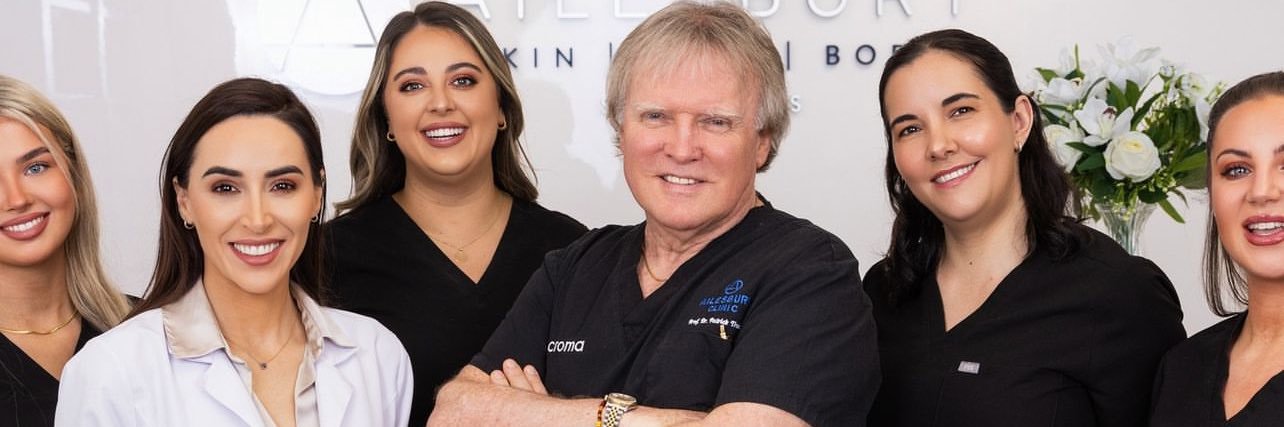
Prof. Patrick Treacy 'Top Global Aesthetic Doctor'
@peege
Voted 'Top Aesthetic Doctor in the World 2019' Visiting Prof Dermatology (Pakistan) Hon Fellowship Cosmetic Surgery (Australia) Educator Author Humanitarian
The Concept of Pathways
If ageing were driven by a single biological mechanism, the study of longevity would be a comparatively simple discipline. Scientists would need only to identify the central defect and devise a way to correct it. For much of the twentieth century this was precisely the hope that guided ageing research. Investigators searched for a master clock of ageing—one process that governed the entire trajectory of decline. At various times, different candidates appeared to hold that promise. Oxidative damage was once proposed as the fundamental cause, arising from reactive oxygen species generated by mitochondrial metabolism. Later, attention shifted to telomeres, the protective caps on chromosomes that shorten with repeated cell division. More recently, enthusiasm has gathered around cellular senescence, epigenetic drift, and metabolic signalling pathways. Each discovery illuminated an important aspect of ageing. Yet none proved sufficient to explain the whole. The reason is increasingly clear: ageing does not originate from a single failure. It emerges from the gradual destabilisation of multiple biological systems that normally function in coordination. These systems form what may be understood as the pathways of ageing—interacting networks responsible for maintaining the order and resilience of living organisms. To appreciate this concept, it is useful to consider how biological systems operate in the first place. Cells are not isolated machines performing independent tasks. They exist within a dense web of communication. Proteins transmit signals across membranes. Metabolic pathways exchange substrates and energy. Genes respond to environmental cues through epigenetic regulators. Hormones circulate between organs, synchronising metabolism and growth. Immune cells patrol tissues while interpreting signals from both pathogens and host cells. Life depends upon the harmony of these interactions.
In interviews and public lectures, Professor Patrick Treacy often describes modern medicine as standing at a crossroads between two very different philosophies: degenerative medicine and regenerative medicine.
He does not use the term “degenerative medicine” as a formal specialty, but as a critique — a way of describing the dominant medical mindset of the past century.
In his narrative, degenerative medicine is the medicine of reaction. It waits for biological decline to declare itself — arthritic joints, thinning skin, metabolic disease, neurodegeneration — and then moves to manage the fallout. It suppresses inflammation, replaces worn structures, removes damaged tissue, or masks the visible signs of ageing. It is skilled, often life-saving, but fundamentally defensive. As Treacy sometimes frames it, it is a system designed to manage the consequences of entropy.
By contrast, regenerative medicine — at least as he believes it should be practiced — represents a shift in thinking. Rather than asking, “How do we treat breakdown?” it asks, “How do we restore the biological signalling that prevents breakdown in the first place?”
In media conversations, he often paints the distinction vividly. Degenerative medicine replaces a knee. Regenerative medicine tries to preserve the cartilage. Degenerative medicine fills a wrinkle. Regenerative medicine attempts to improve the collagen architecture that caused it. Degenerative medicine suppresses inflammation. Regenerative medicine asks why the inflammatory cascade became dysregulated.
Professor Dr. Patrick Treacy—an internationally recognised dermatologist and pioneer in aesthetic and regenerative medicine—is actively working to bring “biological honesty” back into regenerative medicine by advocating for grounded, evidence-based practice, ethical clarity, and an articulated understanding of what modern regenerative therapies can realistically deliver.
🧬 What “Biological Honesty” Means in This Context
“Biological honesty” in regenerative medicine refers to acknowledging both the real biological mechanisms that underpin tissue repair and regeneration and the current limits of our scientific understanding—rather than overstating benefits, promising unproven outcomes, or embracing hype. Treacy emphasises that regenerative approaches should be:
Mechanistically grounded in real cellular and molecular biology (e.g., stem cell signalling, growth factor dynamics). Clinically evidence-based, with transparent data on efficacy and safety.
Ethically sound, avoiding exaggerated claims or interventions without adequate scientific support.
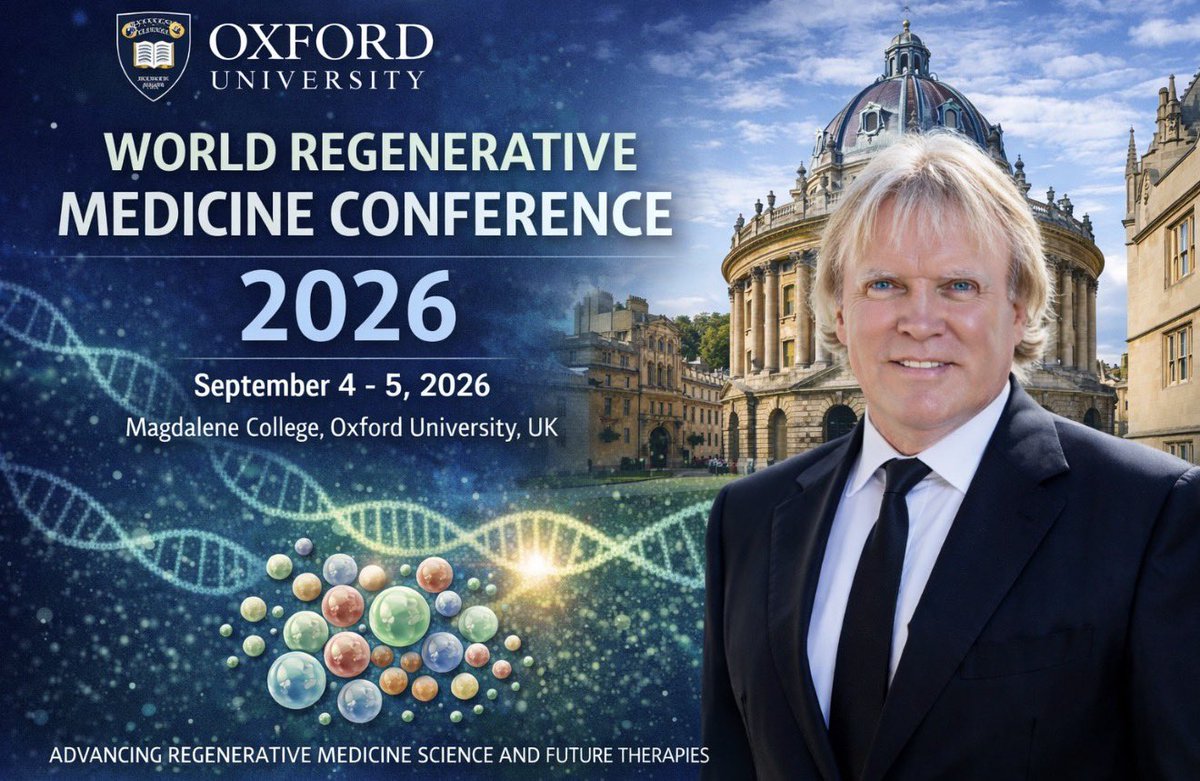
OXFORD UNIVERSITY 2026
*Speakers - Oxford University World Conference September 4 - 5 , 2026 Magdalene College, Oxford University, UK
1 - Dr. Adam Rubinstein USA
2- Dr. Patrick Treacy IRELAND
3 - Dr. Anna Peca UK
4 - Dr. Ernesto Cidranes SPAIN
5 - Dr. Marta Serrano MEXICO
6 - Dr. Zuramis Estrada SPAIN
7 - Dr. Elena Martin ROMANIA
8- Dr. Neha Gupta INDIA
9- Dr. Virginia Ahedo SPAIN
10- Dr. Didem Kurban TÜRKIYE
11 - Dr. Julia Tbarani IRELAND
12 - Dr. Ayah -Siddiqi UK
13 - Dr. Fahad Usman PAKISTAN
14 - Dr. Navneet Magon INDIA
15 - Dr. Dzihan Abazovic MONTENEGRO
16 - Dr. Gabriel Ayala SWEDEN
17 - Dr. Massimo Vitale ITALY
18 - Dr. Daniela Ribeiro BRAZIL
19 - Dr. Sibel Üstünel TÜRKIYE
20 - Dr. Attila Fogarassy ROMANIA
21 - Dr. Prabhu Mishra INDIA
22- Dr. Turi Vladiana ROMANIA
23 - Dr. Ricardo Coronel SPAIN
24 - Dr. Sachi Sivananthan UK
25 - Dr. Marwa ElAjami UAE
26 - Dr. Mustafa Aldam UAE
27 - Dr. Annalisa Calisti ITALY
28 - Dr. Emanuele Bartoletti ITALY
29 - Dr. Helia Naseri UAE
30 - Dr. Sandra Rodriguez SPAIN
31 - Dr. Carlos López Moreno SPAIN
🔬 Degenerative vs Regenerative Medicine 1️⃣ Degenerative (Disease / Process) Degenerative refers to the breakdown, deterioration, or loss of structure and function in cells, tissues, or organs over time. It describes the problem. Examples: Osteoarthritis (cartilage breakdown) Alzheimer’s disease (neuronal degeneration) Parkinson’s disease Macular degeneration Age-related skin thinning Disc degeneration in the spine In degenerative conditions: Cells die or malfunction Tissue structure weakens Function declines progressively Repair mechanisms fail or slow Degeneration = decline. 2️⃣ Regenerative Medicine (Therapeutic Approach) Regenerative medicine is a field of medicine that aims to repair, replace, or regenerate damaged cells and tissues. It describes the solution. It works by: Stimulating stem cells Delivering growth factors Using PRP Tissue engineering Cellular therapies Activating the body’s own repair pathways Regeneration = restoration.
Ageing is driven as much by chemical signalling as by genetics. Hormones, cytokines, growth factors, and metabolites determine how cells communicate — and how long tissues remain functional. Chemical signalling governs inflammation, repair, and regeneration. When signalling becomes distorted, ageing accelerates. Understanding these pathways is central to longevity medicine.
Pathways for Ageing explores how biology, environment, and behaviour intersect to shape longevity.
Ageing isn’t a single process — it’s a series of modifiable pathways. Understanding them is the first step toward healthier, longer lives.
@RyanairPress Why on earth would MOL want to deprive his passengers from paid internet access on board on an otherwise boring flight ? There’s NO logic to it
Michael O Leary trying to deprive RyanAir passengers of internet access is akin to not allowing steerage passengers on the Titanic to use the radio room