Like the House that Jack Built; Once-Elite GSSS Azare, Alma Mater of Yayale Ahmed, Crumbles Under Years of Neglect
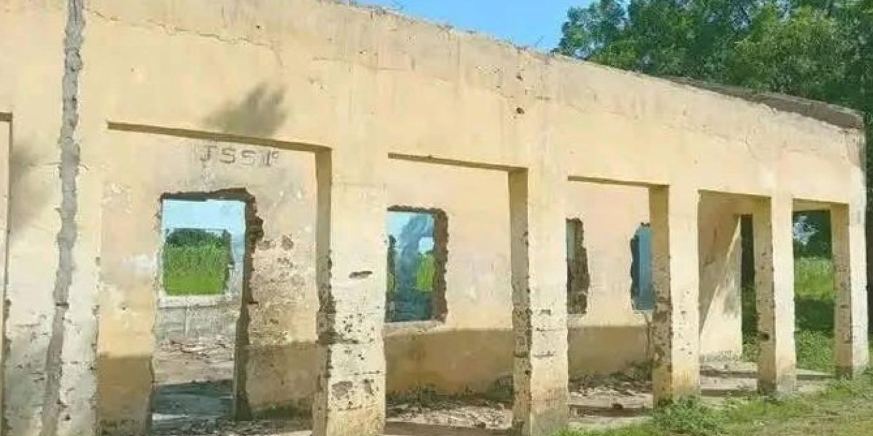
Government Special Secondary School (GSSS), Azare, one of Bauchi State's most historic and prestigious public schools and the alma mater of former Secretary to the Government of the Federation (SGF), Yayale Ahmed, has reportedly fallen into a state of alarming decay after strong winds ripped off sections of its roof, exposing students and staff to hazardous learning conditions.
The development has sparked fresh concerns about the state of public education infrastructure in Bauchi State, with civic accountability organisation MonitNG urging Governor Bala Mohammed to take immediate action to restore the institution.
In a post shared on X, MonitNG lamented the deteriorating condition of the school, describing it as a once-thriving centre of academic excellence that now struggles to provide students with a safe and conducive learning environment.
According to the organisation, the recent windstorm compounded years of neglect, leaving parts of the school severely damaged and unsuitable for effective teaching and learning.
A School with a Proud Legacy
Founded as one of the state's elite government-owned secondary schools, GSSS Azare ranks among the three renowned Government Special Secondary Schools established to provide quality education for some of Bauchi State's brightest students.
Over the decades, the institution earned a reputation for academic excellence and discipline, producing graduates who went on to occupy influential positions in government, academia and the private sector.
Among its most distinguished alumni is Yayale Ahmed, a respected Nigerian civil servant who rose through the ranks of the federal bureaucracy to become Head of the Civil Service of the Federation before serving as Secretary to the Government of the Federation (SGF) under late President Umaru Musa Yar'Adua.
Ahmed, who hails from Bauchi State, is widely regarded as one of Nigeria's most experienced public administrators, having played key roles in the coordination of federal government policies and programmes during his years in public service.
For many observers, the decline of a school associated with such notable figures reflects the broader challenges confronting public education in parts of the country.
Concerns Over Neglect
Reacting to reports from the school, MonitNG questioned how an institution with such a rich history and track record could have been allowed to deteriorate to its current state.
The organisation argued that students should not be forced to learn in classrooms threatened by damaged roofs and poor infrastructure, warning that the situation could put lives at risk, especially during the rainy season.
It further questioned the state's spending priorities, pointing to reports that Bauchi State received more than ₦41.17 billion in Federation Account Allocation Committee (FAAC) allocations between January and March 2026.
According to MonitNG, the condition of GSSS Azare and similar public schools underscores the urgent need for greater investment in education infrastructure across the state.
Calls for Urgent Intervention
The civic group called on the Bauchi State Government, the Ministry of Education, the State Universal Basic Education Board (SUBEB), legislators, local government authorities and other stakeholders to immediately intervene.
It urged the government to commence rehabilitation work on the damaged structures and provide temporary learning facilities to ensure students are not further disadvantaged while repairs are underway.
MonitNG also advocated the declaration of a state of emergency in the education sector to tackle the widespread infrastructural challenges reportedly affecting public schools in the state.
"A government that neglects its schools mortgages the future of its children," the organisation stated, stressing that every child deserves access to safe classrooms, functional facilities and quality education.
For many residents and alumni, the plight of GSSS Azare is particularly painful. Once celebrated as a symbol of educational excellence and a breeding ground for future leaders, the institution now stands as a stark reminder of the consequences of failing to maintain critical public assets.
As calls for intervention grow louder, attention is turning to whether the relevant authorities will act swiftly to restore one of Bauchi State's most historic schools before the situation worsens further.
Endangered Echoes: Second-Generation Green Anacondas Born at Melaka Sanctuary in Conservation Milestone
A green anaconda born at the Melaka Butterfly and Reptile Sanctuary has given birth to 10 offspring, marking a rare second-generation breeding success. The milestone strengthens Malaysia's record in exotic reptile conservation and highlights years of specialised care, research and habitat management for one of the world's largest snakes.
The 2.74-metre-long snake delivered the babies on Monday following a gestation period of approximately 190 days, marking what sanctuary officials describe as a significant milestone in Malaysia's exotic wildlife breeding efforts.
For the sanctuary, the event is especially meaningful. Diana herself was born there in August 2020, making the newborns the second generation of green anacondas successfully bred at the facility.
Managing director Gerard Wong said the achievement demonstrates that long-term conservation and captive breeding programmes for exotic species can be successfully carried out in Malaysia.
"This is meaningful because Diana was born at the sanctuary in August 2020. This second generation proves conservation and breeding efforts involving exotic species native to South America can be carried out in Malaysia," he said during a press conference.
The latest births have increased the sanctuary's green anaconda population to more than 40, making it home to what is believed to be Malaysia's largest collection of the species.
A Remarkable Reproductive Journey
Unlike most snake species that lay eggs, green anacondas are ovoviviparous, meaning they give birth to live young. During pregnancy, females typically stop feeding, surviving solely on stored body reserves for six to seven months.
Diana's ability to carry and deliver 10 offspring after months without food highlights the extraordinary biological adaptations that have enabled the species to thrive in the wild waterways of South America.
According to Wong, successfully breeding one of the world's largest snake species requires specialised expertise and carefully controlled environmental conditions.
"We have to maintain suitable temperatures, ensure water quality remains high and create water currents that closely resemble conditions in the Amazon Basin, where green anacondas naturally occur," he said.
The successful birth, he added, reflects the sanctuary's growing capability in managing and breeding large exotic reptiles.
Expanding Knowledge Through Conservation
Beyond attracting visitors, Diana's pregnancy has provided valuable opportunities for observation and research.
According to Wong, the sanctuary's animal care team has been able to document important aspects of green anaconda reproduction, helping expand understanding of a species that remains relatively understudied in captivity.
"Besides serving as an educational attraction, Diana's breeding has given our team an opportunity to document and better understand the reproductive process of green anacondas," he said.
The sanctuary recently celebrated another breeding achievement with the hatching of 23 baby caimans, a South American crocodilian species that also inhabits the Amazon basin.
To showcase these conservation successes, the facility plans to organise a special carnival that will allow visitors to view both the newborn anacondas and the young caimans up close.
The World's Heaviest Snake
A member of the boa family, the green anaconda (Eunectes murinus) is widely regarded as the heaviest snake species on Earth. Although the reticulated python can grow slightly longer, the anaconda's immense girth allows it to outweigh its Asian cousin by a considerable margin.
Females are significantly larger than males and can grow beyond nine metres (29 feet) in length, weigh more than 250 kilograms (550 pounds) and measure over 30 centimetres in diameter.
Native to the Amazon and Orinoco river basins of South America, green anacondas spend much of their lives in swamps, marshes and slow-moving waterways. Their eyes and nostrils sit high on their heads, allowing them to remain almost completely submerged while waiting for prey.
These powerful constrictors feed on a wide range of animals, including capybaras, birds, deer, turtles, caimans and wild pigs. Once prey is captured, the snake coils its muscular body around the animal and squeezes until it can no longer breathe before swallowing it whole.
Because of their ability to consume exceptionally large meals, green anacondas can survive for weeks or even months without eating.
*A Green Anaconda giving birth to Anaconda snakelets
New Discoveries in Anaconda Science
Scientists continue to uncover new information about the giant reptiles. A 2024 genetic study suggested that what was previously considered a single green anaconda species may actually consist of two distinct species: the southern green anaconda (Eunectes murinus) and the northern green anaconda (Eunectes akayima).
The findings have sparked renewed interest in conserving and studying one of the world's most iconic reptiles.
For the Melaka Butterfly and Reptile Sanctuary, Diana's latest brood represents more than just a successful birth. It shows that dedicated husbandry, scientific understanding, and long-term commitment can help sustain even some of the planet's most formidable creatures far from their native habitat.
Sources: New Straits Times, Agency Reports, Wiki
African Business & Economy: Ethiopia Opens First National Gold Refinery in Major Push for Value Addition
Addis Ababa, Ethiopia - Ethiopia has officially entered the ranks of African nations refining their own precious metals, following the inauguration of the National Precious Metals Refinery in Addis Ababa, a landmark project expected to transform the country's mining sector and boost foreign exchange earnings.
Prime Minister Abiy Ahmed inaugurated the facility at the Bole Lemi Special Economic Zone, describing it as a strategic step towards industrialisation and greater domestic control over the country's mineral wealth. The refinery, established through a partnership between state-owned Ethiopian Investment Holdings (EIH) and Dubai-based Sam Precious Metals, has an annual processing capacity exceeding 600 tonnes of precious metals. Ethiopian Investment Holdings holds a 51 per cent stake, while Sam Precious Metals owns the remaining 49 per cent.
The new refinery is designed to perform a full range of services including assaying, refining, melting, casting and certification of precious metals. It will produce export-grade gold bullion as well as cast and minted gold and silver bars for domestic and international markets.
Speaking at the inauguration, Prime Minister Abiy Ahmed said the project marks a significant shift from the traditional model of exporting raw minerals for processing abroad.
"From resource extraction to industrial transformation, we are creating greater value at home," he said, emphasising Ethiopia's ambition to become a regional hub for precious metals refining.
For decades, Ethiopia has exported much of its unrefined gold to overseas refining centres, particularly Dubai. Officials believe local refining will increase the country's earnings by allowing Ethiopia to capture more of the value chain before products reach international markets. According to government figures, gold exports generated about $5.5 billion to $5.6 billion in the last fiscal year, making the mineral one of the country's most important sources of foreign exchange.
The refinery is also expected to strengthen transparency and quality assurance within Ethiopia's gold trade. By refining and certifying gold locally, authorities hope to improve confidence among international buyers, reduce costs associated with overseas refining, and support the development of a more organised and competitive precious metals market.
Analysts view the project as part of a broader trend across Africa, where resource-rich nations are seeking to retain more economic value from their natural resources through local processing and manufacturing. Ethiopia now joins countries such as Burkina Faso, which recently commissioned its own gold refinery as part of efforts to reduce dependence on foreign processing facilities and increase domestic industrial capacity.
Beyond serving domestic needs, Ethiopian officials say the refinery has been built with regional ambitions in mind. Its processing capacity far exceeds Ethiopia's current gold production levels, suggesting the facility could eventually refine precious metals sourced from neighbouring countries and other parts of Africa
The assassinated Col. Muammar Gaddafi, who taught the dream being fulfilled. (AI-created video)
The launch represents another milestone in Ethiopia's drive to diversify its economy, expand manufacturing activity and leverage its mineral resources for long-term industrial growth. If successful, the refinery could significantly improve the country's export profile while positioning Addis Ababa as an emerging centre for precious metals trade and refining in East Africa.
By Pegasus Reporters
Business & Economy Desk
2027: Northern Governors’ Silent Revolt Sparks Panic in Tinubu’s Camp as APC Moves to Block Sabotage
Growing concerns have emerged within the ruling All Progressives Congress (APC) over what some northern governors see as a lack of enthusiasm for President Bola Ahmed Tinubu’s re-election bid ahead of the 2027 general elections.
Sources within the party claim the relationship between the Presidency and several APC governors has grown increasingly strained, prompting the party’s National Working Committee (NWC) to adopt measures to safeguard its electoral interests.
One such measure, according to party insiders, involves directing APC candidates to submit the names of their proposed polling agents directly to the party’s national secretariat rather than through state structures. The move is reportedly intended to prevent possible manipulation or sabotage during the elections.
The development comes amid concerns within the Presidency over what some observers describe as a lukewarm response from certain governors to efforts aimed at promoting the administration’s achievements across the country.
President Tinubu was said to have expressed dissatisfaction following his recent return from an overseas trip, reportedly lamenting that some governors were not doing enough to communicate the successes of his administration to the public.
Earlier, Vice President Kashim Shettima had suggested that only a handful of northern governors openly supported President Tinubu’s re-election ambitions. Although his media office later clarified that the remarks referred to events surrounding the 2022 APC presidential primary, some party insiders insist the comments reflect the current political reality within the party.
Internal Discontent Among Governors
Speaking anonymously, a governor from a North-West state told journalists that efforts to project unity within the APC mask underlying disagreements that continue to affect the party’s preparations for the next election cycle.
According to the governor, many APC governors in the North remain reluctant to openly campaign for President Tinubu’s second term. He noted that while campaign materials in major cities often feature the President and Vice President alongside gubernatorial candidates, such imagery is reportedly less common in rural areas.
The governor also hinted at unresolved tensions within the Progressive Governors’ Forum (PGF), saying disagreements among governors have spilt over into the broader Nigeria Governors’ Forum (NGF).
“The President promised to intervene in the misunderstandings among governors, but there has been no concrete resolution,” the governor said.
He further disclosed that some governors believe the PGF chairman, Imo State Governor Hope Uzodimma, should relinquish his position to focus on his national political responsibilities, including his role within the APC Presidential Campaign Council and the Renewed Hope Ambassadors initiative.
However, Uzodimma is reportedly maintaining that tradition requires the chairmanship to be handed over to another second-term governor after the general elections.
Sources Cite Multiple Factors Behind Growing Distance
The governor identified several issues contributing to the alleged cooling of relations between sections of the northern political establishment and the Presidency.
Among them, he cited the political challenges faced by former Kaduna State Governor Nasir El-Rufai, despite his support for Tinubu during the 2023 presidential election.
He also claimed that the administration’s push for greater transparency in financial disbursements has been interpreted by some state executives as increased scrutiny of state finances and local government allocations.
Another source of concern, according to the governor, is President Tinubu’s perceived closeness to Federal Capital Territory Minister Nyesom Wike and his political coalition, which some governors reportedly view with suspicion.
APC Tightens Control Over Election Preparations
Meanwhile, party insiders say the APC NWC has intensified efforts to strengthen oversight of election preparations.
Sources familiar with the matter claimed that intelligence reports suggested some governors were allegedly supporting candidates from opposition parties while seeking to maintain influence within APC structures.
As a result, the NWC reportedly decided to take direct control of the process for selecting polling agents in certain states.
According to the sources, the strategy is aimed at preventing situations where individuals loyal to state governors, rather than to the party, are appointed to monitor polling activities during the elections.
The decision is believed to affect states where party leaders suspect governors of backing rival candidates outside the APC fold.
The controversy follows allegations by the Oodua Progressive Youths League, a South-West political group, which accused certain governors of encouraging unsuccessful APC aspirants to seek nominations from opposition parties and contest against APC candidates.
In a statement signed by its General Secretary, Wale Abdulwaheed, the group further alleged that some governors had entered into arrangements with opposition parties concerning the nomination of polling agents.
Ondo Lawmaker Confirms New Directive
An APC member of the National Assembly from Ondo State, who requested anonymity due to the sensitivity of the issue, confirmed that candidates had been instructed to submit polling agents’ names directly to the party headquarters.
The lawmaker stated that agent nomination forms had already been distributed to candidates, bypassing traditional state-level channels.
However, Ondo State Governor Lucky Aiyedatiwa strongly denied allegations linking him to anti-party activities or efforts to undermine APC candidates.
“I have zero tolerance for anti-party activities. I have never engaged in anti-party activities in my life,” the governor stated.
Aiyedatiwa dismissed the allegations as politically motivated, describing those behind them as “naysayers, blackmailers, and slanderers.”
The reported developments underscore growing concerns about internal cohesion within the APC as preparations for the 2027 elections gather momentum. While party leaders publicly project unity, claims of mistrust between the Presidency, governors, and party stakeholders indicate that managing internal grievances could become a significant factor in the ruling party’s electoral strategy heading into the next election cycle.
Re-Pastor Enoch Adeboye's Conference on the Moon: Faith, Science, and the Sanctity of Reason | By Benjamin Adebisi
In contemporary religious discourse, a troubling dichotomy frequently emerges: the false premise that spiritual devotion requires the suspension of intellectual rigour. Too often, declarations issued from sacred pulpits invite believers to trade empirical reality for sensationalised hyperbole under the guise of "faith."
When religious leaders project administrative gatherings or corporate assemblies onto extreme physical environments—such as prophesying a church council meeting on the lunar surface—without regard for basic physical laws, they do not demonstrate profound spirituality. Rather, they conflate divine sovereignty with logical absurdity.
True faith does not promote irrational thinking, nor does it stand in opposition to science; on the contrary, genuine faith honours the empirical universe as a deliberate creation governed by sacred, orderly laws. To understand why faith does not conflict with science, one must first recognise that the physical universe is not an arbitrary sandbox.
The principles that govern reality—from Isaac Newton’s laws of motion and universal gravitation to the fundamental thermodynamics of energy, mass, and fluid dynamics—are not obstacles to divine power. They represent the very architecture of creation. A coherent theology acknowledges that a God of order does not establish a complex, harmonious cosmos only to act with administrative caprice.
Science is simply the systematic human effort to decode the language in which creation was written. When gravity keeps planets in orbit or when atmospheric chemistry dictates breathability, we observe divine consistency at work. Therefore, asserting that spiritual devotion permits us to ignore physical laws discredits both the intellect of the believer and the majestic order of the Creator.
Consider the physical reality of human presence on the Moon.
Lunar exploration remains one of the most technologically demanding and resource-intensive endeavours in human history. The Moon possesses an exosphere so extraordinarily thin that it is effectively a vacuum. Because sound waves require a physical medium—such as air or water—to propagate, direct vocal communication on the lunar surface is physically impossible without pressurised space suits equipped with specialised radio transceivers.
Furthermore, from the historic Apollo missions to modern space architectures, landing even a small crew on the Moon demands billions of dollars in infrastructure, precise orbital mechanics, artificial life support, and extreme radiation shielding.
When religious proclamations treat space flight as a casual venue for routine church governance, they ignore these inescapable scientific facts. Faith is intended to cultivate spiritual discernment and moral responsibility, not to encourage a reckless disregard for physics, engineering, and economic stewardship.
A central error in modern sensationalism stems from a flawed reading of scriptural texts.
A classic example is the vision in Ezekiel chapter thirty-seven—the Valley of Dry Bones. The restoration of dry bones into a living army was not a physical, historical instruction manual for cemetery management or human anatomy. It was an apocalyptic, symbolic vision granted to the prophet to communicate national restoration and spiritual renewal to Israel.
[caption id="attachment_27929" align="aligncenter" width="849"]📷 *Pastor Enoch Adeboye of RCCG owns the largest Pentecostal church in Nigeria[/caption]
Confusing symbolic vision with empirical directives leads to profound theological distortions.
Scriptural miracles were localised, purposeful interventions designed to reveal divine character, not routine exemptions granted to human institutions for organisational logistics. To use "faith" as a justification for impossible physical claims distorts the true purpose of biblical narrative and replaces sound hermeneutics with magical thinking.
When spiritual leaders issue declarations that violate basic physics and common sense, the consequences within the faith community and broader society are severe. Thoughtful believers, scientists, and students are forced into a false choice between their spiritual devotion and their intellectual integrity.
Sensationalised claims subject religious institutions to public ridicule, undermining their moral authority on critical social issues.
Furthermore, reducing divine capability to sensational stunts diminishes the true majesty of God, who works through order, human wisdom, and natural processes.
Faith and science are not antagonistic forces; they are complementary lenses through which we understand existence. Science explains how the physical universe functions through observable, testable laws, while faith explores why we exist, offering moral structure, purpose, and hope.
True faith requires intellectual humility and respect for truth. It does not demand that we abandon logic, ignore the laws of physics, or accept sensationalised declarations.
By celebrating both the awe of creation and the rigour of scientific understanding, believers can cultivate a mature, resilient worldview—one where faith elevates human dignity without ever sacrificing human reason.
SHE’S NOT A VISITOR: Why Every Custom That Disinherits Your Daughter Is Already Illegal | Florence Adewale, Esq.
As the world marks the International Day of the Girl Child on October 11th, this article is dedicated to every girl whose dreams, voice, and potential deserve to be nurtured and protected. It is a reminder that empowering girls through education, inclusion, and equal opportunities is essential to building a more just and prosperous society. May their courage inspire change, and may their aspirations continue to shape a brighter future for all.
For Northerners, Easterners, Westerners, Southerners — and Every Nigerian Who Calls a Girl Child "Omo Alejo"
Yesterday, October 11th, was International Day of the Girl Child. We posted pictures. We paid school fees. We bought uniforms. We called her "princess" for one day.
But today is Monday. The posts have stopped. The hashtags have faded. And the real question remains unanswered:
What happens to your daughter when you are gone?
Not in your Will — because let us be honest: most Nigerians never write one. But under the law that already exists. Under the Constitution that already protects her. Under the customs that courts have already declared void.
This is not a Lagos problem. This is not an Igbo problem. This is not a Muslim problem or a Christian problem.
This is a Nigerian problem. And the law has already answered it.
THE CONSTITUTION HAS ALREADY ABOLISHED YOUR DISCRIMINATORY CUSTOM
Sections 42(1) and (2) of the 1999 Constitution say no citizen shall be subjected to any restriction by reason of sex.
That Igbo custom that says a daughter cannot inherit? Void.
That Northern practice that gives a widow nothing? Void.
That Yoruba family meeting where only sons sign? Void.
That Esan tradition that calls a girl "omo alejo"? Void.
In Ukeje v. Ukeje (2014) LPELR-22724 (SC), Justice Rhodes-Vivour held: "No matter the circumstances of the birth of a female child, she is entitled to an inheritance from her late father's estate."
In Anekwe v. Nweke (2014) 9 NWLR (Pt.1412) 393, the Supreme Court called it "barbaric, worrying and flesh-skinning" to throw a widow out because she had no male child.
The law has spoken. But in village squares and family meetings across Nigeria, these void customs still rule. It is not the judge who must enforce the Constitution first — it is you, at the next family meeting.
FOR NORTHERNERS: ISLAMIC LAW ALREADY GIVES HER A SHARE
Quran 4:7: "For men is a share... and for women is a share... an obligatory share."
Under Faraid, a daughter gets ½ if only child, ⅔ collectively if there are multiple daughters, and ½ of a son's share where there are sons.
Zero is not Sharia. Zero is culture.
FOR EASTERNERS: NRACHI IS NOT REQUIRED
In Muojekwu v. Ejikeme, the Court of Appeal held that a female child can inherit without performing the Nrachi ceremony. She does not need to become a man to inherit what is already hers.
FOR WESTERNERS AND SOUTHERNERS: THE "FAMILY LAND" EXCUSE IS EXHAUSTED
Giving wedding money to daughters while sons get land is discrimination dressed as tradition.
Under Nigerian law, your daughter is next-of-kin. She can apply for Letters of Administration. She can recover family land. She can administer your estate — even if married, even if she lives abroad, even if she has "taken her husband's name."
A visitor cannot do these things. An owner can.
THREE WAYS YOU DISCRIMINATE WITHOUT KNOWING
a) Giving land to sons only, wedding money to daughters only.
b) Making only sons signatories to accounts and directors of family companies.
c) Telling her, "your husband will take care of you" — while training your son to own property.
NO WILL? SHE STILL DOES NOT LOSE.
Under Administration of Estates Laws operating across Nigerian states — Lagos, Kano, Enugu, Rivers, everywhere — children of an intestate deceased share equally. Son or daughter. No difference.
She can apply for Letters of Administration herself. No brother's permission. No uncle's approval. No husband's signature.
FINAL WORD: SHE IS NOT A VISITOR
She is an heir.
She is next-of-kin.
She is protected by Section 42.
She is a Muslim with Quranic shares.
She is a Christian — Galatians 3:28.
She is Igbo, Hausa, Yoruba, Ijaw, Fulani, Tiv, Kanuri.
She is your daughter.
And she belongs.
The best gift for Girl Child Day is not a party. It is respect that outlives you.
*Know a daughter fighting for her inheritance? Share this with her!
ABOUT THE AUTHOR: Florence Adewale, Esq. is a Senior Lawyer, Chartered Mediator, Litigator, Real Estate Consultant and Notary Public based in Lagos, Nigeria. Florence Adewale Legal Consult, Tel/WhatsApp: +2347065161828, Email: [email protected]
Stop Chasing Oxford: Africa Should Build Universities that Match Its Reality | Prof Irene Tracey Tells African VCs
In a city that hosts one of Africa's leading centres of learning, the Vice-Chancellor of the world's most renowned university delivered an unexpected message: Don't try to be Oxford. Prof. Irene Tracey says Africa's future lies not in replicating Oxford, but in reimagining higher education on its own terms
Speaking at the Higher Education Transformation Convening in Accra, Ghana, Professor Irene Tracey, Vice-Chancellor of the University of Oxford, urged African countries to design higher education systems that reflect their own social, economic and demographic realities rather than replicating models inherited from Britain, Europe or the United States.
The leader of an institution that has shaped global ideas of what a university should look like for nearly 1,000 years made a striking admission.
Addressing a gathering of vice-chancellors, policymakers, researchers and industry leaders, Tracey argued that African universities possess an advantage many Western institutions no longer have: the freedom to rethink higher education from the ground up.
Rather than reproducing rigid degree structures, isolated academic silos and campus models designed for a different era and context, African nations can build systems that are more flexible, innovative and responsive to local needs.
According to her, universities across the continent should be designed to serve realities that differ significantly from those that shaped traditional Western institutions.
For a young and rapidly growing population, that could mean placing greater value on short, stackable credentials, apprenticeships, digital learning pathways and entrepreneurship alongside conventional degree programmes.
For economies under pressure to generate employment and drive growth, it could mean developing curricula in partnership with industries such as agribusiness, fintech, manufacturing and the creative economy, rather than relying heavily on imported models and textbooks.
For millions of students facing barriers to access, it could mean embracing technology-enabled learning systems that let students in places such as Tamale, Turkana, and other underserved regions study without relocating to residential campuses modelled on Oxford's historic colleges and quadrangles.
The Irony and the Reality
There was a certain irony in the setting. Many African universities continue to measure their success against benchmarks derived from institutions such as Oxford and Cambridge, often chasing global rankings and quality assurance systems designed in different contexts. Yet Tracey's message struck at the heart of a longstanding challenge in African higher education: what many scholars describe as "academic mimicry" - the tendency to adopt external standards, examination systems and institutional structures without adequately adapting them to local realities.
Critics argue that this approach has often produced graduates trained for labour markets that barely exist, while economies struggle to find workers with the skills they actually need.
"We cannot continue to produce graduates who are unemployable at home but desperate to be employable abroad," one Ghanaian vice-chancellor remarked during the question-and-answer session.
Beyond the Rhetoric
The challenge, however, is not identifying the problem but implementing solutions.
Will international funding agencies stop rewarding African institutions primarily for publishing in Western journals?
Will governments provide the resources and autonomy required for experimentation and innovation?
Will regulators embrace alternative models, including programmes that devote substantial time to industry placements, entrepreneurship and practical training?
Tracey suggested that meaningful transformation will require courage from governments, universities and development partners alike.
She noted that Oxford itself has been learning from its collaborations with institutions across Africa. Partnerships in countries such as Ghana, Kenya and South Africa, she said, have demonstrated that innovation does not move in only one direction. From vaccine research and climate adaptation to digital archiving and the humanities, African institutions are generating ideas and approaches with global relevance.
A Future Africa Must Define for Itself
For Tracey, the future of higher education on the continent should not be an African version of Oxford.
Instead, it should be something uniquely African, shaped by the continent's aspirations, challenges and opportunities, and strong enough that the rest of the world will come to study it.
As the convening drew to a close, one message lingered above all others:
"The best way to honour Oxford is not to copy it."
Sourced and adapted from https://t.co/LsTEbdW6E4 and https://t.co/037OrVvwuP
Financial Report: Standard Bank Makes Bold $200 Million Play as OPay Heads for New York IPO
Standard Bank Group is set to invest up to US$200 million in Nigerian fintech giant OPay, which has filed to list its shares on the New York Stock Exchange (NYSE). The investment was disclosed in OPay's registration statement filed with the US Securities and Exchange Commission (SEC). While Standard Bank did not publicly reveal the size of its commitment, the filing shows that Stanbic Africa Holdings, a Standard Bank Group subsidiary, has signed a subscription agreement to acquire shares in OPay through a private placement that will be completed alongside the proposed initial public offering (IPO), subject to regulatory approvals.
Under the agreement, Stanbic Africa Holdings will invest the lowest of three amounts: $200 million, 0.98% of Standard Bank Group's qualifying regulatory capital (excluding unappropriated profit), or the amount required to acquire a 4.99% stake in OPay at the IPO price. Standard Bank will also be subject to a 12-month lock-up period on the shares, with limited exceptions.
Standard Bank is playing a significant role in the transaction beyond its planned investment. The Standard Bank of South Africa has been appointed as one of four representatives of the IPO underwriters, alongside Citigroup, Deutsche Bank, and China International Capital Corporation (CICC). B. Riley Securities and Needham & Company are serving as co-managers.
The SEC filing also reveals that Lungisa Fuzile, chief executive of Standard Bank's Africa Regions business and former director-general of South Africa's National Treasury, will join OPay's board as a non-executive director once the private placement is completed. Fuzile previously served as CEO of Standard Bank South Africa between 2018 and 2024.
OPay has applied to list American Depositary Shares (ADSs) on the NYSE under the ticker symbol "OPAY". The company has not yet disclosed the number of shares to be offered or an indicative price range.
Reports earlier this year suggested that Standard Bank was exploring a strategic investment in the fintech. OPay is reportedly seeking a valuation of around $4 billion through the listing.
Beyond the equity investment, the two companies are exploring opportunities to collaborate across several areas, including digital banking services, merchant acquiring, payments, lending, remittances, and the distribution of selected Standard Bank products through OPay's extensive app and merchant network.
However, the memorandum of understanding signed between the parties remains non-binding, with any future initiatives requiring definitive agreements and regulatory approvals.
"Standard Bank's banking expertise and African footprint complement OPay's digital financial services platform and merchant ecosystems," said Standard Bank Group CEO Sim Tshabalala. "Together we see potential to expand access to financial services, support cross-border commerce and deliver value to clients across Africa."
From Nigerian Startup to Fintech Powerhouse
OPay was founded in 2017 by Zhou Yahui, also known as James Zhou, in partnership with Opera, the Oslo-headquartered browser company listed on Nasdaq, where Zhou serves as chairman. Zhou also founded Chinese technology company Kunlun Tech.
The company entered Nigeria's financial services market in 2018 through the acquisition of a local financial services provider. In 2021, it raised $400 million in a funding round led by SoftBank Vision Fund 2, which valued the company at $2 billion.
Headquartered in Singapore, OPay now operates in Nigeria, Egypt, Pakistan, and Indonesia, although Nigeria remains its dominant market, accounting for 89.5% of revenue during the first half of 2026.
Strong Growth and Profitability
The prospectus highlights OPay's rapid financial growth. Revenue increased to $536.3 million in 2025, compared with $205.7 million in 2024, while the company swung from a net loss of $50.8 million to net income of $72.5 million.
During the six months ended 30 June 2026, revenue more than doubled year-on-year to $467.1 million, while net income rose to $90.9 million from $21.7 million in the corresponding period a year earlier.
OPay reported 50.1 million monthly active users at the end of July 2026. Gross transaction value (GTV), which measures the total value of payments, transactions, and loans processed through its platform, reached $339.1 billion during the first half of the year.
According to the filing, OPay's active user base in Nigeria represented approximately 66.1% of all active users of financial applications monitored by app analytics firm DataSparkle during the first half of 2026.
Before the IPO, Zhou owns 21.3% of OPay, while Opera holds 8.6% and SoftBank owns 6.6%.
Regulatory Challenges Remain
Despite its growth trajectory, OPay cautioned investors that regulatory intervention remains a key risk. The prospectus notes that regulators in its operating markets could impose restrictions or temporary suspensions on new customer onboarding.
Standard Bank already has a significant presence in Nigeria through Stanbic IBTC Holdings and said the proposed investment aligns with the growth strategy outlined during its recent capital markets day.
Energy Crisis: Africa's Fuel Crisis Shifts from Crude Oil Shortages to Regional Supply Competition According to EBS Financial Group Report
LAGOS, October 8, 2026 — Africa's energy supply challenges are entering a new phase as competition for refined petroleum products across borders threatens fuel availability in some of the continent's largest markets, according to new analysis by EBC Financial Group.
While crude oil exports from the Middle East have largely recovered following months of disruption linked to the Strait of Hormuz crisis, shortages of refined products such as petrol and diesel continue to ripple through African markets, creating fresh supply risks and exposing weaknesses in the continent's fuel distribution networks.
Analysts say the problem has shifted from access to crude oil to access to finished fuels, with supplies increasingly flowing toward countries where prices are higher, potentially leaving lower-priced markets vulnerable to shortages.
Refined Fuel Now the Main Pressure Point
According to EBC Financial Group, Middle Eastern crude exports, excluding Iran, returned to pre-war levels in September, signalling a significant recovery from disruptions that followed the closure of the Strait of Hormuz on February 28.
However, refined-product exports have recovered much more slowly. Global refinery operations remain below normal levels, leaving supplies of petrol and diesel constrained even as crude availability improves.
"The common view is that more refining capacity in Africa means more protection from shocks such as Hormuz," said David Precious, Senior Market Analyst at EBC Financial Group.
"However, when fuel itself becomes scarce, markets with lower prices effectively become suppliers to neighbouring countries. That is when domestic shortages can emerge despite strong refining capacity."
Africa remains particularly exposed because many countries continue to depend heavily on imported refined products rather than crude oil. The African Export-Import Bank previously estimated the continent spends approximately $30 billion annually on refined fuel imports.
Nigeria's Refining Strength Becoming a Regional Magnet
The situation is particularly visible in Nigeria, where the Dangote Refinery has transformed the country's refining landscape.
Recent figures from the Nigerian Midstream and Downstream Petroleum Regulatory Authority (NMDPRA) show refinery operations running above nameplate capacity in August, while crude deliveries to Nigerian refineries increased significantly.
Fuel produced at the Dangote facility has reportedly been exported this year to several African countries, including Côte d'Ivoire, Cameroon, Ghana, Togo, and Tanzania.
Yet analysts warn that Nigeria's refining advantage may also be creating new vulnerabilities.
Aliko Dangote, President of the Dangote Group, recently noted substantial price differences between Nigeria and neighbouring countries, with petrol reportedly selling between 30 and 50 per cent higher in some regional markets.
Those price disparities create strong incentives for fuel to move across borders through both official trade channels and illicit routes.
According to Dangote, the challenge is increasingly about physical availability rather than pricing alone.
Industry observers warn that if fuel exports and cross-border movements exceed the rate at which domestic production and imports can replenish supplies, Nigerian consumers could face tighter availability and higher pump prices despite record refinery output.
The report notes that Nigeria's energy security is therefore dependent not only on local refining capacity but also on crude supply allocations, regional price differences, and the volume of products moving out of the country.
Regional Trade Routes Under Growing Stress
The shifting fuel landscape is also affecting countries far from major refining centres.
EBC's analysis highlights how supply shortages can travel rapidly along trade corridors, particularly those serving landlocked nations that rely on fuel imported through coastal ports.
Ethiopia, which depends heavily on imports moving through Djibouti, introduced fuel conservation measures earlier this year after supply pressures intensified. Zambia also declared a fuel supply emergency as diesel shortages disrupted market activity.
Although conditions in both countries have improved since then, analysts say the episodes demonstrate how quickly disruptions at major refining hubs or ports can spread inland and affect energy availability hundreds or even thousands of kilometres away.
The movement of Nigerian fuel to destinations as distant as Tanzania is cited as evidence of Africa's increasingly interconnected fuel markets.
Currency Factors Taking a Back Seat
Unlike previous fuel crises, currency volatility appears to play a smaller role in current market pressures.
South Africa's latest fuel price data suggest that international product shortages are contributing far more heavily to price increases than exchange-rate fluctuations.
According to the analysis, supply constraints linked to lower global inventories of refined products are exerting a greater influence on pump prices than movements in the rand.
This suggests that availability of fuel, rather than currency weakness, is currently the dominant factor influencing prices across many African markets.
Key Dates to Watch
Market participants are expected to monitor several developments in October that could provide clues about whether supply pressures are easing or intensifying.
Among the most closely watched indicators are:
* Kenya's next fuel price review on October 14;
* The scheduled expiry of Kenya's reduced VAT rate on petrol and diesel;
* The International Energy Agency's next Oil Market Report;
* Monthly Nigerian fuel supply data from the NMDPRA.
Analysts say pricing movements across some of Africa's busiest border regions may offer early signals about whether competition for refined products is diminishing or becoming more severe.
Outlook
EBC Financial Group argues that markets with the lowest fuel prices may paradoxically be the most vulnerable during periods of supply scarcity because they become attractive sources of supply for neighbouring countries where products command higher prices.
The firm says pressure could begin to ease if refined-product exports from the Gulf recover further, regional price gaps narrow, or domestic refiners gain increased access to locally produced crude.
Until then, the continent's fuel challenges are likely to remain focused less on crude oil availability and more on the struggle to secure sufficient volumes of petrol and diesel for domestic consumption.
"The cheapest fuel in a neighbourhood is often the fuel most likely to leave it," Precious said, warning that countries appearing best positioned on paper could face unexpected shortages if regional demand continues to draw supplies across borders.
Dr. Abel Damina calls Apostle Arome Osayi “The King of Lamba”
Arome Osayi said they don’t know Palm tree in America 😩 🤦🏻♀️
My question is. Why are his words always inconsistent? 😭 😭
Endangered Echoes: Community Conservation Effort Saves Leatherback Turtle in Ibeju-Lekki
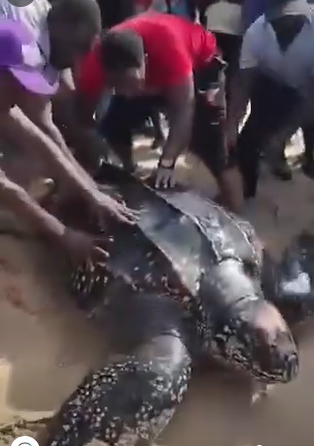
The National Environmental Standards and Regulations Enforcement Agency (NESREA) has commended the Baale of Okun Igando in Ibeju-Lekki Local Government Area of Lagos State, Hon. Chief Semiu Waliu Jejelaiye, and members of the community for rescuing and releasing a critically endangered Leatherback Sea Turtle caught in a fishing net.
The commendation followed the circulation of videos on social media showing the giant marine reptile trapped in a fishing net along the coastline. Community members were seen working together to safely return the turtle to the Atlantic Ocean after the traditional ruler intervened to stop attempts to kill or sell the animal.
NESREA Director-General, Prof. Innocent Barikor, described the action of the Baale and the community's youths as exemplary, noting that the Leatherback Sea Turtle is among species protected under both international conventions and Nigerian environmental laws.
He explained that sea turtles face growing threats worldwide from accidental capture in fishing gear, plastic pollution and poaching, stressing that the survival of a single adult female turtle could contribute significantly to the species' conservation through the production of future hatchlings.
The environmental watchdog also reminded members of the public that the killing, trade or possession of endangered wildlife species constitutes an offence under existing laws.
The agency urged fishermen and coastal communities to release endangered marine animals accidentally caught in fishing gear immediately and report such incidents to relevant authorities.
As part of its conservation efforts, NESREA said it would present a Letter of Commendation to the Baale of Okun Igando for his role in safeguarding endangered species.
The agency further reaffirmed its commitment to working with coastal communities across the country to strengthen environmental awareness and promote the protection of threatened wildlife species.
@Omatune A self-confessed armed robber, he is afraid of being called to question and for the role of sponsoring that American spy who provoke most of the attacks in the plateau.
Ambrose Alli University Lecturer Found Dead in Ekpoma Hotel
A senior lecturer at Ambrose Alli University (AAU), Ekpoma, Edo State, has been found dead in a hotel room under circumstances that have prompted a police investigation.
The deceased, identified as Dr. Matthew Uwuigbe, reportedly died on Sunday, October 5, 2026, at a hotel located in the Mosco area of Ekpoma, Esan West Local Government Area of Edo State.
According to police authorities, Dr. Uwuigbe had checked into the hotel with a woman identified as Angela Defa Jacob, aged 21. Preliminary reports indicate that he allegedly sent the woman to purchase water, but upon her return, she found him lying motionless on the bed.
Confirming the incident, the Edo State Police Command spokesperson, CSP Moses Yamu (or the appropriate spokesperson if different), said investigations are ongoing and that three persons have been taken into custody in connection with the case.
A police statement explained that officers received a report on October 5 regarding the death of Dr. Uwuigbe, a lecturer at Ambrose Alli University, who had lodged at the hotel and engaged the services of a commercial sex worker. The statement added that the woman later discovered him unresponsive after returning from an errand.
The hotel owner, manager, and the woman involved are currently assisting investigators. Meanwhile, the lecturer's remains have been deposited at the Oraifo Memorial Hospital mortuary pending further examination.
Reacting to the development, Ambrose Alli University spokesperson, Otunba Mike Ade Aladenika, confirmed that Dr. Uwuigbe was a member of the institution's academic staff. He, however, stressed that the incident occurred outside the university premises and had no connection to university activities.
"We are not denying that he is our staff member, but whatever happened occurred in his private life. The individual involved is not our student, and everything happened outside the university environment," Aladenika said.
Authorities have not yet established the official cause of death. Police investigations are continuing to determine the circumstances surrounding the incident.














![pegasusreportng's tweet photo. Re-Pastor Enoch Adeboye's Conference on the Moon: Faith, Science, and the Sanctity of Reason | By Benjamin Adebisi
In contemporary religious discourse, a troubling dichotomy frequently emerges: the false premise that spiritual devotion requires the suspension of intellectual rigour. Too often, declarations issued from sacred pulpits invite believers to trade empirical reality for sensationalised hyperbole under the guise of "faith."
When religious leaders project administrative gatherings or corporate assemblies onto extreme physical environments—such as prophesying a church council meeting on the lunar surface—without regard for basic physical laws, they do not demonstrate profound spirituality. Rather, they conflate divine sovereignty with logical absurdity.
True faith does not promote irrational thinking, nor does it stand in opposition to science; on the contrary, genuine faith honours the empirical universe as a deliberate creation governed by sacred, orderly laws. To understand why faith does not conflict with science, one must first recognise that the physical universe is not an arbitrary sandbox.
The principles that govern reality—from Isaac Newton’s laws of motion and universal gravitation to the fundamental thermodynamics of energy, mass, and fluid dynamics—are not obstacles to divine power. They represent the very architecture of creation. A coherent theology acknowledges that a God of order does not establish a complex, harmonious cosmos only to act with administrative caprice.
Science is simply the systematic human effort to decode the language in which creation was written. When gravity keeps planets in orbit or when atmospheric chemistry dictates breathability, we observe divine consistency at work. Therefore, asserting that spiritual devotion permits us to ignore physical laws discredits both the intellect of the believer and the majestic order of the Creator.
Consider the physical reality of human presence on the Moon.
Lunar exploration remains one of the most technologically demanding and resource-intensive endeavours in human history. The Moon possesses an exosphere so extraordinarily thin that it is effectively a vacuum. Because sound waves require a physical medium—such as air or water—to propagate, direct vocal communication on the lunar surface is physically impossible without pressurised space suits equipped with specialised radio transceivers.
Furthermore, from the historic Apollo missions to modern space architectures, landing even a small crew on the Moon demands billions of dollars in infrastructure, precise orbital mechanics, artificial life support, and extreme radiation shielding.
When religious proclamations treat space flight as a casual venue for routine church governance, they ignore these inescapable scientific facts. Faith is intended to cultivate spiritual discernment and moral responsibility, not to encourage a reckless disregard for physics, engineering, and economic stewardship.
A central error in modern sensationalism stems from a flawed reading of scriptural texts.
A classic example is the vision in Ezekiel chapter thirty-seven—the Valley of Dry Bones. The restoration of dry bones into a living army was not a physical, historical instruction manual for cemetery management or human anatomy. It was an apocalyptic, symbolic vision granted to the prophet to communicate national restoration and spiritual renewal to Israel.
[caption id="attachment_27929" align="aligncenter" width="849"]📷 *Pastor Enoch Adeboye of RCCG owns the largest Pentecostal church in Nigeria[/caption]
Confusing symbolic vision with empirical directives leads to profound theological distortions.
Scriptural miracles were localised, purposeful interventions designed to reveal divine character, not routine exemptions granted to human institutions for organisational logistics. To use "faith" as a justification for impossible physical claims distorts the true purpose of biblical narrative and replaces sound hermeneutics with magical thinking.
When spiritual leaders issue declarations that violate basic physics and common sense, the consequences within the faith community and broader society are severe. Thoughtful believers, scientists, and students are forced into a false choice between their spiritual devotion and their intellectual integrity.
Sensationalised claims subject religious institutions to public ridicule, undermining their moral authority on critical social issues.
Furthermore, reducing divine capability to sensational stunts diminishes the true majesty of God, who works through order, human wisdom, and natural processes.
Faith and science are not antagonistic forces; they are complementary lenses through which we understand existence. Science explains how the physical universe functions through observable, testable laws, while faith explores why we exist, offering moral structure, purpose, and hope.
True faith requires intellectual humility and respect for truth. It does not demand that we abandon logic, ignore the laws of physics, or accept sensationalised declarations.
By celebrating both the awe of creation and the rigour of scientific understanding, believers can cultivate a mature, resilient worldview—one where faith elevates human dignity without ever sacrificing human reason.](https://pbs.twimg.com/media/HUbaWlhWUAAMC7C.png)

![pegasusreportng's tweet photo. 2027 Polls: Atiku and the Nigerian Public Divided Over Return of Fuel Subsidy | By Ehichioya Ezomon
"A subsidy remains a subsidy. You may call it production subsidy, targeted subsidy, capped subsidy or give it any sophisticated economic description you like. Once the government is required to absorb part of the cost of petrol so that it can be sold below what the market would otherwise determine, public resources are being committed to make up the difference.
"The critical questions therefore remain unanswered: What is the subsidy rate? What quantity of petrol will qualify? What is the annual expenditure ceiling? Where will the money come from? And what mechanism will guarantee that whatever benefit government gives to refiners will actually reach ordinary Nigerians at the filling stations?"
The Chairman of the Planning Committee of the 2027 APC Presidential and Governorship Campaign Committee (PGCC) in Ogun State, Kayode Oladele, posed these questions while describing, as "an attempt to repackage an old policy under a new name," the fuel subsidy proposal by former Vice President and candidate of the African Democratic Congress (ADC) in the 2027 General Election, Alhaji Atiku Abubakar.
During campaigns for the 2023 election, Atiku had pledged to remove subsidy on petrol (premium motor spirit) he described as "unsustainable, opaque, and susceptible to corruption," though he said the process would be implemented responsibly and paired with structural safety nets for the citizens.
In an interview with Arise News in July 2022, Atiku said he would "eliminate fuel subsidy through negotiations" if elected president in 2023. "It is inevitable that it will happen. I believe through negotiations again with the organised labour and other sectors of the economy, the subsidy removal should be resumed and completed," Atiku said – referring to the aborted plan by the President Goodluck Jonathan government (2010-2015) to effect the policy due partly to pressures from then-opposition All Progressives Congress (APC) that defeated the Peoples Democratic Party (PDP) at the 2015 election.
In December 2022, Atiku again said he would "address the issue of fuel subsidy in his first 100 days in office as Nigeria's president," a Centre for Democracy and Development (CDD) War Room "fact check" stated, tracing the claim that Atiku had campaigned to "remove petrol subsidy on day one if elected president" to former Edo State Governor, Sen. Adams Oshiomhole (APC, Edo North) during the 2023 election.
During a 2023 interview on Channels TV, Oshiomhole said that Atiku, then-presidential candidate of Labour Party (LP) and candidate of Nigeria Democratic Congress (NDC) in 2027, Mr Peter Obi, and Tinubu promised to remove fuel subsidy on their first day in office as Nigeria's president.
Oshiomhole, ex-national chairman of the ruling APC recalled that, "If there is one issue which all the leading (2023) presidential candidates had an agreement on, it is that they all agreed that subsidy will go. I remember the then-candidate, Peter Obi, saying he will remove it on the very first day. Candidate Atiku said the same thing, and candidate Bola Tinubu said the same thing."
Like Tinubu, Obi campaigned to scrap fuel subsidy on his first day as president. The CDD, reviewing his campaign statements for the 2023 poll, found that "he made repeated declarations regarding his plan to remove the fuel subsidy."
In July 2022, Obi, in an interview with Arise News, said he would remove fuel subsidy and "look for something to replace it, as it is not beneficial to Nigeria's economy." Also, at a presidential town hall organised by Channels Television on January 8, 2023, Obi promised to "immediately" remove fuel subsidy if elected president.
Describing subsidy as an "organised crime," Obi said he would "not allow it to stay a day longer when he gets elected into office," as reported by Premium Times and Channels TV, and posted about the event on his verified X/Twitter handle, reiterating he would "immediately remove the subsidy when elected."
"The claim that Peter Obi promised to eliminate fuel subsidy on his first day in office as Nigeria's president is true," CDD War Room said, adding, "We can confirm that he explicitly stated his intention to remove it immediately, without allowing it to stay a day longer."
Since removal of fuel subsidy, and dealing with its harsh economic fallout, President Tinubu's come under Atiku's criticisms for the alleged anti-people action," saying, if he were president, he would've taken a different approach by ensuring cushioning measures were put in place before phasing out the policy.
From inconsistency, and contradicting or countering his media aides on subsidy he's resurrected as a 2027 campaign tool to puncture Tinubu and the APC momentum ahead of the general election; Atiku's found his bearing, with his messaging centred on "transforming from an import consumption relief into a domestic production subsidy."
[caption id="attachment_28344" align="aligncenter" width="850"]📷 Nigerian President Bola Tinubu and main opposition challenger, Atiku Abubakar: Image credit: Oyakhamoh Y. Carl-Abu'Bakar/Pegasus Reporters) ©[/caption]
Arguing that President Tinubu's sudden subsidy removal "has plunged millions into extreme hardship," while the resulting government savings "have been largely mismanaged or unaccounted for," Atiku clarifies that he doesn't intend to restore the previous consumption-driven model, which relied heavily on importing refined fuel, but his policy "will subsidise crude oil processed within Nigeria to lower domestic retail prices."
He promises that "only petrol refined domestically, including products from modular refineries, will qualify" for his proposed intervention, while imported petrol will be excluded, and "the costs and payments will be published and independently audited," to ensure transparency and accountability in the system.
"I'm restoring subsidy to cut fuel, transport costs... (the proposed policy) would amount to a 'production subsidy' rather than an import subsidy. (The government will) support crude oil refined in Nigeria to enable domestic refineries to produce petrol at lower costs and pass the savings to consumers," Atiku said. (Google)
Atiku compares this strategy to shoemaking, stating the government "can either spend public funds to make imported shoes cheaper or support local shoemakers in Aba (the industrial and commercial hub of Abia State) to reduce production costs." He says "I choose the Aba shoemaker" because "a nation as blessed as ours has no business abandoning its citizens to hardship."
As international events, such as the United States-Iran war, force prices of petrol to fluctuate, and Nigerians are yoked to "market forces," Atiku sees an opening to pillory Tinubu government's "failure to extend the so-called gains of subsidy removal" to ordinary Nigerians.
Atiku queries the lack of visible, public benefits from the trillions of Naira saved from subsidy removal in mid-2023, insisting, "I did not oppose the removal of the oil subsidy, but where is the money? Where did it go? It was intended to reduce poverty and help children attend school. It seems they are just stealing it. If elected, I will bring back the oil subsidy, and whoever stole the money must refund it."
Atiku's handlers talk about the return of petrol subsidy as "a short-term economic intervention, to serve as a buffer while the economy stabilises," with one of his spokespersons, Chief Paul Ibe, quoted as saying, "We are not returning to Egypt... (the proposal is) a short-term economic intervention, giving households and businesses time to adjust to prevailing economic conditions before the subsidy is eventually withdrawn."
Similarly, an ADC stalwart and former Kogi West senator, Dino Melaye, appearing on AIT, said implementing Atiku's "targeted production subsidy" could effectively "slash the pump price of petrol down to between ₦400 and ₦500 per litre, offering immediate relief from the current N950+ market rates" – an obviously unrealistic projection meant to woo hard-hit citizens for 2027.
Meanwhile, Oladele, the chair of the Ogun State APC-PGCC, tries to distinguish between Tinubu's "subsidy is gone" and Atiku's "subsidy is back," and how one has affected Nigeria's overall economic and social outlooks, and the other will shape out if Atiku is president.
His words: "The fundamental difference between President Bola Tinubu's approach and Atiku proposes that the president is attempting to restructure the energy and transportation economy rather than return government to permanently underwriting fuel consumption. What Nigerians should therefore ask Atiku is simple: after all our experience with subsidy, is the solution really to create another subsidy programme?"
"President Tinubu took the difficult decision to confront a subsidy system that had become enormously burdensome to the public treasury. Such structural reforms inevitably come with adjustment pressures and nobody should pretend otherwise. What Nigerians should therefore ask Atiku is simple: after all our experience with subsidy, is the solution really to create another subsidy programme?"
Faulting criticism of the Tinubu government's transportation initiatives, Oladele said Atiku ignored the administration's attempt to diversify Nigeria's transportation energy base through Compressed Natural Gas (CNG) and other alternatives to petrol, PUNCH reported on October 4, 2026.
"Atiku wants Nigerians to believe that the only meaningful way of reducing transportation costs is to return the government to subsidising fuel," Oladele said. "President Tinubu is pursuing a different structural approach: broaden the country's transportation energy options, expand CNG infrastructure and progressively reduce the dependence of commercial transportation on petrol.
"That is an important distinction. One approach asks the government to continue absorbing part of the price of a commodity. The other seeks to change the underlying cost structure by creating alternatives," he added, even as he noted that Atiku's entitled to propose a different economic programme, "but Nigerians are equally entitled to demand its full arithmetic."
"It is very easy, during an election season, to promise cheaper petrol, cheaper food, cheaper electricity and cheaper transportation. The harder question is how these promises will be financed without recreating the very fiscal problems Nigeria has spent years trying to escape."
Will Atiku Abubakar look straight into the camera, or into the eyes of Nigerians, and affirm that his pledge to bring down the price of petrol from its current high of about N1,400 per litre to between N400 and N500 per litre isn't a campaign gimmick to hoodwink voters looking for amelioration of their economic and social hardship under the APC government of President Tinubu, who seeks renewal of his four-year mandate on January 16, 2027?
Atiku (and other presidential candidates) shouldn't take Nigerian voters for granted. Dangling a N400 per litre bait before them may be attractive, but the assumed "uninformed and gullible" voters are politically discerning enough to see through campaign rhetoric that attempts to call or label the subsidy a different name!
Mr Ezomon, Journalist and Media Consultant, writes from Lagos, Nigeria. Can be reached on X, Facebook, Instagram and WhatsApp @EhichioyaEzomon. Tel: 08033078357.](https://pbs.twimg.com/media/HUZwws4X0AA2pK-.png)