Did you know the foundation for modern probability theory and the very first working mechanical calculator came from a sickly French genius who spent his final years in constant pain yet never stopped pursuing truth? That was Blaise Pascal, born in 1623 in Clermont-Ferrand, France, to a devout Catholic family that prized learning. By age nineteen he had already invented the Pascaline, a groundbreaking mechanical calculator that could add, subtract, multiply, and divide — an ancestor of every computer and smartphone we carry today.
Pascal’s work in mathematics and physics was extraordinary. He laid down the foundations of probability theory that now power everything from AI risk assessment and machine learning algorithms to weather forecasting and financial modeling. He also advanced fluid mechanics with Pascal’s law, which explains pressure in liquids and still governs hydraulic systems in cars, airplanes, and heavy machinery. His insights helped shape the scientific method itself and influenced later giants like Newton and Leibniz.
But here is the part that adds real depth to his legacy. Despite lifelong illness that left him bedridden much of his adult life, Pascal poured himself into rigorous inquiry with remarkable discipline and honesty. He questioned assumptions, tested ideas relentlessly, and refused to accept easy answers, producing work of such clarity and precision that it continues to underpin the digital tools and decision-making systems we rely on in an increasingly complex world.
If you like these stories of curiosity and integrity that shaped our world, hit follow for more. What part of Pascal’s journey or inventions stands out to you, or which other figure should we explore next?
Johannes Kepler lived with a conviction that the universe was not a random machine but a book written by the Creator in the language of mathematics. Born into a Lutheran home in 1571, he carried that faith through smallpox that scarred his body, the chaos of the Thirty Years War, the witchcraft trial of his own mother, and repeated financial ruin. Yet none of those trials could shake his deep conviction that discovering the mathematical laws of nature was a sacred way of understanding the mind of God expressed in creation.
Kepler approached every calculation with the same reverence he brought to Scripture. When he finally proved that planets move in ellipses rather than perfect circles, he saw it not as a defeat of old ideas but as a revelation of the Creator’s elegant design. He wrote openly that geometry is one of the two great books God gave humanity the Bible and the book of nature and that both must be read with honesty and humility. His three laws of planetary motion were published with prayers of thanksgiving, because for Kepler the harmony he found in the heavens was direct evidence of divine order.
Even when imperial politics threatened his freedom, he never separated his science from his worship. He continued attending church, teaching his children the catechism, and viewing every breakthrough as an act of obedience. The same man who gave Newton the foundation for universal gravitation also spent his final years quietly serving his local congregation and trusting that the God who ordered the stars would order his own difficult path.
Imagine the astronomer who cracked the true shape of planetary orbits while dodging war, poverty, and personal tragedy and still managed to see the universe as a harmonious masterpiece. That was Johannes Kepler, born in 1571 in what is now Germany to a Lutheran family that valued education despite their own hardships. Smallpox left him with weak eyesight and damaged hands, yet he pressed on through university, became a mathematics teacher, and eventually worked as imperial mathematician under the Holy Roman Emperor.
Kepler inherited Tycho Brahe’s priceless observational data and spent years wrestling with the numbers. In 1609 and 1619 he published his three laws of planetary motion showing that planets move in ellipses, that they sweep out equal areas in equal times, and that their orbital periods relate to their distances from the Sun in a precise mathematical harmony. Those laws demolished the centuries-old idea of perfect circular orbits and gave Newton the foundation he needed for universal gravitation. Today they still guide every spacecraft trajectory, every satellite launch, and every simulation of solar-system dynamics.
But here is the part that adds real depth to his legacy. Even amid the chaos of the Thirty Years’ War, the trial of his own mother for witchcraft, and repeated financial ruin, Kepler kept meticulous notebooks filled with the conviction that the mathematical order he uncovered reflected a deeper, purposeful design. His relentless honesty with the data and refusal to force the numbers to fit old assumptions produced discoveries that still shape how we navigate space and understand the cosmos.
If you enjoy these stories of curiosity and integrity that shaped our world, hit follow for more. What part of Kepler’s journey or discoveries stands out to you, or which other figure should we explore next?
James Clerk Maxwell’s story reveals a mind whose faith and intellect worked together in remarkable harmony. Born into a devout Presbyterian family in Scotland, he viewed the natural world not as random chaos but as an orderly creation reflecting the wisdom of God. His famous equations were more than mathematical tools. They were, for him, a way of thinking God’s thoughts after Him.
Maxwell lived his Christian faith consistently. He attended church faithfully, read Scripture daily, and saw scientific discovery as a form of worship. Even while making groundbreaking advances in physics, he remained humble and generous, mentoring students and supporting charitable causes without seeking fame. His strong belief in a rational Creator gave him confidence that the universe followed consistent laws that could be discovered through careful reasoning and experiment.
In an age when many saw science and faith as opposites, Maxwell demonstrated they could strengthen each other. His electromagnetic theory, which now enables everything from smartphones to satellite communication, came from a heart that first bowed before the Lord. The very waves that carry our trending videos, wireless signals, and global data today trace back to a man who pursued truth with both intellectual rigor and spiritual devotion.
James Clerk Maxwell didn’t just study electricity and magnetism. He revealed they were two sides of the same force, and in doing so predicted the existence of invisible waves that travel at the speed of light. Born in 1831 in Edinburgh to a devout Presbyterian family, this quiet Scottish mathematician turned those insights into four elegant equations that still power nearly every piece of modern technology we rely on.
His work laid the foundation for radio, Wi-Fi, radar, television, and all wireless communication. Maxwell also advanced the kinetic theory of gases and even created the first true color photograph in 1861. While today’s trending conversations buzz about AI video generators, AI earbuds, and the latest breakthroughs in tech, Maxwell’s equations remain the invisible backbone enabling so much of that innovation.
But here is the part that adds real depth to his legacy. This brilliant physicist approached science with deep humility, seeing the elegant order in nature as a reflection of divine wisdom. His strong Christian faith fueled a life of integrity, generosity, and tireless pursuit of truth without seeking personal glory.
If you like these stories of curiosity and integrity that shaped our world, hit follow for more. What aspect of Maxwell’s work or approach surprises you most, or who is another historical figure whose story you’d like to see next?
Matthew Fontaine Maury’s story reveals a man whose faith shaped his remarkable scientific work in quiet but profound ways. Born into a devout Protestant family with Huguenot heritage, he approached the oceans not merely as a navigator but as a student of God’s creation. Every chart he produced came from the conviction that the seas followed orderly laws established by the Creator, and his meticulous study of winds and currents was an act of uncovering that divine order.
Maury’s deep Christian convictions guided his daily life and career. He regularly attended church, read Scripture faithfully, and often wove biblical references into his scientific writings. He saw his naval service and scientific contributions as a form of stewardship and humble obedience to God. Even after a painful injury ended his time at sea, he continued serving with integrity, refusing to let personal hardship dim his sense of calling. His famous quote, “It is the Bible that teaches us the value of science,” reflected his lifelong belief that faith and rigorous inquiry walked hand in hand.
His later years showed the same consistent devotion. As a professor and superintendent, Maury remained active in his church and mentored younger scientists with the same moral clarity he brought to his research. The practical tools he created for safer ocean travel trace back to a mind that first sought to honor the Lord through honest, diligent work in the natural world.
Maury shows us that real scientific greatness often flows from a heart surrendered to Christ. When a man seeks first the Kingdom and His righteousness, the Lord sometimes entrusts him with insights that bless the entire world for generations. His life is a powerful reminder that faith and rigorous science are not enemies they are faithful companions when the heart is right.
Matthew Fontaine Maury, often called the Pathfinder of the Seas, transformed ocean navigation in the 19th century through patient study of ships' logs and wind patterns. Born in 1806 in Virginia to a Huguenot-descended family with deep Protestant roots, he joined the US Navy as a young man and rose through the ranks despite a serious leg injury that ended his active sea duty. Assigned to the Depot of Charts and Instruments, he began systematically collecting and analyzing thousands of old logbooks.
Maury compiled detailed charts of ocean currents and prevailing winds that dramatically shortened sailing times for merchant and naval vessels. His 1855 book The Physical Geography of the Sea became a foundational text in oceanography, explaining phenomena like the Gulf Stream and trade winds with remarkable accuracy. These charts helped make transoceanic travel safer and faster, supporting global trade and exploration for decades. He also advocated for international cooperation in sharing maritime data, leading to the first international meteorological conference.
But here is the part that adds real depth to his legacy. This meticulous naval officer and scientist viewed the oceans as part of a beautifully ordered system and saw his work as uncovering patterns set in place by divine wisdom. His drive for precision and service shaped a career marked by integrity and practical impact that still influences modern navigation and marine science.
If you like these stories of curiosity and integrity that shaped our world, hit follow for more. What aspect of Maury's work or approach surprises you most, or who is another historical figure whose story you'd like to see next?
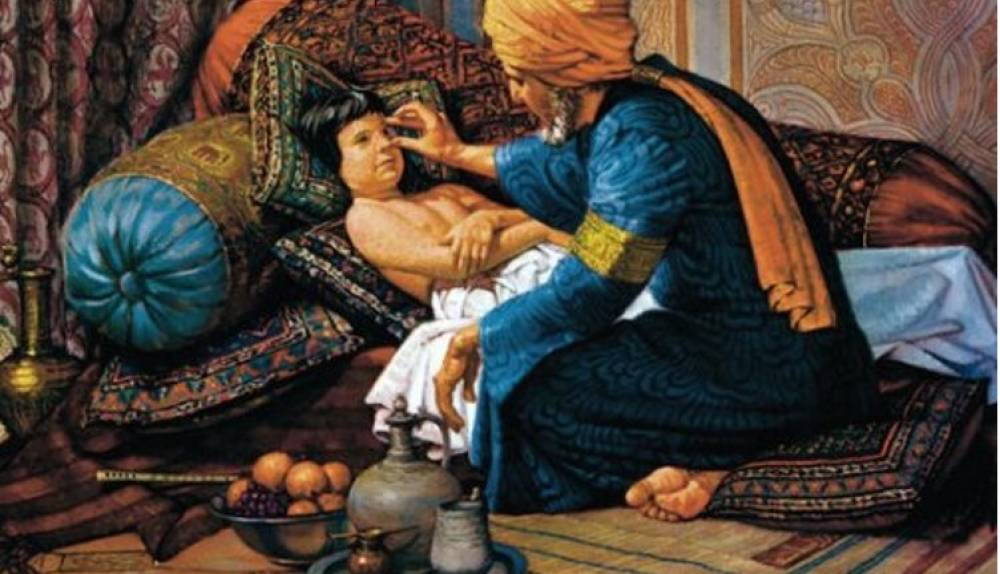
Abu Bakr al-Razi, known in the West as Rhazes, stands out as one of the most practical and observant physicians of the 9th century. Born around 854 near modern Tehran in Ray, Iran, he began with a passion for music before dedicating himself to medicine and alchemy. He went on to direct major hospitals in Ray and Baghdad, where his hands-on approach to patient care earned him lasting respect.
Al-Razi authored over two hundred works, including the enormous medical encyclopedia Kitab al-Hawi. In it he gathered knowledge from many traditions while adding his own careful case studies and experimental results. He wrote the first clear description distinguishing smallpox from measles, advanced ideas in pediatrics and ophthalmology, and improved pharmacy through systematic testing and chemical preparations. His insistence on direct observation, accurate diagnosis, and ethical treatment helped lay important groundwork for more evidence-based medicine that influenced generations of doctors.
But here is the part that adds real depth to his legacy. This prolific writer and experimenter ran major hospitals and questioned ancient authorities whenever evidence pointed elsewhere. He also explored the limits of knowledge through logic and philosophy. His relentless drive to test ideas rigorously and record findings with complete honesty left a lasting mark on the history of science.
If you like these stories of curiosity and integrity that shaped our world, hit follow for more.
Nicolas Steno’s remarkable journey offers far more than the standard accounts suggest. That gifted anatomist didn’t just stumble into science. He brought patient precision and honest curiosity to the study of rocks and fossils, carefully recording exactly what he observed rather than forcing preconceived notions onto nature.
Steno was raised in a Lutheran family and later converted to Catholicism in 1667 after thoughtful study. In the years that followed, his scientific work gradually gave way to other priorities. He was ordained a priest in 1675 and became a bishop two years later, serving as apostolic vicar in northern Germany. There he focused on pastoral duties and helping those in need, often selling his own possessions to support the poor.
His methods in geology emphasized careful, accurate recording of what he observed in the field. The principles of superposition, original horizontality, and lateral continuity that he helped establish remain fundamental to how geologists interpret rock layers and reconstruct Earth history even centuries later. The very framework used in resource exploration and understanding our planet’s past traces back to his detailed observational work.
Steno reminds us that scientific greatness can emerge from a life marked by disciplined inquiry and a willingness to follow where evidence and personal conviction lead. His contributions continue to influence the way we explore and understand the natural world.
What if a single shark tooth changed how we understand the entire history of our planet? In the 1660s a young Danish anatomist named Nicolas Steno was dissecting a shark in Italy when he noticed its sharp teeth looked identical to strange stony fossils found high in inland mountains far from any ocean. That simple but sharp observation opened his eyes to a much bigger story written in the rocks.
Steno went on to establish the basic laws of stratigraphy. He showed that rock layers form in clear sequence with older deposits below younger ones. He explained how sediments settle horizontally and how crystals grow according to fixed angles no matter where they appear. Those straightforward principles became the foundation of modern geology and paleontology giving scientists reliable tools to read Earth’s deep timeline locate resources and interpret fossils with confidence.
But here is the part that still surprises many: after delivering these key insights the same meticulous observer stepped away from research at the height of his influence. He converted to Catholicism became a priest and later served as a bishop in northern Germany choosing a life of simple service and care for the poor over continued laboratory fame. What deeper sense of purpose could draw a pioneering mind like his away from the laboratory toward quiet pastoral duties?
If you enjoy these stories of relentless curiosity and integrity that built our technological world hit follow on this page more coming.
Michael Faraday’s story runs even deeper than the textbooks usually show. That poor blacksmith’s son didn’t just stumble into science he approached the laboratory with the same reverence most people reserve for worship. Every experiment was, for him, an act of reading the handwriting of the Creator in the laws of nature. He once wrote that the beauty and order he uncovered only confirmed his conviction that the universe is sustained by the same God who speaks through Scripture.
Faraday was no casual believer. He belonged to the Sandemanian church, a small, strict evangelical group that took the Bible as their only rule and emphasized simple, holy living over worldly success. That faith shaped everything. When honors came knocking knighthood, presidency of the Royal Society, even a government pension he quietly turned them all down. “I have always loved my work,” he said in essence, “and I will not let position pull me away from the humble service God has given me.”
In his later years, after strokes weakened his body, he still spent quiet mornings with his Bible before stepping into the lab. His notebooks reveal a man who saw electromagnetic induction not merely as a useful phenomenon, but as evidence of the consistent, trustworthy order that a faithful God built into creation. The very power that now runs our cities and devices traces back to a mind that was first bowed before the Almighty.
Faraday shows us that real scientific greatness often flows from a heart surrendered to Christ. When a man seeks first the Kingdom and His righteousness, the Lord sometimes entrusts him with insights that bless the entire world for generations. His life is a powerful reminder that faith and rigorous science are not enemies they are faithful companions when the heart is right.
What if the man who basically invented the modern electrical world started as a poor kid with no formal education and a stack of borrowed books? Michael Faraday was born into a poor blacksmiths family in late 18th century England. With barely any schooling, he apprenticed as a bookbinder at 14 and taught himself science by reading every volume that passed through his hands especially anything on electricity and chemistry.
That self taught hunger landed him a lab assistant job with the famous Humphry Davy. Through careful hands on experiments he discovered electromagnetic induction: how a moving magnetic field creates an electric current. That single breakthrough became the foundation for generators, motors, transformers, and the entire power grid we depend on today.
But here's where it gets even more interesting: this same man turned down a knighthood and high government positions, choosing instead to remain plain Mr. Faraday. Why would someone who changed civilization refuse the fame and fortune that came with it?
If you enjoy these grounded stories of relentless curiosity and integrity that built our technological world, hit follow on this page more coming.
Michael Faraday’s story runs even deeper than the textbooks usually show. That poor blacksmith’s son didn’t just stumble into science he approached the laboratory with the same reverence most people reserve for worship. Every experiment was, for him, an act of reading the handwriting of the Creator in the laws of nature. He once wrote that the beauty and order he uncovered only confirmed his conviction that the universe is sustained by the same God who speaks through Scripture.
Faraday was no casual believer. He belonged to the Sandemanian church, a small, strict evangelical group that took the Bible as their only rule and emphasized simple, holy living over worldly success. That faith shaped everything. When honors came knocking knighthood, presidency of the Royal Society, even a government pension he quietly turned them all down. “I have always loved my work,” he said in essence, “and I will not let position pull me away from the humble service God has given me.”
In his later years, after strokes weakened his body, he still spent quiet mornings with his Bible before stepping into the lab. His notebooks reveal a man who saw electromagnetic induction not merely as a useful phenomenon, but as evidence of the consistent, trustworthy order that a faithful God built into creation. The very power that now runs our cities and devices traces back to a mind that was first bowed before the Almighty.
Faraday shows us that real scientific greatness often flows from a heart surrendered to Christ. When a man seeks first the Kingdom and His righteousness, the Lord sometimes entrusts him with insights that bless the entire world for generations. His life is a powerful reminder that faith and rigorous science are not enemies they are faithful companions when the heart is right.