⚠️ UPDATE: New Court Files Reveal How Microsoft Helped the FBI Identify Peter Stokes "Bouquet" (Scattered Spider Member)
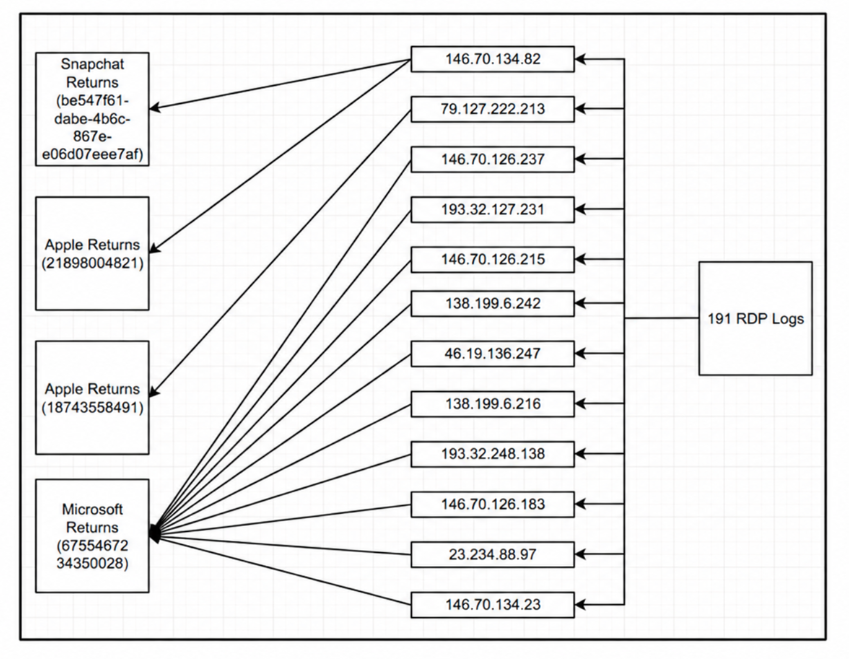
The court files reveal that Microsoft helped the FBI track Peter Stokes down using GDID — a Global Device Identifier, which is assigned to every Windows installation and cannot be changed unless the OS is wiped. The GDID helped them track:
• IP history
• Full web activity
• Video game activity and games played
• Logged-in social accounts, including Snapchat, Facebook, and Apple
According to the court documents, the critical mistake was using a VPN to create the ngrok account used in the May 2025 Tiffany & Co. hack from the same Windows device associated with his GDID.
Although the account was created from a VPN IP address ending in .168, Microsoft records show that the same GDID (6755467234350028) accessed the ngrok signup page at the exact time the account was created, linking the hack to his personal social accounts.
> Peter Stokes
> Scattered Spider guy
> Arrested
> Microsoft helps FBI
> Read court documents
> Page 12
> Microsoft tracks Stokes from GDID
> Microsoft Global Device Identifier (GDID)
> Stokes used Windows
> Page 34
> GDID assigned to each OS install
> GDID unique to each device
> GDID only change if OS wiped
> Stokes GDID 6755467234350028
> GDID reported internet activity to Microsoft
> GDID showed Stokes using Ngrok
> GDID reported Stokes IP address
> GDID showed Stokes web activity
> GDID showed timestamps of web activity
> GDID mapped with video game activity
> GDID showed games played
> GDID undocumented
> GDID only mentioned in one MSDN document
> Azure UCDOStatus
> Azure Monitor Logging
Let’s discuss the business of games.
I’m always advocating for more creative control to devs. And I put a lot of blame for how things are in the executive sphere.
So I’m going to go into depth about why.
Some of you may or may not know I own a studio. I stepped down as CEO in January. I have a few ventures, so I try to focus more on being a creative these days.
I am constantly bombarded with emails and letters about selling my company. Since the three year mark. Legal firms scour HMRC for profitable studios and then contact the owners about their “exit strategy.”
This always confused me as.. I never had an exit strategy. As a creative I built my studio for one purpose: build a great team that’s run the way I think studios should be.
If I sold, some of the team would leave. I would be completely gone. The culture would immediately change.
What is left? The brand? The IP? Yeah how many great IPs have been run into the ground by someone who acquired them.
Here’s the thing. Great games are made by great teams. People who have a working cadence and habits. Not just a collection of great individuals. Anyone can throw that together with money. But it takes more than that, it’s culture, a shared vision, and that takes time to build.
Big companies like Embracer and Microsoft acquire studios for their IP. They see the value in the IP alone. Then they close studios and give the IP to someone else.
But a great IP in the hands of a bad team will just be a bad game.
A great team with no IP can create one.
You can’t transplant DNA.
I always say the biggest problem with companies is they treat devs as disposable. They treat them as their role. They fire people when they don’t need them then hire someone else later.
But this is like taking a brick out of the middle of a wall and then later placing a new one on top. Eventually you have a big hole and it will collapse. I’ve been that brick and I refuse to run a studio that way.
The games industry is exhausting. I love making games, I love working with creatives, I just love games.
What I don’t love is devs being blamed for everything wrong in gaming when the reality is that poor decisions happen 3 layers above the average dev by people who don’t even play games.
I’m not saying devs know everything, but management in the industry is clearly failing everyone.