Looking for a trusted research peptide source?
Amino Club offers 99%+ purity, independent lab testing and batch-specific COAs across its peptide catalog.
Save 20% with code NOW20 👇
https://t.co/M7XRlpSXzE
BPC-157, TB-500 and GHK-Cu are often grouped into one recovery stack—but not because they do the same thing.
The real rationale is that tissue repair is not one event. Cells must respond to damage, move through the repair environment, and rebuild the collagen-rich extracellular matrix that gives tissue its structure.
Each peptide is researched around a different part of that process.
BPC-157 — repair signaling and fibroblast response
In tendon-fibroblast research, BPC-157 promoted cell survival and migration through FAK–paxillin signaling, a pathway involved in cell adhesion and movement.
TB-500 — actin-linked cell movement
An analytical study identified TB-500 as containing the acetylated LKKTETQ fragment from thymosin β4. This is its actin-binding region, which is linked to cell migration. The same seven-amino-acid peptide also promoted wound repair in aged-mouse models.
GHK-Cu — collagen and matrix remodeling
In rat wound models, GHK-Cu increased collagen and other extracellular-matrix components, including type I and III collagen mRNA.
This is why the three are discussed together: not as interchangeable “healing peptides,” but as compounds researched around different parts of the same repair sequence.
Signal → movement → rebuilding.
Three different research roles. One coherent framework.
That is the foundation behind BPC-157, TB-500 and GHK-Cu.
More evidence-based peptide guides and independently tested sources are in the profile.
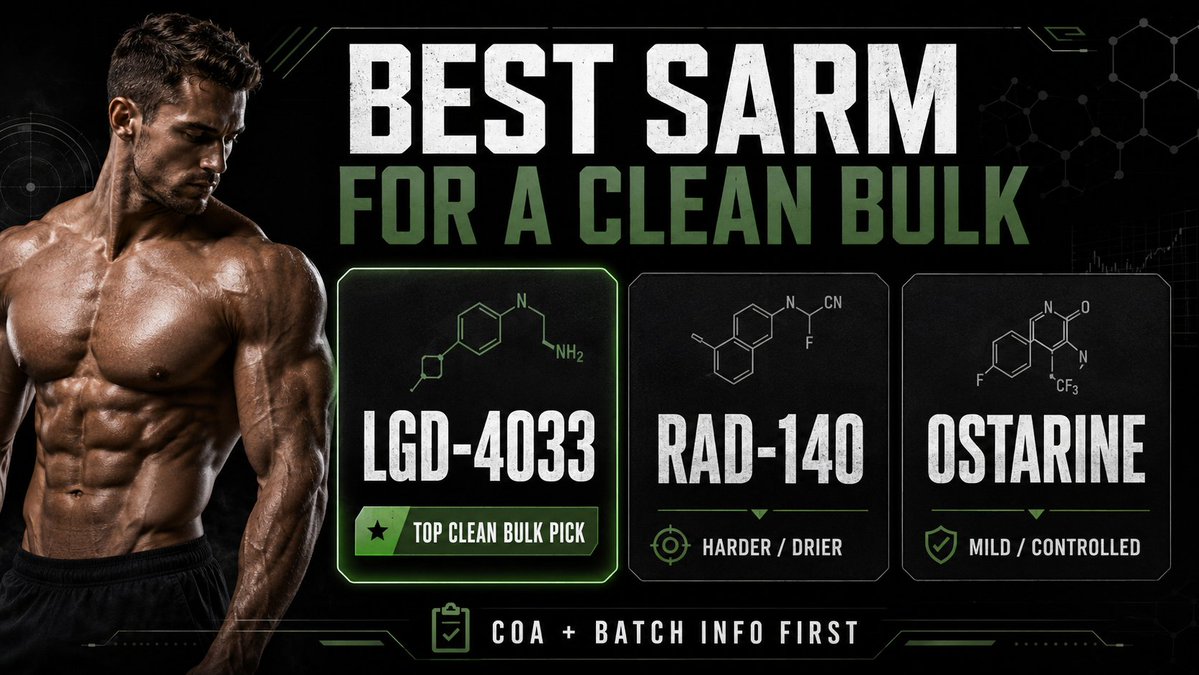
Best SARM for a clean bulk?
If the goal is lean size, strength and muscle fullness, LGD-4033 is still the most common pick.
RAD-140 = harder / drier look.
Ostarine = milder, controlled approach.
LGD still leads for clean bulk.
COA + batch info first. Always.
CHECK LINK IN BIO
New to peptides and not sure where to start?
Put together a free beginner guide – what they are, which ones to start with, how to dose correctly, and where to source safely.
Free below 👇
https://t.co/WG70syOpaV
Different peptides for different goals.
Recovery, fat loss, metabolism, skin, longevity – each has its own compounds and pathways.
Goal first.
Source quality always.
HERE: https://t.co/7W02JRPO66
Retatrutide & Cardiovascular Markers
Everyone's focused on the weight loss numbers.
The cardiovascular data is what actually matters long-term.
TRIUMPH-1 and TRIUMPH-4 both tracked cardiometabolic markers as secondary endpoints. Here's what the numbers showed at 80 weeks:
Triglycerides – down 41%
Non-HDL cholesterol – down 24.2%
Systolic blood pressure – down 12.3 mmHg
hsCRP (inflammatory marker) – significant reduction Waist circumference – down 24.1 cm
TRIUMPH-4 added: systolic blood pressure down 14 mmHg at 12mg dose.
For context – a 14 mmHg drop in systolic blood pressure is double the effect of many dedicated blood pressure medications.
These aren't primary endpoints. TRIUMPH-1 wasn't designed as a cardiovascular outcomes trial. Fewer heart attacks and strokes hasn't been proven yet – that requires longer dedicated trials. TRIUMPH-3, the cardiovascular outcomes trial, is still running with results expected later in 2026.
What the data does show: meaningful improvement in every major cardiovascular risk marker measured.
The weight loss is the headline. The metabolic picture underneath it is the real story.
Research use only.
Research peptide content and sourcing info.
Real Peptides consistently delivers – verified purity, proper shipping, full ingredient transparency.
Check them out below 👇 🧬
https://t.co/8W0rgkxzqY
Wolverine Stack (BPC-157 + TB-500)
...
The most discussed peptide combination of 2026 has a Marvel character's name.
There's a reason for that.
BPC-157 + TB-500 became "the Wolverine Stack" because the biohacking community saw it as the closest pharmacological analog to rapid multi-tissue regeneration currently available in peptide research. The name stuck. TikTok's Wolverine Stack discovery page accumulated millions of views by March 2026.
But the name is where the comic-book analogy ends.
Why this combination makes mechanistic sense:
BPC-157 drives local tissue repair – angiogenesis at the injury site through VEGFR2 and nitric oxide pathways, growth factor upregulation, tendon-bone interface healing.
TB-500 operates systemically – promotes cell migration across endothelial cells, keratinocytes, and progenitor cells via actin polymerization. It mobilizes the repair-competent cells that BPC-157's local signaling calls in.
One builds the blood supply. The other sends the builders.
Two distinct mechanisms converging on the same outcome. That's why they're stacked, not swapped.
Current status:
Both removed from FDA Category 2 on April 22, 2026. PCAC review scheduled July 23, 2026. Accessible through licensed compounding pharmacies with a prescription.
Most evidence remains preclinical. No large-scale human RCTs exist for either compound. The mechanistic rationale is solid. The human data is still developing.
Research use only.
5 Foods to Avoid on Reta or Any GLP-1
.....
Running Retatrutide, semaglutide, or tirzepatide?
Your protocol is only as good as what you eat around it.
GLP-1 class drugs slow gastric emptying. That's part of how they work. But it also means certain foods hit differently – and can make the experience significantly worse.
1. Fried and high-fat foods
Fatty foods slow stomach emptying even further. On top of GLP-1's existing delay – nausea, bloating, and indigestion. High-fat diets also slow drug absorption, reducing effectiveness.
White bread, white rice, pasta, sugary cereals. They spike blood sugar rapidly and counteract the glucose regulation the compound is working to establish. The worst choice when the whole point is metabolic control.
3. Carbonated drinks
Digestion is already slowed. Carbonation adds gas and bloating on top of that. Soda, sparkling water – minimize or eliminate during the active protocol.
4. High-sugar processed foods
Candy, pastries, energy bars. Rapid glucose spikes work directly against GLP-1 mechanism. They also tend to come with poor satiety – dangerous when appetite suppression is already doing the work.
5. Alcohol
GLP-1 medications enhance alcohol sensitivity. Lower food intake means alcohol hits faster and harder. Nausea risk increases significantly when combined with GI side effects already present during titration.
The compound does the heavy lifting. Don't undermine it with the wrong inputs.
Research use only.
.......
#retatrutide
Sleep & Testosterone
Bad sleep doesn't just make you tired.
It tanks your testosterone.
One week of sleeping 5 hours per night reduces testosterone levels by 10-15% in healthy young men. That's the equivalent of aging 10-15 years hormonally.
The mechanism: testosterone is primarily produced during sleep. Specifically during REM and deep sleep stages. Cut the sleep, cut the production window.
No supplement fixes a sleep deficit. Not zinc, not ashwagandha, not anything.
Sleep is the protocol.
Research use only.
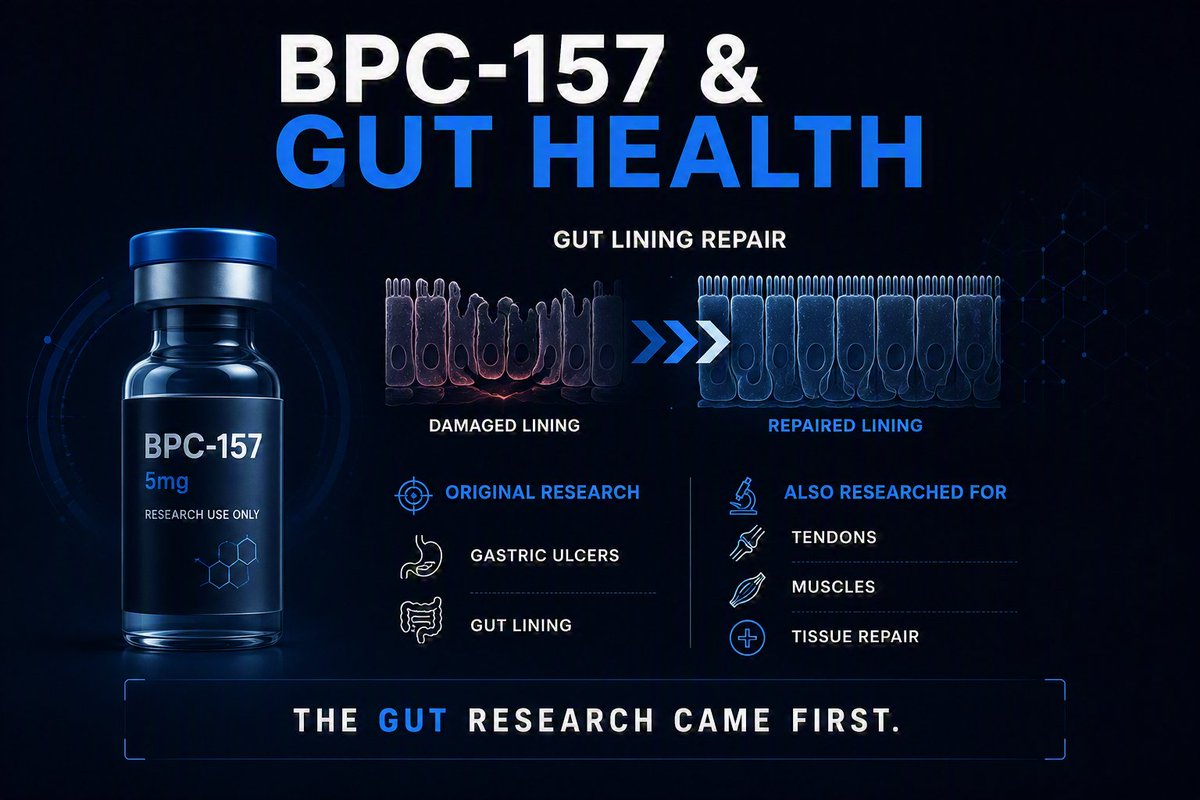
BPC-157 & Gut Health
Most people discover BPC-157 through injury recovery.
The gut research came first.
BPC-157 was originally studied for gastric ulcers. It's derived from a protein found in gastric juice. The tissue repair mechanism that makes it useful for tendons and muscles works the same way in the gut lining.
What the research shows: accelerated healing of gastric lesions, reduced intestinal inflammation, protection of gut lining integrity.
If you're running compounds that are hard on the gut – or dealing with chronic GI issues – this is the angle most people overlook.
Research use only.
5-Amino-1MQ – research compound studied for metabolic health and fat loss. Blocks NNMT enzyme, which plays a role in fat cell energy storage. Early data shows potential for body recomp and mitochondrial support. Often stacked with other metabolic peptides. 🧬