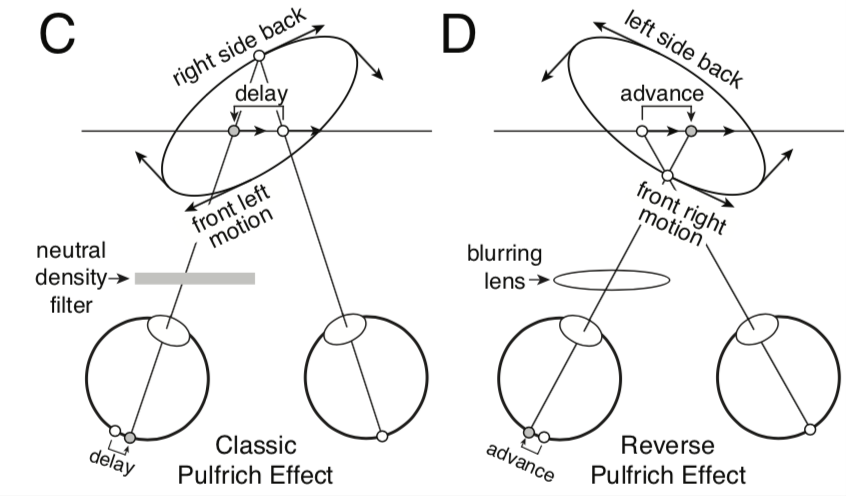
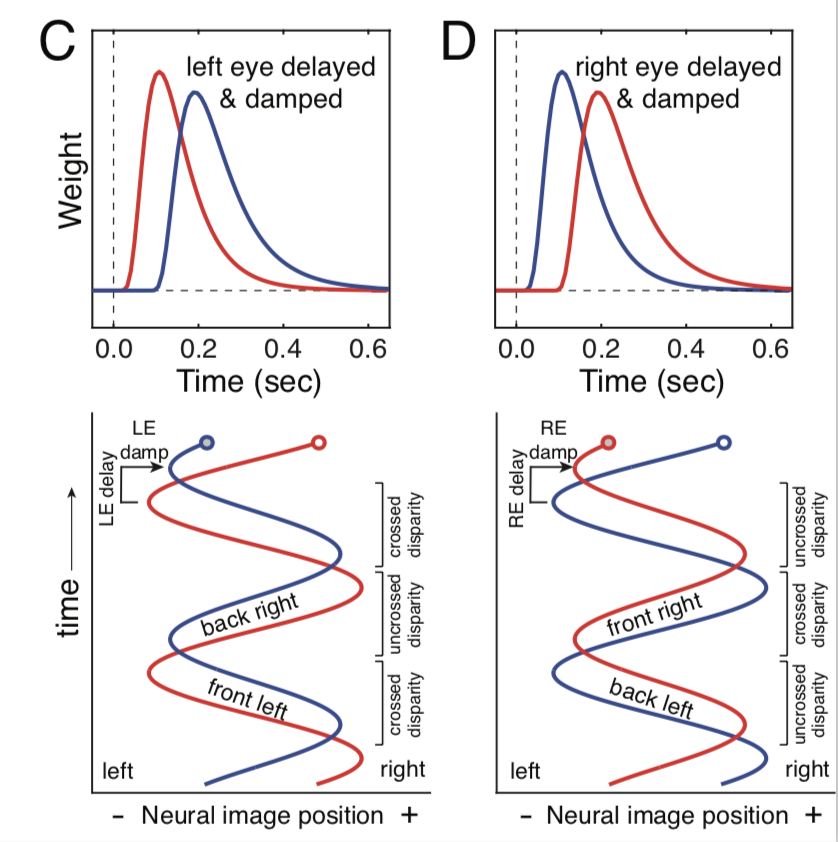
Now in print! In this new paper by @johannesburge and I, we explain a variant of a well-known visual illusion--the Pulfrich effect--and its link to temporal processing dynamics in the human visual system. Lots of nice behavioral data in here. https://t.co/P8C8DyyWRw
These mantids are... watching 3D movies? Find out why in my latest post for @PennNeuroKnow. I had so much fun diving into this fascinating research over the last few weeks! https://t.co/kuyt6Mw0Kk
A new @PNAS paper about attention and Ritalin by @amymni, @marlenecohen + is a VERY BIG DEAL. @Catrina_Hacker and I wrote a memo describing why for @TrendsCognSci (share link through June). We are excited about it for two reasons:
https://t.co/elBFBuzXp5
Mystery unraveled! I’m excited to share my work with @johannesburge now on @biorxivpreprint. We explain a previously reported but poorly understood visual illusion: an anomalous variant of the well-known Pulfrich effect (1/4)https://t.co/ozHK8paxLT
Our results make sense because higher spatial frequencies are processed with longer temporal integration periods, effectively ’damping’ the motion signal and causing the anomalous Pulfrich percept (4/4)
We can reliably induce this effect when Gabor stimuli of different spatial frequencies are presented to each eye. Check out these shifts in psychometric functions (3/4)